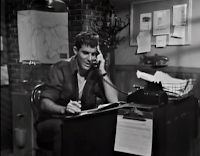
Episode 48: Tell us all where we’re going

In yesterday’s episode, Vicki the governess had come downstairs with a sketch of the great house of Collinwood that her charge David made. She showed the sketch to David’s father, Roger. Vicki tells Roger that she had taken the sketch from David’s room without David’s knowledge. Vicki spent the third week of the show trying to make it clear to David that by taking a letter from her room without her permission, he was stealing from her. Viewers who remember those episodes can’t help but wonder why Vicki is being so hypocritical.

Today, Vicki returns the drawing to David. He is surprised that she took the drawing, but pleased when she tells him how good she thinks it is. He’s starting to warm up to her, until she tells him she showed the drawing to Roger and that Roger liked it. At that reference to his hated father, David tears the drawing to pieces. David then brings up her lectures about his taking the letter and tells her she has one standard for children and another for grownups. She apologizes and agrees that she ought not to have touched the drawing. He refuses her apology and tells her he hates her. It goes on like that for a moment, until David’s aunt Liz walks in. At first Vicki tells Liz that what she’s hearing is an argument about the American Revolution, but she then says that David “had every right to be angry” because she took a drawing of his without his permission. David is involved with something else at that moment, but he does glance back at Vicki when she says “he had every right to be angry.”

Later in the series, Vicki will seem to lose quite a few IQ points. While it was foolish of her to take the drawing from David’s room without his permission and almost as foolish to tell him that Roger liked it, I don’t think this is quite a Dumb Vicki moment yet. Even the smartest adults do occasionally forget to respect children’s rights to privacy and to property, and it isn’t easy for anyone to really absorb the fact that a ten year old boy hates his father as intensely as David hates Roger. The most important thing about the scene is that Vicki admits to David that she’s wrong, apologizes to him, and tells Liz that David was in the right. The growth of a friendship between Vicki and David is going to be the most successful story-line of the first 42 weeks, and we can see the seeds of it right here.

Liz has come to David’s room to deliver a package. The package is a gift with a bow on it, brought by a messenger from the village and addressed to David. It’s a crystal ball, sent by David’s idol Burke Devlin. David loves it. Liz points out that Burke is the Collins family’s arch-nemesis, and says that it would be a good idea to send the present back. David pleads to be allowed to keep it, and she relents.

The crystal ball allows David to make all sorts of cryptic pronouncements, and gives the cameramen opportunities to take some ambitious shots. This still is featured on just about every webpage anyone has ever posted about the episode:
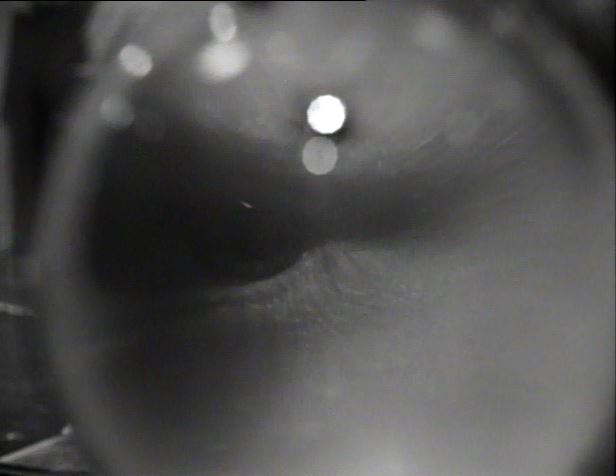
Screenshot from Dark Shadows from the Beginning

In a couple of years, we will see similar images, some of them giving great prominence to reflections of characters who aren’t supposed to cast reflections. For now, it is so unlike any other image in the show that I think we have to regard it as a message to the viewer. Just as David was the first character to look directly into the camera- he did it twice, in episodes 17 and 23, and no other character would do so until Sam did it day before yesterday, in #46- so he is the first one to look into a glass that will present us with a distorted image of his eye. The show seems to be laboring to get us to think about David’s viewpoint, about David as an observer.

The other plot also comes back to David as observer. Joe comes to the house and tells Liz that Bill Malloy didn’t come to work and isn’t at home. That gets everyone worried about Bill. Vicki tells Liz that Bill came to the house the night before, revealing to Liz that Roger lied to her. That gets Liz upset with Roger. David ties this together when he tells Vicki that he looked into the crystal ball and saw that Bill is dead, that his death was violent, and that Roger is responsible.

David is absent from the show for long stretches- today is the first we’ve seen him since #36. So it’s easy to regard him as a secondary character. But, we followed Vicki to Collinwood, and she came there because she had been hired to be David’s governess. The name “Collins” is something everyone on the show regards as terribly important, and David is the only candidate to carry that name into the next generation. They build a lot of story points around Burke, and at times Burke seems to be David’s fantasy come to life. David’s actions precipitated the saga of the bleeder valve, which was after all the first story-line on the show to be resolved. And David will be the fulcrum on which several story arcs will turn in the years to come. So perhaps we should see him as the central figure of the whole series.
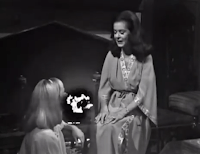
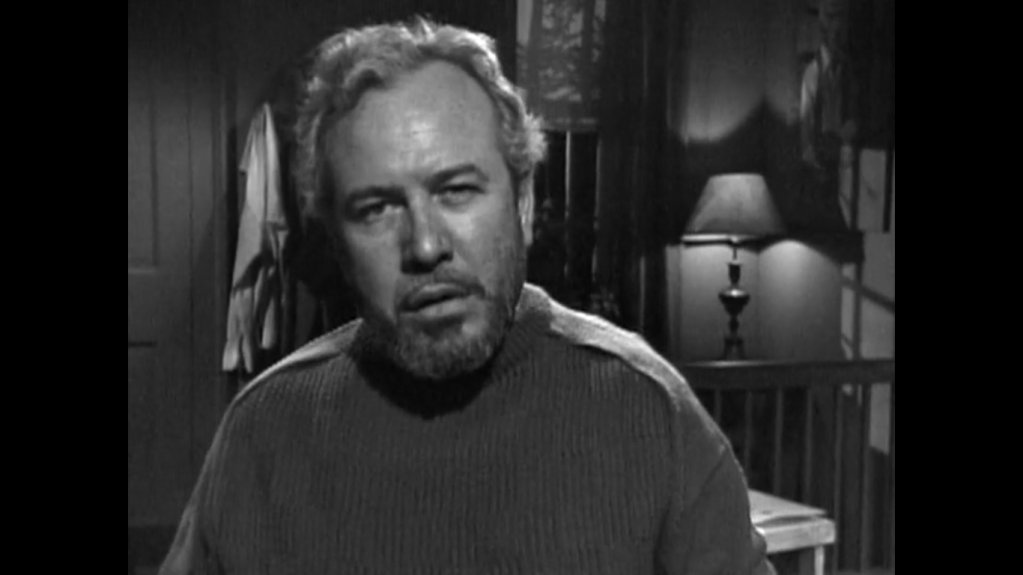
Episode 47: Three calls for the ghosts of Collinwood, and none for me

Carolyn finds her mother playing the piano in the drawing room. They have a very sweet conversation about the good times they had when Carolyn was growing up. Liz laughs when her daughter calls her a “bit of a kook.”

Carolyn wants to talk about Roger and Bill Malloy; Liz doesn’t, but can’t help listening when Carolyn tells her that Roger had declared that he wouldn’t be anyone’s sacrificial lamb. Liz is troubled by what Bill had told her about Roger and the manslaughter charge that sent Burke Devlin to prison ten years before, and wonders if the sacrificial lamb has been led to the altar.

Screenshot by Dark Shadows Before I Die

In this scene between Liz and Carolyn, we see a relationship we can care about. In the concern the two women have for Roger, we can see their wish that he would just be part of the good times, not a source of heartache.

Roger is in his office, where Bill had told him, Sam Evans, and Burke he wanted to meet them at 11 PM sharp. It’s 11:30 when we first see the three of them sitting around wondering where Bill is. Burke wants to keep waiting, the others decide to leave. Roger tells Burke that he wants to give him his pen back, feels for it in his pocket, and says he must have left it at home.

The three men in the office don’t have anything interesting to do today. They mention that they’ve spent their time talking about the weather and the price of sardines; it’s a wonder that three New England men with nothing in particular to say to each other on an August evening wouldn’t talk about the Red Sox, but I suppose the club had a bad enough season in 1966 that it would just have added to the gloom.

Roger comes home, apparently quite happy that Bill never showed up and the meeting ended without any new information for Burke. Liz confronts him in the drawing room. She tells him that Bill had told her he thought Roger, not Burke, was responsible for the manslaughter ten years ago, and demands Roger tell her the truth. He emphatically denies Bill’s charges. For good measure, he adds more lies, denying that Bill had said the same thing to him. Liz leaves him alone in the drawing room. Out of her sight, he looks stricken.

In yesterday’s episode, the clock in the foyer at Collinwood chimed at 10:10 and again at 10:30 pm. In today’s, it chimes at 11:10 and 11:30. We saw the hands on the clock each time, and today Carolyn even says that it is 11:10 immediately before it chimes. So it isn’t a blooper- they really want us to think that the clock chimes at 10 minutes and 30 minutes after the hour. That’s just a weird thing to set your clock to do, is what I’m saying. Staying home for 18 years isn’t the only kooky thing about Liz.

Episode 46: Collinwood, with all its dark shadows

Bill Malloy’s investigation into the manslaughter case that sent Burke Devlin to prison ten years ago is coming to a head. Bill tells Burke, Sam Evans and Roger Collins to meet him to discuss the case in Roger’s office at 11 PM. When Bill leaves the Evans cottage, Sam mutters something about stopping him and looks directly into the camera.

Sam looks directly into the camera

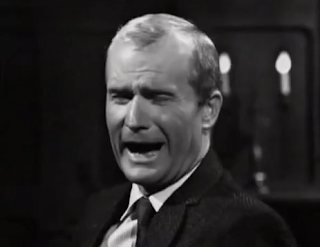
Roger is no happier at the idea of the meeting. Louis Edmonds’ performance ever so subtly hints at Roger’s reluctance to attend:

Roger contemplating unwelcome news
Screenshot by Dark Shadows Before I Die

Roger gives a speech to Vicki about how David is better off than he was at nine, since he already knows that the world is a horrible place. The speech is vague, rambling, and high-flown. That’s suitable for the occasion, since Vicki isn’t supposed to know what the hell he’s talking about, but Louis Edmonds struggles with it. In a future period such speeches will become a hallmark of the show. Malcolm Marmorstein is credited as the writer of 82 episodes in all, from 115 (broadcast 2 December 1966) to 309 (broadcast 31 August 1967,) and often as not speeches just like that crop up in them. Marmorstein’s flowery gibberish will defeat actor after actor, until Jonathan Frid joins the cast as Barnabas Collins. In Frid’s voice, the speeches sound so gorgeous you barely notice that they don’t make a lick of sense. After a while, Marmorstein stops giving them to other actors, and they become the way Barnabas talks. I wonder if Marmorstein did some uncredited work on this episode. Art Wallace, sole credited writer of episodes 1-40, is listed on screen again as the author of this teleplay, but at many points it sounds more like Marmorstein than it does like Wallace.

This one also has a key moment in one of the aspects of the show that most saddens me, the decline and fall of Vicki. In the drawing room, Roger is in a panic about Bill’s investigation. Vicki sees this and asks if the investigation has something to do with her quest to learn her origins. Roger laughs in her face. Of course it doesn’t have anything to do with that story-line- nothing happening on the show does. As long as she’s chained to that rotting corpse of a narrative element, Vicki is going to be of limited relevance.

Episode 45: Where Burke Devlin’s pen is

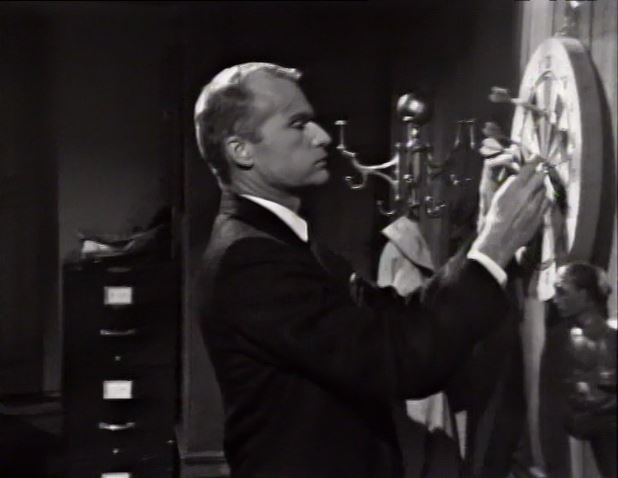
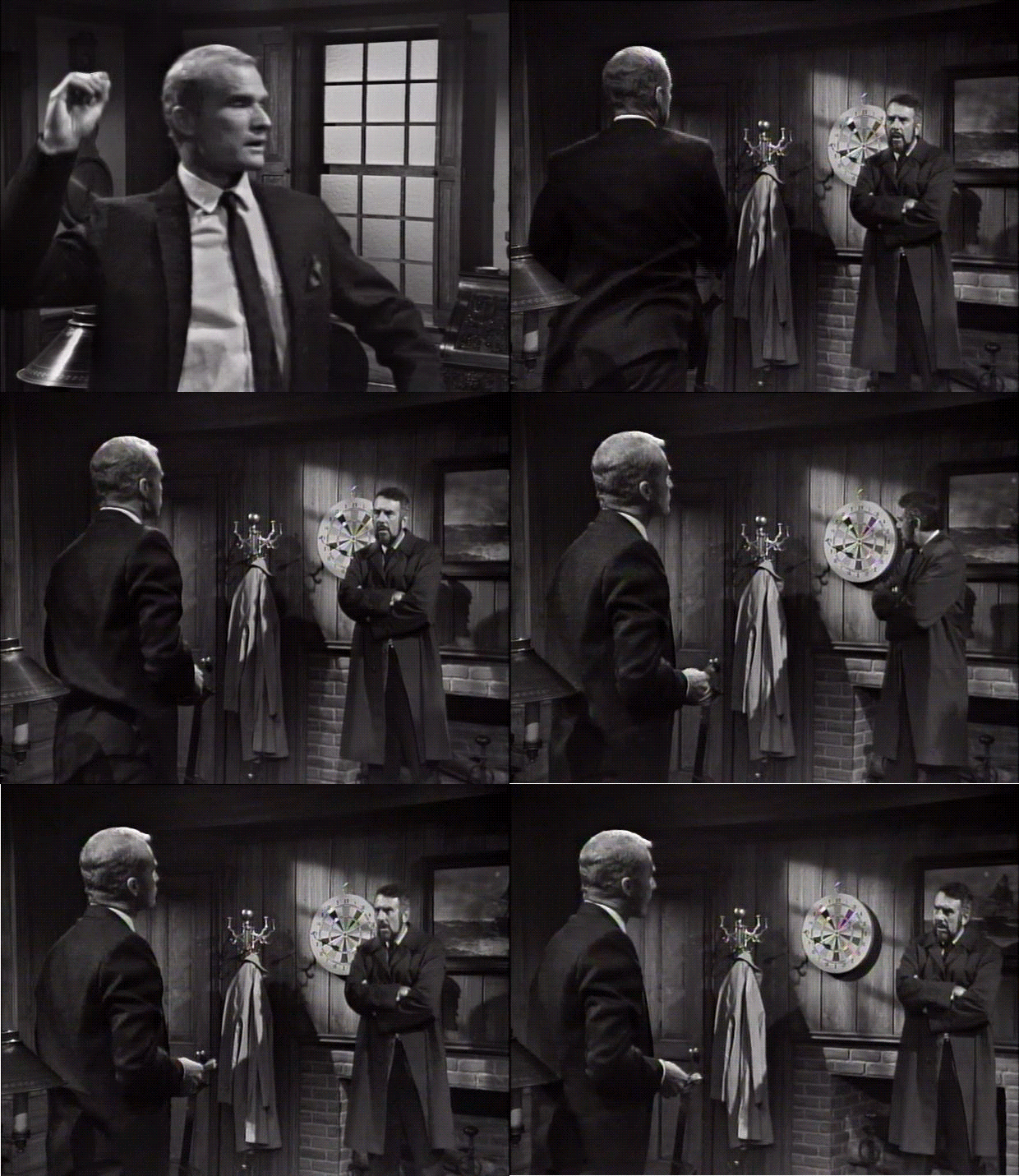
Roger is trying to keep his hands busy today. Our first look at his office focuses on his dart board, and he spends a great deal of time handling the darts.

Roger pulling the darts out of the dartboard on the wall in his office
Screenshot by Dark Shadows from the Beginning

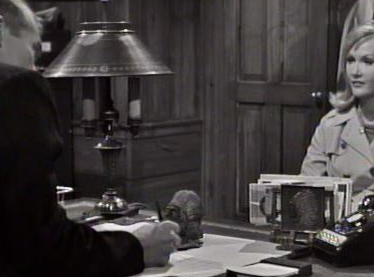
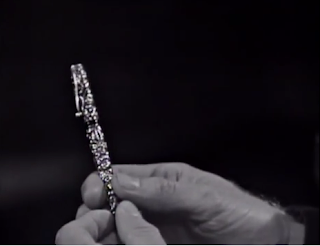
Carolyn stops in the office. Roger hugs her, calls her “Kitten,” and doodles with his pen while he and his niece flirt pretty daringly.

Roger and Carolyn flirting with each other while Roger plays with his pen
Screenshot by Dark Shadows from the Beginning

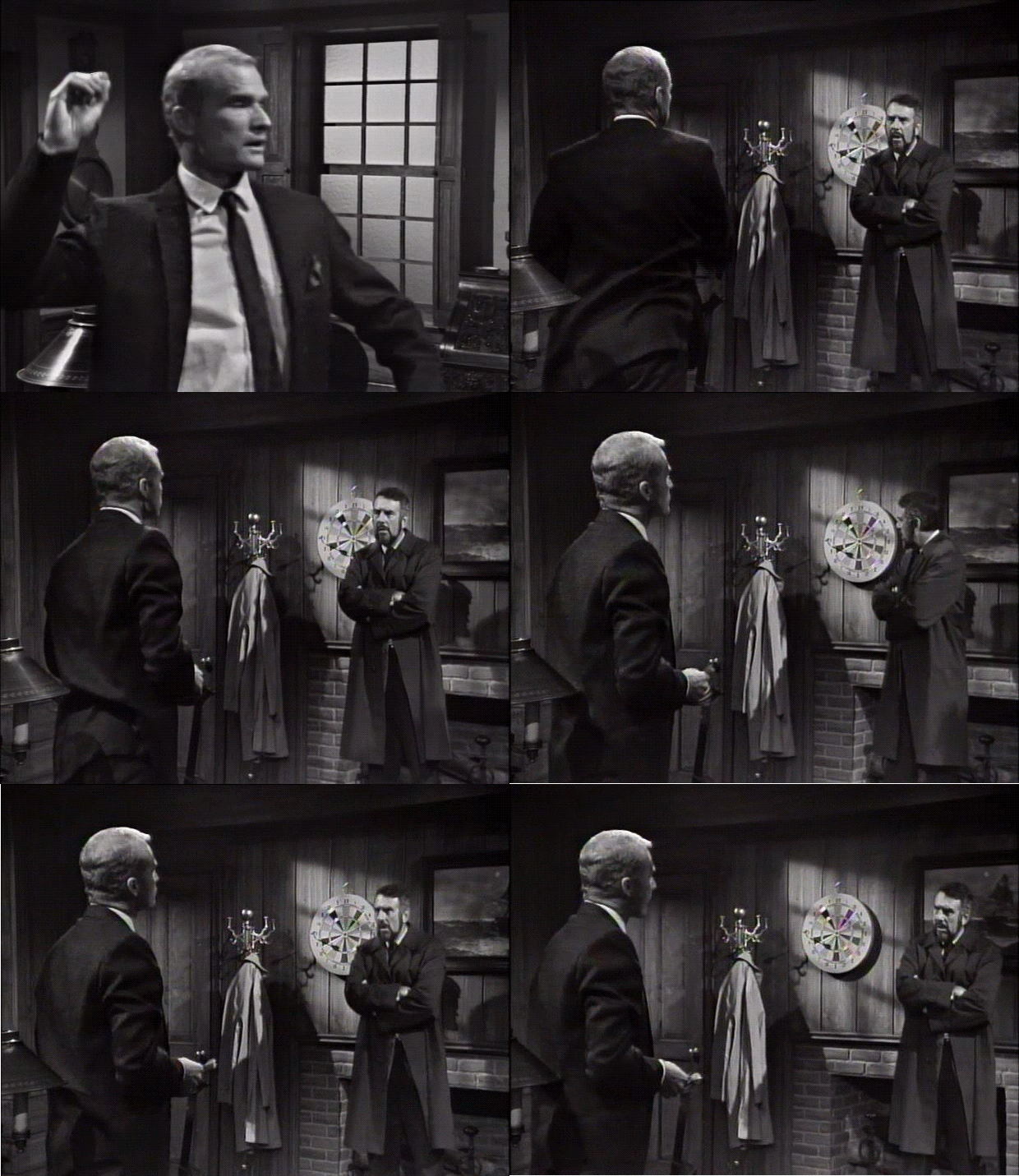
Bill, whom we just saw in the Blue Whale giving Burke a stern talking-to, comes to Roger’s office to continue his stern talking-to concert tour. He drives Carolyn away. Roger stops handling the pen playfully and handles the darts menacingly.

Roger throws a dart in Bill's direction
Screen capture by Dark Shadows from the Beginning

Later, Roger sees Carolyn at home. He finds out she had lunch with Burke and that Burke gave her his pen. He explodes at this and demands that she give up the pen. After a phone call from Bill (stern talking-to #3) and a commercial break, Roger simmers down. He apologizes and calls Carolyn “Kitten” again. She admits that she’s probably just hanging around Burke out of curiosity. She also tells Roger about the evidence that Burke is trying to put the family out of business. Roger takes this news calmly- after all, the Collinses’ cannery, fishing fleet, and other financial interests can hardly compare to the significance of who gets to touch Burke’s pen.

Roger's hands fondling Burke's pen
Screenshot by Dark Shadows Before I Die

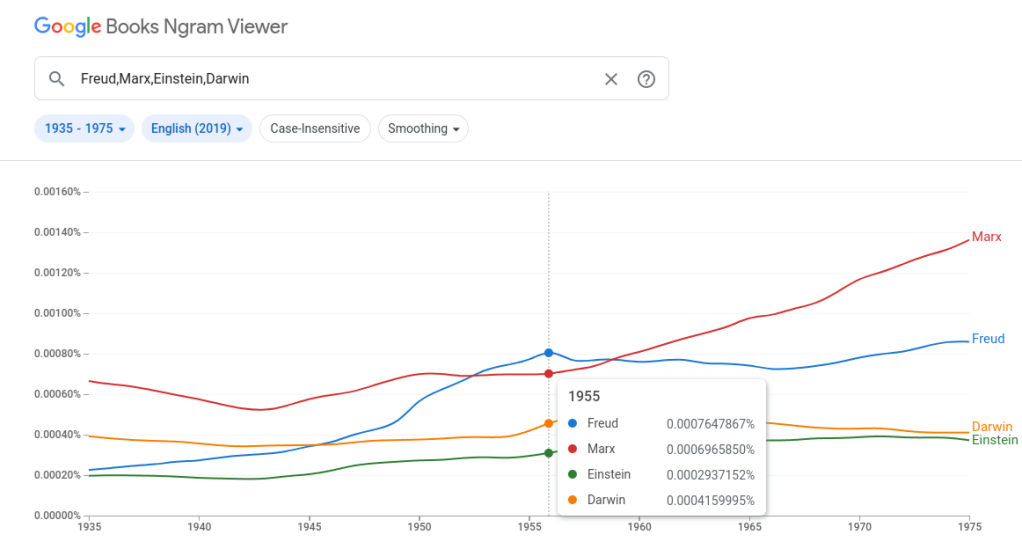
Roger’s obsession with where Burke Devlin’s pen is will become the show’s obsession for a couple of months. Anyone unsure whether there is some symbolic significance to this might have a look at the books, plays, and movies the makers of Dark Shadows and other intellectually ambitious New Yorkers were likely to be paying attention to in the summer of 1966. Maybe we can learn something about the ideas that were in the air if we look up the some famous thinkers on Google NGrams:

Google Ngram tracing the relative prominence of the names Marx, Freud, Darwin, and Einstein in English language books from 1935 to 1975

Looks like Marx was a biggie in those days- maybe Roger’s obsession with where Burke’s pen is illustrates the Marxist concept of commodity fetishism. That might also explain Roger’s relative disregard for the family’s capital holdings- he’s so caught up in the fantasy of value as something inherent in a physical object that he has lost sight of the actual source of his wealth.

Darwin was on people’s minds as well. Perhaps Roger’s fixation on Burke’s pen is the result of his genealogy- maybe the Collinses have been bred to their little niche for so many generations that they have emerged as a new species, one which does not have the same survival strategies as other humans and so does not share values and concepts which we would understand.

And there’s Einstein, also a popular preoccupation among people who aspired to advanced learning back then. One of Einstein’s most famous ideas was that time passes at different rates for different observers depending on how fast those observers are moving through space. There will be twenty or more episodes of Dark Shadows that focus largely or entirely on the question of where Burke’s pen is, and as we move through that narrative space there will be many occasions when it seems that time itself is about to grind to a halt. Could be that, I guess!

That leaves Freud. Hmm, looks like Dark Shadows was written and acted chiefly by people from Broadway, and that Freudianism was a major inspiration on Broadway in the 1950s, 60s, and 70s. I suppose we’ll have to figure out what Freud would have made of a fascination with where Burke’s pen is. Then maybe we’ll have some idea what’s really going on with Roger.

Episode 44: Casually, and in passing

Even the dullest, most routinely soap operatic episodes of Dark Shadows have a couple of moments when you can tell they were being made by people with artistic ambition. This one is a case in point. Bill brings Liz some unwelcome information. Look at the composition of the shot:

Screenshot by Dark Shadows From the Beginning

They hold it like that for about a minute, and Joan Bennett’s response to the closeup really shows you how she came to be the movie star she was in the 1940s. It really is great.

In the same sequence, Carolyn hears for the first time that her adored Uncle Roger is in trouble. They cut to her for just a fraction of a second, which makes her reaction all the more effective:

Screenshot by Dark Shadows From the Beginning

The last shot is also a fine bit of visual story-telling. After his attempt to get Liz to face facts, Bill returns to the Blue Whale, and takes a seat in an even danker part of the bar than he’d occupied previously.

Screenshot by Dark Shadows From the Beginning

There’s also a good moment when the banker is presenting his visit as routine and Liz, who in the episodes earlier this week had been shown time and again to be in a precarious financial state, combines a faultlessly well-composed smile with hands trembling so hard her teacup almost cracks against its saucer.

And that’s it. The story points are a lot of tedious stuff about people we’ve never seen and relationships that aren’t going anywhere. Most of the actors do their best, but even in that department there is one notable exception.

The banker is played by Patrick McVey, a veteran character actor who could usually be relied upon to turn in a solid performance. He does well enough with the lines he remembers, but he takes most of his dialogue straight off the TelePrompTer. Marc Masse counts 22 shots of McVey catching up on his reading. That takes you out of the show, so that you start noticing everything else that’s wrong. In particular, the banker at one point tells Liz that anyone who might buy up her outstanding notes could put her out of business in a moment, and that in fact someone has been looking into the price of those notes. She asks who, he says “I don’t remember his name.” Mrs Acilius and I laughed out loud at that, saying to the screen “Isn’t it printed on the TelePrompTer?” Obviously the script called for the banker to deliver that line, and maybe if McVey had known his part we could have overlooked the absurdity of it, but as it stands, it is the most memorable moment of the entire episode.

Episode 43: Do you think they’d tell me?

Bill goes to the restaurant and asks Maggie a bunch of questions about Sam. As he is getting ready to leave, Vicki comes in and Maggie asks her questions about Collinwood. When Vicki leaves, Sam comes in.

Joe goes to the Blue Whale and finds Bill day-drinking. As Joe is getting ready to leave, Sam comes in and he and Bill have a conversation about what Sam told Bill when he was about to pass out drunk. Joe then goes to Collinwood and talks to Vicki about Carolyn.

Vicki’s scenes are, strictly speaking, filler. Alexandra Moltke Isles seems to have known that her character was stuck in a dead end. She plays Vicki very brightly, with maximum excitement, as if she doesn’t get out much and is thrilled that people are paying attention to her. When Joe leaves, she stands in the foyer staring off into space, looking hopeless:

On the one hand, that’s a sign of bad things to come for Vicki. Her great story-line, her winning David’s friendship, is still to come, but once that is complete her character will go completely to waste.

On the other hand, Mrs Isles’ performance in this episode is the first example of a resource they will draw on to introduce all sorts of alarming characters into the cast. That resource is the keen loneliness of the residents of Collinwood. Several times people will turn up whom the Collinses ought by all rights to throw out on the street immediately, most notably a certain cousin from England who will present himself at the house next spring. But they are isolated in their big dark house, battered by hostility, stung by betrayal, and desperate to find someone they can trust.

Episode 42: The anticipation of doing it

In these early months of the show, the Collinses are in danger of running out of money and losing their position. In yesterday’s episode, we learned that Roger blew his half of the inheritance and Liz drew heavily on hers to keep the business in the family; in this one, we learn that the house is a moldering ruin and the rest of the family’s assets are leveraged to the hilt. Burke plans to take his revenge in part by buying up their debts and making himself their master, which it appears he is in a position to do.

Burke and his investigator are at a table in a restaurant in Bangor when they discuss these matters. Carolyn has followed Burke to the restaurant. Burke spots her, invites her to his table, and sends the investigator away. Burke flirts with Carolyn as he makes sure she didn’t overhear any important information. He makes a show of his elaborately filigreed pen. When she admires it, he makes a gift of it to her.

The last time Carolyn made her way to Burke’s luncheon table, she played with her ring, called his attention to it, and left it behind as a deliberate stratagem to prompt him to call her. She seemed altogether unconcerned with the fact that the ring was a gift from Burke’s sworn enemy, her Uncle Roger, even after Burke indicated that he found it significant; and went ahead to keep an appointment to get the ring back from Burke even after Burke had given it to Roger and Roger had returned it to her. This strange obliviousness in all things having to do with Roger recalls the equally strange blitheness with which Carolyn told Vicki about her crush on her Uncle Roger when they first met “he sends me, he really does!”)

This time the object that passes from one to the other is another distinctive bit of metal associated with some important relationships. Burke tells Carolyn how few pens there are like it in the world, that he had them made to distinguish their bearers as key people in his life. When he makes the pen a gift to Carolyn, he implies that what he is giving her is not just a thing, but a new connection between them.

I made some remarks about these scenes in a comment on John and Christine Scoleri’s Dark Shadows Before I Die:

Carolyn comes to Burke’s table at one restaurant and leaves a special ring with him; she comes to his table at another restaurant and he gives a special pen to her. Even if the mid-60s weren’t the Age of Freud among intellectually ambitious people in the USA, the flirty tone of the two encounters would make it difficult not to see these tokens as body part symbols.

…As for the pen, it is going to become a more and more unmistakable phallic symbol over the next several weeks, leading us to wonder what the show is trying to tell us about the relationship between Burke and Roger and what was really going on between them before that accident ten years ago.

There’s also a scene between Sam and Liz. Yesterday’s episode ended with a big cliffhanger when Liz opened the doors and saw Sam waiting outside, suggesting that he is going to unburden himself of the secret he and Roger share. In true soap opera fashion, once the cliffhanger has brought the audience back to watch the next episode it has served its purpose. It is then to be got out of the way as quickly and anticlimactically as possible.

Today’s anticlimax sheds an unexpected light on Sam’s position. Sam’s extreme reluctance to tell his secret grew out of his assumption that whenever and wherever he started talking, he would find a hyper-attentive audience who would listen to his his every word and lose no time putting them into far-reaching and disastrous action. What he actually meets in Liz is personal dislike for him and impatience with anything he might want to say. Once Sam starts to talk about Roger, she assumes he has come to blackmail her with some sordid information about her no-good brother, and she makes it clear she will not be having it. Joe comes to the house, Liz mentions Bill, and Sam crumbles, his secret untold and unwanted. If the audience is expecting Sam to murdered, this result will add an extra touch of bathos to his plight- a man carrying a secret that spells his doom, but that does not attract the attention of a suitable listener.

Ray Stewart, later to gain a place in history as part of the gay couple on Barney Miller, appears in this episode as a featured extra. He’s the head-waiter in the restaurant in Bangor. Both the Dark Shadows wiki and his imdb page list his role as “Customer,” but here you see him telling the server which table to go to first:

Screenshot by Dark Shadows from the Beginning

And here you see him greeting Carolyn when she arrives at the restaurant:

Screenshot by Dark Shadows from the Beginning

Ray Stewart is still alive, maybe he should complain about his role being mislabeled. In all seriousness, I’d like to see him and other onetime background players on one of those panel discussions they used to have at Dark Shadows cons and now have on Zoom. I’d like to know what it was like being an extra on the show. And of course some of them went on to become big names.

Episode 41: Working day

Three people expressed surprise in episode 40 that Roger Collins wasn’t at his office. He still isn’t there today, and three more people are surprised. He finally decides to go in when Liz presents him with the alternative of looking for Carolyn.

Bill Malloy isn’t at work either, hasn’t been all day. He and Roger have been taking turns inviting themselves into Sam Evans’ house. Sam is also not working, and in fact takes time out of his busy schedule of downing one glass of whiskey after another to destroy the only thing we’ve seen him make as part of a paying job, a sketch of Burke. Maggie pieces the sketch back together- she’s also at home when she’s supposed to be working.

Telephones are unusually dynamic in this episode. Typically we see only one end of a phone call on Dark Shadows. This time, we cut back and forth between both ends of three telephone conversations this time. In the teaser Roger is browbeating Sam; Sam sets the phone down and walks off. While he gets another drink, the receiver is in the foreground and we hear Roger’s voice at the same volume as we did when Sam was listening. Sam comes back, returns the receiver to its cradle, and goes to sit down while it rings.

The bit when we see the phone and hear Roger’s voice, though Sam isn’t looking at the phone and can’t hear it, establishes the telephone as a character with its own relationship to the audience, independent of anyone who may or may not be paying attention to it. It’s a neat moment:

Screenshot by Dark Shadows Before I Die

Liz calls the office and talks to Joe. Joe tells her Bill hasn’t been in all day. The stress in his voice, the papers piled on his desk, and the tight grip he has on the telephone receiver all make it credible that he’s the only person in town who showed up for work today:

Screenshot by Dark Shadows Before I Die

Liz mainly wants to talk to Joe about Carolyn. Joe tells her he hasn’t talked to Carolyn in some time, and that he has no idea what if anything she is thinking about their relationship. While he breaks this news to Liz, we see him continue working, then cut back to the look of distress on Liz’ face.

Maggie calls Collinwood. Vicki answers and is excited to talk to Maggie. I guess the show is telling us they’re friends now. Maggie asks to talk to Roger. Vicki says Roger is probably in the office at this time of day, Maggie somehow knows he isn’t, Vicki remarks that he isn’t in the habit of confiding in her. Roger overhears this and asks “Is there any reason why I should confide in you?” When Vicki holds the receiver out to him and says Maggie Evans is on the line, he takes it and hangs up without so much as putting the receiver to his ear. Vicki and Roger then have one of their little quarrels.

That’s the only thing Vicki does in the episode. Her character is heading into a danger zone. Through the first eight weeks, she was on all the time. She was our representative, the outsider who knew nothing about the other characters or the town they live in, and to whom everything had to be explained. Now she knows as much about the rest of the characters as they know about each other, and we know as much as we want to learn by hearing explanations.

The major characters all have their secrets, but the only two who know each other’s secret are Roger and Sam. Vicki isn’t any likelier than anyone else to uncover that one. She has no secrets of her own, and her original story-line- her quest to discover her origins- is dead in the water. What’s more, Vicki is no good at lying. Soap operas are mostly conversation, and the big events on them are lies and the exposure of lies. The only time Vicki has tried to lie to anyone- in episode 13, when she told Matthew that Liz knew she was in his cottage- she was immediately found out, with disastrous consequences. If she’s going to stay relevant to the show, something is going to have to change, and fast. It’s fun to watch Alexandra Moltke Isles bicker with Louis Edmonds, but the characters they play need something meatier to bicker about.

This is the first episode credited to writer Francis Swann, indeed the first episode credited to anyone other than Art Wallace. Swann’s teleplay finds humor in the idea that so many people have taken the day off. Each time another character remarks on a case of absenteeism it gets that much closer to raising a chuckle. And Roger’s line that looking for Carolyn would require him to “neglect my vital tasks at the office… Dear me, no” is genuinely funny, especially as Louis Edmonds delivers it. The telephone scenes are also an innovation, and promise a new source of visual activity. Those favorable omens are offset by Vicki’s scene and its suggestion that her character is about to be allowed to wither on the vine.

A couple of the blogs I read when I prepare my comments made remarks about this episode with which I disagree. John Scoleri of Dark Shadows Before I Die says this of the quarrel between Sam and Maggie:

I know Sam gets frustrated with Maggie, but I’m beginning to wonder about their relationship. If he’s that close to hitting Maggie when he gets drunk, there’s no way I’m believing he hasn’t done that before.

To which I replied:

It doesn’t look to me like Sam has hit Maggie. She’s inches from his face when he is at his angriest, yet she doesn’t flinch, doesn’t slump down, doesn’t show any sign of withdrawal or fear or anger or panic or sullenness or bewilderment or any other possible response to physical abuse.

Patrick McCray said this:

There hasn’t been much happening on DARK SHADOWS in the last few weeks, but that doesn’t mean the show hasn’t been moving forward. There’s been a growing sense of doom throughout the show, and it’s obvious that someone is going to die. In this episode Sam rips up his portrait sketch of Burke Devlin, he and Roger lob threats at each other, Liz begins to draw Joe’s attention to his girlfriend’s romantic intentions on the family rival, and Victoria has been pushed around by just about everyone in the cast. In theory, any one of them is eligible for a ride in the bone wagon, but the show has been implying that Devlin is headed for a fall. It’s interesting that the show decides to go in another direction: I don’t know when Bill Malloy checks in at Eagle Hill Cemetery, but it’s probably sooner rather than later.

While it is true that “in theory, any one of them is eligible for a ride in the bone wagon,” I do think there’s a clear front-runner to be the first Dark Shadows character to be killed. It’s Sam who is obsessed with the fear of death, Sam whom Roger has threatened, Sam who left a mysterious sealed envelope to be opened in the event “something happens.” And, from an out-of-universe perspective, it’s Sam who has a daughter played by an appealing actress who needs a story-line. Maggie seeking revenge for the killing of her father would be just the plot to elevate Kathryn Leigh Scott from the bottom of the second string to the starting lineup where she so obviously belongs.

No other character has anyone so well-positioned to play avenger if they’re killed. The only keen attachment Bill Malloy has shown is his devotion to Liz, and in her scene with Matthew in episode 38 Liz demonstrated that she sees devotion from people outside the family as a tool to use when time comes to protect the good name of those inside it. So if she suspects Roger killed Bill, she won’t become Bill’s avenger- if she could order Matthew to throw away his own good name to cover up the truth about David, we can hardly expect her to expose Roger to redress Bill’s grievance against him. Indeed, when Bill is murdered, they will introduce an entirely new character to seek revenge for him.

Vicki is an orphan, who tells us in today’s opening narration that before she arrived at Collinwood she had never known a home. No one is likely to avenge her, and besides, she still does the opening narration for every episode- she’s supposed to be important, even if the writers can’t quite figure out what to do with her. Burke is supposed to be rich and powerful. Presumably he has friends, but we haven’t seen any of them. Joe is Mr Nice Guy and he’s mentioned a friend or two, but again, we haven’t seen them. The series story bible calls for Roger to die when Burke finally gets his revenge, but every time Louis Edmonds’ performance is the most interesting thing in an episode it becomes so much the less likely that they will ever get around to playing that scene. So the smart money, at this point, would be on Sam to be the victim in the first Dark Shadows murder. So much so, indeed, that it might not be surprising enough if it does happen- they may think they have to kill someone else to keep the audience engaged.

Episode 40: Their shrieks and their moanings

In the teaser, Bill asks Sam for a cup of coffee. When Sam brings it, the music abruptly stops, to start again when the cup is in Bill’s hands. Apparently the hand-off was an occasion that called for a respectful silence.

Bill proves to be quite an effective action hero. He spends one lunch hour plying Sam with Sam’s own liquor, and Sam tells him that Roger has demanded he leave town and has threatened to kill him, because he has information that could send Roger to prison. That’s more than Burke and his private detectives have managed to dig up in years of snooping.

Roger wanders from the Evans cottage to the restaurant to Collinwood, in each place to be told that it’s the middle of a working day. By the third time this happens, it’s worth a chuckle.

Roger encounters Burke and brings Carolyn’s ring back from him. This thwarts Carolyn’s plan to get a date with Burke by deliberately leaving it behind. She goes to see him anyway. He tells her that shenanigans with rings were a cliche in comedies written long before they were born. At that line, the theater types involved in making Dark Shadows would probably think back to examples reaching back to Shakespeare and beyond, all the way to Plautus and the ancient Greeks.

Burke refuses to take Carolyn to an appointment he has in the city of Bangor. I was going to write “He refuses to take her to Bangor,” but that’s almost as venerable a comic cliche as are hijinks with rings.

Episode 39: Questions don’t mean a thing

Yesterday’s episode was a relaunch of the series, with a new actor (a new kind of actor, in fact) as Matthew Morgan, an exposition of the Revenge of Burke Devlin story so straightforward as to include a bibliography of its origins, an emphatic closing of the Who Failed to Kill Roger? story, and a checklist of the other narrative threads in progress. The relaunch continues today, with an established character re-introduced as a potential action hero.

That character is Bill Malloy (Frank Schofield.) Bill is first seen with Liz in her sanctum, the drawing room at Collinwood. She is approving his plan to dramatically improve the capital plant of the cannery without laying off any employees. He tells her about Burke’s investigations of the family’s debts. Regular viewers know that this investigation was a deep secret, and that only a capable businessman could have learned what Bill knows about it. The scene itself makes it clear that it is difficult to get Liz to face facts about the threat Burke poses, and that Bill is equal to that challenge.

Roger is at the Evans cottage, demanding Sam back out of painting Burke’s portrait, hiding in the bathroom and listening at the door when Burke comes and poses, emerging to threaten him after Burke leaves. Sam is helpless to get rid of Roger, Roger is helpless to control Burke, Burke is helpless to get Sam to start talking. Burke leaves the cottage to meet Bill at the restaurant.

The restaurant is in the Collinsport Inn, Burke’s home base. So far Burke has maintained the upper hand in most encounters there. Even when Matthew came to the restaurant yesterday and informed Burke that he might kill him, Burke kept his wits about him. But when Bill and Burke sit down together, Bill drives the conversation from beginning to end. Bill asks Burke to leave town, and declares his opposition to whatever plan he may have to harm Liz, Carolyn, or David. In return for Burke’s backing off, Bill offers to help him clear his name, presumably at Roger’s expense. Thus Bill breathes new life into the Revenge of Burke Devlin story- no longer is it a static confrontation between dashing but stymied Burke and charismatic but despicable Roger. Now the action is coming from a third, independent, corner.

Back in the Evans cottage, Sam and Roger are reprising their mutual helplessness, when Bill walks through the open door. Roger has just been yammering on at length about the information he doesn’t want Sam to give Burke. As the credits start to roll, we are wondering how long Bill was standing there and whether he has already learned everything Burke has spent all this time trying to uncover and Roger to hide.

Image captured by Marc Masse