Episode 148: A sane and adult level

Writer Ron Sproat stayed with Dark Shadows too long, and fans of Danny Horn’s great blog Dark Shadows Every Day will have fond memories of his frequent denunciations of Sproat. It is true Sproat had many glaring weaknesses. For example, he was pretty bad at inventing stories to tell, which you might think would get in the way of building a career as a fiction writer. But one strength Sproat undoubtedly had was a sense of structure. There might not be anything happening in one of his episodes, but you can count on him to make it clear why it isn’t happening, where it isn’t happening, to whom it isn’t happening, and who isn’t making it happen. Today there are some events, and between Sproat’s script and the work of the actors, it is plain to see what purpose each of those events serves in keeping the story on track.

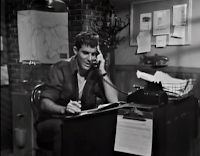
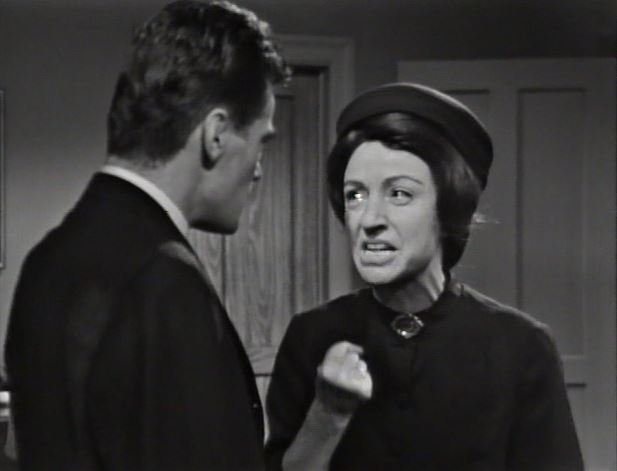
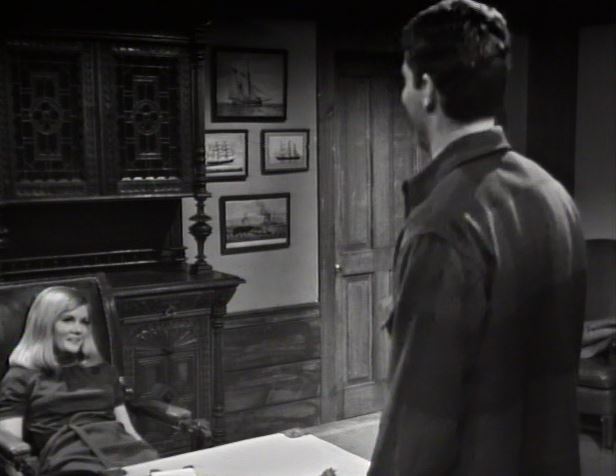
As the episode opens, Lieutenant Dan Riley of the Maine State Police is visiting instantly forgettable young lawyer Frank Garner in an office. Regular viewers will be confused; we’ve seen this set several times, with exactly these decorations, as high-born ne’er-do-well Roger Collins’ office at the headquarters of Collins Enterprises. We haven’t seen the set since #69, and Roger wasn’t there at that time. So apparently Frank has moved in.

Frank hasn’t even moved the portrait of the Mustache Man from the spot where Roger had it when he was in the office. Screenshot by Dark Shadows Before I Die

Lieutenant Riley wants to pass along to Frank the information that the Phoenix, Arizona police have given him about a fire in Laura Collins’ apartment in that city. Laura is Roger’s estranged wife, and Frank is representing Roger in their upcoming divorce. It isn’t clear why Riley wants to tell Roger’s lawyer what he has heard about Laura. Later in the episode, Frank will tell well-meaning governess Vicki that Riley came to him because he is a “lawyer for the Collins family.” Perhaps that means he believed that Frank represented Laura. Throughout their conversation, Frank repeatedly protests that no one has any grounds for accusing Laura of anything, encouraging Riley in such a belief. I suppose it’s a lawyer’s job to collect damaging information about the opposition, but Frank does seem to be pushing an ethical boundary here.

The charred body of a woman was found in what was left of Laura’s apartment. Since the woman appeared to be the same age, height, and build as Laura, the room was locked from the inside, and everyone associated with the building other than Laura was accounted for, the body was initially identified as hers. Riley now tells us that the police have determined that the fire started in Laura’s apartment, and that a witness claims to have seen Laura in the building the day of the fire.

Laura checked into the Collinsport Inn the day of the fire and has been in and around town ever since, as many witnesses can testify. Riley says that there is no indication that Laura has been on an airplane recently, and it would seem impossible to travel from Phoenix, Arizona to central Maine in a few hours any other way.

The lieutenant goes on to say that because the room was locked from the inside and the woman who died in the fire made no attempt to escape, the police suspect murder. This is nonsense. An attempt to escape might have been evidence of murder, not the lack of such an attempt. And if the room was locked from the inside, how did the murderer get out?

Frank doesn’t raise these objections, but just blusters through a lot of verbiage as he protests against any suggestion that Laura should be suspected of murder. The lieutenant keeps pointing out that Arizona isn’t his jurisdiction, so he doesn’t have anything to do with it. He’s just a messenger.

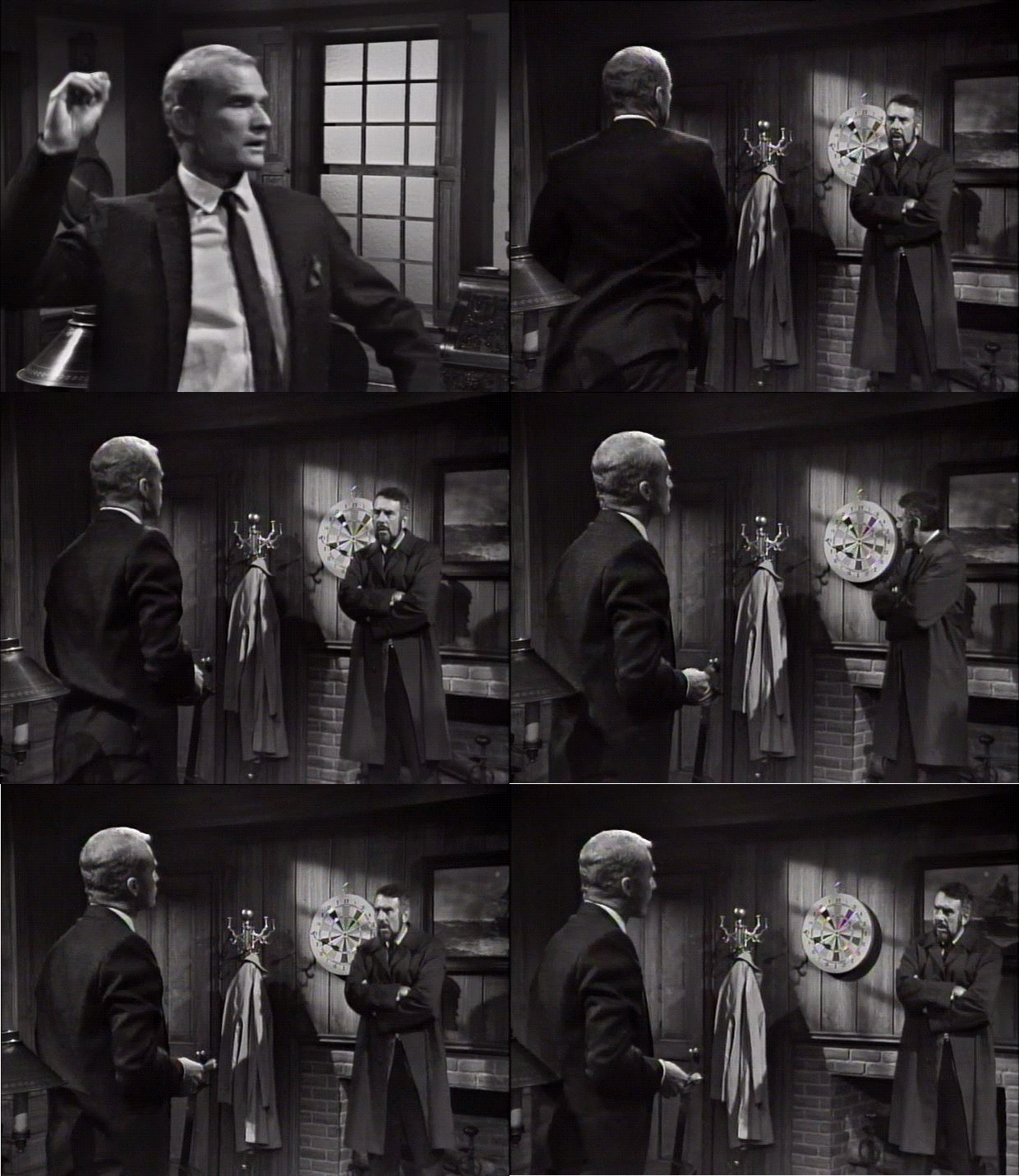
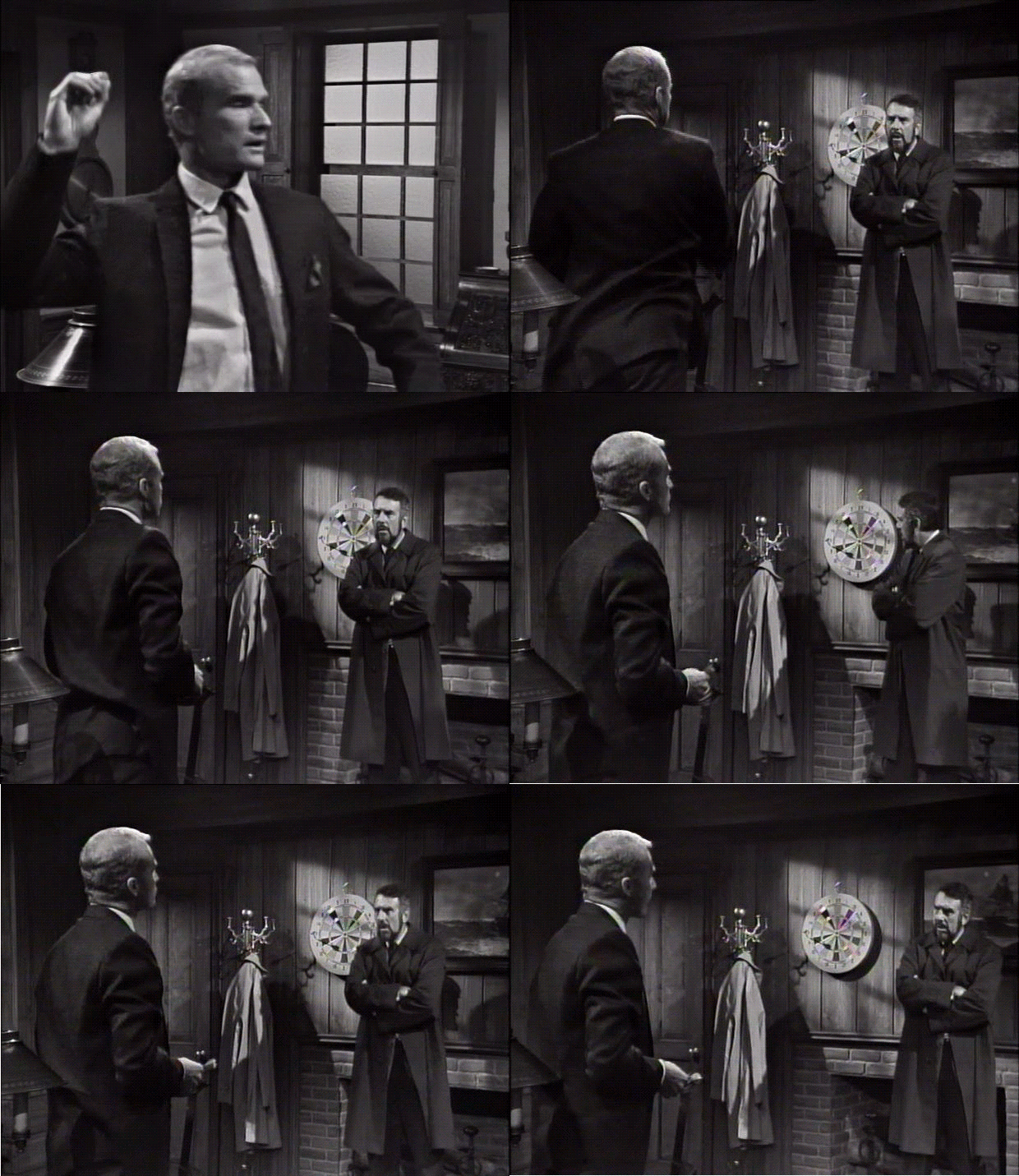
Some scholar of acting really ought to make a frame-by-frame study of Conard Fowkes portrayal of Frank in this scene. He has plenty of dialogue, he’s challenging statements made by a policeman, he raises his voice, makes gestures, moves around the room, looks down moodily and up excitedly. Yet he is still so bland that it is difficult to remember a word he says. It is far beyond my understanding of the actor’s craft to explain how Fowkes manages to be so consistently dull no matter what the character is doing.

When Frank is a small part of an episode, I think of his blandness as a note of pure realism. He is just the sort of person you would expect to meet in a small-town law office in 1967, and indeed it is reassuring to think that someone who has obviously never thought of putting himself in the spotlight would handle your sensitive legal affairs. The last person anyone should want as a lawyer is some guy who habitually makes himself interesting to watch on television.

Today, Frank is the leading man of the first half of the episode, and comes back with a key part in the second half. Giving that much time to a performer with such a bland screen presence does serve a purpose. None of the characters has really committed to the notion that they have to worry about crimes and physical danger, much less that they are facing a challenge from the realm of the supernatural. As far as they know, the whole story today is about a couple of romances and a child custody matter. That’s the right speed for dull, amiable Frank Garner.

That the characters don’t yet know the true dimensions of what they are facing in the storyline is one of the points this scene has to make. The other is that we will be hearing more about the investigation in Phoenix, and that it will advance the plot.

I think an acting problem muddies this second point. Today Vince O’Brien takes over the part of Lieutenant Dan Riley from John Connell, who played him in #143 and #144. As Connell played him, Riley was an out-of-town cop, not the least bit awed by the Collinses of Collinsport. His matter-of-fact speaking and impatient listening made it clear that the family’s connection to the case in Phoenix was not going to result in the discreet, abbreviated treatment that the local authorities have given them. But O’Brien’s version of the character is noticeably quick to agree when Frank makes a statement. When Frank does a TV lawyer “may I remind you” about the elements of a murder charge (elements which he gets wrong, but hey, it’s TV, not law school,) O’Brien’s Riley is agitated. He shows defiance by declaring “You don’t have to remind me” in a harrumphing voice, but his wide eyes and trembling legs show that he is intimidated to be in a discussion with the representative of the mighty Collinses. There’s no point in bringing in an out-of-town character if that’s what you’re going for- the residents of Collinsport can show you what it’s like to live under the thumb of the people in the big house on the hill. And it introduces a doubt as to whether anything will come of the investigation, a doubt which leaves us wondering why we just spent so much time watching these two guys talk to each other.

Meanwhile, Vicki is visiting dashing action hero Burke Devlin in his hotel suite. Burke has asked her to come. Yesterday, she told him that she was suspicious there was something sinister about Laura, and he had listened attentively. Later, he met with Laura and the love he once felt for her had flared back into life. So today, he wants to tell Vicki that Laura is A-OK and she should do everything she can to help her.

Like the scene with Frank and Lieutenant Riley in Roger’s office, this scene has two points to make. First is to establish Vicki as a credible protagonist for the rest of the storyline about the danger Laura presents to her son, strange and troubled boy David. Second is to show that Burke is so smitten with Laura that he won’t be much help in protecting David.

Burke guides Vicki into his kitchen, a cozy space where people can confide in each other. Last time they were in this space, she made coffee for him; this time, he makes coffee for her. He’s remarkably dainty about it, sifting cream and sugar in separate cups. He makes a pitch about how remarkable Laura is, how he’s rethought everything they said yesterday, and how a fine woman like her deserves Vicki’s trust and support.

Burke making coffee for Vicki. Screenshot by Dark Shadows Before I Die

Vicki is unimpressed. She was in the room when Laura telephoned Burke yesterday, and heard him agree to meet her at one of their old places. She presses him to explain what has changed his mind, and he won’t give a clear answer. She asks how well he really knows Laura, and he looks dreamily off into space and says that he knows her better than anyone else. She asks if his feelings for Laura might be clouding his judgment, and he demands she change the subject. When Burke urges her to persuade David to grow closer to his mother Laura, Vicki replies “I’ll do what I can for David.” Burke says “You’re hedging.” Vicki replies coolly, “I can’t help it.” When he repeats his urging, he tells her she doesn’t look convinced. She replies, “I can’t help how I look, either.”

Vicki’s strength and intelligence and Burke’s dreamy infatuation should impress anyone watching this scene, but especially viewers who just saw yesterday’s episode. When Vicki is asking Burke what happened between yesterday and today to change his mind, she is waiting for him to talk about the meeting he arranged with Laura while she was right next to him. He never mentions it, and his repeated statements that all he has done is think more deeply implies that he does not remember that Vicki heard him talking to Laura. He is so captivated with Laura that the sound of her voice erases his awareness of everyone else, even of someone he is trying hard to persuade of an important idea.

Shortly after Vicki leaves, Burke receives another visitor from the great house of Collinwood. Flighty heiress Carolyn shows up. Carolyn is pouting because Burke hasn’t been paying attention to her since her Aunt Laura showed up.

This scene has one major point to make, which is that the budding Burke/ Carolyn romance is not going to be blooming this winter. Nancy Barrett’s Carolyn bursts off the screen as she bounces from one extreme to another, trying to attract Burke by pushing her breasts at him, trying to anger him by suggesting that her mother Liz and her Uncle Roger were right when they said he was just using her to get at them, trying to embarrass him by bringing up the obstacles between him and Laura, trying to break through his reserve by flinging her arms around his neck and pleading with him to love her.

Carolyn flings herself at Burke. Screenshot by Dark Shadows Before I Die

Burke tries to let Carolyn down easy, smiling at her, caressing her face, hugging her, kissing her on the forehead. But signs of boredom and irritation keep slipping out. He tells her that the time has come for them not to see each other any more, and there can be no doubt he means it.

Burke, bored with Carolyn

Vicki goes to visit Frank. Frank blabs everything to her that the lieutenant had told him.
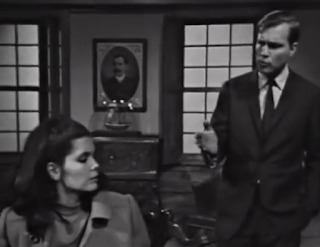
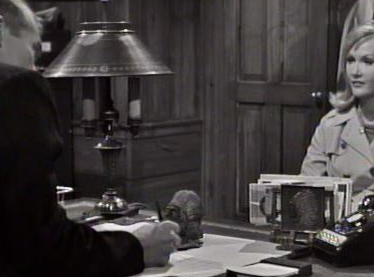
Vicki and Frank in Roger’s office. Screenshot by Dark Shadows Before I Die.

Vicki is deeply concerned about the idea that Laura might be a murderer. Frank keeps telling her that there’s probably nothing to that idea, but Vicki resolves at the end of the episode to do whatever she can to keep Laura away from David. Having established Vicki as a character strong enough and smart enough to square off with Laura in her previous scene, this scene shows us her decision to do just that.
Episode 69: I believe in signs and omens

Mrs Sarah Johnson, longtime housekeeper to the late Bill Malloy, shows up in the hotel room of dashing action hero Burke Devlin. She tells Burke that she believes his enemy, high-born ne’er-do-well Roger Collins, killed Bill. Her principal evidence for this is the fact that Bill’s body washed ashore near Roger’s home on the estate of Collinwood, and “I believe in signs and omens!”

Mrs Johnson believing in signs and omens. Screenshot by Dark Shadows from the Beginning

This line is a bit of an omen itself- Clarice Blackburn will be an important part of the show, not only as Mrs Johnson, but as other characters who believe in signs and omens, and who make things happen in the name of that belief.

Meanwhile, hardworking young fisherman turned hardworking young clerk Joe Haskell is called into Roger’s office at the cannery. There, he finds flighty heiress Carolyn behind her uncle’s desk, looking seductive, or at least highly available.

Carolyn coming on to Joe. Screenshot by Dark Shadows from the Beginning

Nancy Barrett’s way of throwing herself completely into whatever her character is supposed to be doing at any given moment sometimes makes Carolyn seem even more scattered than her persona as Flighty Heiress required, but it does come in handy when the character is supposed to be sexy. That makes her stand out- even by the standards of an American television show of the 1960s, Dark Shadows is remarkably un-sultry. Sometimes it’s a marvel that they can put so many good-looking young people in close proximity to each other and still project an image of total chastity.

Joe and Carolyn kiss, and she asks him to go away with her. He tells her that he can’t just leave work in the middle of the day. She explains that she is troubled by the doings of Joe’s bête noire, Burke. This leads to a lively conversation, which in turn leads Carolyn to resume her attempts to persuade Joe to take the rest of the day off. When Joe’s boss calls for him, she offers to use her clout as the owner’s daughter to persuade him to let Joe go. He won’t let her do this. She leaves, frustrated by his refusal.

Back at the hotel, Burke and Mrs Johnson are devising a plan in which she will get a job at Collinwood and act as a secret agent for him. We get a glimpse of Burke’s persuasive abilities. When Mrs Johnson is showing reluctance to follow his plan, Burke mentions that well-meaning governess Vicki has given Roger an alibi. She immediately declares that Vicki is lying. Burke won’t agree, leading her to demand that he set aside his personal feelings and devote himself wholeheartedly to making the case against Roger. Not only does the audience see Burke showing kindly feelings towards Vicki, keeping the idea alive that they might become a couple, but we also see Mrs Johnson commit herself to going along with Burke’s plan. Whatever Burke’s actual feelings for Vicki, his emotional display at this moment is timed to lock Mrs Johnson into doing what he wants.

There is a knock on the door. It’s Carolyn. Mrs Johnson hides in Burke’s kitchen and listens as he gives Carolyn the idea of hiring her as housekeeper at Collinwood. This isn’t very hard- Burke simply mentions that Mrs Johnson needs a job, and Carolyn at once says that she will tell her mother to hire her as housekeeper at Collinwood. Even so, Burke’s skillful handling of Mrs Johnson is so fresh in our minds that we don’t need to see him actually do anything to enlist Carolyn in his scheme for this scene to reinforce his image as master manipulator.

Mrs Johnson listens in. Screenshot by Dark Shadows from the Beginning

The sight of Mrs Johnson lurking in the shadows, eavesdropping on Burke and Carolyn, further reinforces this image. A guileless woman comes into his room proclaiming her every thought at the top of her lungs, as she had done when she was introduced at the sheriff’s office in episode 67. We can hardly imagine so straightforward a personality becoming an effective undercover operative Yet within minutes of meeting Burke, he has her working as a spy.

Writer Francis Swann is credited with the script for today’s episode. He is particularly good with installments that, like this one, have only four characters. Swann’s ability to slip substantial amounts of plot exposition into natural-sounding dialogue makes a minimalist drama seem busy. In this one, it also helps us to feel that we have seen Burke perform great feats of persuasion. Burke may not have had to work very hard to plant ideas in the minds of Carolyn and Mrs Johnson, but we are aware that the scripted dialogue has planted ideas in our minds, and know that someone on the other side of the screen is good at subtle communication.

Swann and director Lela Swift also make effective use of the sets in today’s episode. This is our first look at the kitchen in Burke’s room. He’s gone in and out of there several times, most notably in episode 29 when he prepared a nonalcoholic mixed drink, the “Burke Devlin Special,” for Roger’s son, problem child David. Regular viewers might have started to wonder what it might look like, and might pay close attention when we get our first look at it. What we do see is a complex pattern of shadows that signals Mrs Johnson’s initiation into the world of film noir.

In today’s scenes with Carolyn and Joe, we spend as much time in Roger’s office as we have in any other episode. It’s the only part of the Collins’ business location we see, standing in for the whole enterprise. Played on that set, Carolyn’s flippant attitude towards Joe’s job and his mixed feelings about the demands she makes lead us to wonder if she’s going to wreck the whole business. Her persistent friendliness towards family nemesis Burke gives substance to that thought. Regular viewers will remember that Roger’s self-indulgent behavior nearly annihilated the business; seeing his favorite niece play-act as him in his office leads us to wonder if she will finish the job.

Episode 54: A proper charge

At the end of yesterday’s episode, dour caretaker Matthew admitted to reclusive matriarch Liz that he had found a drowned man on the beach, that the man was missing plant manager Bill Malloy, and that he had pushed the body out to sea and watched it float away. Liz then called the sheriff.

As today’s episode opens, Liz’ ne-er-do-well brother Roger doesn’t know about Matthew’s confession. We see him in his office, countermanding orders Bill Malloy had given and acting like he has Malloy’s job. On his blog Dark Shadows from the Beginning, Marc Masse interprets this as an indication of guilty knowledge on Roger’s part:

Roger has evidently just implemented a new system that has effectively replaced Bill Malloy’s previous methods for operations at the plant. This indicates that Roger knows for certain that Malloy will not be returning as plant manager, which enshrouds him with an additional layer of suspicion given how as of the close of episode 53 only two people knew for certain that Bill Malloy was in fact dead: Matthew Morgan and Elizabeth Stoddard, and as of today’s episode the sheriff. Roger will be informed of Malloy’s demise later on that day when his sister calls him away from the office to have him return to Collinwood, and Roger will feign surprise upon hearing the news, but it’s evident from his phone conversation above that he was somehow already aware of Malloy’s fate.

That’s a possible interpretation, and I certainly thought of it the first time I saw the episode. On the other hand, Malloy has been missing for more than a day, and was last seen drinking in a bar. So even if he were to walk in the door in prime physical condition at this very moment, he would be in a poor position to defend himself in workplace politics. Roger could easily claim that he was simply moving to fill a vacuum. The show is keeping Roger viable as a suspect, but is not committing itself to the idea that he is the guilty party.

Whatever Roger knows about the situation, dashing action hero Burke knows less. But Burke seems to think of himself as very knowledgeable. He storms into Roger’s office and confronts him with the fact that Malloy was trying to prove that Roger, not Burke, was responsible for the killing that sent Burke to prison years before. Burke makes many accusations against Roger, some of which the audience knows to be true, but none of which he is yet in a position to prove.

The scenes in Roger’s office are intercut with scenes in the drawing room in the mansion at Collinwood. There, the sheriff is talking with Liz and Matthew about Matthew’s confession. Matthew asks the sheriff if he will be arrested now. To which the sheriff replies, “I can’t think of a proper charge.” He jokes about “burial without a license,” then goes on to warn Matthew that he has laid himself open to suspicion.

This is a moment when you can tell you’re watching a show made in 1966. Seven years later, coverage of investigations into the Watergate affair would give the American public an intensive eighteen-month tutorial in criminal law concerning obstruction of justice and related offenses. Ever since that time, residents of the USA have known that you are risking jail any time you make things difficult for the police. Prior to that, however, this was not well-known even among lawyers who practiced in areas other than criminal law.

Watergate itself illustrated this. Several of the major figures in that matter were lawyers, and many of them, including Richard Nixon himself, genuinely did not know that it was an offense for a person who had not been involved in a crime to cover that crime up. You can hear Nixon on the White House tapes telling his legal aide John Dean that because Dean didn’t know about the Watergate burglary in advance, the things Dean had done to hinder the investigation of the burglary can’t possibly put him in danger of prosecution. In his memoirs, Dean admits his own ignorance of the relevant law, confessing that he first read the federal statutes on obstruction of justice not when he was in law school, not when he was studying for the bar, not when he was a staffer for a commission tasked with rewriting the federal criminal code, but in his office at the White House, after he’d been running the Watergate cover-up for nine months. He reports in that same book that several other White House staffers who were lawyers shared his ignorance. Many of them would go on to confirm this aspect of his account.

In light of the legal education that Watergate provided the people of the USA, the sheriff sounds like an idiot. That same education ruined other old shows. Perry Mason, for example- ridiculous as it is that every episode ends with the guilty party jumping up in court and shouting “I did it!,” if you’re into the story you feel enough poetic justice in those endings that they don’t really bother you. But Mason himself can hardly make it through five minutes without committing every crime with which Haldeman, Ehrlichman, Mitchell, and Dean would be charged and a few more besides. Perry Mason broadcast its final episode in May of 1966, so that show, not the Watergate news, was the law school the original audience had attended.

Miscellaneous:

The episode opens with footage of Louis Edmonds walking around outdoors on a waterfront. They play some nice sound effects of sea-birds over it.

The sheriff we see in this episode is Sheriff Patterson, the first of that name. He is played by Dana Elcar, a fine actor who would be ubiquitous on American television and cinema screens in the 1980s. If we’re heading into a major story arc dominated by a mystery story, it’s a relief to know that the policeman role will be in such trustworthy hands. The part will be re-cast many times in the years to come, and never again as well. Then again, none of the subsequent Sheriffs Patterson will be as important as is this first.

Since there is a good deal of overlap between fans of Star Trek and fans of Dark Shadows, I might mention that this was the episode that aired on the day Star Trek premiered.

There was a great deal of Anglophilia involved in the making of Dark Shadows: the mid-Atlantic accents, the plots lifted from English literature, etc. So it may not be a coincidence that a dark-haired, small-chinned matriarch named Elizabeth presides over the family at the center of it. Indeed, Joan Bennett looked enough like the northern European royals that when they wanted to cast an actress who resembled her closely enough to set the audience wondering how their characters were related, they settled on the daughter of a Danish count. So I might also mention that I am writing this on the day Britain’s Elizabeth II died.

There are two big flubs. At one point when they’re about to cut from the drawing room back to the office, we hear a loud noise and some garbled voices in the background. My wife, Mrs Acilius, wondered if this was Josette Collins trying to make herself heard.

At the very end of the episode, as announcer Bob Lloyd is intoning “Dark Shadows is a Dan Curtis production,” a figure walks in front of the camera. You can just see the top of his head. The Dark Shadows wiki refers to the figure as “a crew member.” Marc Masse says it’s probably Mitch Ryan. John and Christine Scoleri speculate on their blog Dark Shadows Before I Die that it might be Dan Curtis himself. To me it looks like more the hairdo Thayer David is wearing as Matthew Morgan than like either Ryan’s hairdo as Burke or Dan Curtis’ hair- there seems to be some grey in it, and it looks to be more matted than either wavy or curly.

Episode 45: Where Burke Devlin’s pen is

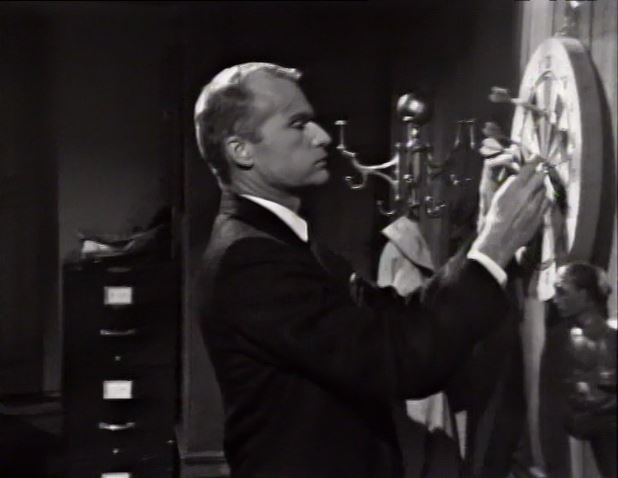
Roger is trying to keep his hands busy today. Our first look at his office focuses on his dart board, and he spends a great deal of time handling the darts.

Roger pulling the darts out of the dartboard on the wall in his office
Screenshot by Dark Shadows from the Beginning

Carolyn stops in the office. Roger hugs her, calls her “Kitten,” and doodles with his pen while he and his niece flirt pretty daringly.

Roger and Carolyn flirting with each other while Roger plays with his pen
Screenshot by Dark Shadows from the Beginning

Bill, whom we just saw in the Blue Whale giving Burke a stern talking-to, comes to Roger’s office to continue his stern talking-to concert tour. He drives Carolyn away. Roger stops handling the pen playfully and handles the darts menacingly.

Roger throws a dart in Bill's direction
Screen capture by Dark Shadows from the Beginning

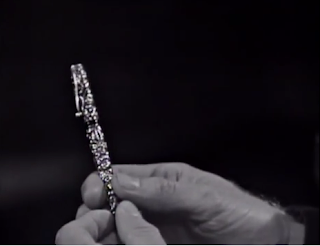
Later, Roger sees Carolyn at home. He finds out she had lunch with Burke and that Burke gave her his pen. He explodes at this and demands that she give up the pen. After a phone call from Bill (stern talking-to #3) and a commercial break, Roger simmers down. He apologizes and calls Carolyn “Kitten” again. She admits that she’s probably just hanging around Burke out of curiosity. She also tells Roger about the evidence that Burke is trying to put the family out of business. Roger takes this news calmly- after all, the Collinses’ cannery, fishing fleet, and other financial interests can hardly compare to the significance of who gets to touch Burke’s pen.

Roger's hands fondling Burke's pen
Screenshot by Dark Shadows Before I Die

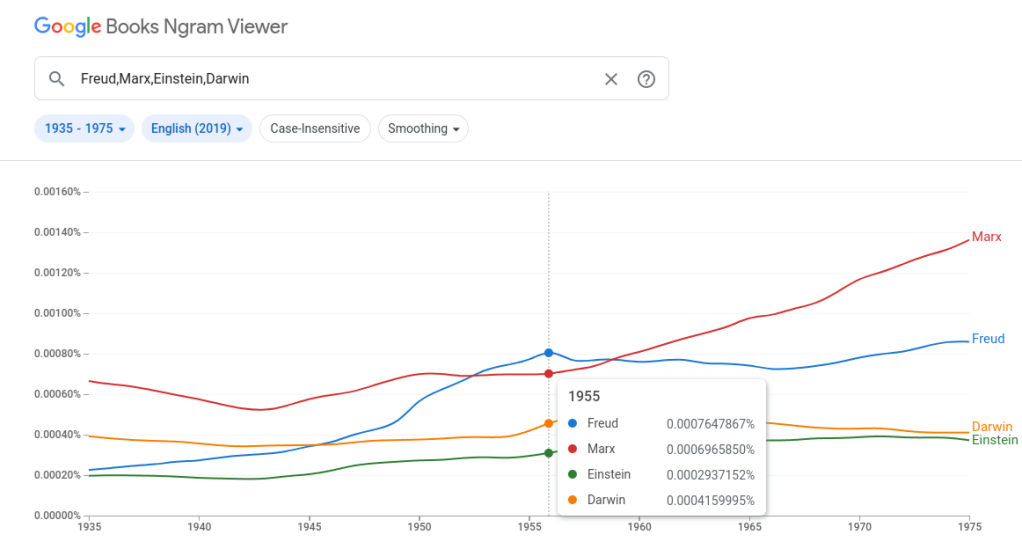
Roger’s obsession with where Burke Devlin’s pen is will become the show’s obsession for a couple of months. Anyone unsure whether there is some symbolic significance to this might have a look at the books, plays, and movies the makers of Dark Shadows and other intellectually ambitious New Yorkers were likely to be paying attention to in the summer of 1966. Maybe we can learn something about the ideas that were in the air if we look up the some famous thinkers on Google NGrams:

Google Ngram tracing the relative prominence of the names Marx, Freud, Darwin, and Einstein in English language books from 1935 to 1975

Looks like Marx was a biggie in those days- maybe Roger’s obsession with where Burke’s pen is illustrates the Marxist concept of commodity fetishism. That might also explain Roger’s relative disregard for the family’s capital holdings- he’s so caught up in the fantasy of value as something inherent in a physical object that he has lost sight of the actual source of his wealth.

Darwin was on people’s minds as well. Perhaps Roger’s fixation on Burke’s pen is the result of his genealogy- maybe the Collinses have been bred to their little niche for so many generations that they have emerged as a new species, one which does not have the same survival strategies as other humans and so does not share values and concepts which we would understand.

And there’s Einstein, also a popular preoccupation among people who aspired to advanced learning back then. One of Einstein’s most famous ideas was that time passes at different rates for different observers depending on how fast those observers are moving through space. There will be twenty or more episodes of Dark Shadows that focus largely or entirely on the question of where Burke’s pen is, and as we move through that narrative space there will be many occasions when it seems that time itself is about to grind to a halt. Could be that, I guess!

That leaves Freud. Hmm, looks like Dark Shadows was written and acted chiefly by people from Broadway, and that Freudianism was a major inspiration on Broadway in the 1950s, 60s, and 70s. I suppose we’ll have to figure out what Freud would have made of a fascination with where Burke’s pen is. Then maybe we’ll have some idea what’s really going on with Roger.

Episode 41: Working day

Three people expressed surprise in episode 40 that Roger Collins wasn’t at his office. He still isn’t there today, and three more people are surprised. He finally decides to go in when Liz presents him with the alternative of looking for Carolyn.

Bill Malloy isn’t at work either, hasn’t been all day. He and Roger have been taking turns inviting themselves into Sam Evans’ house. Sam is also not working, and in fact takes time out of his busy schedule of downing one glass of whiskey after another to destroy the only thing we’ve seen him make as part of a paying job, a sketch of Burke. Maggie pieces the sketch back together- she’s also at home when she’s supposed to be working.

Telephones are unusually dynamic in this episode. Typically we see only one end of a phone call on Dark Shadows. This time, we cut back and forth between both ends of three telephone conversations this time. In the teaser Roger is browbeating Sam; Sam sets the phone down and walks off. While he gets another drink, the receiver is in the foreground and we hear Roger’s voice at the same volume as we did when Sam was listening. Sam comes back, returns the receiver to its cradle, and goes to sit down while it rings.

The bit when we see the phone and hear Roger’s voice, though Sam isn’t looking at the phone and can’t hear it, establishes the telephone as a character with its own relationship to the audience, independent of anyone who may or may not be paying attention to it. It’s a neat moment:

Screenshot by Dark Shadows Before I Die

Liz calls the office and talks to Joe. Joe tells her Bill hasn’t been in all day. The stress in his voice, the papers piled on his desk, and the tight grip he has on the telephone receiver all make it credible that he’s the only person in town who showed up for work today:

Screenshot by Dark Shadows Before I Die

Liz mainly wants to talk to Joe about Carolyn. Joe tells her he hasn’t talked to Carolyn in some time, and that he has no idea what if anything she is thinking about their relationship. While he breaks this news to Liz, we see him continue working, then cut back to the look of distress on Liz’ face.

Maggie calls Collinwood. Vicki answers and is excited to talk to Maggie. I guess the show is telling us they’re friends now. Maggie asks to talk to Roger. Vicki says Roger is probably in the office at this time of day, Maggie somehow knows he isn’t, Vicki remarks that he isn’t in the habit of confiding in her. Roger overhears this and asks “Is there any reason why I should confide in you?” When Vicki holds the receiver out to him and says Maggie Evans is on the line, he takes it and hangs up without so much as putting the receiver to his ear. Vicki and Roger then have one of their little quarrels.

That’s the only thing Vicki does in the episode. Her character is heading into a danger zone. Through the first eight weeks, she was on all the time. She was our representative, the outsider who knew nothing about the other characters or the town they live in, and to whom everything had to be explained. Now she knows as much about the rest of the characters as they know about each other, and we know as much as we want to learn by hearing explanations.

The major characters all have their secrets, but the only two who know each other’s secret are Roger and Sam. Vicki isn’t any likelier than anyone else to uncover that one. She has no secrets of her own, and her original story-line- her quest to discover her origins- is dead in the water. What’s more, Vicki is no good at lying. Soap operas are mostly conversation, and the big events on them are lies and the exposure of lies. The only time Vicki has tried to lie to anyone- in episode 13, when she told Matthew that Liz knew she was in his cottage- she was immediately found out, with disastrous consequences. If she’s going to stay relevant to the show, something is going to have to change, and fast. It’s fun to watch Alexandra Moltke Isles bicker with Louis Edmonds, but the characters they play need something meatier to bicker about.

This is the first episode credited to writer Francis Swann, indeed the first episode credited to anyone other than Art Wallace. Swann’s teleplay finds humor in the idea that so many people have taken the day off. Each time another character remarks on a case of absenteeism it gets that much closer to raising a chuckle. And Roger’s line that looking for Carolyn would require him to “neglect my vital tasks at the office… Dear me, no” is genuinely funny, especially as Louis Edmonds delivers it. The telephone scenes are also an innovation, and promise a new source of visual activity. Those favorable omens are offset by Vicki’s scene and its suggestion that her character is about to be allowed to wither on the vine.

A couple of the blogs I read when I prepare my comments made remarks about this episode with which I disagree. John Scoleri of Dark Shadows Before I Die says this of the quarrel between Sam and Maggie:

I know Sam gets frustrated with Maggie, but I’m beginning to wonder about their relationship. If he’s that close to hitting Maggie when he gets drunk, there’s no way I’m believing he hasn’t done that before.

To which I replied:

It doesn’t look to me like Sam has hit Maggie. She’s inches from his face when he is at his angriest, yet she doesn’t flinch, doesn’t slump down, doesn’t show any sign of withdrawal or fear or anger or panic or sullenness or bewilderment or any other possible response to physical abuse.

Patrick McCray said this:

There hasn’t been much happening on DARK SHADOWS in the last few weeks, but that doesn’t mean the show hasn’t been moving forward. There’s been a growing sense of doom throughout the show, and it’s obvious that someone is going to die. In this episode Sam rips up his portrait sketch of Burke Devlin, he and Roger lob threats at each other, Liz begins to draw Joe’s attention to his girlfriend’s romantic intentions on the family rival, and Victoria has been pushed around by just about everyone in the cast. In theory, any one of them is eligible for a ride in the bone wagon, but the show has been implying that Devlin is headed for a fall. It’s interesting that the show decides to go in another direction: I don’t know when Bill Malloy checks in at Eagle Hill Cemetery, but it’s probably sooner rather than later.

While it is true that “in theory, any one of them is eligible for a ride in the bone wagon,” I do think there’s a clear front-runner to be the first Dark Shadows character to be killed. It’s Sam who is obsessed with the fear of death, Sam whom Roger has threatened, Sam who left a mysterious sealed envelope to be opened in the event “something happens.” And, from an out-of-universe perspective, it’s Sam who has a daughter played by an appealing actress who needs a story-line. Maggie seeking revenge for the killing of her father would be just the plot to elevate Kathryn Leigh Scott from the bottom of the second string to the starting lineup where she so obviously belongs.

No other character has anyone so well-positioned to play avenger if they’re killed. The only keen attachment Bill Malloy has shown is his devotion to Liz, and in her scene with Matthew in episode 38 Liz demonstrated that she sees devotion from people outside the family as a tool to use when time comes to protect the good name of those inside it. So if she suspects Roger killed Bill, she won’t become Bill’s avenger- if she could order Matthew to throw away his own good name to cover up the truth about David, we can hardly expect her to expose Roger to redress Bill’s grievance against him. Indeed, when Bill is murdered, they will introduce an entirely new character to seek revenge for him.

Vicki is an orphan, who tells us in today’s opening narration that before she arrived at Collinwood she had never known a home. No one is likely to avenge her, and besides, she still does the opening narration for every episode- she’s supposed to be important, even if the writers can’t quite figure out what to do with her. Burke is supposed to be rich and powerful. Presumably he has friends, but we haven’t seen any of them. Joe is Mr Nice Guy and he’s mentioned a friend or two, but again, we haven’t seen them. The series story bible calls for Roger to die when Burke finally gets his revenge, but every time Louis Edmonds’ performance is the most interesting thing in an episode it becomes so much the less likely that they will ever get around to playing that scene. So the smart money, at this point, would be on Sam to be the victim in the first Dark Shadows murder. So much so, indeed, that it might not be surprising enough if it does happen- they may think they have to kill someone else to keep the audience engaged.