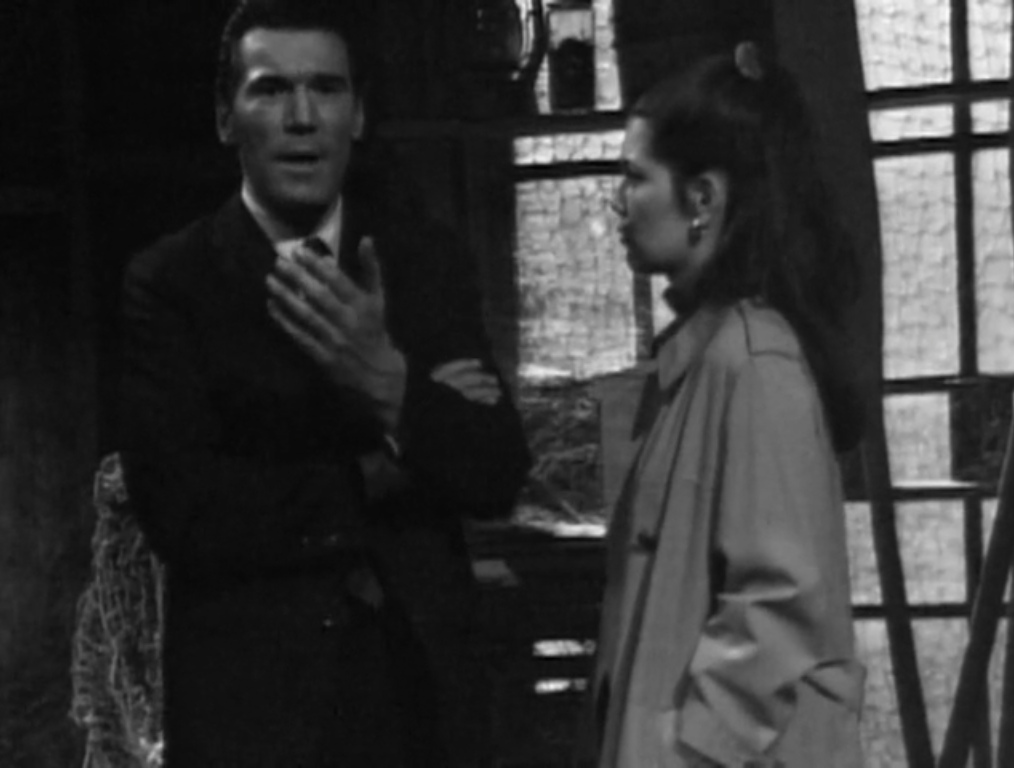
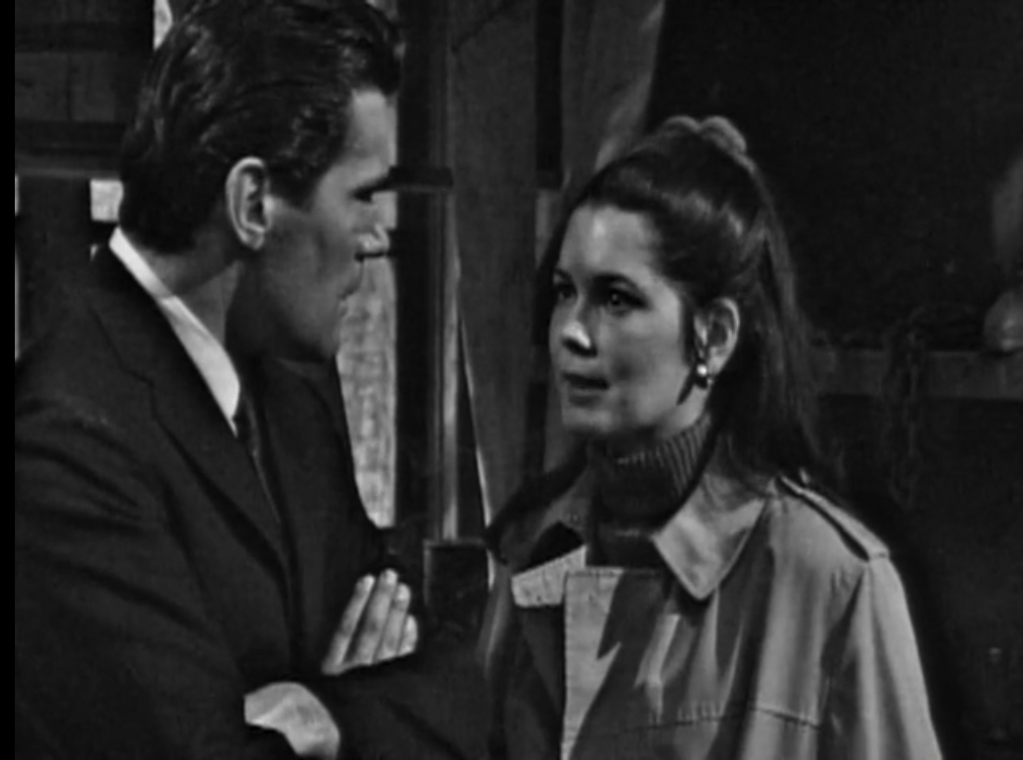
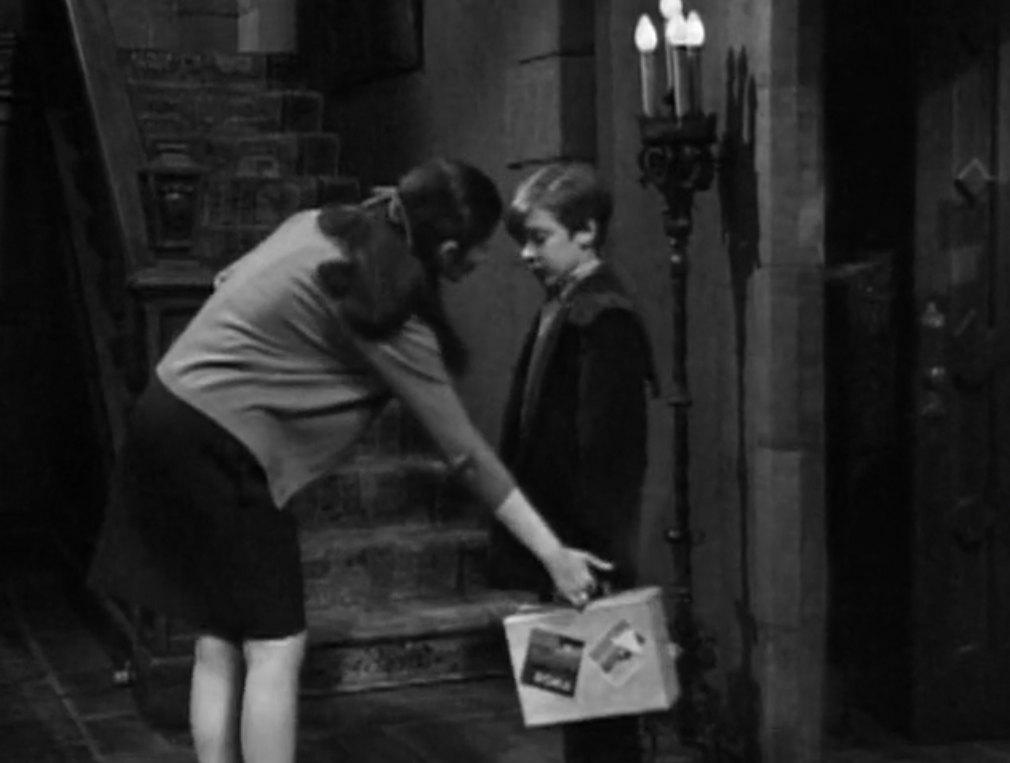
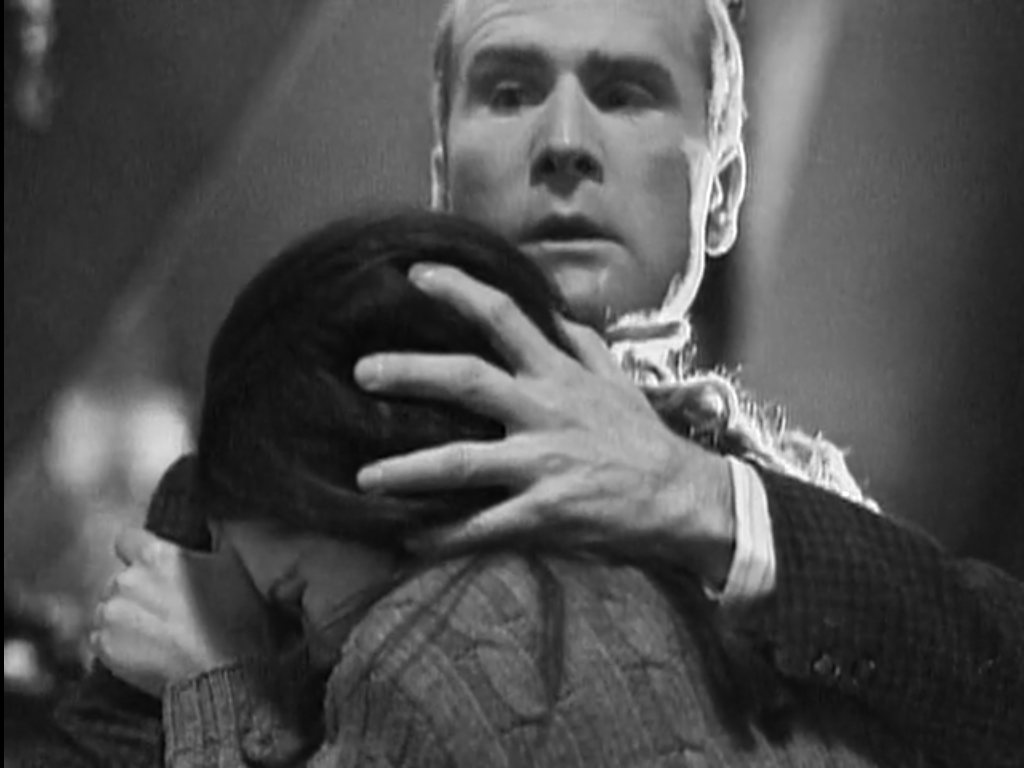
Frustrated that her mother, reclusive matriarch Liz, has decided to marry seagoing con man Jason McGuire, flighty heiress Carolyn spends the day and night with motorcycle enthusiast Buzz Hackett.
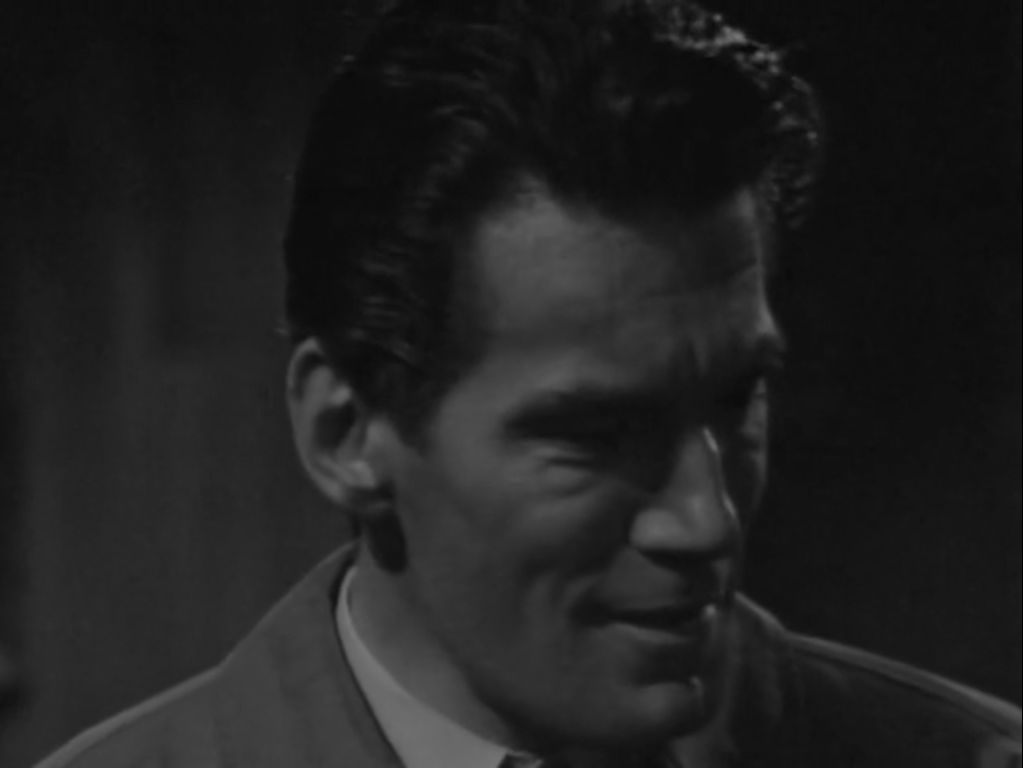
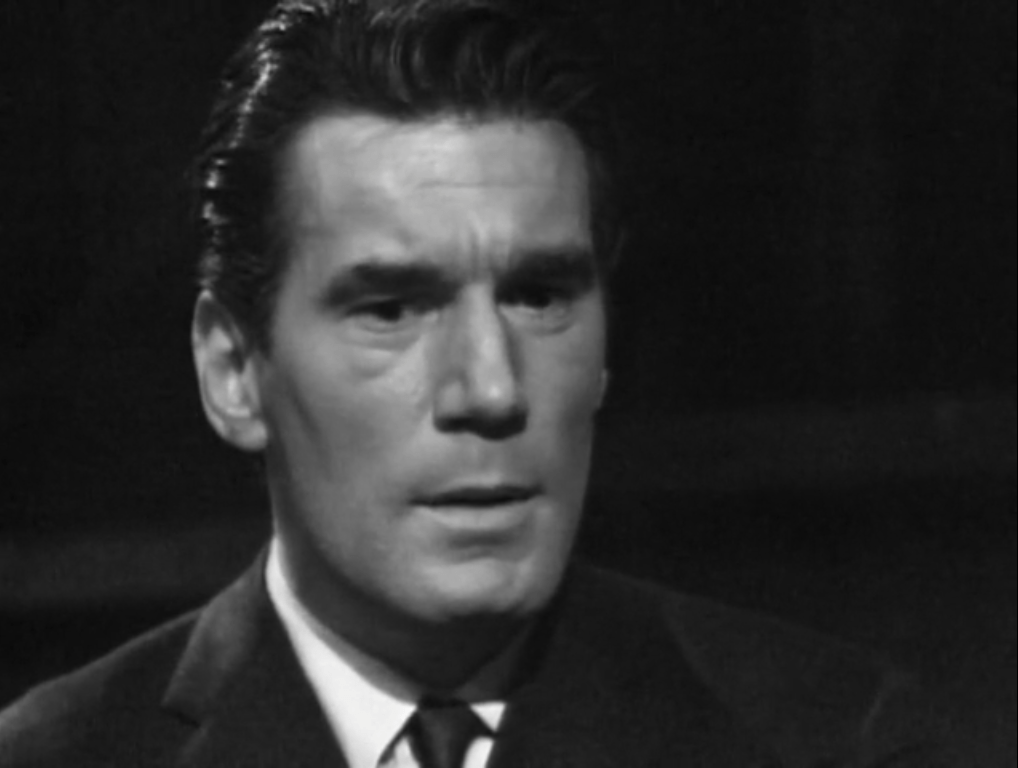
Buzz is modeled on the biker dude villains of Beach Blanket Bingo. Some of his mannerisms, such as speaking in a Beatnik slang that was a decade and a half out of date by 1967 and wearing sunglasses when he rides his motorcycle at night, would have been a little too broadly comic even for that movie, and are ludicrously out of place on the rather solemn Dark Shadows. The very sight of Buzz therefore raises a laugh.
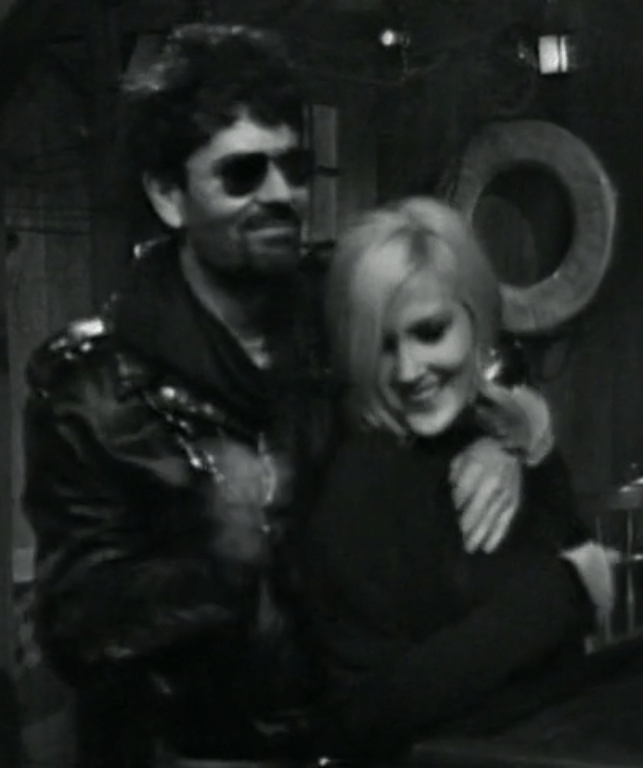
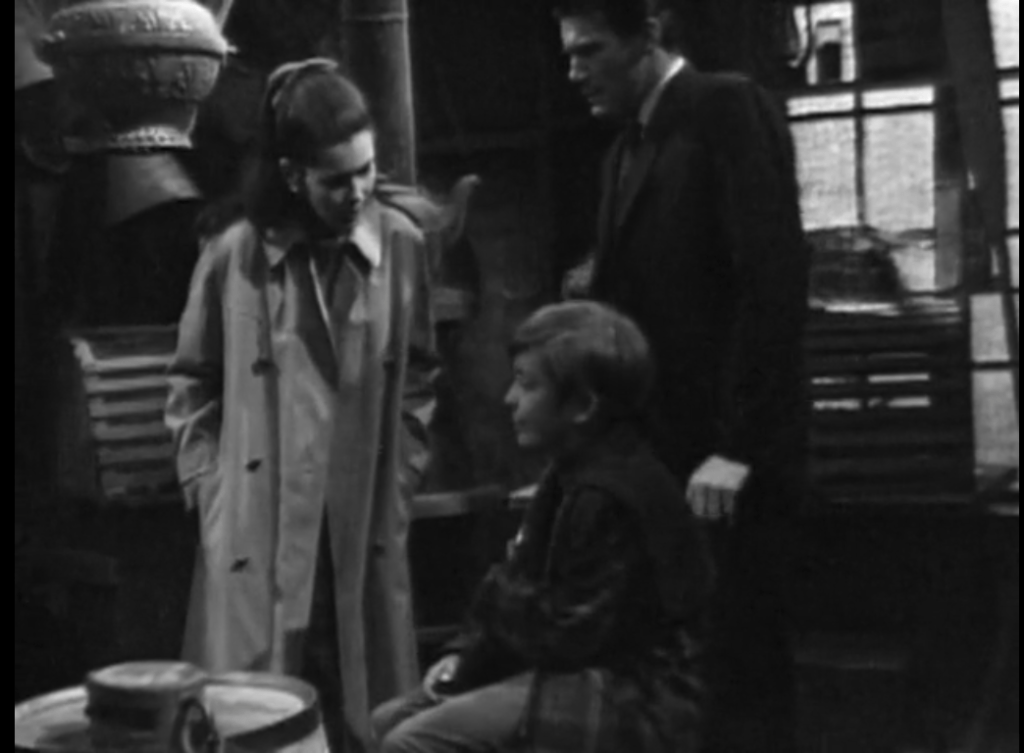
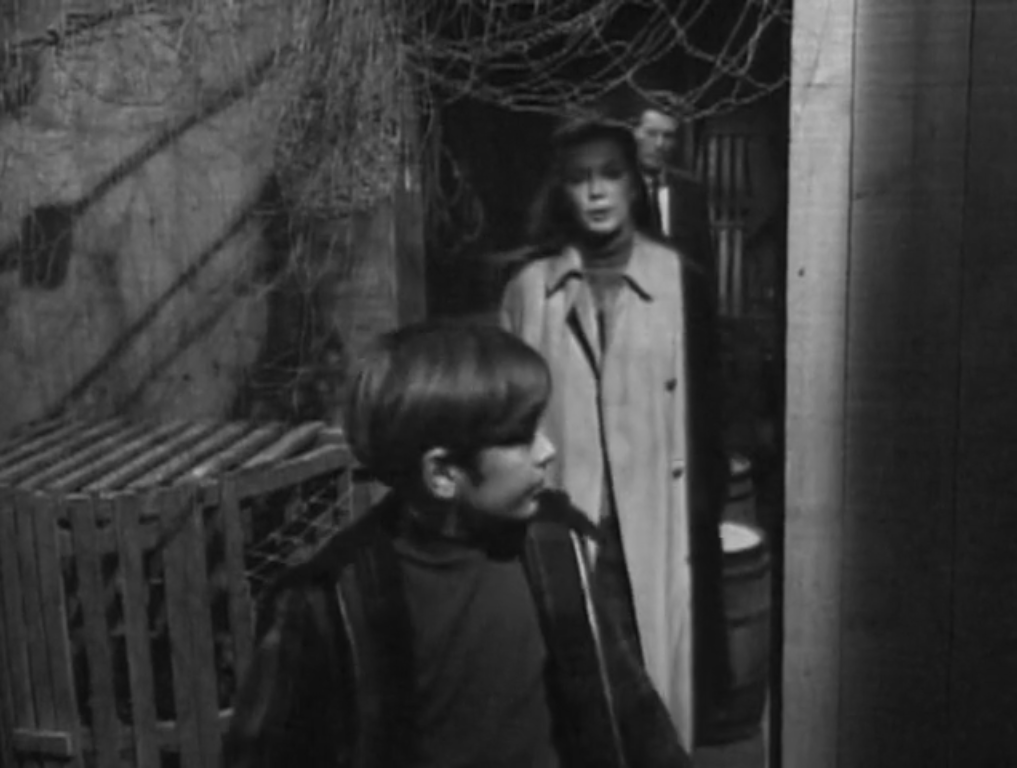
Nancy Barrett’s acting style was to throw herself unreservedly into whatever the script had her character doing that day, and seeing her present Carolyn as a newly minted biker mama is hilarious from beginning to end. When Carolyn and Buzz show up at the Blue Whale tavern, she’s already sloppily drunk. They see well-meaning governess Vicki and hardworking young fisherman Joe at a table, and Carolyn insists they go over and greet them. Vicki and Joe give Buzz and Carolyn frosty stares, which are of course the main ingredients of drawing room comedy.

As Danny Horn points out in his post about the episode on Dark Shadows Every Day, Buzz is actually pretty nice. That’s a good comic move- the obvious outsider is the one who knows enough to be uncomfortable, while the one who has been a central member of the cast from the first week is oblivious to the social awkwardness surrounding her. If it were the other way around, we might feel sorry for Buzz or be angry with him, but since we know that Carolyn’s place is essentially secure we can laugh at her uninhibited behavior, no matter how much it may make others squirm.
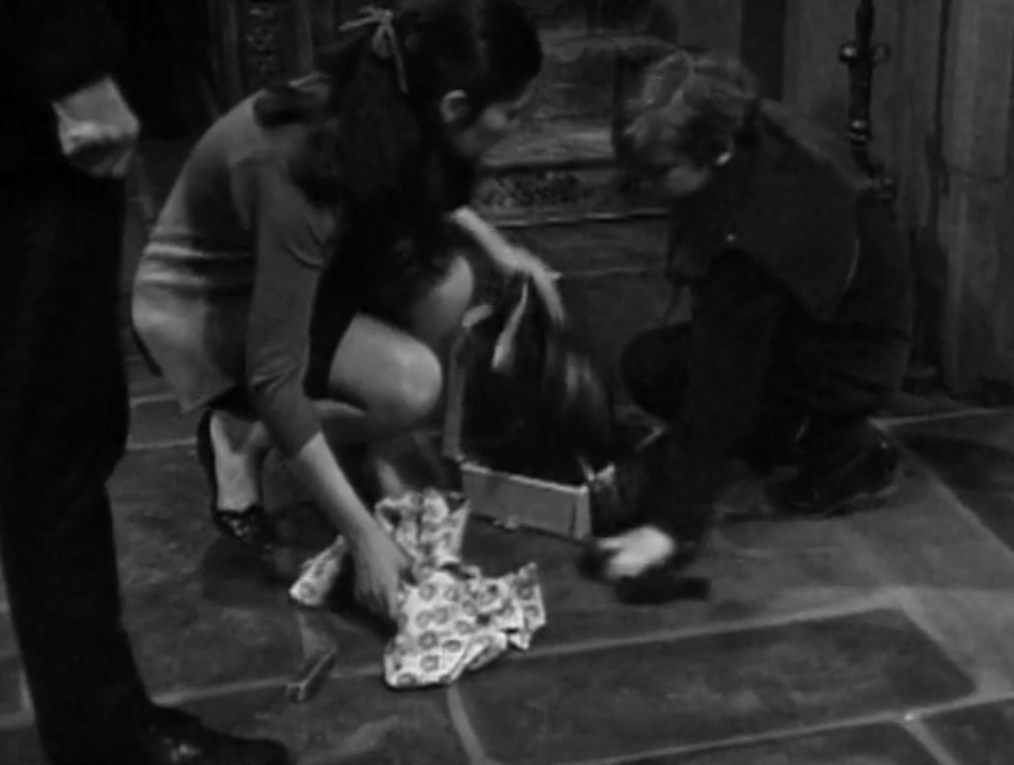
Buzz takes Carolyn home to the great house of Collinwood, parking his motorcycle a few feet from the front door. That isn’t a sign of inconsideration- there only are a few feet in front of the door, they’d be off the set if he parked any further away. It’s still pretty funny to see.

Inside the house, Buzz jokes about riding his bike up the main staircase. Carolyn laughs, then urges him actually to do it. He refuses, clearly appalled that she would want such a thing.

They go into the drawing room. Carolyn picks up a transistor radio and finds some dance music. Buzz is ready to dance, but takes a seat when Carolyn goes into the violent, rhythm-less jerks people in Collinsport do when music is playing. Buzz watches her, apparently ready to provide first aid.


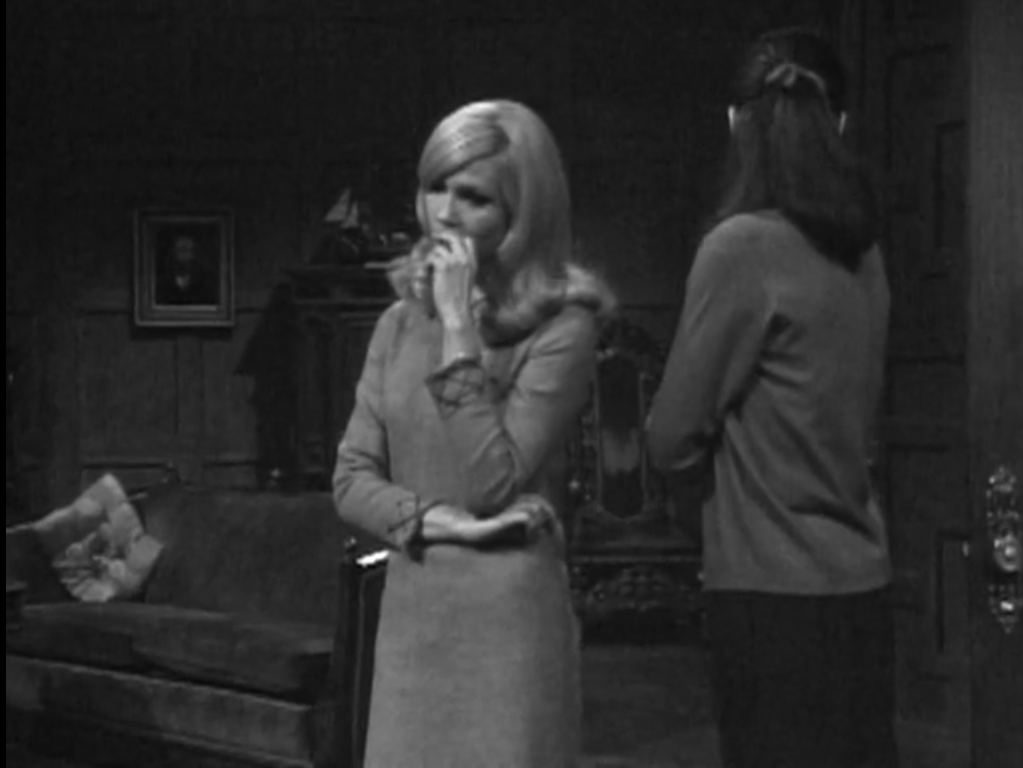
As Carolyn’s performance of the Collinsport Convulsion ends with her falling face first, Liz comes downstairs. She protests against Carolyn and Buzz making so much noise at 3 AM. For the first time, Buzz is rude. He does not stand up when Liz comes into the room, and when Carolyn introduces her as “Mommy,” he greets her with “Hiya, Mommy!” Liz orders him to go.
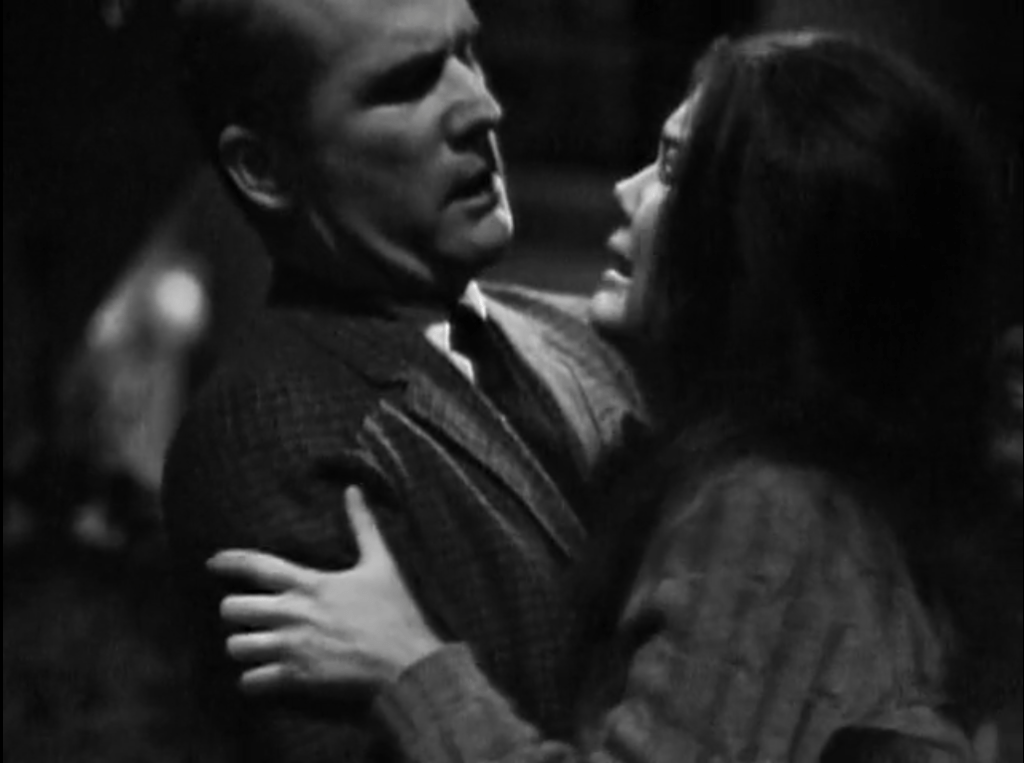
Before Buzz has a chance to comply, Carolyn starts taunting her mother, yelling at her that her name will soon be “Mrs McGuire!” Liz retreats up the stairs as Carolyn taunts her with repetitions of this name. When Liz is on the landing, Carolyn and Buzz clench and kiss passionately. While they kiss, we see Liz above and behind them, trying to exit the scene. As it happens, the door she is supposed to go out is stuck, so she has to struggle with the knob until she’s out of the frame. Thus, the longest period of intentional comedy on the show ends, not with a break into angry melodrama, but with a huge unintended laugh. It is one of the few truly perfect things ever seen on television.

As Buzz, Michael Hadge really isn’t much of an actor- he shouts his lines and goes slack whenever he isn’t speaking. That doesn’t matter so much today. Nancy Barrett’s high-energy performance, the other cast members’ skill at comedy of manners, and the mere sight of Buzz combine to keep the audience in stitches throughout.
Still, I can’t help but wonder what might have been. Yesterday, vampire Barnabas Collins threatened to murder his blood thrall, the sorely bedraggled Willie Loomis. Viewers watching on first run might have wondered if Buzz was going to be his replacement. They might have, that is, if Buzz were played by an actor in the same league as John Karlen. With Mr Hadge in the role, that suspense never gets off the ground.
One of the little games I play in my head when the show gets boring is to ask who else might have taken a part and to imagine how it would have changed with that other actor in the cast. So, if Harvey Keitel was available to dance in the background at the Blue Whale in #33, then surely Mr Keitel’s friend Robert De Niro would have taken a speaking part in #252. Actors inspire screenwriters, and if Mr De Niro had played Buzz I would have wanted to write this line for him to speak to Liz: “Mrs Stoddard, you got me all wrong. You think I want to hurt you, or take something from you, but that’s not the way it is. Me and Carolyn, we’re just trying to have a good time.” Mr Hadge’s shouting wouldn’t have made much of a line like that, but delivered by Mr De Niro to Joan Bennett it could have started a scene between Buzz and Liz that would have expanded his role beyond comic relief and earned him a permanent place in the cast.
It may be for the best that it didn’t work out that way. A De Niro-Buzz might have been such a hit that Dark Shadows never would have got round to becoming the excursion into sheer lunacy that we know and love. And Martin Scorsese might never have been able to get soap opera star/ teen idol Robert De Niro to answer his phone calls.
Closing Miscellany
There are some other notable moments today. We might wonder why Vicki and Joe are sitting together in the Blue Whale, when Vicki has been dating dashing action hero Burke. In fact, the script originally called for Vicki to be out with Burke, but actor Mitch Ryan showed up too drunk to work the day they taped this one and was fired off the show. Burke gave up on his big storyline over ten weeks ago and there hasn’t been a reason for him to be on the show since. Besides, the same cast of characters cannot indefinitely include one whose type is “dashing action hero” and another whose type is “vampire.” The vampire is already pulling in bigger audiences than anything else they’ve done, so Burke has to go. Still, Ryan was such a charismatic screen presence that he was a high point in every episode he appeared in, so it’s sad we’ve seen him for the last time.
The bartender brings drinks to Vicki and Joe’s table and Joe calls him “Bob.” They have settled on this name by now. The same performer, Bob O’Connell, has been playing the bartender since the first week, but in the opening months of the show he had a long list of names. My favorite was “Punchy.”
There is some new music in the jukebox at the tavern and more new music while Carolyn and Buzz are outside the front doors of Collinwood. In the tavern we hear something with brass, and at the doors we hear a low-key saxophone solo.
The closing credits give Buzz’ last name as “Hackett.” We heard about a businessman named Hackett in #223, but Buzz doesn’t seem to be related to him. In the Blue Whale, Carolyn says that her mother has more money than Buzz will ever see, to which Buzz laughingly replies “That isn’t much!”
Patrick McCray’s post about this episode on his Dark Shadows Daybook is fun. I especially enjoyed his description of Michael Hadge’s performance as a merger of “Russ Tamblyn with Truman Capote.”