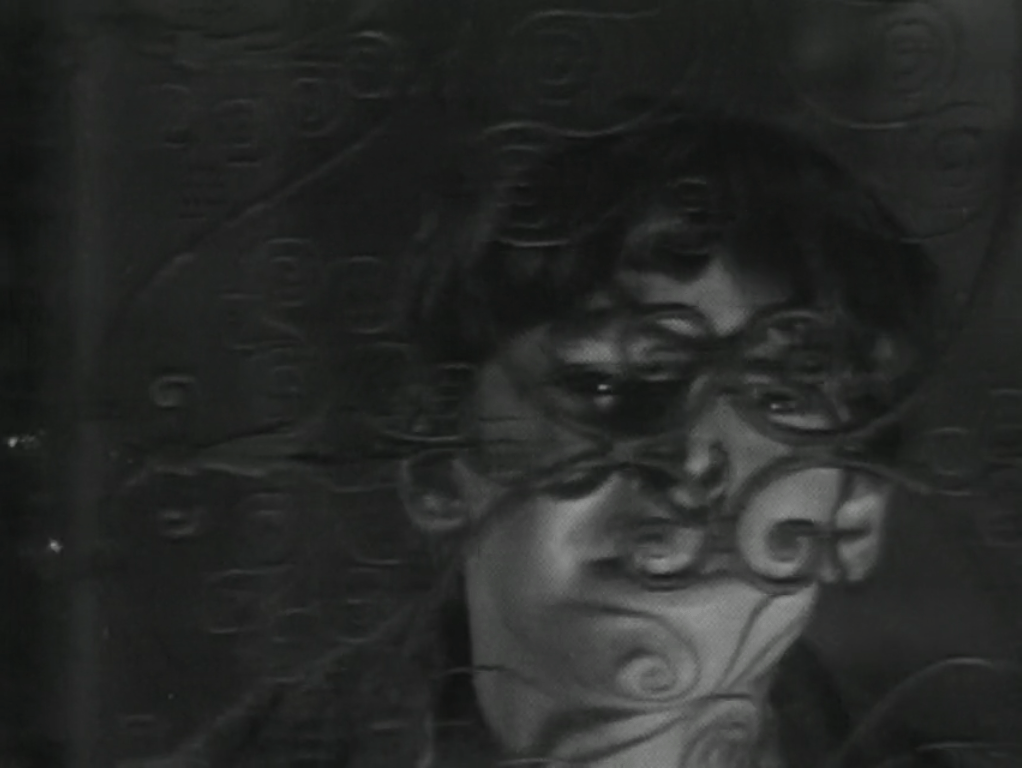
Episode 201: People like you

The first shot of the first episode of Dark Shadows featured well-meaning governess Vicki sitting on a train next to a window in which we saw the reflection of dashing action hero Burke Devlin. Vicki was on her way to the great estate of Collinwood, where she hoped to learn who her birth parents were. Burke was on his way to the village of Collinsport, where he hoped to exact revenge on high-born ne’er-do-well Roger Collins and other residents of Collinwood.

Vicki’s quest to learn her origins never took off, and hasn’t been mentioned for months. Burke’s pursuit of revenge drove a lot of action in the first twenty-one weeks of the show, but has been fading ever further into the background in the nineteen weeks since. Today, it fizzles out altogether.

In his original story bible for Dark Shadows, titled Shadows on the Wall, Art Wallace had proposed that Burke’s pressure on Roger would culminate in Roger’s death. Roger was to inadvertently reveal to Vicki that he was guilty of the crime that sent Burke to prison long ago. Roger would then try to push Vicki off the cliff at Widow’s Hill, but would miss her and go over the edge himself. The show discarded this resolution when Roger’s relationships with several other characters proved to be consistently interesting, particularly the Bossy Big Sister/ Bratty Little Brother dynamic between him and reclusive matriarch Liz. Besides, Louis Edmonds had such a gift for comic dialogue that he could get a laugh out of even the lines in which Malcolm Marmorstein attempted to be funny. So they couldn’t afford to kill Roger off.

Further, they have gone over Roger’s crime so frequently and made all the details so clear to everyone concerned that a trial wouldn’t give the audience any new information about what happened or show us any characters reacting to shocking news. It would be like a real trial, where all the evidence has gone through a discovery process and there are no surprise witnesses. No one is going to put that on commercial television in 1967.

So when Burke shows up at the great house of Collinwood with drunken artist Sam Evans, who has finally admitted that he saw what happened and took Roger’s bribe to keep quiet about it, the only real question is how Burke can leave the status quo in place.

Burke demands that Roger and Liz meet with him and Sam in the drawing room. Burke demonstrates his mastery by closing the drawing room doors, something that Liz, the mistress of Collinwood, usually does, and that Vicki did several times during the weeks when Liz was away and she was effectively in charge of the place.*

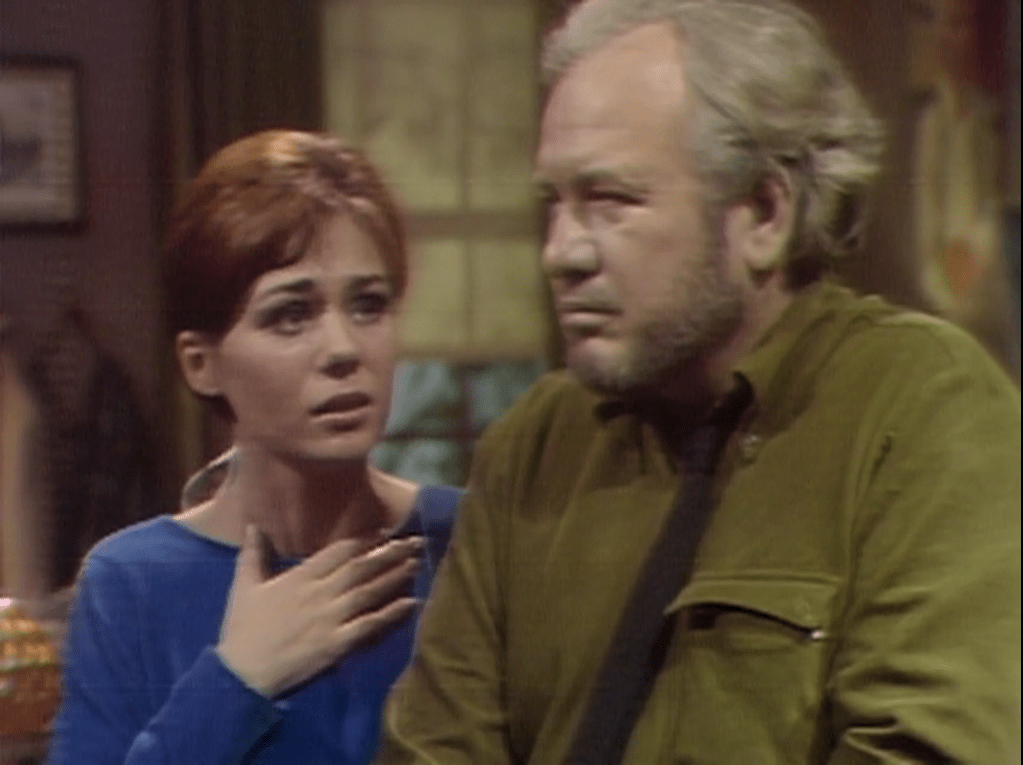
Roger of course tries out a series of lies in his attempts to deny Burke and Sam’s charges, but Liz is convinced. When she picks up the telephone and calls the sheriff, Burke reaches in and disconnects her. He says that she doesn’t have to turn Roger in- it is enough for him to know that she really would do it. She declares that she won’t let Burke keep coming back and using Roger’s guilt to blackmail the family, apparently intending to place another call. Burke says that he will never bring it up again, provided Roger confesses here and now in front of the three of them. He does. Burke tells Roger that he used to want to see him rot in jail but that now he realizes that “People like you rot wherever they are.” Burke and Sam leave, and that’s that as far as they are concerned.

During a few scenes scattered throughout the first forty weeks of Dark Shadows, Burke had considered relenting from his quest for vengeance. Those scenes hadn’t been developed in any great depth, and hadn’t been connected to each other. Only in the climactic week of the “Phoenix” storyline, when Burke and Roger briefly joined forces to save Roger’s young son David from death at the hands of his mother, blonde fire witch Laura Murdoch Collins, did we have a sustained glimpse of something other than all-consuming enmity between the two men. That was such an extreme situation, and was followed so quickly by a renewal of their hostilities, that Burke’s decision to peace out cannot be said to have any foundation in what we have seen the characters do so far. It is simply a convenient way of discarding a story element that has outlived its usefulness.

Most episodes of Dark Shadows have a cast of five actors. The rest are almost evenly divided between casts of six and casts of four. Today is a rarity with eight on screen. Six of these eight have been deeply involved in the Revenge of Burke Devlin storyline, and are at loose ends now that it has reached its abrupt conclusion. Burke, Roger, and Sam suddenly find themselves with nothing in particular to do. Also, flighty heiress Carolyn had a mad crush on Burke that alarmed her mother Liz and terrified her uncle Roger; that ended months ago, and she’s been a utility player ever since. Vicki is starting to date Burke; if Burke is no longer a threat to the family, there’s no obvious drama in that relationship, and she doesn’t have much else going on. David was as fascinated by Burke as Carolyn was; now that Laura is gone and he is happy with Vicki as his substitute mother, he’s pretty well settled in too.

We don’t see wildly indiscreet housekeeper Mrs Johnson today. She had come to Collinwood as Burke’s secret agent. Now that Burke is satisfied, presumably that’s over. Nor does Sam’s daughter Maggie, The Nicest Girl in Town, appear. She’s been dating hardworking young fisherman Joe, rebuffing his suggestions that they think about marriage because she is worried about what is going on with her Pop. Now that Sam’s conflict with Roger has come to its conclusion, there isn’t any reason the two of them shouldn’t get married, or stay unmarried, or whatever. So today’s episode leaves nine of the eleven major characters with no specific connection to any unresolved storyline.

Indeed, there is only one ongoing narrative arc. Long before he wrote Shadows on the Wall, Art Wallace wrote “The House,” a 1954 episode of The Web, an anthology series produced for CBS by Mark Goodson and Bill Todman.** Wallace recycled the story of “The House” for a 1957 installment of an hourlong anthology, Goodyear Playhouse, on NBC. Alternating with Alcoa Theatre in a window known collectively as A Turn of Fate, Goodyear Playhouse featured many pilots. The only one that seems to have been picked up was My World and Welcome to It, which went to series after an interval of more than a decade. I haven’t seen Wallace’s Goodyear Playhouse episode, but the 1954 version is too thin to fill a half hour, so I can’t see that an hourlong reworking would have been likely to catch the eyes of networks that passed on so many other pilots presented in that series, including teleplays by Rod Serling and Paddy Chayefsky. Wallace incorporated the story of “The House” in Shadows on the Wall, and a couple of weeks ago Dark Shadows dredged it up.

Seagoing con man Jason McGuire presented himself at Collinwood, to Liz’ great dismay. So far, they have had five conversations, two of them in Friday’s episode. All have followed the same pattern. Jason and Liz meet in the drawing room; he makes a demand of her; she resists; he threatens to expose her terrible secret; she capitulates. It’s true that on Friday they varied this a bit. Roger was with them during the first session, so that they had to veil their meanings, and in the second session Jason finds that Liz is unable to meet his initial demand, so that he shifts to a second one. In the first scene, they have a lot to show us as Liz and Jason manage to communicate their usual messages without letting Roger in on anything, and in the second they show us that Jason puts a higher priority on keeping Liz under his control than on any particular item he might want her to give him, so they managed to be interesting that day.

Today, Jason and Liz have their sixth conversation. It isn’t in the drawing room this time, but in the basement. While looking for David, Vicki had caught Jason listening at the doors of the drawing room at the moment when Liz was talking about going to the police, and he had rushed up to his room and telephoned*** his associate Willie, telling him they should be ready to get out of town fast. This conversation lets the audience know that Jason’s threat to Liz is a bluff. David had then caught Jason trying to get into the locked room in the basement. David told Liz what he saw Jason doing. Liz then goes down to the basement herself and shines a flashlight directly into the camera. We can see her in the halo, but Jason cannot. He seems helpless while she shines the light at him.

Jason blinded by the light

Jason scrambles a bit to regain control of the situation. Liz tells him he must leave the house immediately. He finally puts into words what the audience has long since figured out is on Liz’ mind, that she killed her husband Paul Stoddard eighteen years ago, that Jason buried him in the room, and that Jason will take this information to the police if she does not comply with his demands. She yields.

Liz’ reaction is interesting in the light of her scenes with Roger. When Burke was in the room, she explained her determination to call the police by saying that blackmail is no life for anyone to live. After Burke and Sam have gone, Roger starts begging Liz to let him and David keep living in her house. She doesn’t seem to know what he is talking about. She says that “Everyone does terrible things,” a remark she had also made to Burke and that is certainly true of characters who last on soap operas. He wants to go on pleading with her, but she just walks off, deep in thought about something else.

Remembering those scenes, we see Liz not simply giving in to Jason, but making a decision to keep going along with him. That makes today’s iteration of Jason Threatens Liz a bit more worthwhile than were the first three, if not quite as lively as the two we saw Friday. We can see something going on in her mind that raises the possibility she might do something different next time.

Two actors have bad trouble with lines today. When Burke is supposed to be saying something very dramatic and powerful about “hypocrites,” Mitch Ryan is actually blabbering about “hippie-crippie… er… hippie-crizz.” And when David Collins meets his Aunt Liz on the stairs and tells her he saw Jason in the basement, David Henesy stumbles over so many lines he falls out of character. Eventually he gets enough of the words out that you can tell what he’s trying to say, but he never really recaptures David Collins’ rhythm and intonations.

This latter slip-up leads to a reminder that there are always people in the audience checking in to a series for the first time with any given episode, so that actors are subject to judgments that don’t take into account what they have done before. At the bottom of their post on this episode, John and Christine Scoleri transcribe a conversation with a friend of theirs who hadn’t seen any of the episodes before this one. He says “Those who think the kid playing David went to any kind of acting school, raise your hand. Now leave the auditorium, please.”

In fact, David Henesy had been working steadily as a professional actor for four years before joining the cast of Dark Shadows at the age of nine. During that time, he had studied under many teachers, among them Uta Hagen. Usually, that background shows through, even when a particular script gives him problems. For example, he had a lot of difficulty with his lines in #191, and I rated that one as one of his weaker efforts. But here’s what Patrick McCray said about it on his Dark Shadows Daybook:

The success of this installment rests on the narrow shoulders of David Henesy. At the end of a big Henesy episode or scene, it’s common to announce that the kid nailed it, and this episode is no exception. His scene partners have it easy. They have straightforward, high stakes objectives to pursue. Either David goes into the fire or he doesn’t. There are only so many ways that people can implore the kid to come to them. On the other hand, Henesy has to stretch out indecision and keep it fresh for twenty minutes… with the help of an “ancient legend” that he recites. Not only does he succeed like a champ, but he concludes one of his better Hagen Days with a tearful catharsis that reads as properly-uncomfortably authentic.

Patrick McCray, Dark Shadows Daybook, 7 March 2018

I disagree with McCray overall about #191- I think Henesy’s line troubles in that one are bad enough that he doesn’t “succeed like a champ,” but I do agree that there are also some good things in his performance, particularly the way he uses his eyes and his posture. And there is no doubt that the last two minutes are very good.

Not even McCray comes to Henesy’s defense regarding #201, though the scene in the basement is all right. David Collins has a pleasant little conversation with Jason, and David Henesy gives sufficient support to Dennis Patrick that we can see just how badly wasted that talented actor is in all of those scenes where Jason repeats his threat to Liz.

*When we were watching the episode, my wife, Mrs Acilius, noticed the significance of Burke’s closing the drawing room doors. She had a lot to say about it, I wish she could remember her WordPress password and write her observations here.

**Later to become game show specialists, Goodson and Todman would be the producers of Match Game, which in the 1960s was on CBS 4:00-4:30 PM Monday through Friday opposite Dark Shadows, and of Password, a version of which would replace Dark Shadows on ABC in that timeslot when the show was canceled in April 1971.

***Just a few weeks ago, Laura nearly succeeded in killing David because there were no telephones upstairs. Apparently that has led Liz to have some new lines installed.

Episode 190: Always

Strange and troubled boy David Collins has run off to be with his mother, blonde fire witch Laura Murdoch Collins. Wildly indiscreet housekeeper Mrs Johnson had been keeping an eye on him yesterday, and only let him out of her sight long enough for him to escape because she had to answer a telephone call from well-meaning governess Vicki. Vicki had set Mrs Johnson to watch David, because she knows that if he gets loose Laura is going to burn him to death. So it was an act of inexplicable stupidity on Vicki’s part to make that call.

Today, the show lampshades this problem, having Vicki say that she assumed someone else would answer the phone. But the whole reason Vicki was giving orders to Mrs Johnson in the first place was that no one else was at home. They take a moment that made Vicki look dumb yesterday and turn it into one that makes her look twice as dumb today.

Vicki and her allies, dashing action hero Burke and hardworking young fisherman Joe, remember something that happened at a recent séance. David had channeled the ghost of David Radcliffe, the son of one of his mother’s previous incarnations, whom she had burned to death one hundred years ago. David Radcliffe had said that there would soon be a deadly fire in a “little house by the sea.” Laura has been staying in a cottage on the grounds of the estate of Collinwood, and it could meet that description. Burke and Joe head for the cottage while Vicki and Mrs Johnson stay in the great house.

We see David enter an old fishing shack on the estate. As he does so, he shines a flashlight directly into the camera, creating a halo of light that fills the screen. He does this three more times during this brief scene.

Flashlight halo

While David settles in at the fishing shack, Burke and Joe go to Laura’s cottage. When they arrive at the cottage, Burke shines a flashlight directly into the camera. He’s way behind David, he only creates a halo effect once.

Flashlight halo

He and Joe don’t find Laura or her luggage at the cottage, but when they see the wood-fire still blazing in the hearth they know that she must have been back since leaving on a bus early this morning. Burke wonders if David might have gone to meet Laura at the long-abandoned Old House on the estate. This leads to a spectacular dialogue flub:

Burke: Maybe she asked him to meet her up at the Old House. I think I’ll go and check.

Joe: Want me to go with you?

Burke: No, I think we should stick together… No, no… we can’t stick together. You go down to the greenhouse and look through the woods. I’ll go up to the Old House.

This may not look like much on the page, but as Mitch Ryan delivers it his mangled lines are good for a laugh out loud. Joel Crothers can’t hide his confusion while Ryan is stumbling:

What?

Back in the drawing room at the great house, Vicki has called the bus company. We see her on the telephone protesting “I don’t understand!” As Dumb Vicki becomes a bigger and bigger part of the character in the months ahead, we will hear those words many, many times.

The bus company tells Vicki that the driver reported a weird story about Laura. She was sitting next to an old lady. The old lady nodded off and when she woke up, Laura was gone. The bus had not stopped while she was asleep- Laura simply vanished into thin air. As a frequent user of mass transit, I enjoyed the idea of something uncanny happening on a bus. That was definitely the high point of the episode for me.

In the fishing shack, David hears Burke and Joe approach. He hides in a wooden crate. They don’t think to walk around it, or turn it over, or tap on it. Apparently whatever has knocked three or four standard deviations off Vicki’s IQ is contagious. Joe does give us one flashlight halo, but otherwise the scene is a bust.

The Three Stooges couldn’t have missed that kid

Laura materializes in the corner of the fishing shack, holding a lantern. David sees her and expresses only very mild surprise that he didn’t hear her coming in. Within seconds, he is acting as if it is perfectly natural for her to be there. Considering that there is only one door and he is standing directly in front of it, his rapid acceptance of the fact that she has somehow managed to insert herself into the shack ought to be a chilling sign of the power she already has over his mind. We’ve seen too much dumb behavior on the part of Vicki, Burke, and Joe today for that to land, so the impact of the scene is blunted.

Laura gives David her lantern and instructs him to look into the center of the flame. Several times we have seen her sit with him by a hearth and urge him to look deep into the flames, but this is the first time she or anyone else on Dark Shadows indicates an object held in the hand and directs someone to “look into the center” as a means of inducing a trance-like state.

Alone in the drawing room, Vicki senses the presence of her chief patroness, the ghost of Josette Collins. She catches the scent of Josette’s jasmine perfume while spooky music plays on the soundtrack and the picture goes out of focus. She keeps asking Josette what she is trying to tell her. It takes her quite a long while to figure out that Josette is reminding her of the fishing shack.

While we were watching this scene, my wife, Mrs Acilius, wondered how exasperated Josette must be getting with the dimwitted living beings she has to work with. She imagined Josette at each turn of the Phoenix story starting to get her hopes up- “OK, they’re getting it!”- only to be disappointed time and again. In #149, she literally paints a picture for them, and they still can’t figure it out.

Meanwhile, David is complaining of the cold and saying that he’s tired. Laura refuses to take the lantern from him, quietly urging him to peer into the center of the flame, then talking about sleep. When he drops the lantern and sees the floor catch fire, he says they should get out. She tells him everything will be all right so long as they stay inside. We end with animation effects suggesting that fire is starting to surround them, while David stands quite still.

Episode 173: Don’t work me

We open in the cottage on the great estate of Collinwood. Blonde fire witch Laura Murdoch Collins is pleading with dashing action hero Burke Devlin to help her. Laura and her husband, high-born ne’er do-well Roger Collins, are divorcing. Laura wants to leave with their son, strange and troubled boy David. Since Roger is all for this plan, Burke is unsure why she needs his help. Laura’s lines aren’t much, but Diana Millay delivers them in such a perfectly sardonic tone that we laughed out loud. And not only us- here’s Mitch Ryan breaking character to laugh on screen a second before the opening title

Burke isn’t laughing- Mitch Ryan is

David finds his governess, the well-meaning Vicki, arranging flowers in the drawing room of the great house on the estate. David is furious with Vicki and everyone else. Wildly indiscreet housekeeper Mrs Johnson has told him that there was a séance at the house last night, and that his buddy, the ghost of Josette Collins, spoke through Vicki. David feels that Josette belongs to him, and is outraged that he wasn’t invited to the séance. Vicki is shocked that Mrs Johnson told David about the séance.

David asks Vicki why the séance should be kept secret from him. She tells him that it isn’t a secret, it is just something he ought not to know about. This distinction doesn’t make any more sense to David than it would to anyone else. It seems that Vicki is being sincere, but she has a complicated thought to express and has not had time to work out a way to express it clearly. Seeing David’s frustration, Vicki tells him that she can’t explain the matter any further. Vicki reaches out to caress him, and he pulls away, asserting that they can’t make up. He announces that he is going outside to play. Entirely unruffled, Vicki asks to go with him. He refuses and stalks out of the house.

Through the first months of the show, David hated Vicki and she struggled to befriend him. This scene is a well-realized glimpse into the friendship that has developed since then. Even when David is very angry with Vicki and doesn’t think she is being fair or honest with him, he knows that she will be patient and affectionate. When he says they can’t make up now, we know that they’ve made up before and hope to see them make up again.

Laura and Burke are still talking in the cottage. Burke very much wants to be with Laura, and agrees to help her persuade David to leave Collinwood and live with her. They talk about the mysterious illness that has overtaken reclusive matriarch Liz and led to her hospitalization. Burke is startled when Laura says “That was hard enough to arrange.” Seeing his expression, she hastens to explain that all she meant was that she had a hard time persuading the family to send Liz to a hospital where she could be cared for properly. Burke doesn’t seem to be quite convinced.

Following Laura’s suggestion, Burke finds David at the old fishing shack, a location that has never before been seen or mentioned. He tells David he would like to take him fishing, and encourages him to go live with Laura. David is excited about the proposed fishing trip, but confides in Burke that he still has mixed feelings about his mother. When she first came to Collinwood after several years when she was far away, David had been afraid of Laura. He likes her now, but the fear still complicates his feelings towards her. As David Collins, David Henesy does a superb job depicting these conflicting emotions.

Burke approaches the fishing shack
Burke finds David
Burke and David talk

Vicki shows up. She scolds David for going so far from the house without telling her where he would be. When Burke and David bring up the idea of a fishing trip, Vicki says it’s still winter and they should wait until it’s warmer. David had predicted Vicki would say no, and turns to Burke when he is proven right.

Vicki the wet blanket

Over Vicki’s objections, David leaves for his mother’s cottage. Vicki stays with Burke, who asks her what she has against Laura. He tries to talk her out of her misgivings, but when Vicki carefully lays out the inexplicable events that have surrounded Laura’s return, he falls silent.

David leaves for the cottage
Burke and Vicki start their conversation

Burke has heard all of these facts before, but Vicki’s quiet candor connects with him. She looks up at him very steadily, keeping both eyes on him the whole time. Closeups concentrating on Vicki’s eyes do tend to make Alexandra Moltke Isles’ strabismus noticeable, but the extraordinary stillness of her body turns that to advantage. It’s as if she is concentrating so hard on telling the straight story that she can’t keep her eyes in place. She speaks in a quiet, level voice, and uses the simplest available words. Of all the attempts characters in today’s episode make to persuade each other of things, only this resolutely plain one has the desired effect.

Burke tries to dismiss Vicki’s concerns
Vicki speaks
Burke starts to catch on

In the cottage, Laura and David sit by the fire. He asks her what happened at the séance. She denies that anything at all happened, except that Vicki got upset. She tells David that Vicki is a high-strung and nervous person whom he ought not to trust. David’s two scenes with Vicki today are enough to show even a first-time viewer that he is unlikely to accept this description of her. He doesn’t protest, though. He seems anguished when Laura tells him that Vicki and her friend Dr Guthrie may lie to him even about her.

Burke comes in. He tells David it’s getting dark, and David grumbles that he’ll have to get back to the great house to stay out of trouble. Burke confronts Laura about the strange goings-on Vicki has enumerated. Laura points out that for Vicki’s suspicions of her to have any substance, she would have to be a superhuman being. She invites Burke to touch her. She asks him if she seems to be anything other than a woman pleading for help, if she seems to be any different than she was when he loved her before. He turns away. With a bleak look on his face, he says “Don’t work me, Laura.”

“Don’t work me, Laura.”

Episode 165: It feels like someone was here

Our point of view character is well-meaning governess Vicki. Vicki believes that her charge, strange and troubled boy David, is in danger from his mother, blonde fire witch Laura. Today we see several weaknesses in Vicki’s position against Laura.

The opening sequence shows that physical force is useless to Vicki. David comes down the stairs in the great house on the estate of Collinwood carrying a small cardboard suitcase. Vicki sees him and asks where he is going. He tells her he is going to the cottage on the estate to spend the night with his mother. Vicki tells him he is not. She grabs at his suitcase.

Vicki grabs for the suitcase

Vicki is not given to clutching at David or his possessions. The last time they had a physical confrontation comparable to this was in #68. In that one, David was throwing a tantrum, and Vicki’s attempt to restrain him only led him to escalate his violent behavior:

From episode 68. Screen capture by Dark Shadows from the Beginning

Today, Vicki’s intrusion into David’s personal space backfires just as badly. She inadvertently knocks the suitcase open, dumping his pajamas on the floor. She is shocked to see what she has done:

Vicki sees what she has done

She tries to undo the damage by picking up the contents of the suitcase. That requires her to crouch down before David, destroying whatever authority she may have had over him at the beginning of the encounter:

Kneel before D’vod!

Making matters even worse, David’s father, high-born ne’er-do-well Roger, shows up and stands over Vicki while she and David are on the floor. Roger wants David to go away, and since Laura wants to take him he is working with her. As David’s governess, Vicki has no legal right to oppose the wishes of his parents, and in a conversation that begins with her in this position it is going to be psychologically difficult for her even to voice her objections:

Roger stands over Vicki and David

Vicki does insist Roger meet with her alone in the drawing room while David waits upstairs, and she makes her case valiantly. But that conversation only shows that Roger is as useless to Vicki as is brawn. He ignores every consideration that does not advance his own interest, and his interest now is getting rid of David.

Flighty heiress Carolyn comes into the room and supports Vicki. Roger won’t budge. He gives a long speech about his position as David’s father, a speech which actor Louis Edmonds takes straight off the teleprompter. He delivers it with as much conviction and brio as if he had actually learned it. At the end of his dramatic reading, Nancy Barrett and Alexandra Moltke Isles bite their fingers and Mrs Isles finally turns her back to the camera, so we don’t see either of them laughing.

The finger-biters
Mrs Isles gives up and laughs silently

In Laura’s cottage, David complains to his parents about Vicki’s attempts to keep him from his mother and mentions that his father stood up for him. Roger, rather surprisingly, rises to Vicki’s defense, denying that there was any need for standing up to anyone- he claims that Vicki simply did not realize that he had given David permission to spend the night with Laura, and that they had talked about improving communication to avoid similar confusions in the future. Laura isn’t fooled by Roger’s covering up his conflict with Vicki- she clearly knows that Vicki is her adversary. Nor is the audience encouraged to believe that Roger will support Vicki when it counts. He simply thinks that he has her under control.

When Roger leaves David and Laura alone in the cottage, he says good night. He turns and walks out the door as they watch him. Neither of them says anything. This is the sort of thing that often happens in plays, less often on screen, and almost never in real life. I suppose it’s hard to make the sorts of fumbling exchanges people actually have in those moments fit into a drama, but still, it would have avoided a distracting moment to have Laura and David say good night in reply.

Back in the great house, Vicki talks with Carolyn and visiting parapsychologist Dr Guthrie. They tell Carolyn that Laura was lying when she denied having seen Carolyn’s mother, reclusive matriarch Liz, on the day when Liz was stricken with the mysterious ailment that has sent her to the hospital. Dashing action hero Burke Devlin has told Vicki that Liz came upon him and Laura in Laura’s cottage shortly before Liz’ first attack, and that Liz and Laura were still together when Burke left them.

Carolyn has been madly in love with Burke, unable to think about anything else when she is reminded of him. She does initially react to his name with “You talked to Burke?” in the same dreamy tone of voice she has used hithertofore, but quickly resumes her focus on the business at hand. Her feelings for him have not vanished, but she has matured sufficiently that she can set them aside while she deals with a crisis.

That is not to say that Carolyn is entirely grown-up in her behavior. When she learns that Laura has lied about Liz, Carolyn wants to march down to the cottage at once and confront her with “absolute proof that she is responsible for my mother’s illness.” Vicki points out that Laura’s lie is by no means proof of any such thing, and Guthrie says that he doesn’t want Laura to know how much the three of them know.

Having learned that Vicki and her allies have nothing to hope from either physical force or from Roger, we then discover that they can’t count on the writers either. Carolyn asks why Guthrie wants to hide their knowledge from Laura. The audience knows that they are in conflict with Laura and will have to be careful with any information that might enable them to catch her off-guard at a strategic moment. That Carolyn does not know this makes her sound like an idiot.

Guthrie’s response makes this bad situation worse. He makes the nonsensical claim that they should try to keep Laura from realizing that they are suspicious of her. Carolyn is openly hostile to Laura, Vicki has had to tell Laura repeatedly that she is trying to keep her son from her, and Laura treated Guthrie frankly as an enemy when they met yesterday. Considering that the only thing that has happened so far this week is that Dr Guthrie has been brought up to date with the story, seeing him presented to us as someone unable to hold onto information or process it gives the audience the feeling that we’ve just wasted a whole lot of time.

In the course of this miserable conversation, Guthrie does disclose a fateful plan. He says that he is considering organizing a séance. That marks the first utterance of what will, in the years to come, become perhaps the single most important word in all of Dark Shadows. In this instance, it is obscured by Guthrie’s inexplicable idea that Laura might agree to join them as a participant in their séance.

In the cottage, Laura’s behavior towards David is quite peculiar and seems to unsettle him. He was sitting next to her on the couch she has made up for a bed when she suggested he go get a book and read to her. When he found the book and sat down where it had been, she at once pleaded with him to come back and sit by her again. After expressing his puzzlement, David humors her. She squeezes him while he holds a smile. In an extended closeup, that smile shows several emotions- pleasure and self-satisfaction are in there, but so are confusion, discomfort, and loneliness.

Mixed feelings
Mixed feelings
Mixed feelings

David drifts off, and a visitor comes to the cottage. Laura calls to her before we can see her. “Josette! I know you’re here!” David has a friendly relationship with the ghost of his ancestor, Josette Collins. Apparently Laura is also on a first name basis with Josette. For some time now, the show has emphasized that Josette never appears to more than one person at a time. Though Laura and David are both in the room, Josette manifests:

Manifestation

Laura orders Josette to go away, and she does. After she has gone, David wakes up. He says that “It feels like someone was here.”Laura tells him no one was, and he goes back to sleep.

Laura has her back to Josette, and David is unconscious. So perhaps that’s why she is able to break her usual rule and appear when more than one person is in the room.

Or perhaps there isn’t more than one person in the room. We know that Laura is not quite human, and not exactly alive. In her previous star turn, when she rescued Vicki from the crazed Matthew Morgan in #126, Josette was accompanied by the ghosts of beloved local man Bill Malloy and the Widows of Collinsport. Perhaps we are to conclude that Laura, like them, has erupted into the narrative from the supernatural back-world.

As we opened with a demonstration of the protagonists’ weaknesses, so Josette’s retreat exposes a further weakness. Josette has been established as the mighty supernatural protectress of David, Vicki, and the rest of the household. Yet Josette cannot overpower Laura. If there is to be a happy ending for David, Vicki will have to marshal her forces with care.

Episode 103: The girl can’t help it

Another action-packed episode from writer Francis Swann. His new colleague Ron Sproat seems to have given him a jolt of energy.

High-born ne’er-do-well Roger Collins has been Dark Shadows‘ foremost villain so far. This week’s theme is that well-meaning governess Vicki suspects Roger of murdering beloved local man Bill Malloy. She is terrified of what Roger might do to her, and Roger is terrified she might go to the sheriff. Vicki and Roger scramble to keep up with each other, and draw the other characters into their frantic activity.

Today we divide our time between the great house of Collinwood, where Roger and Vicki live and play their high-stakes game of cat and mouse, and the Blue Whale, a tavern in the village of Collinsport where we see the consequences of their actions ripple out into the broader community. In yesterday’s episode, Vicki and Roger had a talk in which he told her that he did see Bill the night he died, but that he was already dead when he found him. That accounted for the evidence Vicki found, but only increased the tension between them.

We begin and end today in Vicki’s bedroom. In the opening teaser, Roger knocks on her door and lets himself in when she doesn’t answer him. In the closing scene, Vicki’s door is unlocked and opens while she is in bed. This prompts her to scream. When she does, the door quickly closes. Roger comes in seconds later, and implausibly denies that he opened it until after she screamed.

In between, we see Vicki in the tavern, telling Roger’s arch-nemesis, dashing action hero Burke Devlin, what Roger told her yesterday. Burke is incredulous that Vicki seems willing to believe that Roger might be telling the truth this time. She responds “I know you think I’m an idiot, but I can’t help it!” Maybe Bill wasn’t pushed to his death- maybe he was just clumsy and fell without anyone’s intervention. Burke does not contradict Vicki when she tells him he thinks she is an idiot. He urges her to leave town, since Roger might kill her at any time. She insists on staying at Collinwood.

Vicki and Burke leave the tavern. Drunken artist Sam Evans and his daughter Maggie Evans, The Nicest Girl in Town, enter. Maggie tells Sam that she talked to Vicki yesterday. Vicki told her almost everything, holding back Roger’s name but making it clear she can’t be thinking of anyone else. Maggie sees that the idea of the investigation into Bill’s death being reopened and connected with the incident that sent Burke to prison ten years ago disturbs Sam intensely. When Sam answers one of her questions with a lie, she asks “Haven’t you thought of a better one than that?” He mumbles a response, but won’t tell his daughter what he has to be afraid of.

Maggie calls Collinwood. Roger answers, and Maggie asks to speak to Vicki. Returning viewers will remember that when Burke called Vicki in yesterday’s episode, Roger was in the room. Vicki concealed the fact that she was talking to Burke by pretending she was talking to Maggie. Maggie’s call tips Roger off to Vicki’s lie. He tells her that Vicki isn’t home. She tells him that the Evanses are at the Blue Whale, that they haven’t been home all evening, and that they haven’t seen Vicki.

Vicki comes home. She tells Roger she was visiting Maggie at her house. Roger plays along and encourages Vicki to elaborate on this story. At the tavern, Burke had told Vicki she was a bad liar. She proves him right, giving Roger one falsifiable detail after another about her time at the Evans cottage.

After the affair of the door, Roger sees Vicki’s frank disbelief that he will not admit that he unlocked and opened it. Facing her unspoken accusation that he is brazenly lying to her, he casually mentions Maggie’s call. He suggests Vicki call her tomorrow, so that the two of them can get their story straight. He saunters away, having deflated her righteous indignation about his apparent lies.

As Vicki, Alexandra Moltke Isles was one of the cast members who delivered her lines with the fewest stumbles. She has a doozy today, though. When she returns from her conference with Burke, Roger sees her climbing the stairs and calls out to her: “Vicki!” She replies: “Rodgie!” A man you address as “Rodgie” is not someone of whom you are deathly afraid. They have done such a good job building up an atmosphere of tension between Vicki and Roger that this slip is one of the most breathtaking bloopers in the entire series. It’s still a Genuinely Good Episode, but that moment does make you wish for a videotape editor.

Vicki and Rodgie. Screenshot by Dark Shadows Before I Die

Episode 87: She came to us from nowhere, and now it seems she has disappeared into nowhere

Hardworking young fisherman Joe is spending the evening with Maggie, The Nicest Girl in Town. It’s their first date. Maggie impresses him with her knowledge of ships, and he sings a verse of “What Do You Do With a Drunken Sailor?” It may not sound like much, but the actors, Kathryn Leigh Scott and Joel Crothers, sell it so well that we’ll be rooting for Joe and Maggie for years to come. The final moment of the scene comes after Joe leaves. Maggie looks directly into the camera and says to the audience, “Goodnight, pal.”

Goodnight, pal

In the great house of Collinwood, high-born ne’er-do-well Roger Collins greets his niece, flighty heiress Carolyn, on her return home. Carolyn is upset because Joe has broken off their relationship and is having a date with Maggie. The story of Joe and Carolyn was a bore, largely because the two of them never had a scene with any fraction of the sweetness we see between Joe and Maggie today. There was nothing at stake in their quarrels, because they had nothing to lose if they simply gave up on each other.

Roger tells Carolyn that well-meaning governess Vicki hasn’t been seen for hours, and that he promised Carolyn’s mother, reclusive matriarch Liz, that he would sit up waiting for Vicki’s return. Carolyn is worried as well, and asks Roger why he isn’t actively searching for her. He says she’s probably fine. When Carolyn says that people don’t just disappear, he reminds her of family friend Bill Malloy, who disappeared not so long ago, but then turned up. Considering that Bill turned up in the form of a corpse washed ashore by the tide, it is perhaps unsurprising that Carolyn does not find Roger’s analogy particularly comforting.

After Roger persuades Carolyn to toddle off to bed, he makes sure he’s alone (well, alone except for the stagehand in the lower left-hand corner of the screen.)

Once assured that no one mentioned in the script can see him, Roger returns to the drawing room and opens a secret passage we’ve never seen before. After he disappears into it, Carolyn comes to the drawing room and is baffled at his absence.

The suggestion that Carolyn doesn’t know about the secret passage is characteristic of the show. From the beginning, Vicki has represented our point of view. She started off knowing nothing about the other characters, and everything had to be explained to her while she was on camera. If Vicki knows just what we know, Carolyn, who grew up in the house where most of the action is set, can be presumed to know a great deal we do not. When they reveal a secret to us, they can amplify its importance by showing that Carolyn isn’t in on it. They’ve done this several times, mostly in situations having to do with the murky origins of Roger’s feud with dashing action hero Burke Devlin. Carolyn’s ignorance of the secret passage is particularly effective- it’s right there in the most important room of the only house she’s ever lived in. If she doesn’t know about it, it must be a very well-kept secret indeed.

We go with Roger into the secret passage. He shines his flashlight directly into the camera, creating a halo of light around it. This would not seem to be a desirable visual effect, yet we will see it many, many times in the years to come. This is the second appearance of the effect. The first time came when Roger’s son, strange and troubled boy David, was leading Vicki into the abandoned Old House in episode 70. Now we see it when Roger himself is entering another abandoned space, one where he might meet Vicki.

Halo

It’s hard to believe that the repeated use of this effect was altogether unintentional.

All the more so because of what follows Roger’s entry into the passageway. His journey through it actually does seem to wind through a very large space. In the opening narration, Vicki had said that the house is made up of 80 rooms, retconning the total of 40 given in the second episode. Roger’s trek up one flight of stairs, down another, up a spiral staircase, around corners, past windows, etc etc, seems like it must take him past enough space for at least that many. Perhaps the sequence would be a bit more attractive with less time spent focused on Roger’s feet, but all in all it is as effective a creation of space as Dark Shadows would ever do. If there had been Daytime Emmy Awards in 1966, Lela Swift would have had every right to expect to win Best Director for conjuring up this illusion of vast, winding corridors without editing or going outside the tiny studio space available to her.

Roger does indeed discover Vicki’s whereabouts. He hears her calling for David from behind a locked door, promising David not to tell anyone he imprisoned her there if he will let her out now. Roger does not simply let Vicki out. Instead, he makes some loud noises, then puts on a ghostly, wavering voice and calls out to Vicki that she is in great danger as long as she stays in Collinwood. He seems to be having trouble keeping a straight face when he makes these spooky sounds. Vicki isn’t laughing, and returning viewers aren’t either- in Friday’s episode, she and we saw the ghost of Bill Malloy in the room, and heard that ghost warn her that she would be killed if she stayed in the house much longer.

Once he’s had his fun, Roger opens the door. After another flashlight halo, Vicki recognizes him. Alexandra Moltke Isles gives us one of the finest moments of acting in the entire series, when Vicki throws her arms around Roger, her bodily movement as smooth as any ballet dancer’s but her voice jagged, and says that “David is a monster, you were right!” Up to this point, Roger has been brutally hostile to his son, Vicki heroically friendly to him. Her determination to befriend David has become so central to her character that hearing her make this declaration makes it seem that she is permanently broken.

Broken Vicki

Vicki struggles to hold back her sobbing long enough to tell Roger that she saw the ghost of Bill Malloy. That’s an episode-ending sting- Roger wants everyone to forget about Bill’s death, and if his ghost starts popping up he is unlikely to get that wish.

Stunned Roger

Mrs Isles was a “head actor,” one who found the character’s innermost psychological motivation and worked outward from that. That heavily interiorized style would be one of the things that left her in the dust, along with similar performers like Joel Crothers and Don Briscoe, in the period when Dark Shadows was a hyper-fast paced, wildly zany show about vampires and werewolves and time-travel and God knows what. But in the period when Art Wallace and Francis Swann were writing finely etched character studies, she consistently excelled. In this little turn, she shows that when it was logical for her character to go big, she could go as big as any of the stars of the show in those later days.

Episode 66: The appearance of hospitality

Downstairs in the great house of Collinwood, high-born ne’er-do-well Roger and dashing action hero Burke have another of their quarrels. Upstairs, well-meaning governess Vicki tells reclusive matriarch Liz about her shockingly lonesome childhood. Nothing happens to advance the plot, but the actors make Francis Swann’s dialogue sparkle.

Roger and Burke’s conversation revolves around one of the two major storylines introduced in episode 1, The Revenge of Burke Devlin. Liz and Vicki’s revolves around the other, Victoria Winters’ Quest to Learn Her Origins. The investigation into the death of beloved local man Bill Malloy has suggested that one or both of these may become interesting, though by now that prospect has been reduced to rather a low order of probability.

The real themes of the conversations are the real themes of the whole series- loneliness and denial. As Vicki goes on about how solitary her childhood was at the Hammond Foundling Home, Liz’ face shows one expression of agony after another. When Liz tells Vicki that she can understand loneliness, Vicki tells her that she could leave the house if she wanted to do so. Liz replies with a note of absolute finality- “No. I couldn’t.” Vicki tries to open a new topic, mentioning Liz’ daughter Carolyn, but the barriers have gone up.

Roger insisted on talking to Burke alone. The two of them go round and round, not answering each other directly or telling each other anything new. They can’t talk productively to each other, but can’t talk to anyone else at all. The unresolved, unexplained past they share binds them together and shuts everyone else out. As he leaves, Burke declares that he will return to Collinwood- “possibly to stay.” He’d been telling Liz that he wanted to buy the house, and in previous episodes we’ve seen him scheming to drive the family to bankruptcy and collect their assets. But in this context, his line sounds less like a threat to take the house from the family than like a proposal to move in with them.

There is also a memorable production fault. A camera bounces out of control and gives the audience a view of the lights above the set:

Lights above the set

Episode 54: A proper charge

At the end of yesterday’s episode, dour caretaker Matthew admitted to reclusive matriarch Liz that he had found a drowned man on the beach, that the man was missing plant manager Bill Malloy, and that he had pushed the body out to sea and watched it float away. Liz then called the sheriff.

As today’s episode opens, Liz’ ne-er-do-well brother Roger doesn’t know about Matthew’s confession. We see him in his office, countermanding orders Bill Malloy had given and acting like he has Malloy’s job. On his blog Dark Shadows from the Beginning, Marc Masse interprets this as an indication of guilty knowledge on Roger’s part:

Roger has evidently just implemented a new system that has effectively replaced Bill Malloy’s previous methods for operations at the plant. This indicates that Roger knows for certain that Malloy will not be returning as plant manager, which enshrouds him with an additional layer of suspicion given how as of the close of episode 53 only two people knew for certain that Bill Malloy was in fact dead: Matthew Morgan and Elizabeth Stoddard, and as of today’s episode the sheriff. Roger will be informed of Malloy’s demise later on that day when his sister calls him away from the office to have him return to Collinwood, and Roger will feign surprise upon hearing the news, but it’s evident from his phone conversation above that he was somehow already aware of Malloy’s fate.

That’s a possible interpretation, and I certainly thought of it the first time I saw the episode. On the other hand, Malloy has been missing for more than a day, and was last seen drinking in a bar. So even if he were to walk in the door in prime physical condition at this very moment, he would be in a poor position to defend himself in workplace politics. Roger could easily claim that he was simply moving to fill a vacuum. The show is keeping Roger viable as a suspect, but is not committing itself to the idea that he is the guilty party.

Whatever Roger knows about the situation, dashing action hero Burke knows less. But Burke seems to think of himself as very knowledgeable. He storms into Roger’s office and confronts him with the fact that Malloy was trying to prove that Roger, not Burke, was responsible for the killing that sent Burke to prison years before. Burke makes many accusations against Roger, some of which the audience knows to be true, but none of which he is yet in a position to prove.

The scenes in Roger’s office are intercut with scenes in the drawing room in the mansion at Collinwood. There, the sheriff is talking with Liz and Matthew about Matthew’s confession. Matthew asks the sheriff if he will be arrested now. To which the sheriff replies, “I can’t think of a proper charge.” He jokes about “burial without a license,” then goes on to warn Matthew that he has laid himself open to suspicion.

This is a moment when you can tell you’re watching a show made in 1966. Seven years later, coverage of investigations into the Watergate affair would give the American public an intensive eighteen-month tutorial in criminal law concerning obstruction of justice and related offenses. Ever since that time, residents of the USA have known that you are risking jail any time you make things difficult for the police. Prior to that, however, this was not well-known even among lawyers who practiced in areas other than criminal law.

Watergate itself illustrated this. Several of the major figures in that matter were lawyers, and many of them, including Richard Nixon himself, genuinely did not know that it was an offense for a person who had not been involved in a crime to cover that crime up. You can hear Nixon on the White House tapes telling his legal aide John Dean that because Dean didn’t know about the Watergate burglary in advance, the things Dean had done to hinder the investigation of the burglary can’t possibly put him in danger of prosecution. In his memoirs, Dean admits his own ignorance of the relevant law, confessing that he first read the federal statutes on obstruction of justice not when he was in law school, not when he was studying for the bar, not when he was a staffer for a commission tasked with rewriting the federal criminal code, but in his office at the White House, after he’d been running the Watergate cover-up for nine months. He reports in that same book that several other White House staffers who were lawyers shared his ignorance. Many of them would go on to confirm this aspect of his account.

In light of the legal education that Watergate provided the people of the USA, the sheriff sounds like an idiot. That same education ruined other old shows. Perry Mason, for example- ridiculous as it is that every episode ends with the guilty party jumping up in court and shouting “I did it!,” if you’re into the story you feel enough poetic justice in those endings that they don’t really bother you. But Mason himself can hardly make it through five minutes without committing every crime with which Haldeman, Ehrlichman, Mitchell, and Dean would be charged and a few more besides. Perry Mason broadcast its final episode in May of 1966, so that show, not the Watergate news, was the law school the original audience had attended.

Miscellaneous:

The episode opens with footage of Louis Edmonds walking around outdoors on a waterfront. They play some nice sound effects of sea-birds over it.

The sheriff we see in this episode is Sheriff Patterson, the first of that name. He is played by Dana Elcar, a fine actor who would be ubiquitous on American television and cinema screens in the 1980s. If we’re heading into a major story arc dominated by a mystery story, it’s a relief to know that the policeman role will be in such trustworthy hands. The part will be re-cast many times in the years to come, and never again as well. Then again, none of the subsequent Sheriffs Patterson will be as important as is this first.

Since there is a good deal of overlap between fans of Star Trek and fans of Dark Shadows, I might mention that this was the episode that aired on the day Star Trek premiered.

There was a great deal of Anglophilia involved in the making of Dark Shadows: the mid-Atlantic accents, the plots lifted from English literature, etc. So it may not be a coincidence that a dark-haired, small-chinned matriarch named Elizabeth presides over the family at the center of it. Indeed, Joan Bennett looked enough like the northern European royals that when they wanted to cast an actress who resembled her closely enough to set the audience wondering how their characters were related, they settled on the daughter of a Danish count. So I might also mention that I am writing this on the day Britain’s Elizabeth II died.

There are two big flubs. At one point when they’re about to cut from the drawing room back to the office, we hear a loud noise and some garbled voices in the background. My wife, Mrs Acilius, wondered if this was Josette Collins trying to make herself heard.

At the very end of the episode, as announcer Bob Lloyd is intoning “Dark Shadows is a Dan Curtis production,” a figure walks in front of the camera. You can just see the top of his head. The Dark Shadows wiki refers to the figure as “a crew member.” Marc Masse says it’s probably Mitch Ryan. John and Christine Scoleri speculate on their blog Dark Shadows Before I Die that it might be Dan Curtis himself. To me it looks like more the hairdo Thayer David is wearing as Matthew Morgan than like either Ryan’s hairdo as Burke or Dan Curtis’ hair- there seems to be some grey in it, and it looks to be more matted than either wavy or curly.

Episode 38: The Count in his castle

Vicki first met Matthew in the basement of Collinwood, back in episode 6. So the basement is Matthew’s territory. Not even the cottage where he lives is more so. Before we ever saw it, we heard him go on about how it was a gift from Liz. When we do see him there he’s having an uncharacteristic moment, baking muffins. The basement is the dusty, forbidding workspace is where we expect to find a dusty, forbidding workman like Matthew.

In his remarks on episode 37, Patrick McCray complained about “writing shortcuts that occasionally make Victoria look like a moron.” I didn’t quote him in my post on that episode, because I don’t agree with his assessment of the scene- he thinks Vicki is falling for Roger’s obvious lies, I think she is disregarding them because she knows she has him where he wants him and is about to squeeze some information out of him. But this opening scene is definitely a case of Idiot Plot. Vicki chased David into the basement in episode 6, only to be menaced by Matthew and scolded by Elizabeth; she followed the sound of the sobbing woman there in 37, to be yelled at by Roger. Those were moments of hot pursuit, when she could claim that in the heat of the moment she forgot Elizabeth’s prohibition on going to the basement. But now, she’s just looking for some books. There’s no reason she couldn’t have asked Liz about the books before going to the basement. What’s more, she’s going after those books only because David, last seen telling her he’d make her wish she had never come to the house, suggested she go after them. I realize she’s had a stressful few days, but unless she’s had a massive head injury off-camera, going to the basement at David’s suggestion is inexplicable.

Of course, the out-of-universe explanation is obvious- a new actor is taking over the role of Matthew, and they want to introduce him on this set. On the one hand, the scene is a reprise of the first introduction of Matthew, thereby making it clear that this is a new start for the character. On the other hand, because it is his territory, and our point of view character is trespassing there, he is all the more menacing to us than he would be if we met him in someone else’s space.

I think Danny Horn described Thayer David’s acting style well when he said that “He’s loud, and disruptive, and he plays to the balcony. Not this balcony, naturally; I mean the balcony in the theater next door.” He’s relatively subdued in his first outing as Matthew, but the appliances the makeup shop constructed on his face prepare us for the titanic approach he’ll be taking in the weeks ahead.

Matthew goes upstairs. In the foyer, a more or less neutral space among the residents of the estate, Liz gives him a shopping list to take into town. She then asks him into the drawing room, her home base. There, she asks him to do something horrible- take the blame for Roger’s car crash. He is shocked at the request, and asks for an explanation. She doesn’t give him one, but he agrees anyway. Thayer David’s anguished face shows the terrible price Matthew is paying for Liz’ insistence on covering up what really happened between David and Roger.

This encounter closes the story of Roger’s crash. Along with the Mystery of the Locked Room, Vicki’s search for something David might like, and the talk about ghosts, it ties Thayer David’s Matthew in to four of the stories we’ve been following.

We next see him in town, ordering coffee at the restaurant in the Collinsport Inn. There he’s tied in to a fifth story, The Revenge of Burke Devlin. The Inn is Devlin’s territory, and Matthew encounters him there. Still unhappy because of Liz’s shocking request, Matthew is in no mood to be diplomatic with the known enemy of the family he is sworn to serve. He tells Devlin that if he makes trouble for Liz, “I’ll kill you.” Devlin tries to reason with him, asking if it makes a difference whether the family deserves trouble, to which Matthew does not respond kindly.

Even before Matthew came to town, Devlin had met another Collinwood resident at the restaurant. Carolyn sits at his table and notices he is reading The Count of Monte Cristo. She summarizes the plot, and realizes that it is one of the sources of The Revenge of Burke Devlin story-line. She’s so self-aware it wouldn’t be surprising if she and Burke started gossiping about what the new writers coming on board next week have in mind for their characters. She drops the subject, and immediately starts wheedling him for a date. When he begs off, she deliberately leaves a ring behind.

Back at Collinwood, Carolyn and Vicki talk on the landing overlooking the foyer. This is the first conversation we’ve seen in that space. A couple of times, we’ve seen David Collins standing up there by himself, looking menacing, or as menacing as a not-very-tall nine year old boy could. In the years to come, a succession of villains will take turns declaring themselves to be Master of Collinwood by standing on this spot and looking at the camera. The last of these will be the ghost of Gerard, played by an adult actor about the same height as the nine year old David.

This time, the space is not being used to suggest menace, even though the camera is shooting up at the same drastic angle. Instead, it is a relatively intimate place, separated from the public-facing foyer by the stairs and leading to the bedrooms. Carolyn and Vicki are there because they are at home. Carolyn confides in Vicki about her plan to leave the ring where Burke would find it, obligating him to call her and return it. Vicki confides in Carolyn about the sobbing woman, and Carolyn admits to having heard her many times, and to having lied when Vicki asked her about the sounds her first morning in Collinwood. The friendship between Carolyn and Vicki is settling in as a wide-open information exchange, a regular channel not only to keep the audience up to date on what’s happened in previous episodes, but to make it possible for characters to learn enough about what’s going on to make plans and take action.

Back down in the foyer, Liz talks to Vicki about the basement. Vicki tells her that she can’t believe in ghosts; Liz assures her there’s no one being held in the locked room. Liz offers Vicki the key to the room and invites her to let herself into it and search it. Vicki declines the offer. Liz repeats it, doing everything she can to show that she has nothing to hide. Vicki declines again, and turns away. As soon as Vicki can’t see her, Liz’ face resolves into an expression of immense relief.

Over the closing credits, ABC staff announcer delivers the usual blurb for “Where the Action Is.” He trips over the title. It sounds like he’s stifling a laugh or is distracted or something. Unusual to hear him commit a blooper!

Episode 37: Fatigue lines

Roger’s mounting anxiety about what Burke may learn from Sam leads him to alternate in each scene between yelling and begging. Depicting this, Louis Edmonds’ chews the scenery so hard that he momentarily loses track of Roger’s mid-Atlantic accent and slips into his native Louisiana drawl, yelling at Vicki “Jes supposin’ you a-tell me how long you wah standin’ in that doah-way?” Perhaps this is Marc Masse’s “David Ford Effect”– Ford came to the show from a long engagement as Big Daddy in Cat on a Hot Tin Roof, maybe they’ve decided to transport Collinsport from Maine to the Mississippi Delta.

At the Evans cottage, Sam gives Maggie a sealed envelope to be opened in event of his death. Maggie is bewildered and upset. Surmising that her father’s trouble is to do with Collinwood, she wishes that the mansion would burn to the ground. Sam waxes philosophical, opining that “Ghosts of the past don’t live inside a home. They live inside each man. They fight for his soul.. twist it into something unrecognizable.”

Moments later we find out that Sam is wrong, ghosts totally live inside a home. In the middle of the night, Vicki is awakened by the same strange sobbing she had heard in episode 4. She follows it to the basement. Last time she was in the basement, in episode 6, Matthew found her there and spoke sharply to her. Now Roger finds her there and yells at her. As she had stood up to Roger in the drawing room earlier, so she stands up to him now. After their showdown, he even admits that he has heard the sobbing woman many times, and says that she may be “one of our ghosts.”

I divide the series into several periods, the first of which I call “Meet Vicki.” The major story-lines of the Meet Vicki period are all in a down-cycle during this episode. Roger’s panic and Sam’s melancholy are part of the Revenge of Burke Devlin story, but Roger’s activities today do nothing to advance that story, and Sam’s letter will become one of the most tedious MacGuffins in a series that is notorious for forcing the audience to sit through overlong contemplation of its MacGuffins. Roger’s angry reaction to finding Vicki in the basement touches on the Mystery of the Locked Room, which is connected with the question of why Liz became a recluse. Those stories haven’t advanced for weeks. The sobbing woman revives the question of whether the house is haunted. While Roger’s admission that he has heard the sobbing marks the first time one character knows what another is talking about concerning the ghostly happenings, it does not prompt any further action. The question of Vicki’s origins is at a stalemate, the romance between Carolyn and Joe is dead in the water, and David is so alienated right now that they can’t do much with Vicki’s attempts to befriend him.

So the Meet Vicki period has reached a dead end. Tomorrow we’re going to meet someone else, and a new period is going to begin.