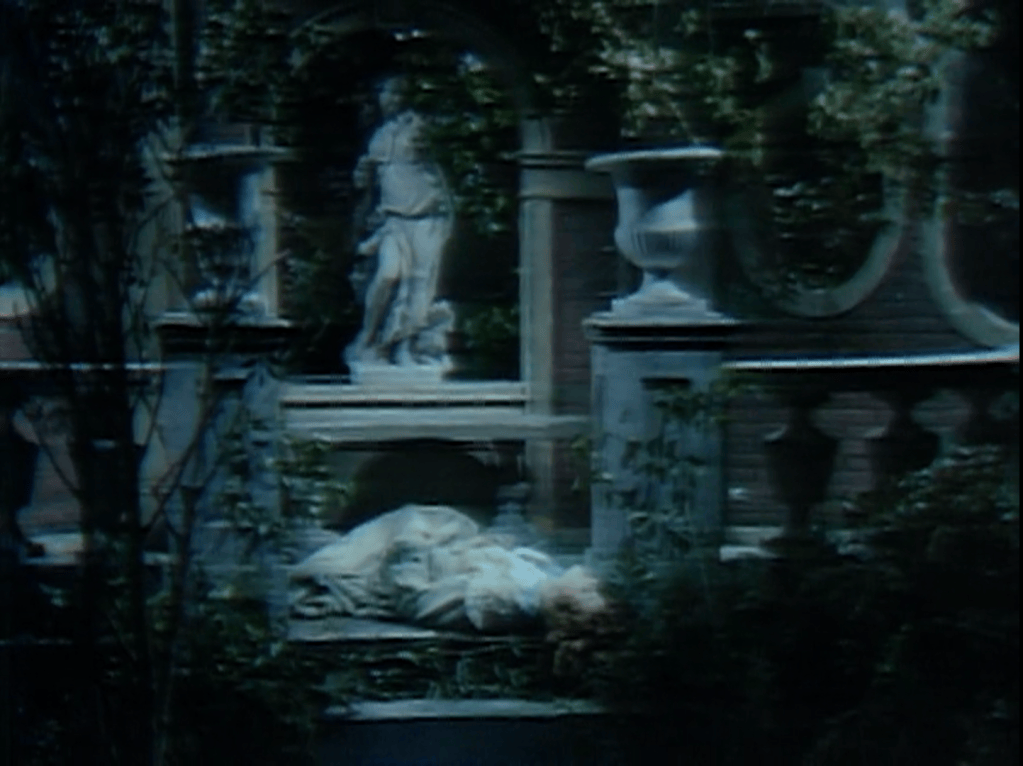
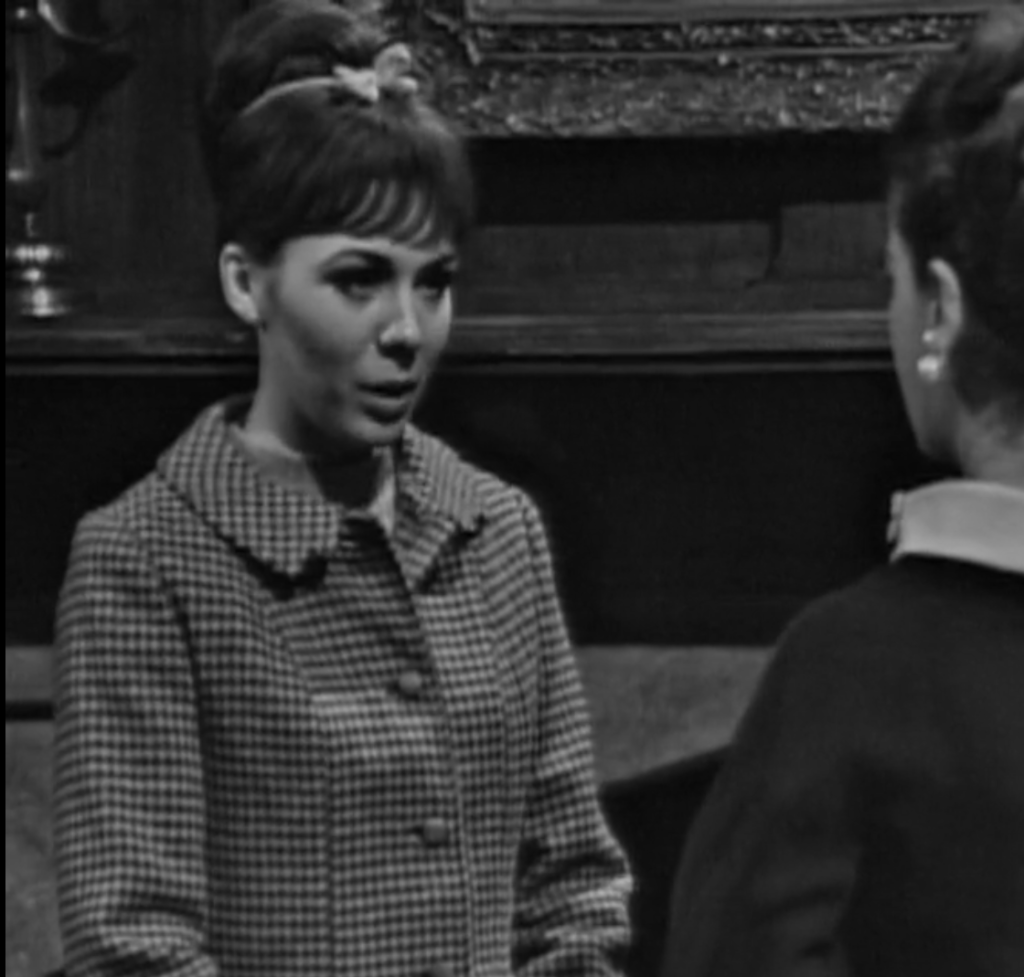
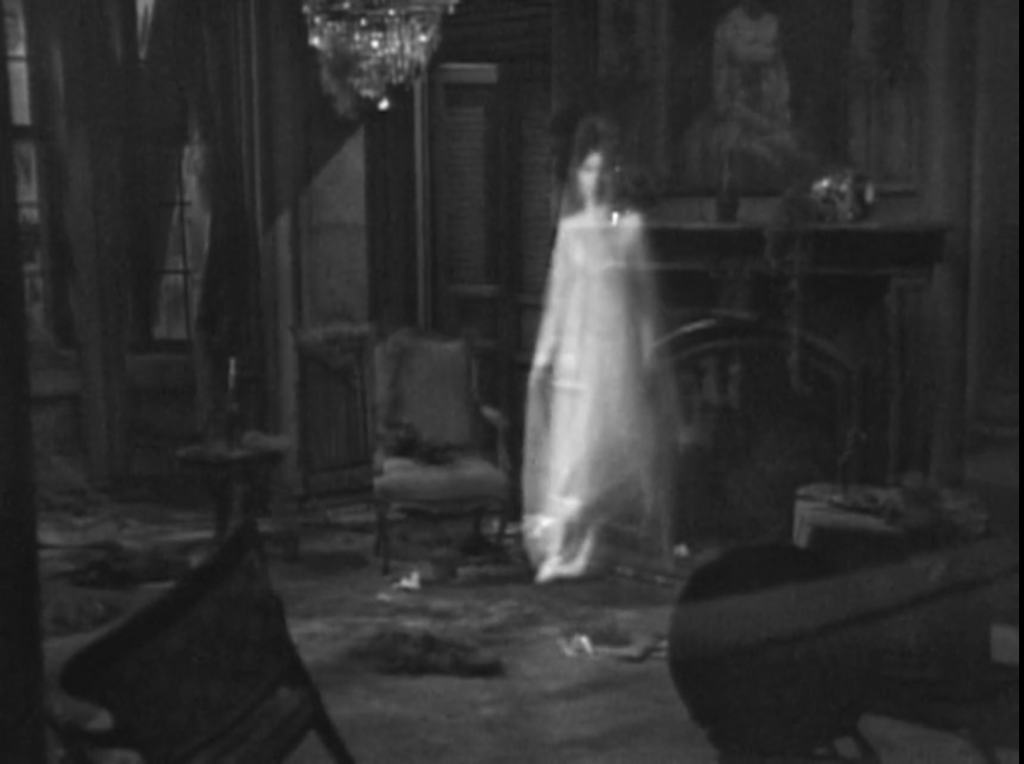
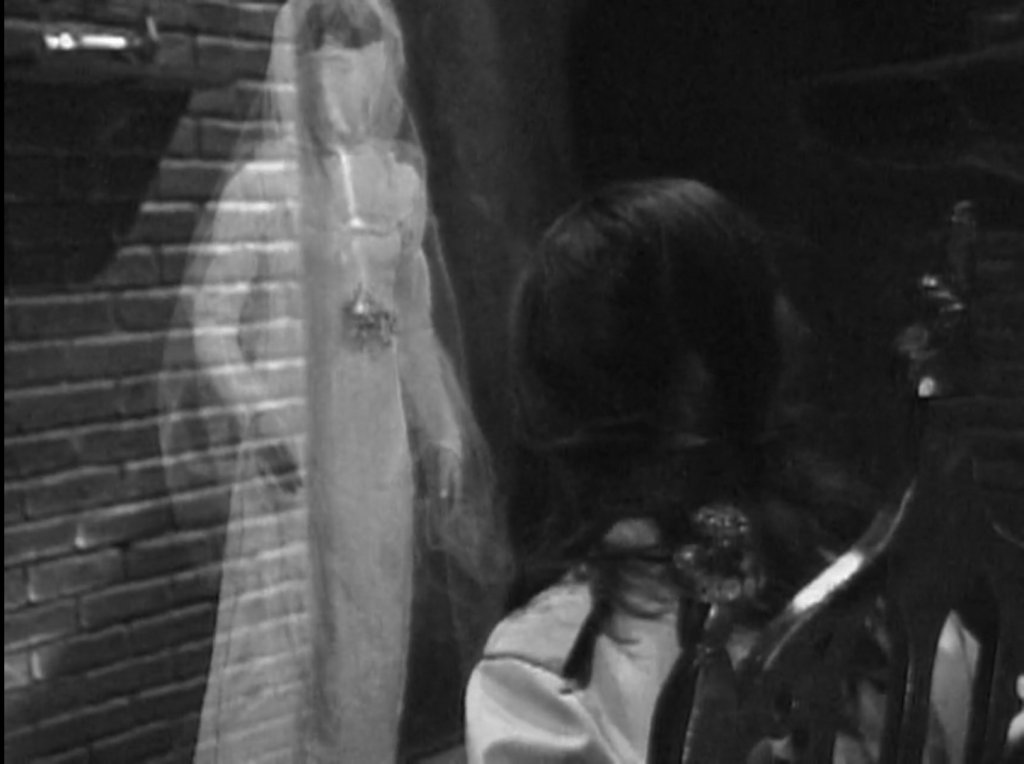
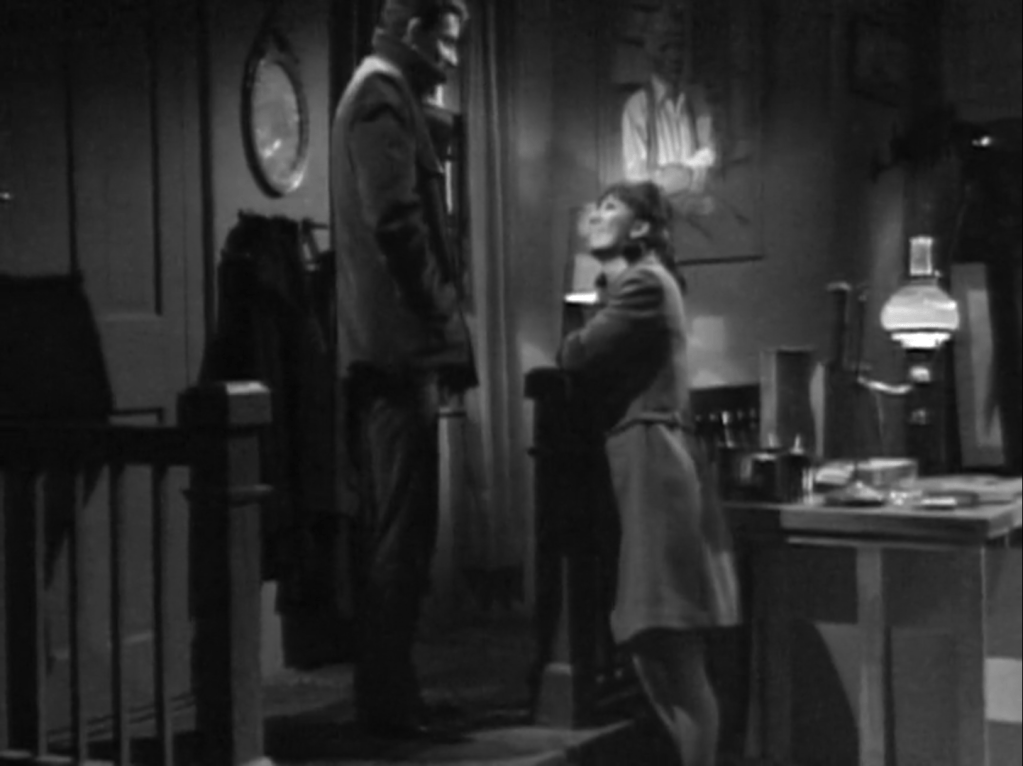
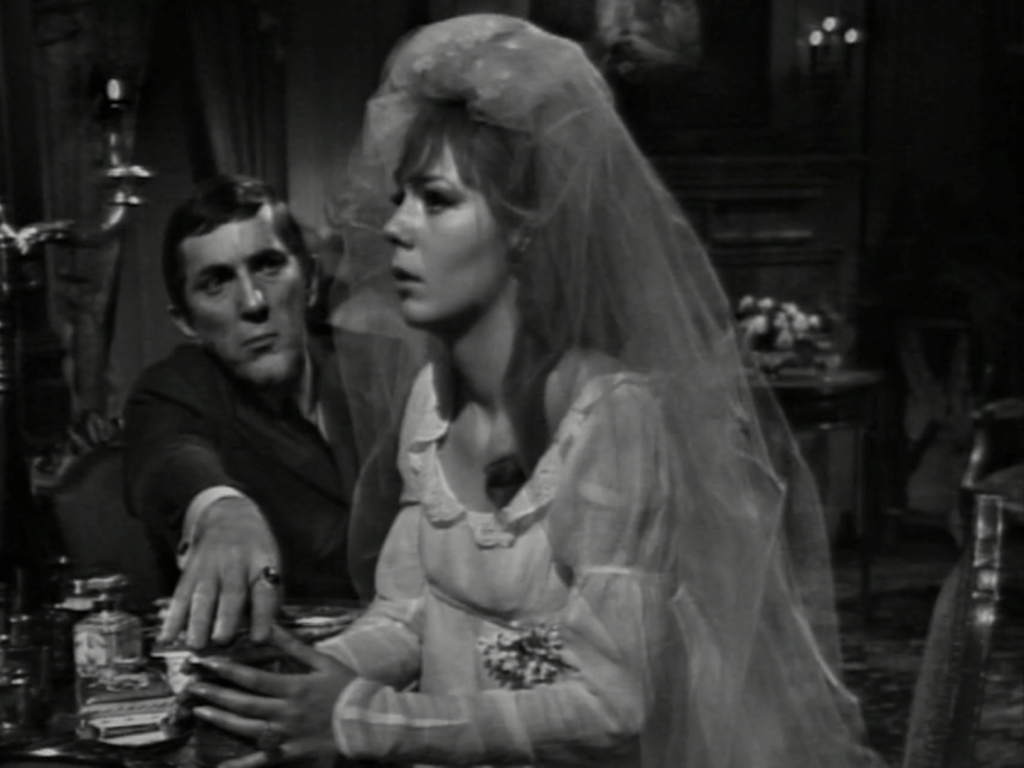
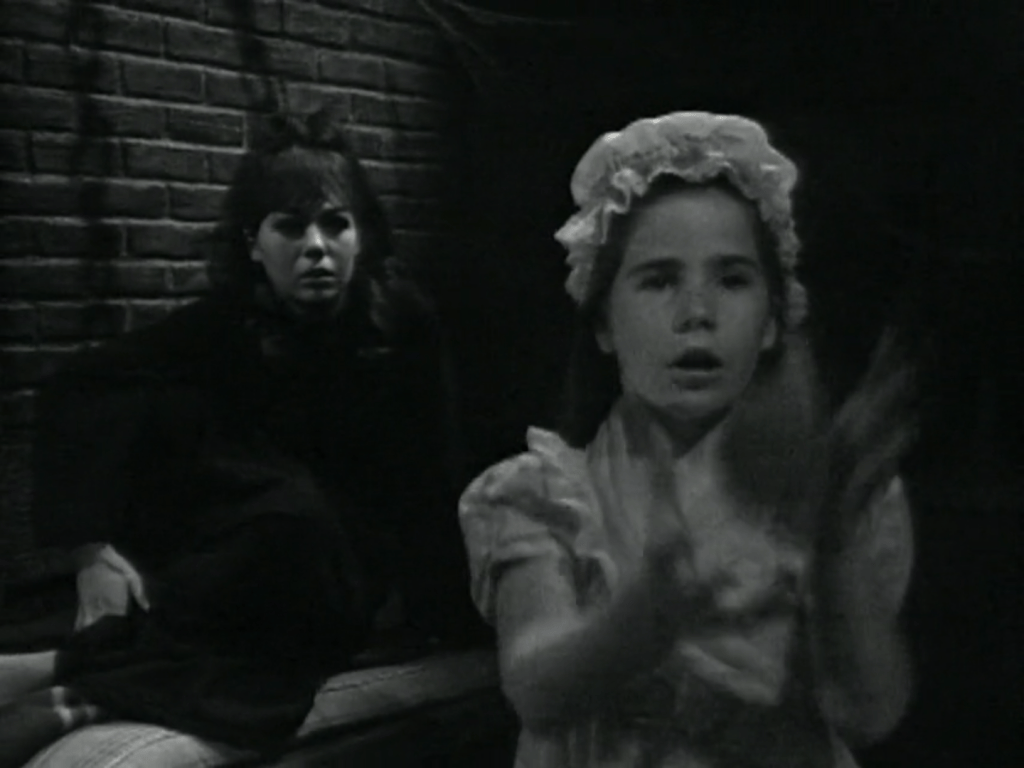
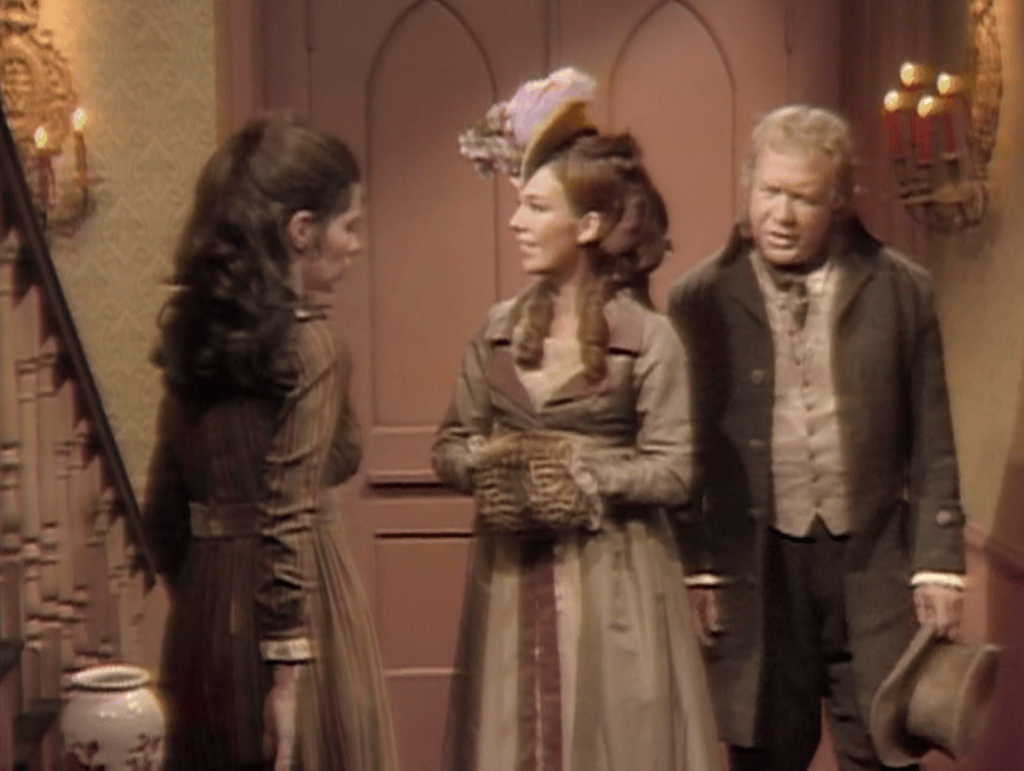
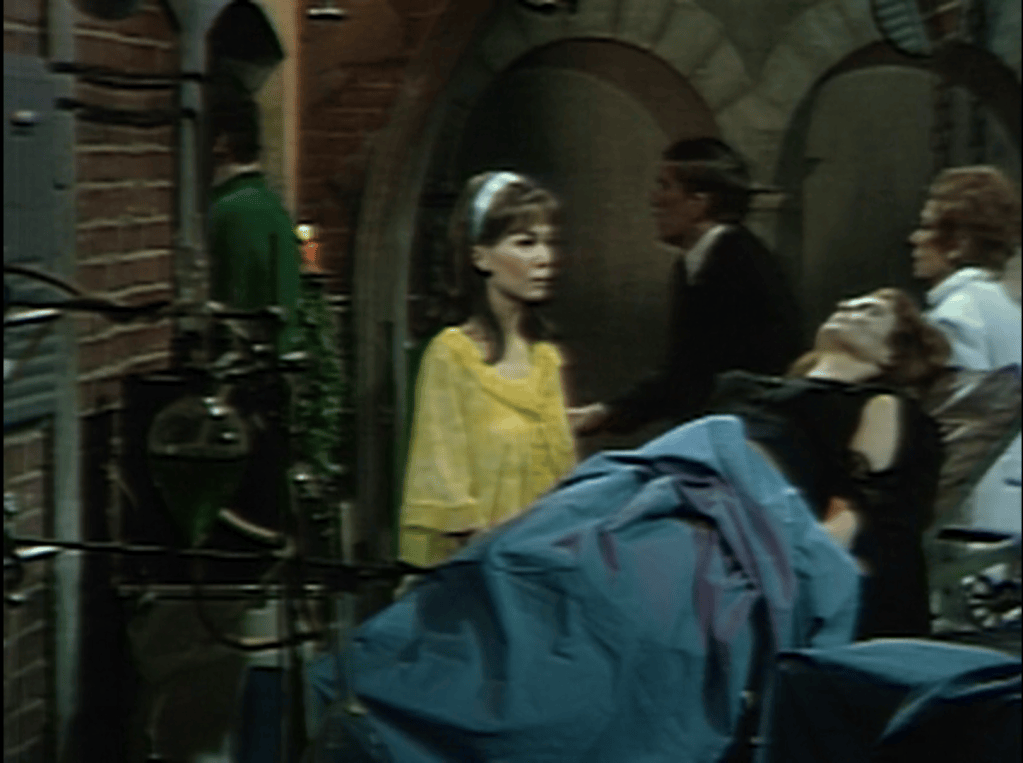
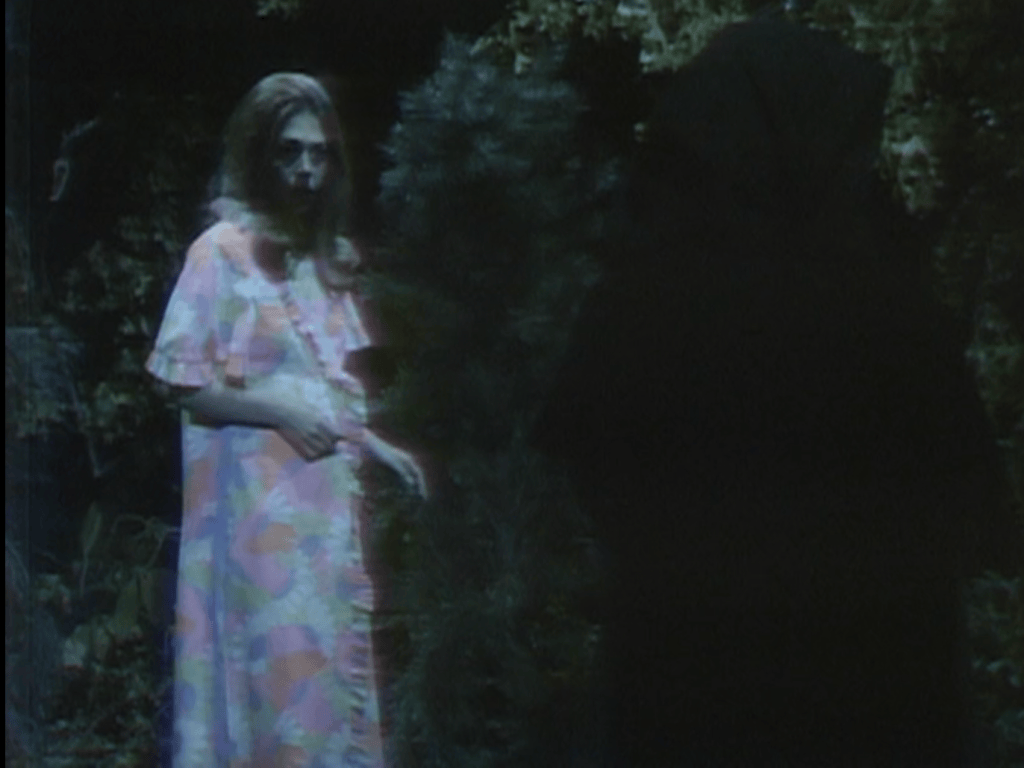
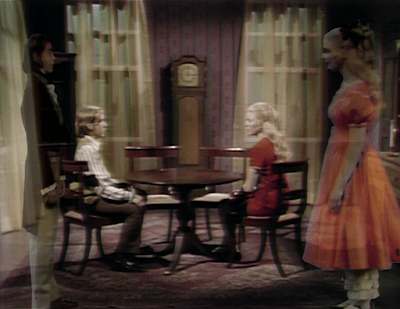
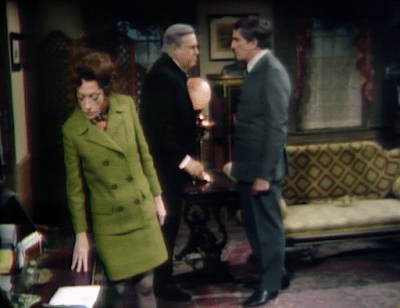
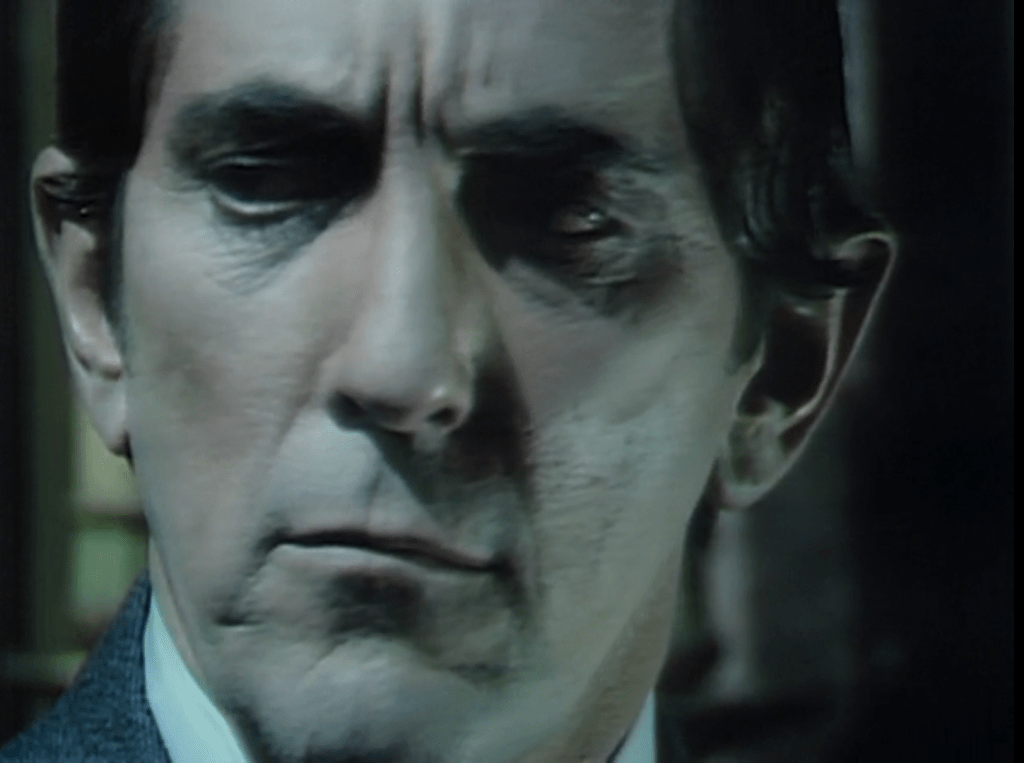
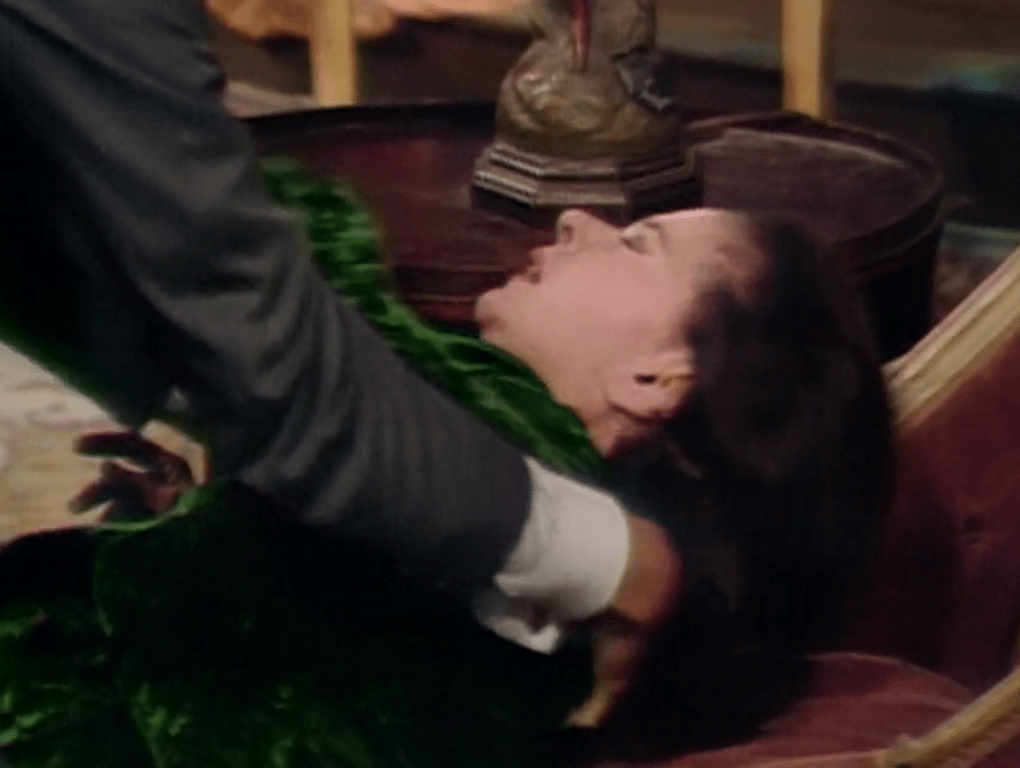
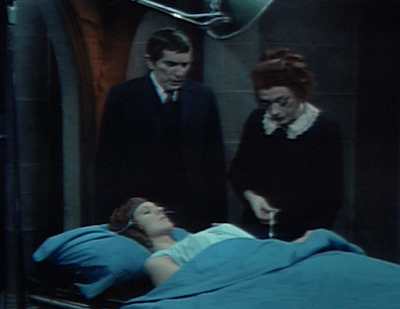
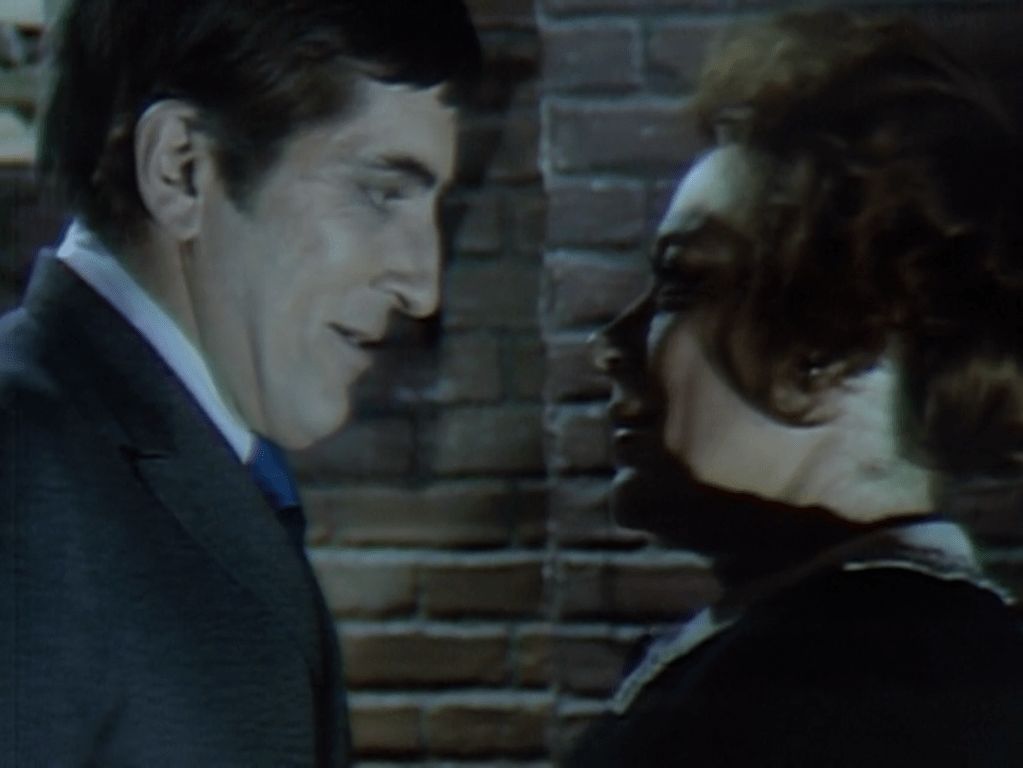
The year is 1840. Vampire Barnabas Collins summons his latest victim, Roxanne Drew. They meet at the gazebo on the grounds of the estate of Collinwood. He says he has a way they can be together forever. She says she would die for him. That’s what he had in mind. He bites her, drains her body of blood, and lets her fall to the floor of the gazebo. He tells her corpse that it will be found tomorrow, and that Roxanne will be mourned. The following night, she will rise as a vampire. He walks off, leaving her.
Roxanne, left like a cat leaves a mouse for its people to find.
Roxanne’s sister Samantha also has a new relationship, and may also be murdered as a result. Her husband, whose name is Quentin Collins, is missing and presumed dead after a shipwreck. Quentin and Samantha’s son Tad was with his father and is also missing. Quentin’s friend Gerard Stiles has been a guest at the great house of Collinwood for some time. We saw the other day that Samantha turns to Gerard when she needs comforting, and they kiss today.
After Gerard and Samantha’s love scene, Gerard is alone in the drawing room with Quentin’s brother Gabriel. He is in the act of walking out on Gabriel when Gabriel addresses him as “Mr Miller.” Gabriel leafs through a stack of papers about the life of crime Gerard led under his original name, Ivan Miller. Gerard grabs the papers from Gabriel. Gabriel clutches at Gerard’s arm and squeezes it so hard Gerard falls to his knees. Gerard is stunned by Gabriel’s strength. Gabriel gets around by pushing himself in a manual wheelchair, which does indeed build the muscles in the arms and upper back, so it is a believable moment.
Gabriel then hands Gerard the papers and says that they are his copy. He has another copy stashed where it will go to the authorities should any harm befall him. He says that he will hold them back provided Gerard makes himself useful to him. First he dispatches Gerard to acquire a large packet of arsenic. Then he tells Gerard that his next duty will be to poison Samantha with the arsenic a little bit at a time, so that she dies a painful, lingering death. Gerard says that he would rather just leave Collinwood and make a fresh start somewhere else rather than do that. Gabriel says that since Samantha’s death will make him the heir to his terminally ill father’s vast estate, he will be able to pay Gerard very handsomely for the task. He offers him 10% of the Collins fortune. Since Gerard apparently murdered a woman in Portugal a few years back, Gabriel is quite sure he will not be squeamish about murdering another woman, especially when he stands to profit so richly. Gerard says they have a deal.
In #1077, set in 1970, another Quentin Collins was reading the family history when he learned for the first time that he had a “grand uncle” who lived in 1840 who was also named Quentin Collins. Not even the family history mentioned Tad’s name. Since that Quentin was born in 1870 (though he looked much younger than his hundred years,) we could take it that neither Grand Uncle Quentin nor his widow was the one through whom ownership of the Collins family wealth passed to the other generations we have seen. Indeed, longtime viewers may recall that in #701 and #702, set in 1897, Quentin’s very elderly grandmother Edith Collins reminisced on her deathbed about her husband Gabriel. So we know that Gabriel and Edith are the parents of a son who will sire that other Quentin and his siblings, among them Edward Collins, whose son Jamison will go on to be the father of Elizabeth Collins Stoddard and Roger Collins, the adults at the great house in the 1960s.
As of this day in 1840, however, Gabriel’s father Daniel Collins has named his son Quentin his sole heir, with Tad in second place and Samantha in third. Told that Quentin and his son are dead, Daniel has refused to rewrite the will in Gabriel’s favor. Early in the episode, Samantha tells Gabriel that when Daniel dies, it will be up to her to take care of him and his wife, and that she will do so provided they behave themselves. Knowing that it does not work out that way, we can believe Gerard will actually carry out the assignment Gabriel gives him today.
The disappearance of Quentin and Samantha from the Collins family’s memory by the late nineteenth century is only the first of four reasons we might believe Gabriel’s plan will come to fruition. The second is the casting of Samantha. Virginia Vestoff was a splendid actress whose performance lets a great deal of fresh air into every scene she appears in. However, Samantha is Vestoff’s first role on Dark Shadows. If she were a member of the show’s established repertory company, we might be confident that Gerard will disappoint Gabriel and let her live. But first timers, even spectacularly talented ones with solid backgrounds on Broadway and in daytime television, often turn out to be short-timers. So her presence adds to the suspense about her character’s future.
The third reason is an echo of the circumstances of one of Dark Shadows‘ most prominent on-screen murders. In 1967, Barnabas coerced his associate, mad scientist Julia Hoffman, into preparing a lethal injection for her old friend Dave Woodard, who was threatening to expose their crimes. As Gerard brings the arsenic to Gabriel today, only to be shocked to hear that he will have to commit the murder himself, so Julia offered the hypodermic to Barnabas, only to be told that she would administer the deadly shot. The murder of Woodard actually came off, so longtime viewers have another reason to expect that Samantha, too, might die. And of course that Gabriel pulls the same maneuver on Gerard that Barnabas pulled on Julia shows that they really are members of the same family and that they are bearers of that family’s curse.
The fourth reason grows from what we have seen of the future of Collinwood. In segments set in 1970 and 1995, we have seen that Gerard’s ghost will destroy Collinwood and rule over its uninhabitable ruins for decades after. Today that starts to make sense. If Gabriel’s descendants own the house and hold their position in the community as the result of a hideous crime their ancestor committed through Gerard, then it is fitting that Gerard should be the face of the long-delayed reckoning for that crime.
I should mention that Vestoff is not alone in giving an excellent performance today. Christopher Pennock was pretty hard to take when he first joined the show as monstrous man-child Jabez Hawkes in #935; he moved well, but he delivered his dialogue with so much bombast that he stood out even among the cast of Dark Shadows. He was noticeably better as Jekyll/ Hyde characters Dr Cyrus Longworth and John Yaeger from #985, but still enunciated his lines too self-consciously to really draw the audience in. As astrologer Sebastian Shaw from #1073, he was a little more natural, but Sebastian was such a poorly conceived character that he couldn’t really show his stuff.
As Gabriel, Pennock finally comes into his own. He is smooth as silk in Gabriel’s scenes with Gerard today; it’s a pleasure to listen to him sidle his way from one syllable to the next. He’s just as pitch-perfect projecting Gabriel’s humiliation and uncontrolled rage in his scene with Samantha as he is at the opposite end of the emotional spectrum with Gerard. Certainly Vestoff and James Storm are first-rate scene partners; they may deserve a share of the credit for Pennock’s fine work. Or maybe he just needed to sit down, I don’t know.
It’s no news to fans of Dark Shadows that Jonathan Frid was capable of great work. He’s been on top form this week. The other day, Barnabas’ aged friend Ben Stokes told him a bizarre story, to which Barnabas replied “You’re mad, old man.” No actor could deliver Henry V’s dismissal of Falstaff, “I know thee not, old man” more heart-breakingly than Frid delivers that line. And watching his face as Roxanne falls dead in Barnabas’ arms, you can feel the terror and the awe of the moment. The murders sometimes come so thick and fast on Dark Shadows that watching them we can feel like we are seeing the coyote raise yet another the mushroom cloud at the end of his fall after failing to catch the roadrunner, and Barnabas himself often takes killing very lightly. But there is nothing cartoonish about what he does to Roxanne.
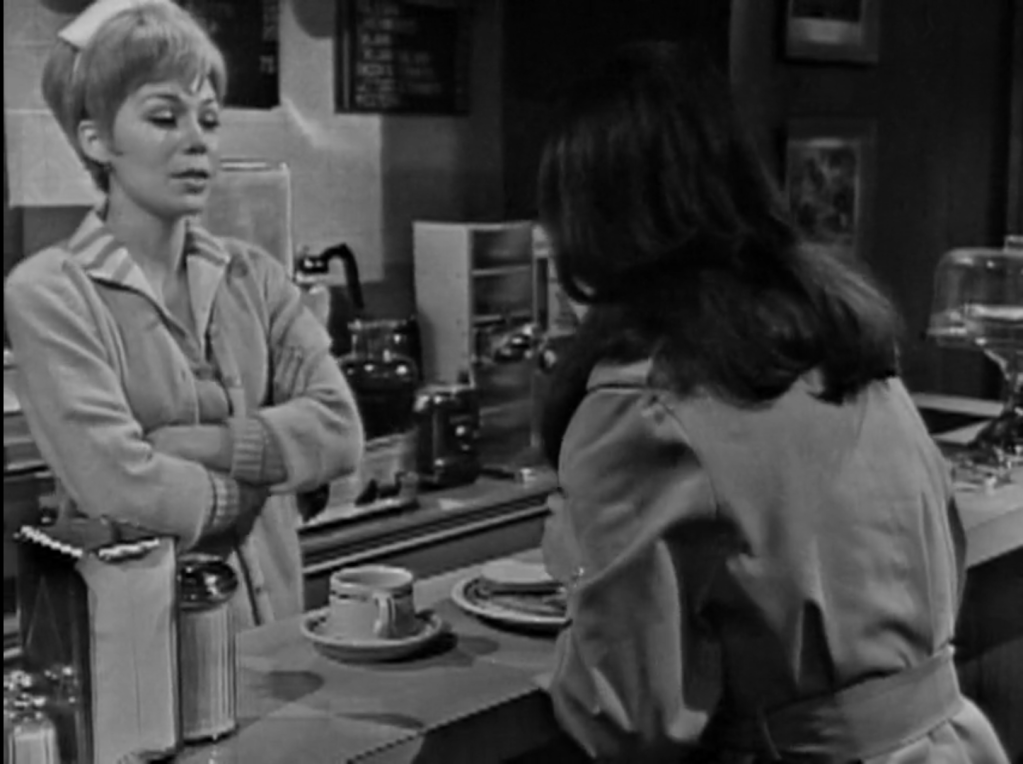
In episode #1 of Dark Shadows, first broadcast 27 June 1966, Victoria Winters came to the great house of Collinwood to serve as governess to strange and troubled boy David Collins. On her way, Vicki stopped at the Collinsport Inn and had a meal at the diner there. Her waitress was Maggie Evans, a young woman with short blonde hair whom the original story bible identified as “everybody’s pal and nobody’s friend.” Maggie opened their conversation by telling Vicki that she was a “jerk- J-E-R-K” for going to live at Collinwood. Maggie told Vicki that the great house would turn her long black hair gray in two months. When Vicki said she would go there anyway, Maggie offered her a “piece of apple pie on the house- and I won’t take no for an answer.”
Maggie lays it on the line for the new jerk.
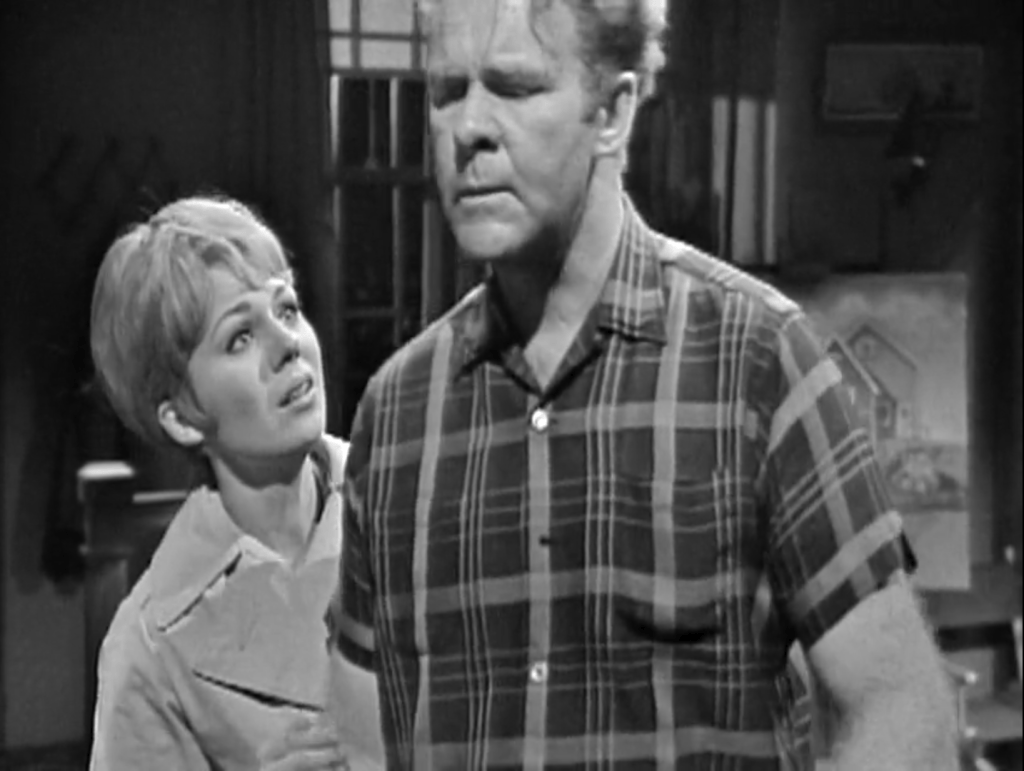
Maggie was the chief representative of Collinsport’s working class in the show’s first months. The diner was a meeting place for a variety of characters, so we saw her wait on all sorts of people. She shared her home, “The Evans Cottage,” with her father, drunken sad-sack Sam Evans. Sam’s career as an artist was ruined when he took a bribe from high-born ne-er-do-well Roger Collins and allowed his one-time friend, Burke Devlin, to go to prison alone for a crime of which Roger was also guilty. Sam’s misery and Maggie’s Adult Child of an Alcoholic (ACoA, they call it) mannerisms, such as laughing awkwardly whenever she begins to speak, attest to the dire consequences for the whole town of what goes on in the big house on the hill. As Maggie and Sam’s territory, the cottage was a space where Burke, who left prison and came back to Collinsport as a corporate raider, could talk about his plans to wrench control of the cannery and fishing fleet from the feudal-minded Collinses and bring the area into the age of capitalism.
From #12, Maggie at home with Sam. At that point, Sam was played (very badly) by Mark Allen.
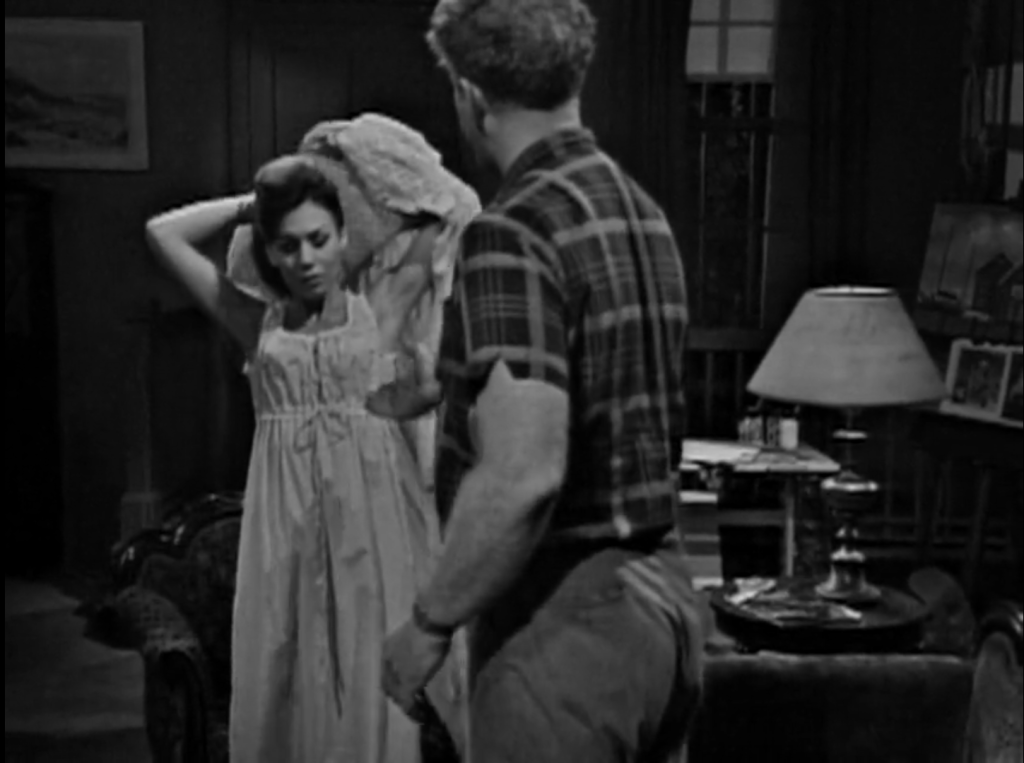
They eased up on the “everybody’s pal and nobody’s friend” business pretty quickly. Maggie’s short blonde hair was a wig seen for the last time in #12; from #20 on, she has Miss Scott’s long brown hair. When Miss Scott’s real hair came out, her real personality started to peek through as well. While Maggie could still make a caustic remark or a tactless one as occasion demanded, the signs were already there of her final form, The Nicest Girl in Town.
Our first look at Maggie as a brunette.
In #63, Maggie made her first visit to Collinwood. She had made a vow never to set foot in the great house, and was ill at ease when she broke it. With a great show of courage she stood up to matriarch Elizabeth Collins Stoddard. She told Liz that she believed that her family had information about what had gone wrong in her father’s life, and she wanted answers.
Maggie admits to Liz that she had to screw up her courage to come to Collinwood.
The supernatural was represented in the first months of Dark Shadows primarily by people using the word “ghost” as a metaphor when talking to Vicki, prompting her to reply “Surely you don’t believe in ghosts!?” They would then respond that they damn well did believe in them, and that if she went on living at Collinwood it wouldn’t be long before she believed in them, too. The first unequivocal sign the audience had of supernatural activity came in #70, when the ghost of the gracious Josette Collins emanated from her portrait above the mantel of the Old House at Collinwood, walked outside, and danced among the columns. The figure of Josette was none other than Kathryn Leigh Scott, who volunteered for the task when the original plan to achieve the effect without a performer fell apart.
EmergenceDance
Miss Scott reprised the role of Josette’s ghost in #126, wearing a heavy veil over her face. We hear her voice, with a French accent of sorts, telling Vicki not to be afraid even though a madman has tied her up and is on his way with an ax to cut her head off. Josette then leads the other ghosts of Collinwood in killing the madman before he can harm Vicki.
“I am Josette Collins.”
With that, Miss Scott became the first member of the cast to play multiple roles on Dark Shadows. For anyone who happened to recognize her voice in #126 and notice that she was in the credits, even though Maggie was not in the episode, the wised-up waitress and the ghost of Josette would have made an interesting pair. All we knew about Josette at that point was that her maiden name was LaFreniere, that she came to Collinwood in 1830 and married Jeremiah Collins, that she died by jumping off the cliff at Widows’ Hill, and that her ghost could be seen and heard around the estate. For all we knew, the LaFrenieres may have been a humble Franco-American family whom Jeremiah’s haughty relatives snubbed. She may have grown up in a house like The Evans Cottage, and her death might have been the outcome of a class conflict. Later, Josette’s family name would be retconned to DuPrés, her time of arrival to 1795, and she would be presented as a French aristocrat who was the daughter of one of the richest sugar planters on the island of Martinique, a description met in our universe by Joséphine de Beauharnais, wife and empress to Napoleon I.
In the first months of the show, Liz’ daughter Carolyn was dating hardworking young fisherman Joe Haskell. Carolyn and Joe were bored to tears with each other, and only kept going out because Liz thought they should. Joe and Carolyn finally broke up in #84, and he started dating Maggie by #129. Maggie and Joe were happy together, and soon planned to get married once Joe had saved up the money to go into business for himself with a boat and crew of his own. Their cheerful repartee was more agreeable to watch than were the many many scenes of Carolyn and Joe staring silently at each other, but it did not generate any story. It would be helpful that Joe and Maggie each had someone to talk to if they got involved in the plot in any way, but there were long stretches when we did not see either of them.
Maggie invites Joe to stay for a nightcap after a date in #129.
From December 1966 to March 1967, Dark Shadows was dominated by the story of undead blonde fire witch Laura Murdoch Collins. Maggie was very far from the center of the action during that period. Laura’s story gathered up the loose ends of all the ongoing stories, including “The Revenge of Burke Devlin” and the significance it gave to Sam’s alcoholism. That would clear the decks for the transformation of the show from a Gothic romance with occasional nods to the uncanny to a full-blown supernatural thriller.
After Laura went up in smoke in #192, Sam wrestled with the idea of admitting Burke that he had taken a bribe from Roger to stay silent in his case. Maggie had a tearful scene in #199 when Sam told her the truth. She urged him to make a clean breast of it. Even if he went to prison, he would be better off in prison than he has been these last ten years. In #200 and #201, Burke heard Sam’s confession and Roger’s, and decided to peace out. The Revenge of Burke Devlin never was a very exciting storyline, and it was apt that Burke himself eventually gave up on it.
In April 1967, Laura was succeeded as the show’s supernatural Big Bad by vampire Barnabas Collins. Barnabas met Maggie in #221, and shortly after added her blood to his diet. She went through a period bedridden in her room at The Evans Cottage, helplessly weak during the day and aggressively determined to deliver herself to Barnabas at night. Eventually he took her to his home, the Old House, where he set about erasing her personality and replacing it with that of Josette.
Barnabas with the partially Josettified Maggie in #241.
Despite Miss Scott’s appearances as the ghost of Josette in #70 and #126, the show had always associated Josette primarily with Vicki up to that point. At times it seemed Barnabas believed Maggie really was Josette come back to life; he certainly expressed himself with conviction in #260, when he sat with Maggie in the prison cell in his basement to which he had confined her after she started trying to resist him and said “But you are Josette!” And David, who had been very chummy with the ghost of Josette, saw Maggie in the dress in #240 and #241 and took her for Josette, remarking that her face looked exactly the same as it always had. In those moments, the show was nodding to the 1932 film The Mummy, in which Boris Karloff plays the undead Imhotep, who recognizes in Helen Grosvenor (Zita Johanns) the reincarnation of his lost love Ankh-Esen-Amun (also Zita Johanns.)
At other times, it seems that any pretty girl will do for arnabas’ fiendish plan. So in #274, after Maggie escaped and he decided to repeat the experiment with Vicki as the subject, Barnabas tells his sorely bedraggled blood thrall Willie Loomis that if you “Take the right individual, place her under the proper conditions and circumstances, apply the required pressure… a new personality is created.”
While Barnabas was holding Maggie in his basement cell, the ghost of his little sister Sarah showed up and befriended Maggie. It was she who helped Maggie escape. Sarah’s appearances turned out to be at least as big a turning point in Dark Shadows’ development as anything else that had happened up to that point, since it showed that the beings who lurked in the supernatural back-world behind the show’s action are starting to emerge into the foreground. Eventually, they will come on in force.
Sarah visits Maggie in her cell.
Maggie was sent off to a psychiatric facility called Windcliff after her ordeal as Barnabas’ prisoner. She had lost much of her memory and regressed to an almost nonverbal state. Her doctor, Julia Hoffman, probed into her mind, and soon learned the truth. Julia then went to Collinwood, where it turned out that her true loyalty was not to Maggie at all. She had been working on a cure for vampirism, and wanted to attach herself to Barnabas. When Sarah magically released Maggie from Windcliff and led her back to Collinsport, Julia betrayed her patient completely by using her powers of hypnosis to erase her memory and protect her abuser.
In November 1967, the supernatural back-world switched places with the naturalistic fore-world when Vicki traveled back in time to 1795. There, she met Josette, played by Miss Scott. That casting confirmed that Maggie really was the reincarnation of Josette, as Helen Grosvenor really was the reincarnation of Ankh-Esen-Amun. Those who remember how bleak the show was in May and June of 1967 when Maggie was in Barnabas’ basement can’t help but squirm at the thought that his attempt to torture her into expressing Josette’s personality was motivated by anything other than his utter loathsomeness, yet here the show is telling us that, however unsound his methods may have been, he had a point.
Josette’s first appearance as a living being, in #370.
When the show returned to contemporary dress in March 1968, it was a Monster Mash with a cast drawn from the whole back-catalogue of Universal Studios horror pictures from the 1930s. Wicked witch Angelique struck Sam blind; later, he befriended Frankenstein’s monster Adam. Not knowing his own strength, Adam would accidentally kill Sam. The story moved so fast in those days that Maggie didn’t have much time to mourn her father.
Angelique defied her master, suave warlock Nicholas Blair. To punish her, Nicholas turned Angelique into a vampire. Angelique took Joe as a victim, wrecking his relationship with Maggie. In #599, Maggie had recovered her memory of her own time as Barnabas’ victim, and she saw Angelique biting Joe. She pleaded with Joe to run away with her, urging upon him the hope that there was still time for them to escape. Then, Nicholas got hold of them. He erased Maggie’s memory again, leaving her cheerful and Joe beyond help.
Shortly thereafter, Nicholas and Maggie went on some dates. Nicholas had plans for Adam that required a woman to risk her life. In #633/634, Maggie accompanied Nicholas to the basement of the Old House, where he was forcing Julia and Barnabas to do his bidding. Maggie calmly and cheerfully volunteered to serve the function Nicholas had in mind for her. She looked around the basement and mentioned that she had spent a great deal of time there, indicating a knowledge of everything that had happened to her in that place before. When Nicholas threatens to kill both Adam and Barnabas if he does not get his way, Julia tells Maggie to stop him. Maggie blandly asks why she should. Her willingness to risk her life seems to be the measure, not of her resignation to her fate, but of an indifference to human life so total as to include her own life. Maggie was under a spell then, and when Nicholas’ plans failed she became her usual self again. But in that scene, we catch the only glimpse we will ever get of Evil Maggie. It is thrilling.
Maggie working with Nicholas in #633/634.
Not long after Nicholas’ defeat, Vicki disappeared. Maggie took her place as the new governess at Collinwood just in time for a story that calls for a new governess, an adaptation of Henry James’ The Turn of the Screw. Unlike the famously unreliable narrator of that novella, Maggie is not an overpowering presence who would obviously a danger to the children in her charge even if she were right about the ghosts. Instead, she is a squish, a completely ineffective teacher whom David and his live-in playmate Amy Jennings easily wrap around their fingers.
That’s a long way from the hard-boiled dame in the short blonde wig. Nor is it what we would have expected of the plucky heroine who fought her way back from dependence on the vampire’s bite to escape Barnabas in June 1968. It works in the story, though, and we’ve all known people who are tough and efficient in one situation but who go to pieces in a different kind of situation. And if we remember #63, we know that even when she was at her most hard-bitten Maggie couldn’t keep from trembling at the thought of Collinwood, so longtime viewers can believe that Maggie would be unable to bring herself to discipline David, who is after all one of Liz’ principal heirs.
The “Haunting of Collinwood” segment ended with another trip back in time, in this case to 1897. In that period, Miss Scott played Rachel Drummond, a neurotic intellectual hired to act as governess to children Jamison and Nora Collins. Rachel had spent the first twenty-odd years of her life under the thumbs of the horrendous Rev’d Mr Gregory Trask and his equally unspeakable family, wife Minerva and daughter Charity. The show gave Miss Scott enough to work with that we could see why Rachel kept going back to the Trasks and submitting to further abuse from them.
Miss Scott’s performance as Rachel was a finely observed and persuasively realized study of the psychology of dependence, which is probably why the fans all hate it so much. Dark Shadows was such a slam-bang adventure show at that point that Rachel seemed to have wandered in from the Strindberg play in the theater down the street. But so far as I’m concerned, she anchors the whole 1897 segment. Every story in it depends on our dread of the Trasks. They are the villains in the part that is concerned with the danger that they will take control of Collinwood. The Collinses are such a mess that the Trasks have to be something special to make us see them as a step down. The other parts of the segment require that we enjoy watching or even root for villains who are so wicked that we might be expected to want them to be stopped immediately. It is because they are a relief from the Trasks that we can find sympathy for werewolf Quentin Collins, can be amused by sorcerer Count Petofi, and can be glad that Angelique makes friends with Julia and Barnabas. Rachel’s torment shows us just how much is at stake in the battle against the Trasks and makes those reactions possible.
Rachel died halfway into 1897. After a bit, Miss Scott returned to the cast as Kitty Soames, a young American woman who is the dowager Countess of Hampshire. Kitty schemes to marry stuffy Edward Collins for his money, while he wants to marry her for her money. As it happens, they don’t have a cent between them. This farcical situation is executed with charm and wit, and as Kitty Miss Scott proved that she could play a character who is not The Nicest Girl in Town.
Kitty’s story came to a bizarre end. It turned out that she really was the reincarnation of Josette, that Josette’s personality was lurking in her subconscious, and that she wanted to trade places with her and live again. Barnabas was all for this, and he and Kitty vanished from 1897 into Josette’s portrait. They came out in 1796, where Kitty was indeed an inchoate memory somewhere in the depths of Josette’s mind. Barnabas tried to prevent Josette dying, but succeeded only in diverting her from her leap off the cliff to a fatal dose of poison. Poison was a suitable way to end that story, since it left a bitter taste in the audience’s mouths.
When the show was back in a contemporary setting in February 1970, Josette’s ghost appeared one last time. In #948, she told Barnabas that it was over between them, and that he should get a new girlfriend. In March, it looked like he and Maggie were becoming an item. She was certainly interested in him. In #973, she asks the newlywed Carolyn how married life is treating her, and mentions that she has a dinner date with Barnabas. When Carolyn responds that “Oh, maybe you and Barnabas…,” with the implied conclusion “will get married soon, Maggie doesn’t contradict her. It is unclear how Barnabas can take Maggie to dinner- she doesn’t know that he’s a vampire, and if she looks up from her salad to see him munching on one of the girls at the docks she will probably catch on. But for a couple of weeks they are getting remarkably cozy.
In #980, Barnabas traveled to an alternate universe, which the show insists on calling “Parallel Time.” In Parallel Time, Maggie’s counterpart is married to Quentin’s. Parallel Quentin is an abusive jerk, and he and Maggie Collins never have a single happy day together. This Maggie stands up for herself in #985. In one of the very best scenes Miss Scott ever played on Dark Shadows, she objects that Quentin insists on talking to her “like a child, and I am not a child, and I refuse to be treated like a child.” She walks out of the house and does not return until #1016.
Maggie Collins refuses to be treated like a child.
The six weeks of Maggie’s absence were the six weeks Miss Scott was in Tarrytown, New York for principal photography on the feature film House of Dark Shadows, in which she played the lead. When we see Maggie again, she is in her sister’s apartment in New York writing a letter to Quentin saying that it is time to formally end their marriage. She crumples that letter up before the phone rings and she learns that Quentin is gravely ill. Whether she would have written another draft making the same point, we never find out.
Maggie goes back to Collinwood, where Quentin dishes out more of the same stuff. This time she does allow herself to be treated like a child. It is a demoralizing thing to see. We don’t get enough of Maggie Collins’ backstory to give Miss Scott room to etch a portrait of the psychology of defeat like that which made Rachel such a triumph for her. Worst of all, Quentin is not in the position of the Trasks- we aren’t supposed to hate him. On the contrary, we can get invested in the story only to the extent that we like him. Seeing how he treats Maggie, that extent is zero.
In July 1970, Barnabas returned to the original continuity. After a few days we saw that Maggie was distraught that he wasn’t coming around anymore. Other characters tried to explain that he and Julia had learned of a terrible menace facing Collinwood and were busy trying to fight it, and they did eventually enlist Maggie in their efforts. But she is still disappointed that her romance with him has fizzled. Considering that Barnabas’ attempted Josettification of Maggie was the story that first made Dark Shadows a hit, and that it is retold in House of Dark Shadows, you don’t have to be a longtime fan for this attitude to make you queasy.
For the last couple of weeks, Maggie has been the victim of a vampire other than Barnabas. This turns out to be Roxanne Drew, counterpart of a woman Barnabas fell in love with in Parallel Time. Barnabas has taken male victims before, but this is the first time a female vampire has taken a female victim. They never showed Barnabas biting Willie or the luckless Dirk Wilkins, while they often lingered over him biting female victims and Angelique, in her vampire phase, biting male ones. The ABC network’s office of Standards and Practices was vigilantly on guard against any exploration of homoerotic imagery. We never see Roxanne bite Maggie, though the final image of #1104 does show Maggie with a startlingly raw look of longing as she approaches a veiled Roxanne.
She wants her disease.
We see Maggie for the last time today. She is in a car, being driven back to Windcliff by strangely dressed man Sebastian Shaw. Some speculate that this ending was a private joke on the part of executive producer Dan Curtis, who thought that Miss Scott was crazy to want to leave the show and move to Paris with her husband, photographer Ben Martin.
The last of Maggie.
Be that as it may, it is a nice touch that the final reference to Windcliff should be in connection with Maggie, for whom it was invented in the first place. Her stay there brought Julia onto the show, and Julia, for all her villainy, has for some time been the chief protagonist and audience identification character. Sending her there also leaves open the widest range of options for ways to bring her back. Maybe she will still be a patient there, as she was when she played a mad scene in #265 that was the single most frightening moment in all of Dark Shadows. Or maybe she will return to Collinwood, or maybe she will become a monster, or maybe something else will happen. Anything is possible.
Except that nothing is possible. The ratings are going down, Curtis and the writers are exhausted, and the public has moved on from the mood that made Dark Shadows one of the big fads of the late 1960s. The loss of Miss Scott, a performer who gave the show so much of its heart, is a nail in a coffin that was almost fully built already. House of Dark Shadows is in the theaters, and it is a big enough hit that MGM will greenlight another film in the franchise. But the series is on a one-way road to cancellation. In April 1971, Mrs Ben Martin will pick up an American paper from a newsstand in Paris and be astonished to read that Dark Shadows has broadcast its final episode.
In the years since, Miss Scott has been perhaps the most assiduous member of the original cast at keeping the fandom alive. No one has attended more of the conventions; she presided over the last two, held this year. Her publishing firm, Pomegranate Press, has put out many Dark Shadows-themed books, some of which she herself wrote. She, along with Jonathan Frid, David Selby, and Lara Parker, had a cameo in Tim Burton’s 2012 Dark Shadows film. She took roles in many of the audio drama continuations of the show produced by Big Finish, and she is the voice performer for the audiobooks of “Marilyn Ross'” Dark Shadows novels. If Dark Shadows was a projection of the personality of Dan Curtis while he was alive, in the last twenty years Kathryn Leigh Scott has been the first lady of the world of Dark Shadows, and has done more than anyone else to set the cheerful, welcoming tone of its fandom.
Dark Shadows began in June 1966, when well-meaning governess Victoria Winters was on her way to the great house of Collinwood to take charge of the education of strange and troubled boy David Collins. David’s aunt, matriarch Elizabeth Collins Stoddard, had written to Vicki to offer her the job; his father, Liz’ brother Roger Collins, was opposed to Vicki’s hiring. Roger’s opposition rose from mild disapproval to paranoid fervor when he learned that his arch-nemesis, Burke Devlin, rode into the village of Collinsport on the same train as Vicki.
In the months that followed, the only story that consistently worked was Vicki’s attempt to build a friendship with David in spite of his vicious and at times murderous hostility towards her. Later, David met Burke, and the two of them quickly bonded over their shared hatred of Roger. For his part, Roger was haunted by the thought that Burke was David’s biological father, a thought which Liz forbade him to express.
For a long time, David continued to be the pivot on which the story turned. Crazed handyman Matthew Morgan abducted Vicki and tried to kill her; that crisis reached its emotional peak when David found Vicki bound and gagged in Matthew’s hiding place and refused to rescue her. David’s mother, undead blonde fire witch Laura Murdoch Collins, came back to claim him, which would have meant his death. That arc ended when David ran from the fishing shack Laura had set ablaze and flung himself into Vicki’s arms. With that, he chose Vicki and life over Laura and death, appointing Vicki as his new mother. That marked the conclusion, not only of the David and Vicki story, but of Dark Shadows 1.0.
As the show reinvented itself, David remained the key to the action. The two long costume drama inserts that established Dark Shadows as, first and foremost, a show about time travel, the trip to the 1790s that lasted from November 1967 to March 1968 and the trip to 1897 that ran from March to November 1969, were both prompted by attempts to protect David from a looming supernatural menace. Though he was not an active participant in either of those stories, it was his peril that triggered them, and attempts to protect him and his analogues in previous generations of the Collins family that set the boundaries of the possible action.
As of this episode, all of the characters mentioned above are off the show. Vicki made her final appearance in #665*; Matthew made his in #123; Laura in #191**; Burke in #344; Roger, in #979***. Liz made her last substantive appearance on Friday; she will have one brief scene in #1198, simply to mark the end of a storyline. David leaves the show today.
In the early parts of today’s episode, David and his fellow teenager, houseguest Hallie Stokes, are being led through the woods by the unspeaking ghosts of two people who died in 1841. David’s psychopomp is the late Gerard Stiles, who was apparently a pirate when he was alive but has become a landlubber in death. Hallie’s is the late Daphne Harridge, who was once the governess at the great house. Daphne’s charges were Tad Collins and Carrie Stokes. Hallie and David have spent vast amounts of time moaning about how the ghosts of Carrie and Tad are going to take possession of their bodies and erase them from existence. Much of this moaning has taken place in a mysterious room which they call “The Playroom.” The Playroom intermittently exists in a obscure corner of the great house. When it materializes, it can be found behind a door that at other times opens onto a linen closet. Gerard, Daphne, Tad, and Carrie have free rein in The Playroom.
There is a dollhouse in The Playroom that the ghosts like to play with when David and Hallie aren’t looking. This dollhouse is a scale model of Rose Cottage, a mansion which stood somewhere near Collinwood in 1840. It is in some supernatural sense identical with that mansion. In #1082 and again in #1093, it was made clear to Hallie and David that they are fated to become dolls confined to this dollhouse, and that any living that is left for their bodies to do will be done by Carrie and Tad.
Daphne and Gerard take Hallie and David to a full-sized version of Rose Cottage that stands in the woods. It is unclear whether this mansion is visible all the time, or if it comes and goes as does The Playroom. The latter would seem more likely, since it is such a big place it is hard to imagine it would have escaped the notice of the people who have heard the expression “Rose Cottage” and have recently been trying to figure out which of the big houses in the area was around in 1840 and could have been known by that name in that year.
Gerard gets David to Rose Cottage while Daphne and Hallie are still making their way through the woods. David takes a nap in the corridor outside the upstairs parlor where the dolls are kept. He has another dream like the one he and Hallie both had in #1082, in which they are in the upstairs parlor. Daphne is in his dream. She smiles. Her smile is more unsettling than Gerard’s sneer. David wakes up and finds that Daphne is there, with Hallie.
David says they must resist; Hallie says it is too late. Then there is a commercial break. When we come back, they are in the upstairs parlor. Hallie notices the dolls are gone. David says they are no longer needed. Hallie says they must resist; David says it is too late. David Henesy manages to make David Collins’ part in these two scenes work. In the corridor, David is conflicted, trying to sound brave as he says the words about resisting but looking helpless as his eyes turn to the ghosts. In the parlor, he is simply defeated. His performance sketches a clear line between these two emotional states.
Kathleen Cody is less successful as Hallie. She seems to have come to terms with the reality while in the corridor. In the parlor, she flips back into Hallie’s usual mode, maximum possible tension. It doesn’t help that her dialogue is a bunch of questions about why they can’t resist. In context, those questions are just nonsense, and Hallie’s abrupt switch from quiet resignation to extreme plangency is inexplicable. My wife, Mrs Acilius, asked if they were trying to make us root for the ghosts who promise to shut Hallie up.
This story is the second time Dark Shadows has adapted Henry James’ The Turn of the Screw. The first time through, in late 1968 and early 1969, David and his friend Amy Jennings took turns in the role of Child Who Enforces the Will of the Ghosts and Child Who Resists the Will of the Ghosts. That got to be frustrating, but at least they waited until the episode was over to switch roles. Switching them during a commercial break is just a slap in the face of the audience. Miss Cody’s decision to play Hallie at such a high level of agitation so much of the time was a costly mistake, but no performer could really have saved the part.
The ghosts indicate that David and Hallie are to take their seats at the table where the dolls usually sit. When they do so, we jump to a somewhat lower camera angle. This cut does indeed make it look like Hallie and David are small figures inside a small space. Henry Kaplan directed this episode. I usually have a lot of complaints about Kaplan. His preferred visual strategy was to cut from a closeup of one face to a closeup of another face to an extreme closeup that shows at most part of a face. But this shot achieves a subtle effect, and that effect tells the whole story. I can’t suppress a suspicion that Lela Swift stepped in and set the shot up for Kaplan, but even if she did he deserves credit for not fouling it up.
Carrie and Tad come into view. Carrie superimposes herself on Hallie’s body, Tad superimposes himself on David’s, and both ghosts fade out. As they do, we hear Tad say “Goodbye, David,” and Carrie say “Goodbye, Hallie.” We will see Carrie and Tad in the persons of Hallie and David for some time, but will never see either David or Hallie again.
I remembered this closing image vividly from our previous watch-through of the series. I misremembered the lines, though. I recalled David and Hallie saying goodbye to each other, not the ghosts saying goodbye to the teenagers as they took possession of them. I think it is better the way it is. We are supposed to be horrified at Carrie and Tad’s thoughtless cruelty as they annihilate Hallie and David, and denying them even the opportunity to bid each other farewell serves that purpose. Unsatisfactory as are the rest of the episode and indeed the rest of the David and Hallie story, this closing shot is highly effective.
*Alexandra Moltke Isles last played the character in #627. Two other actresses succeeded Mrs Isles in the role.
**Another iteration of the character appeared in 20 episodes between #729 and #760.
***Another version of the character appeared in 17 episodes between #975 and #1055.
The sun has set, and vampire Barnabas Collins is opening the lid of his coffin in the basement of the Old House on the estate of Collinwood. Suddenly a cross is thrust in his face. He recoils from it, crying in pain and becoming immobile. The cross is wielded by the sheriff of Collinsport, who announces “I know all about you, Barnabas Collins!”
Before the sheriff can take matters any further, a teenage girl appears nearby. Shocked to see her, he reels away from the coffin. He jabbers at her, saying that he recognizes her and pleading with her not to come closer. Barnabas grabs him from behind and strangles him to death.
Barnabas didn’t have anything against the sheriff, but can’t deny that it feels good to use the old strangling muscles again. Screenshot by Dark Shadows Before I Die.
Barnabas goes upstairs and finds his best friend, mad scientist Julia Hoffman. He tells Julia that the sheriff’s gun was loaded with silver bullets, and that only the manifestation of the ghost of Carrie prevented his destruction. The police know about him, and more officers will be coming any time. Julia admits that she told the sheriff about Barnabas. Shocked, he says “You betrayed me?” He has said these words many times, always as a prelude to extreme violence. Julia braces herself, expecting the same. But to her amazement, Barnabas is gentle and understanding. He realizes she is under the sway of an evil ghost named Gerard. She says that she will betray Barnabas again and again, and urges him to leave without her. He says he will never do that. She embraces him, weeping, and he comforts her. For most people, a day that begins with the murder of a policeman is a day when nothing goes well, but Barnabas is not like most people. This is far and away the most mature behavior we have ever seen on his part.
The year is 1995; Barnabas and Julia have come unstuck in time and found themselves at Collinwood 25 years after a mysterious disaster wrecked the great house on the estate, ruined its inhabitants, and left Gerard in charge. They believe they can travel back to 1970 and prevent the disaster from ever occurring, if only they can find out what it was. Barnabas’ distant cousin Carolyn left him a note yesterday consisting of six cryptic phrases which he took to be clues, but Gerard killed Carolyn before Barnabas could ask her to explain them.
Barnabas has brought occult expert Timothy Eliot Stokes to the Old House. We find Stokes exclaiming to Barnabas “You killed the sheriff?” Barnabas confirms, “Yes, I killed him.” Stokes replies, “Everyone’s going mad. It’s the effect of this place. I’m not surprised at your terrible story. Horrified, not surprised.” One wonders what the story was that Julia and Barnabas told. Stokes’ role in the parts of the show set in contemporary times was always limited, because he is too decent and law-abiding to be a party to the continued existence of a vampire. He could never be allowed to learn the truth about Barnabas. He stays in the room, chatting amiably with Barnabas and Julia, so clearly they haven’t told him now, either. Perhaps they just told him that the sheriff was going to shoot Barnabas, and let him assume that the reason was that Gerard was making him do it.
Be that as it may, Stokes is still aware of the situation. “Do you realize that I will be implicated in all this if the police come here?” he asks. They say that they do, but that they desperately need him to make a third for a séance. He dismisses as hopelessly naive the idea that Gerard would allow a séance to succeed, but Barnabas says that Gerard may not have the power to prevent Carolyn’s spirit coming through and telling them what her note meant. The idea of one spirit trying to block another from emerging out of the supernatural back-world and speaking at a séance harks back to the very first séance on Dark Shadows, in #170 and #171, when undead fire witch Laura Murdoch Collins used her powers to impede the spirit of the gracious Josette from warning the company about her. Stokes gives in and agrees to participate; Julia, self-conscious because of her compromised position, is reluctant, but Barnabas proclaims that if Carolyn is to speak it will be through her.*
The séance begins. Julia goes into the trance, and starts speaking in what appears to be Carolyn’s voice. If this is Grayson Hall’s Nancy Barrett imitation, it is terrible. Mrs Acilius and I laughed out loud at it. But the voice does not give any useful information, and Julia is under Gerard’s power, so it is also possible she is faking the trance to throw Barnabas off. In that case, it is Julia’s Carolyn imitation, and it reminds us of the ups and downs in the relationship between those two characters.
When the séance is over, Stokes says he feels a presence. He rises from the table, drifts towards the window, and sees Gerard watching him from outside. Gerard touches the pane. Stokes staggers back, descends into a chair, and becomes still. Barnabas finds that he is dead. He looks up and realizes that Julia has fled the house.
Julia has gone to the great house. She is in a mysterious playroom with Gerard. Gerard gives her a dagger. She asks if she “must.” She is reluctant, but finally works herself up to joy as she says that she always knew it would come to this, that now she will be with Gerard as he wants her. She lifts the dagger to stab herself in the heart.
Barnabas enters. He confronts Gerard. As the two beings from beyond the grave stare each other down, Julia drops the dagger. Barnabas tells Gerard he cannot stop them leaving. Gerard looks offended at this. He touches Julia, who collapses. She is not dead, but she and Barnabas fear she is dying. Gerard leaves the room and takes his time locking the door from the outside.
Carrie’s ghost materializes to Julia and Barnabas. She beckons to them, then walks out through the wall. They stare at the wall, and a door appears. They pass through the door, and find themselves on a staircase. They follow the staircase, and come to another door. They exit in the same corridor outside the playroom; they have gone in a circle. In space, anyway- the time appears to be different. The corridor is in severe decay in 1995, but is in good repair now. And they see a girl who looks exactly like Carrie, but is alive. She asks them who they are.
This is the final episode set in 1995. It is also the last we will see of Don Crabtree. Previous sheriffs of Collinsport have been ridiculously ineffective. Crabtree’s sheriff doesn’t chalk up many successes either, but no one else meets with anything but failure in these two weeks. Every death and defeat we see reinforces the sense that the evil which Gerard represents is overwhelming. As the penultimate victim of the 1995 curse, the sheriff is second only to Stokes as someone who would have been able to make a positive difference, if anyone could have, and Crabtree makes us believe that he belongs in that position.
*In the main continuity of Dark Shadows, spirits at séances always speak through a medium of the same sex as themselves. In the séance in #990, when the show was set in a mirror universe, the spirit chose a medium of the opposite sex.
Vampire Barnabas Collins and mad scientist Julia Hoffman have come unstuck in time and found themselves in 1995, 25 years ahead of their proper period. The great house on the estate of Collinwood is in ruins. Some of the people they knew are missing, some are dead, and the rest are determined not to help them find out what happened when disaster struck in 1970.
In his post about the episode on his great blog Dark Shadows Every Day, Danny Horn writes that “if this is July 1995, then Barnabas and Julia are on completely the wrong track. They want to know where Elizabeth and Roger and Maggie are, and the answer is obvious — they’re watching the O.J. trial. Where else would they be?”
Barnabas’ distant cousin Carolyn owns Collinwood now, and she doesn’t have cable. So she is in the great house, a demon-haunted wreck which most people avoid. Julia and Barnabas have followed her there. They hear Carolyn talking and laughing inside an upstairs room that didn’t exist in 1970. They let themselves in. Unlike the rest of the great house and every other structure on the estate, the room is in perfect repair, well-lit and full of luxury items. Carolyn has repeatedly told Barnabas and Julia to stay off her property, even sending the sheriff to arrest them on one of their previous trespassing expeditions to the great house, and she is outraged at this latest intrusion. She demands how dare they follow her into the room, and they respond by praising themselves for their good intentions.
Julia and Barnabas finally leave the room, and Carolyn relaxes. She turns and starts talking to someone who, to her surprise, is not there. She is all the more furious that Barnabas and Julia have driven this person away.
Not content with one home invasion, Julia and Barnabas go to the apartment of their former friend Timothy Eliot Stokes. Before they pushed past him into his parlor, Stokes had been reading a letter from a psychiatric facility where Barnabas and Carolyn’s distant cousin Quentin is a patient. His interior monologue read the part to us about Quentin having taken a turn for the worse. While Barnabas hectors Stokes, Julia leans way down and reads the letter. It turns out Quentin has escaped from the facility. At length, Stokes tells them that he was out of town when the disaster occurred in 1970 and that he doesn’t know much about it. He agrees to help them.
Later in the episode, two scenes take place between Stokes and Carolyn. Carolyn enters Stokes’ apartment and reproves him for collaborating with the enemy. She laments that Julia and Barnabas ruined the birthday party, and that there won’t be another birthday party for a year. He has no idea what she is talking about and tries to reason with her. He finally takes her home. These, like every scene with Carolyn in the 1995 segment, are spectacularly good. Nancy Barrett is an excellent actress, Dark Shadows suited her strengths perfectly, and crazy lady Carolyn Fredericks was as good a part as any performer could wish for. Thayer David was terrific also, and the two of them are unforgettable together today.
Barnabas and Julia return to the playroom, since they haven’t been arrested yet tonight. They find a brand new birthday card addressed to “Tad” and signed “Carrie.” Barnabas has never heard those names in connection with Collinwood and wonder who they could be.
Barnabas says that he wants to question Quentin. Julia responds “Barnabas, If Quentin has been in a mental institution, he can’t help us.” It’s true that it takes special training and considerable experience to gain useful information by questioning severely disturbed people, but Julia has those qualifications. She is a psychiatrist who, when we first saw her in #265, was conducting an examination of a barely verbal patient. Over the last three years, everything that Julia had in those days has been stripped from her, a theme the show has been exploring heavily for the last six weeks. This line seems like a throwaway, but it underlines the transformation we have seen.
Quentin’s existence depends on a magical portrait painted in the year 1897. In an upstairs room at the Old House, Julia and Barnabas find this portrait intact. At that very moment, Quentin himself rushes in with a knife and tries to slash it. Barnabas thwarts him.
Quentin won’t believe that Barnabas and Julia are who they appear to be. He babbles as if he were still in the psychiatric facility. He claims never to have heard of the playroom, then insists the playroom was always there. They take him to the playroom, their third trip there today. Quentin looks in the room and flees in terror. Barnabas and Julia stay, and see the ghost of strange and troubled teen David Collins. The appearance of David’s ghost is one of the most forceful week-ending images in the series, up there with Barnabas’ hand darting out of its coffin in #210 or the Old House in sunlight in #365.
Vampire Barnabas Collins and mad scientist Julia Hoffman have come unstuck in time and found themselves 25 years in the future, in the year 1995. The great house of Collinwood is in ruins. They are trying to find someone who can tell them what happened after they left in 1970.
They meet Carolyn Collins Stoddard Hawkes, who has changed her name to Carolyn Fredericks. Carolyn now lives in an old shack on the beach. She is offended that Julia and Barnabas look the same as they did in 1970. She refuses to answer any of their questions and orders them to leave her house.
During the day, Barnabas takes shelter in his coffin in the secret chamber hidden in the old Collins family mausoleum. Julia leaves the mausoleum and finds Carolyn waiting outside. Carolyn warns her that she and Barnabas must leave the area. Julia goes on her way, and occult expert Timothy Eliot Stokes comes out of the shadows and talks with Carolyn. Carolyn had seemed to be drifting in and out of lucidity while talking to Julia, but she is crystal clear while she and Stokes discuss the need to get rid of the new arrivals.
Julia goes to the county building and tries to get the clerk to answer questions about what happened in 1970. He is frightened by the mention of the date and claims that there are no records of any kind from that year. She finds Stokes in the corridor outside the clerk’s office. She greets him joyously. He tells her to go away, lest he and others be “forced to act.”
After nightfall, Julia and Barnabas decide to visit a man named Victor Flagler, whose name the clerk had mentioned. As Barnabas and Julia leave the mausoleum, Stokes and the clerk watch them go and speculate as to their destination. Evidently the secret chamber is no longer secret at all.
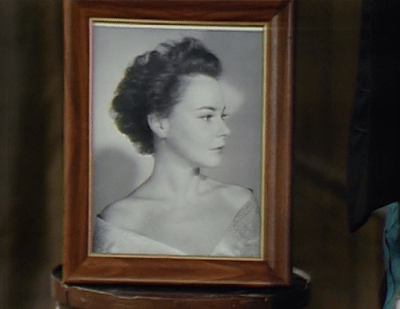
Victor is in his 30s; he has a framed picture of his wife Jeanne that appears to have been taken during the Coolidge administration. Some fans complain that everyone in the 1995 segment dresses in clothes that might have been found at Ohrbach’s in 1970, but I don’t think that’s a problem. The Collinses of Collinwood had a stranglehold on the economy of the village of Collinsport in the 1960s, and if they were annihilated in 1970 and their assets left to rot it stands to reason people in the area would still be wearing the clothes they bought then. But the antique style of this photograph really does take me out of the show:
Victor initially resists having anything to do with Julia and Barnabas, but finally tells his story. He and Jeanne went into Collinwood on a dare, believing it to be just a big empty house. They felt an evil presence there, and something pushed a heavy object from the top of the foyer stairs onto Jeanne’s head, killing her. When Victor found that Jeanne was dead, he heard laughter resounding through the house.
Barnabas and Julia go back to the mausoleum, only to find that the door to the secret chamber is standing wide open. They wonder who knows about it.
The clerk’s name is Ed. He is played by Ronald Dawson, who also appeared in #910 as art restorer Henry Osmund. This is Ed’s only episode, and Dawson’s final appearance. It is also Victor’s only episode, and Cliff Cudney’s final appearance. Cudney played a zombie in #963, 964, and 965. Both Dawson and Cudney have much better chances today to show us what they could do than those earlier parts afforded them. Indeed, all the actors are on top form. All roles played by Nancy Barrett are serious contenders for the title Best Character Ever, and in her scene with Barnabas and Julia in the little house on the beach, we can see that Carolyn Fredericks will be no exception.
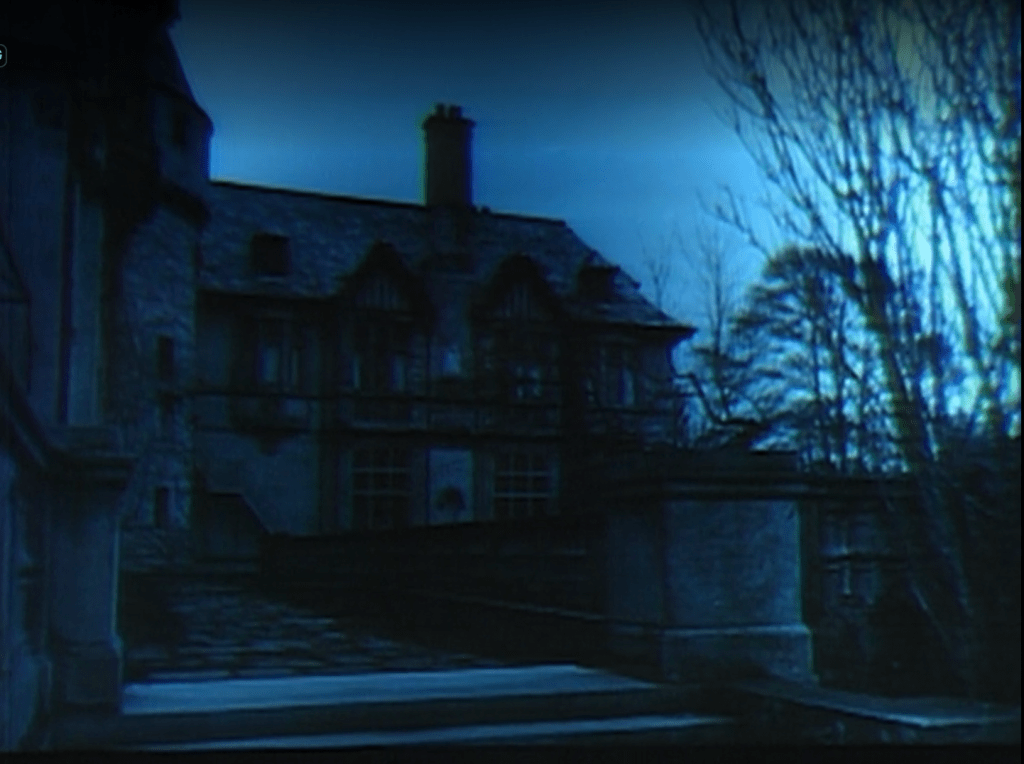
The episode opens with a seldom seen still of the exterior of the mansion representing the great house of Collinwood, suggesting we are going to be seeing things from a new angle today.
This part of the place is in fairly good shape.
Vampire Barnabas Collins and mad scientist Julia Hoffman have escaped an alternate universe where a fire was raging around them. They find themselves unsinged and in their own timeline, back in the room at the great house where they first passed through the aperture that connects the universes. Barnabas is plunged into self-pity, since he wasn’t able to bring a girl he met while he was in the other universe home with him. She was comatose when they first met, and he goes on about how much he loved that. “She’s the only woman who ever made me forget my dear lost Josette. The moment I saw her, so still, so helpless, I felt a love I haven’t felt since I first met Josette.” Barnabas himself is dead half the time, so necrophilia is not inappropriate or even kinky in his case, but this is still a pretty funny line.
Julia has given up everything in her life for Barnabas’ sake, and she is so deeply implicated in his countless crimes that there is no way she can build a meaningful relationship with anyone else. She has decided to make the best of this, and has fallen in love with him. He does not requite this love in the slightest. When Julia first let Barnabas see how she felt, in 1967, he ridiculed her for it and reveled in showing her that nothing could ever develop between them. Now he is friendlier, most of the time, but still keeps expecting her to assist him while he chases after other women. When he rants about how he has lost his one chance at love, she looks up at him adoringly. She chokes back tears while she says “We forget how rare a life of love can be. You’re not the only one who’s had so little hope. It’s something one learns to live with. We can get used to anything if we have to.”
Barnabas reacts to this anguished little speech with a flash of outrage. He then turns from Julia and resumes lamenting his fate. He seems deeply offended that she started talking about trivial stuff like her feelings when the topic was supposed to be the most important thing in the world, his feelings. Barnabas and Julia’s exchange is not an example of anything that you will ever see described as good scene construction, but between the two of them, as we know them to be, it is magnificently constructed. It’s exactly the kind of non-conversation you would expect to take place between a colossal narcissist and someone who can’t even hope to get free of him.
Barnabas is appalled at Julia’s interruption.
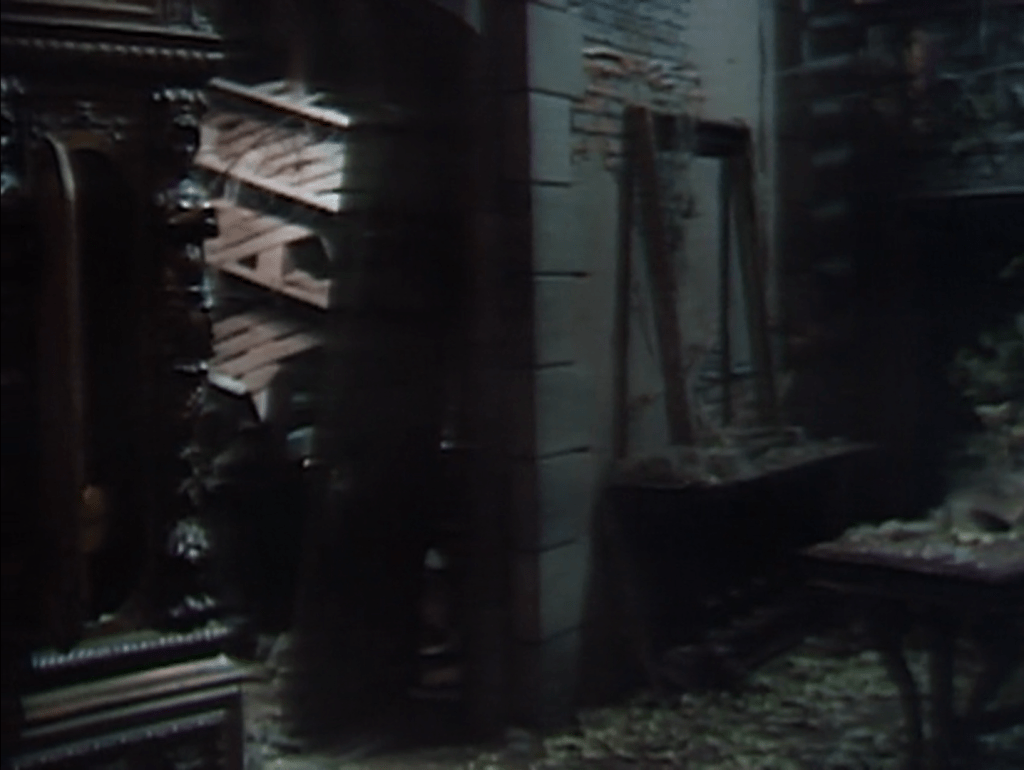
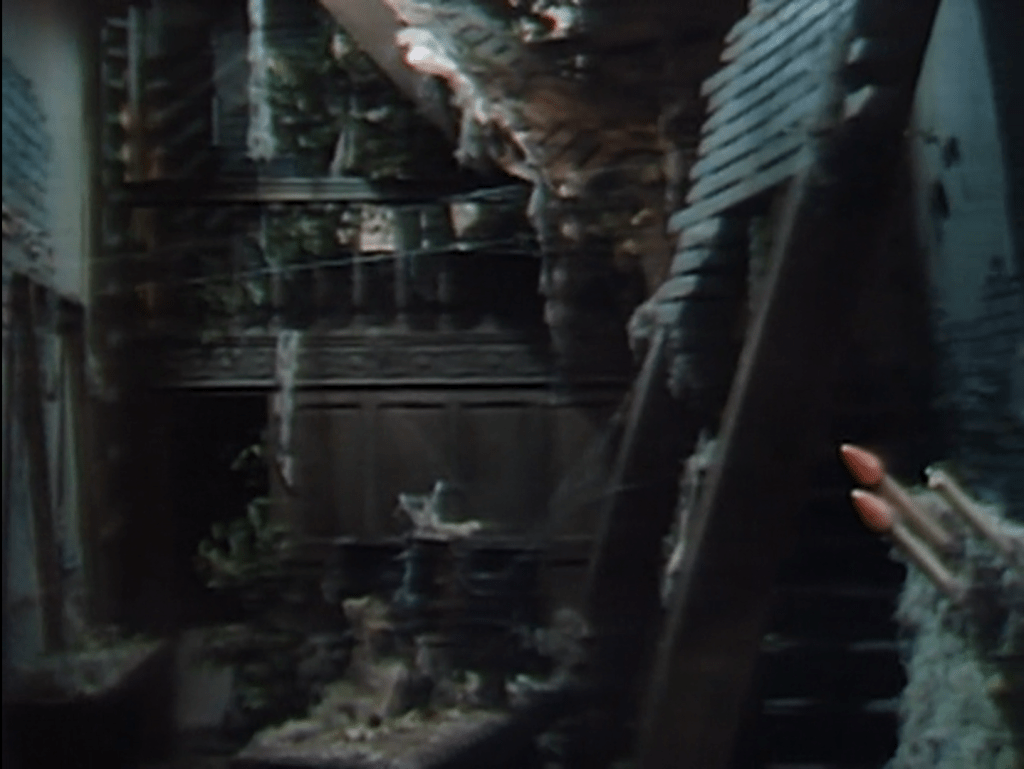
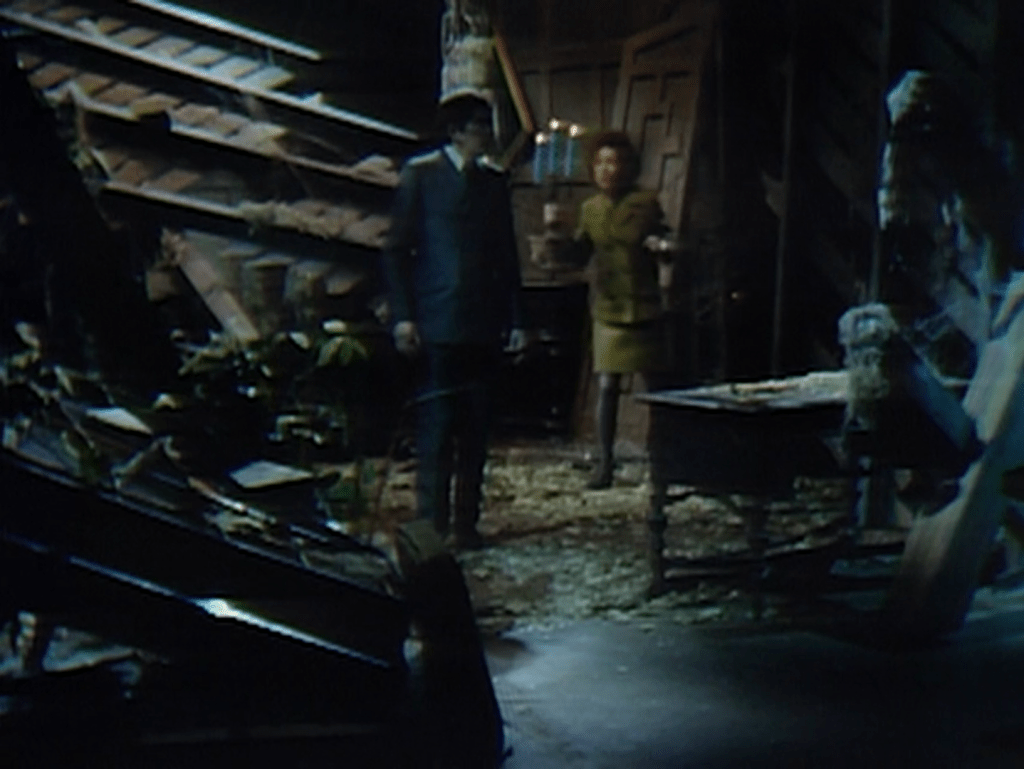
Julia and Barnabas realize that the room is damp and musty, not at all like it was when last they were there. They find that the house is in a state of collapse. The foyer and drawing room is the only permanent set on Dark Shadows; it is extremely impressive by the standards of 1960s daytime TV, and has always looked very solid. Longtime viewers will find the images of it in ruins unforgettable.
Julia left for the other universe only five weeks ago; she and Barnabas cannot imagine what could have caused the destruction they see in such a short period. Julia wonders if a hurricane or a war is responsible for the damage. When they find some note paper that has yellowed and begun to crumble, Barnabas speculates that some kind of radiation may have accelerated its decay. Barnabas grew up in the eighteenth century and takes only a desultory interest in anything more recent than the Washington administration, so it is rather jarring for regular viewers to hear him talking about radiation and wondering if a thermonuclear exchange has taken place.
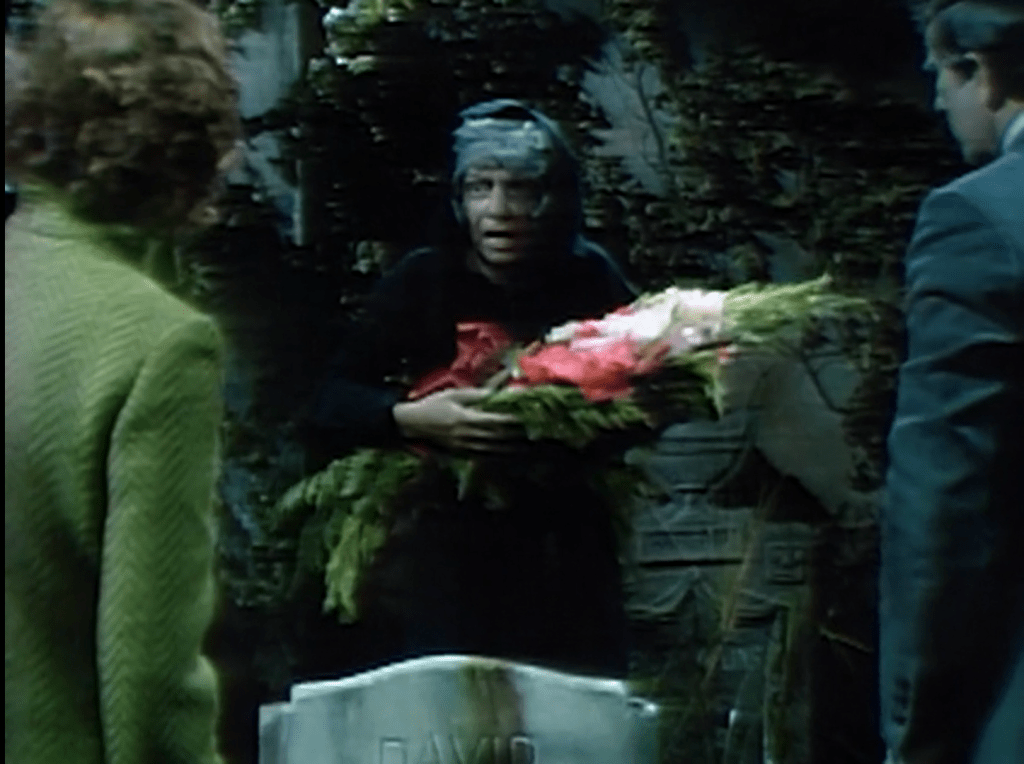
Barnabas and Julia go to the cemetery to find a coffin for him to spend his days in. They see a freshly dug grave with a marker giving the current year as 1995. That explains how the decay at Collinwood could have happened in the time after Julia followed Barnabas into the alternate universe in 1970. The aperture returned them to their own universe, but to a later period of time. They also find a grave marked as that of strange and troubled teen David Collins, whose date of death is given as 1970.
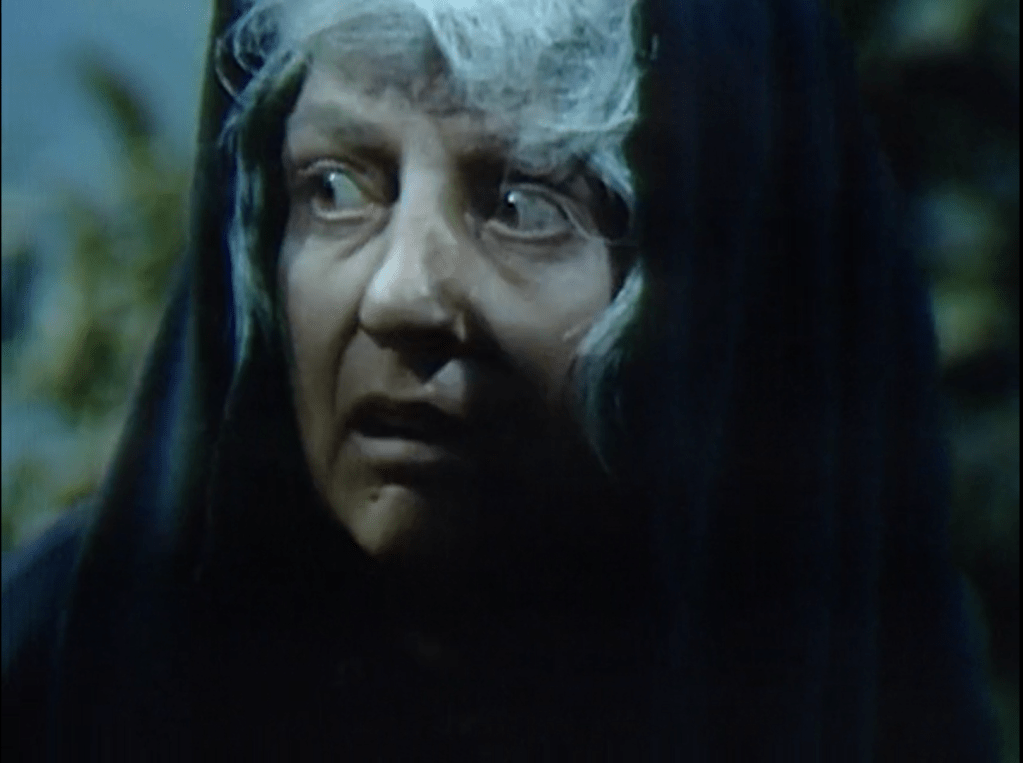
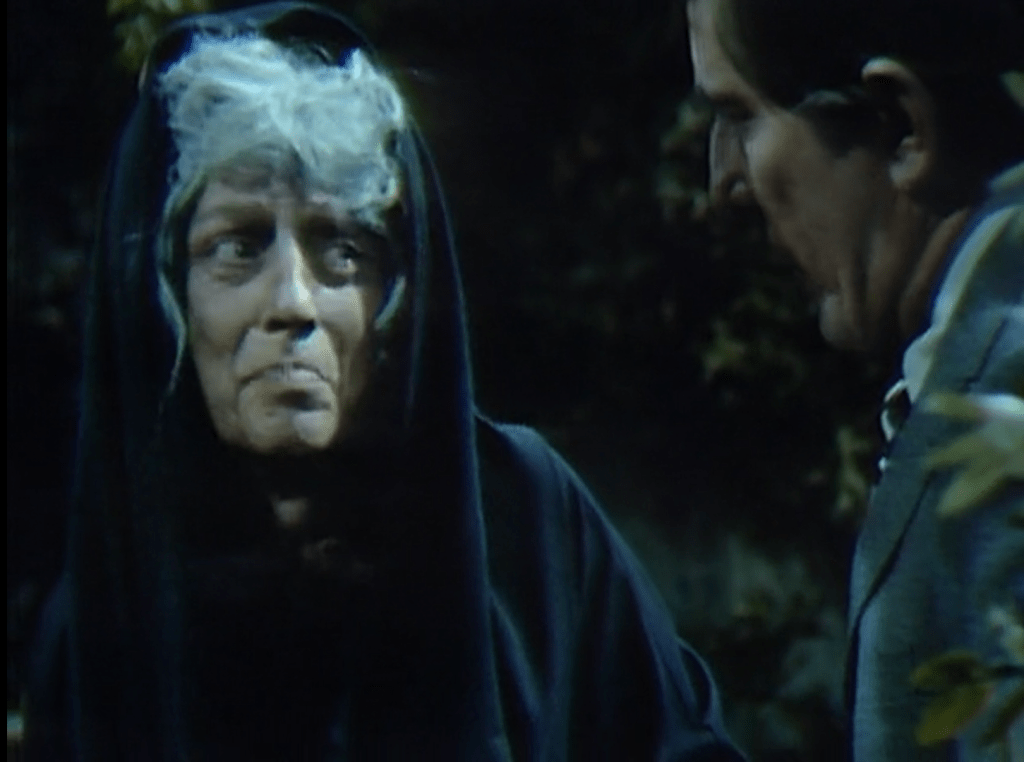
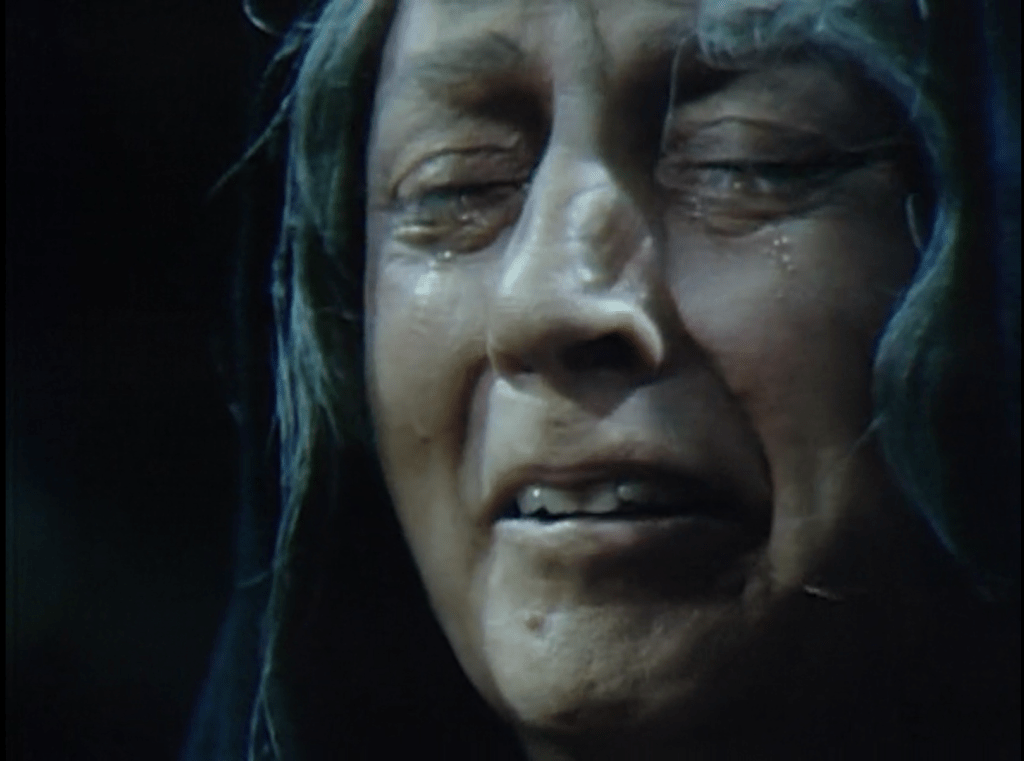
A gray-haired woman cries out to Julia and Barnabas to leave David’s grave alone. They recognize her as Mrs Johnson, housekeeper at Collinwood from 1966 to 1970. Mrs Johnson recognizes them too, and sees that they have not changed since last she saw them. She takes them to be ghosts, and demands they stop haunting David’s place of rest.
Barnabas and Julia deny that they are ghosts and ask Mrs Johnson what happened after they left. She starts telling transparent lies, claiming that the adult members of the Collins family are alive and well and living overseas. She rushes off, but as she goes she says the name “Fredericks” and “The old shack at Finley’s Cove.” Clarice Blackburn was always excellent, and this scene is one of her very finest turns.
Julia and Barnabas let themselves into a small house at Finley’s Cove. Julia remarks that the house was always vacant when she knew the area. Barnabas says that in the other universe, it was his comatose girlfriend’s house. They notice that the place is chock-a-block with objets d’art from Collinwood. Julia is excited that whoever lives there knew the place; Barnabas surmises that they may have been its destroyers, and that they might have looted the stuff from it. The doorknob turns, and Julia says that they will soon know who lives in the house.
For some time, wicked witch Angelique Stokes Collins has been dissatisfied with her minion Julia Hoffman. What she most wants from Hoffman is information about her new enemy, old world gentleman Barnabas Collins. Yet Hoffman has told her nothing useful about Barnabas. The only time she brings him up is to claim that she was busy following him when Angelique needed her to do something else. Even then, her reports are no more substantive than “He went into town,” without so much as a single name of a person he met or building he entered while there. Hoffman keeps showing friendliness to people to whom Angelique wants her to be hostile, asking questions to which she ought already know the answer, and resisting orders she would usually be eager to follow. Whatever is wrong with Hoffman, Angelique does not propose to put up with it indefinitely.
Yesterday, Angelique found the solution to the puzzle. She learned that she has not been dealing with Hoffman at all, but with her Doppelgänger from an alternate universe. Barnabas came from that universe as well. This Julia is as devoted to Barnabas as Hoffman was to Angelique, and followed him to this reality to take her place at his side. Today, Angelique traps Julia in a secret chamber off the basement of the great house of Collinwood and demands to know what she has done with Hoffman. At length Julia confirms her true identity and admits that she killed Hoffman, but she will not answer any of Angelique’s questions about Barnabas.
Angelique takes out a medallion and tells Julia to look at it. Julia gasps and turns away. She says that she knows about hypnosis and knows how to resist it. Angelique says that if she knows how to resist, there is no reason for her not to look at the medallion, but Julia keeps looking away. Julia was first introduced as a psychiatrist, whose talent for hypnosis was of magical proportions. By showing her medallion to a person, she could erase and rewrite that person’s memory as easily and as completely as one could erase and rewrite a chalkboard. Julia is the heroine of the show now, but longtime viewers will still find it fitting that Angelique turns the tables on her.
Upstairs in the same house, high-born ne’er-do-well Roger Collins is having a conversation with Angelique’s portrait. This is one of several habits Roger has that recall Waldo Lydecker, the sarcastic dandy in the 1943 novel and 1944 film Laura. Lydecker turned out to have murdered a woman with whom he had a strange obsession.
Roger is overwrought, telling the Angelique in the portrait that he should have known she would come back from the dead. If he had, he would have realized it was a waste of time to kill her. He only made things worse by doing that; for one thing, it made it necessary for him to kill his niece Carolyn. As he says this, his sister Elizabeth Collins Stoddard, Carolyn’s mother, overhears. She storms in. He tries to deny that meant anything he said, but Liz won’t be stopped. As Roger presses his hands on Liz’ shoulders, Joan Bennett plays the part of someone being strangled. Louis Edmonds’ fingers are nowhere near her throat. You can’t believe that Roger is hurting Liz, but you can easily believe that Edmonds and Bennett are a brother and sister playing pretend. They look like they’re about six.
Oh, oh, I’m being strangggled!
Just as Roger closes Liz’ body into the storage space under the window seat, Barnabas enters. Roger is on the point of tears, a circumstance Barnabas notices. Roger keeps urging Barnabas to leave the room with him, but he replies that what he has to say will take only a moment. Barnabas says that he is worried about Liz. Roger gets even more upset, and Barnabas finally agrees to go downstairs with him.
For longtime viewers, this scene makes a poignant contrast with #446. In that episode, set in the year 1796, Edmonds played haughty overlord Joshua Collins, father of Barnabas. Joshua discovered that Barnabas had become a vampire. Joshua confronted his son in his hiding place. Joshua was at once horrified and shattered, but in no way intimidated by Barnabas, who was for his part alternately ashamed and petulant. Edmonds and Jonathan Frid made that scene into one of the high points of the series. Now, it is Edmonds’ turn to be the murderer dejected by the knowledge of his own inexpungable guilt, and Frid’s turn to be the upright family man. Barnabas does not know Roger’s secret as Joshua knew his, but in Roger’s inability to face him we see the fear of the same righteous condemnation Joshua had felt it his duty to proclaim.
At one point in this conversation Frid has so much trouble with his lines that the words dissolve into a buzzing sound. I told my wife, Mrs Acilius, that it sounded like Barnabas had briefly turned into Bob Dylan. She roared with laughter and said that was exactly what she was going to say.
This is the first “Parallel Time” episode in which Lara Parker is credited as playing Angelique. Previously she had been billed as Alexis Stokes, the identical twin sister whom Angelique killed when she rose from the dead ten and a half weeks ago and whom she has been impersonating ever since. Several times in the series, cast members have wandered onto the set while the credits were rolling.* Referring to this, Mrs Acilius had explained that they kept using Alexis’ name in case any characters who didn’t know who she really was wandered in while the credits were rolling. She imagined them looking up, widening their eyes, and pointing. She meant that hypothesis as a joke. But since the only character in today’s episode who didn’t know Angelique’s true identity was Liz, who was dead by the time the credits rolled, I think we have to take it as proven.
*Most conspicuously in #703, #635, #510, and #328. There are also moments when crew members can be seen during the closing credits, most spectacularly in #999, when a man is just sitting there eating a sandwich.
We open in the room atop the tower of the great house on the estate of Collinwood. Wicked witch Angelique, enemy of the mysterious Barnabas Collins, confronts Will Loomis, Barnabas’ henchman. She demands Will tell her Barnabas’ secret. Returning viewers know that Barnabas is a vampire, and Will is his blood thrall. When Will tells Angelique that he is incapable of betraying Barnabas, we know that he is making a literal statement of fact. But Angelique has power over Will, too. Caught between these opposing forces, Will does the only thing he can. He opens the window and flings himself to his death.
John Karlen plays Will, Lara Parker Angelique. In his post about this episode at his great Dark Shadows Every Day, Danny Horn observes that Karlen approached all of his parts as if he were in a play by Tennessee Williams. In a comment I left under that post, I said that while most of Karlen’s scene partners stuck with their own distinctive styles of acting while playing opposite him, resulting in surprisingly effective mashups of techniques that you wouldn’t think could coexist on any stage, Parker followed his volcanic lead in today’s first act. Will’s anguish and Angelique’s vehemence both go way over the top, but the result is far from hammy. Orson Welles famously said that hamminess is not overacting, it is false acting. There is nothing false between Will and Angelique today.
Just before Will jumped out the window, Julia Hoffman entered the room. Furious that Will has died without telling her what sort of creature Barnabas is, Angelique accuses Hoffman of startling him and ruining everything. Wondering if Will may have survived his fall, she orders Hoffman to accompany her to the foot of the tower. Hoffman kneels down and says that Will’s spinal cord snapped on impact resulting in instant death. Angelique says that she is intrigued by Hoffman’s diagnosis. “Have you a medical degree?”
Unknown to Angelique, the true answer would be yes. Angelique believes herself to be with Hoffman the housekeeper, her most fanatical devotee. In fact, the woman is Hoffman’s counterpart from an alternate universe, Dr Julia Hoffman, MD. Julia has followed her best friend Barnabas into this continuity and is assisting Barnabas in his battle against Angelique. Julia killed Hoffman and assumed her identity. Julia responds to Angelique’s puzzlement with a story about an incident when she saw a man fall from a roof and land in the same twisted position Will now holds. She remembered the words the doctor said when examining that man and merely repeated them when she saw Will’s distorted neck. Angelique compliments Julia on her extraordinary memory, and proceeds as if she were telling the truth. There seems little else she could do.
I remembered the line “Have you a medical degree?” from the first time Mrs Acilius and I watched Dark Shadows. Angelique has noticed that Julia is different from the Hoffman she knows, and has been showing signs of impatience with her. But she has not suspected she is a different person, only that she is going soft on her enemies. “Have you a medical degree?” makes it seem that might be changing. Julia may be in grave danger before long.
Barnabas rises from his coffin in the basement of Will’s house. He goes upstairs and finds Angelique waiting for him. She says she came, not to see him, but to console the widow Loomis. Thus Barnabas learns that Will has died.
Barnabas tells Angelique that he will avenge Will’s death upon her, but she tells him that he is the one to blame. It was because his power over Will matched hers that Will could respond to her commands only by killing himself.
Angelique’s counterpart in Barnabas’ own universe placed the curse that first made him a vampire. She was also wholly or partially responsible for the deaths of his mother, sister, aunt, uncle, fiancée, and many other people he cared about. So he reacts to the sight of this Angelique with barely controlled rage. For her part, she has no idea who he is, and does not know why he is hostile to her. She, therefore, is much cooler. The contrast is fascinating to watch, far more interesting than are the scenes between Barnabas and the other Angelique and one of the joys of the “Parallel Time” segment.
Julia and Barnabas are busy with a science project. They have learned that Angelique returned from the grave because her father, evil barfly Tim Stokes, somehow established a remote connection between her and a woman named Roxanne whom he keeps in the back room of his apartment. This connection, whatever it is, drains most of the “life force” from Roxanne into Angelique. This creates a delicate situation. If Roxanne dies, all of her “life force,” including that which animates Angelique, will vanish. But if she regains any of the force that has been taken from her, even enough to flutter her eyelids, Angelique will collapse and, unless Roxanne is brought back down to the prescribed level of debility, re-die.
When Julia and Barnabas first came upon Roxanne, they planned to kill her to finish Angelique off. Barnabas put the kibosh on that when he saw how pretty Roxanne was. Then they thought of destroying Angelique by reviving Roxanne, but, for reasons too silly to explain, they’ve decided they want to keep Angelique around. So now Barnabas has decreed that they will manipulate Roxanne’s condition to slow Angelique down. They have taken her from Stokes’ place and put her on a table in Will’s basement, somewhere away from the coffin. They have connected her to a lot of mad science equipment that is supposed to act on the “life force.” Longtime viewers know all about this equipment, because Julia had it in 1968 when she was building a Frankenstein’s monster as part of a project to cure Barnabas of vampirism.
Julia runs the equipment. Roxanne’s condition does not change. Julia tells Barnabas that Angelique is expecting her back at the great house. In her absence, Barnabas takes Roxanne’s hand and stares at her. She opens her eyes and sits up. In the great house, Angelique weakens and collapses.
Many fans wonder where Julia could have got the “life force” equipment. In her own universe, she is a medical doctor and the head of a private hospital, so she could order anything she needed from a medical supply house. Here, her only identity is her imposture as Hoffman the housekeeper, who did not have a prescription pad.
I don’t see why people are so concerned with this. In 1968, the equipment originally belonged, not to Julia, but to another mad scientist, Dr Eric Lang. Barnabas and Julia simply stole it from Dr Lang’s house after he died. In this continuity, we haven’t heard about Dr Lang, but we hadn’t heard about him in the main continuity either until Barnabas fell into his clutches, at which point he already had all of his equipment. So we can presume Barnabas and Julia just found out when his counterpart would be out of the house and raided the place.
Will’s death marks his final appearance, but John Karlen will be back in a couple of months as Willie Loomis, the version of him we met in the main continuity. He will play other characters later, when the show will be set in other periods.
Julia Hoffman joined the cast of characters in the summer of 1967 as a supremely confident professional, a medical doctor doubly qualified as a psychiatrist and a blood specialist and the head of a private hospital. Julia came to the estate of Collinwood because she had figured out that Barnabas Collins, master of the Old House on its grounds, was a vampire. She had a plan for curing vampirism and believed that if she succeeded she would change the way science defines life and death, thereby revolutionizing medicine.
Julia’s plan was not successful. She came to be so closely entwined with Barnabas and so deeply complicit in his crimes that she could not hope for any future that did not revolve around him. She decided to make the best of this, and set about falling in love with Barnabas. At first he mocked her cruelly for this. Eventually his response to her signs of romantic interest softened into an embarrassed sympathy.
In #980, Barnabas crossed over into an alternate universe, hoping that he would escape his curse there. He found he was still a vampire, and that he was surrounded by strangers. He has now persuaded the Collinses in the great house at Collinwood that he is their long-lost cousin from South America. He has once more established himself in the Old House, this time by biting and enslaving its owners. He quickly made enemies, most notably the undead Angelique Stokes Collins. The housekeeper in the great house was Angelique’s most fanatical devotee and deadliest enforcer. Her name was Julia Hoffman.
Yesterday, Hoffman had learned that Barnabas was a vampire, found his coffin, placed a stake on his chest, and raised a hammer to drive it through his heart. At the last second, a blow was struck from behind, killing Hoffman and saving Barnabas. The killer was Julia, who had made her way into this universe to take her place at Barnabas’ side.
In #351, Julia offered to guard Barnabas during the day. Since Barnabas had previously given this task only to domestic servants, he was shocked to hear a medical doctor volunteer to perform it. Julia smiled and said “I am not offering to be your maid.” Now, Julia is wearing Hoffman’s French maid outfit and posing as her in an attempt to find out what Angelique is up to. Long before Julia killed Hoffman, she had destroyed her old self in the course of her relationship with Barnabas.
The joyous reunion.
Julia is waiting by Barnabas’ coffin when night falls. The lid opens, and she looks delighted. This image is hilarious, but again contrasts with her earlier behavior to show how ragged her personality has become after all this time as a vampire’s henchman. In #289, Julia made her way to Barnabas’ coffin during the day, opened it, looked inside, and staggered back, shivering with a mixture of terror and triumph. She was at once fantastically intrepid and apparently sane. We did not then know what her intentions were, but the daring action combines with Grayson Hall’s masterful performance to persuade us that Julia might be equal to almost any task.
Now, Julia has become so dependent on Barnabas that she neither sees the horror of the situation nor remembers that he is dangerous to her. The very first we saw of Barnabas was his hand darting out of his coffin to choke someone who woke him unexpectedly, and the second time someone did that, in #275, the choking was lethal. Moreover, Barnabas knew that Hoffman was his deadly foe, so even if he’d been up for a while he could be expected to kill Julia before she had a chance to utter a word if he found her in his hiding place dressed as she is.
Fortunately for Julia, Barnabas has developed a habit of standing around and pontificating before his murders. So she has a chance to explain who she is. She shows him the stake and hammer Hoffman was holding when she found her, and he is convinced. He seems impressed that she killed her Doppelgänger for his sake, and they look more like they are about to kiss than they ever have before.
Barnabas and Julia, sitting in a tree, K-I-S-S-I-N-G!
Julia goes to the great house to report to Angelique, who is staying there in the guise of her identical twin sister Alexis. Angelique irritably asks where Julia has been all day. Julia makes an excuse, and Angelique starts talking about the progress of her evil plans. Before she gets very deep into it, she has a seizure of some kind. Julia asks what she can do to help, and Angelique tells her that she knows very well what to do. The only useful information Julia can get out of her are the word “father” and the sentence “He is doing this!” She decides to call on Angelique’s father, Tim Stokes. She looks Stokes’ address up in the telephone directory, and sets out.
When Stokes answers his door, he expresses surprise, not that Julia is there, but that she bothered to knock before entering. He makes some remarks which Julia cannot even pretend to understand. He says that Angelique must surely have told her about the situation; she says that she did, but that she is very confused about all of it. Stokes ushers her into his back room to give his own explanation.
A blanket covers the body of a woman lying on a table in the back room. Stokes explains to Julia that the woman is not dead. He drained her “life force” to enable Angelique to transcend death, but she retains enough vitality that she keeps pulling that force back to herself from Angelique. That is what causes Angelique to have her seizures. The woman must remain in precisely her current state if Angelique is to exist in the world of the living. The more of her strength she regains, the weaker Angelique will become, and if she dies, Angelique will return to the grave. He has given the woman an injection; he tells Julia that when she returns to the great house she will find that Angelique has recovered.
Julia does indeed find this. She urges Angelique to have Stokes over and repair her relationship with him. Since everyone else is out of the house, tonight would be the perfect time for such a tête–à–tête. Angelique agrees.
While Angelique is mixing martinis for Stokes, Julia is with Barnabas. She goes to the Old House and tells him what she has discovered. He produces a short knife and says that it should take care of the matter. In Stokes’ apartment, he stops and talks about all the time he has spent trying to find Angelique’s vulnerabilities, and wonders that now they have found such a simple method for getting rid of her once and for all. It sounded to my wife as if he was upset that Julia had beaten him to the answer.
In the back room, Julia hands Barnabas the knife. He again goes into a pre-murder soliloquy. Julia peps him up by telling him that the woman isn’t really alive, and that her continued existence means death and destruction for many others. Barnabas agrees. He lifts the blanket and prepares to strike.
The first murder in which Julia participated directly was that of her onetime friend and medical school classmate Dr Dave Woodard in #341. Woodard had learned that Barnabas was a vampire and that Julia was helping him, and was going to expose them both. After resisting the idea for several days, Julia complied with Barnabas’ demand that she prepare a lethal injection for Woodard. She handed him the hypodermic then, as she hands him the knife now. In those days, Barnabas and Julia were not yet friends, and Barnabas replied that she would have to administer the shot herself. In the end, he wound up giving Woodard the fatal dose while Julia stood in the doorway and blocked their victim’s escape. Afterward, Barnabas taunted Julia with her new status as a murderer, making her miserable. Now, they like each other fine, and he accepts the weapon as a matter of course.
It is not surprising that Barnabas, confronted with a problem, chooses murder as the solution. That is always his Plan A, and usually his Plan B and Plan C as well. Indeed, when he wonders what Stokes will do when Angelique is dead he implies that he will murder him too, lamenting that “It never ends does it, when one begins to unravel evil?” Barnabas looks utterly hopeless when he says this. He always feels deeply sorry for himself when he thinks about killing someone.
But this is a new step for Julia. She usually puts up at least a show of reluctance when Barnabas is planning a murder, even if her immediate response when she finds a corpse in his vicinity is to arrange for its secret disposal. What Stokes told her about the “life force” logically entails that bringing the woman out of her coma would destroy Angelique as surely as killing her would. Their resources in this universe are so limited that this may not be a viable course of action, but on her previous form you would expect Julia at least to suggest it. We may wonder if something inside her finally broke when she looked at someone she had killed and saw her own dead face looking back at her.