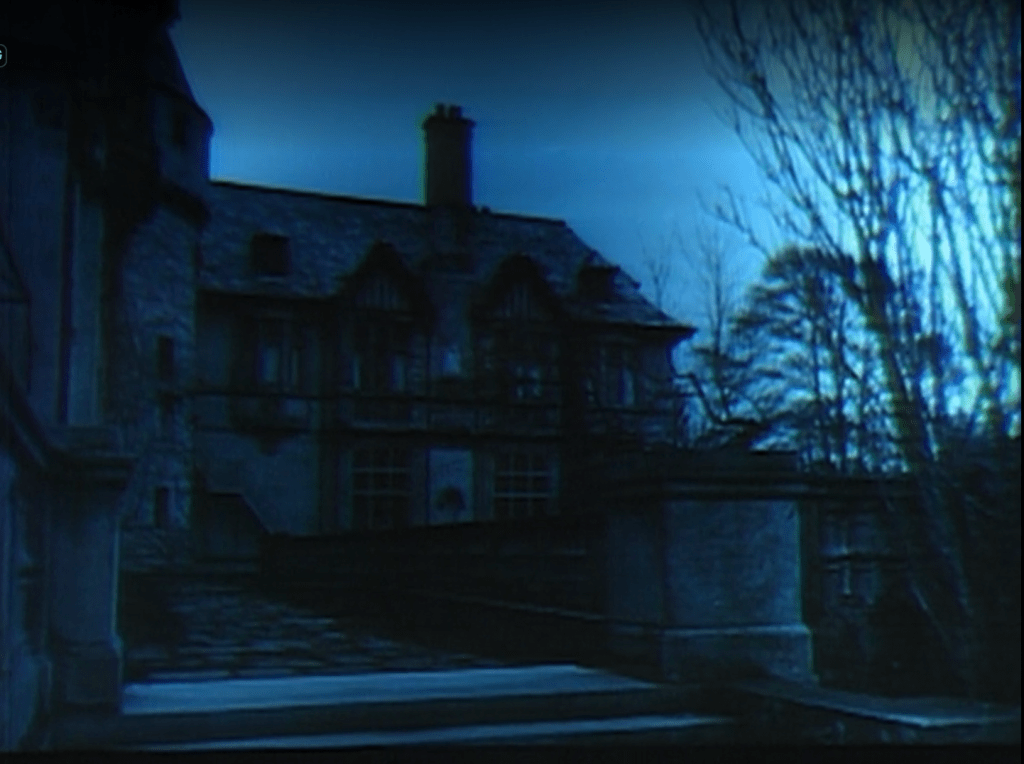
The episode opens with a seldom seen still of the exterior of the mansion representing the great house of Collinwood, suggesting we are going to be seeing things from a new angle today.
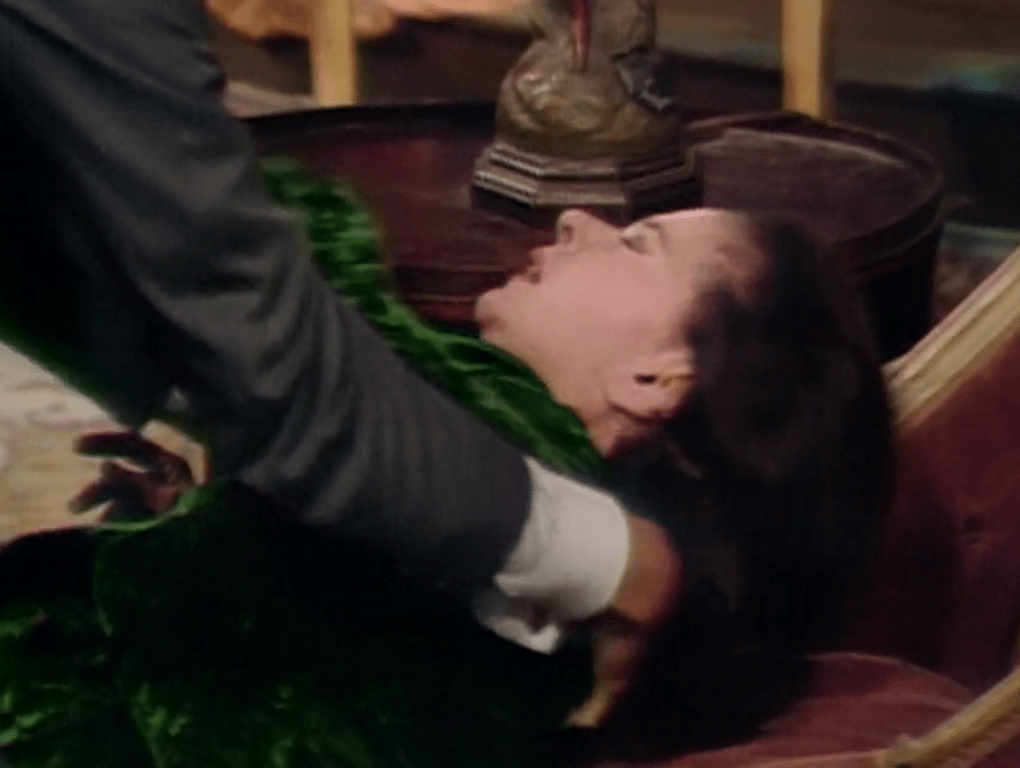
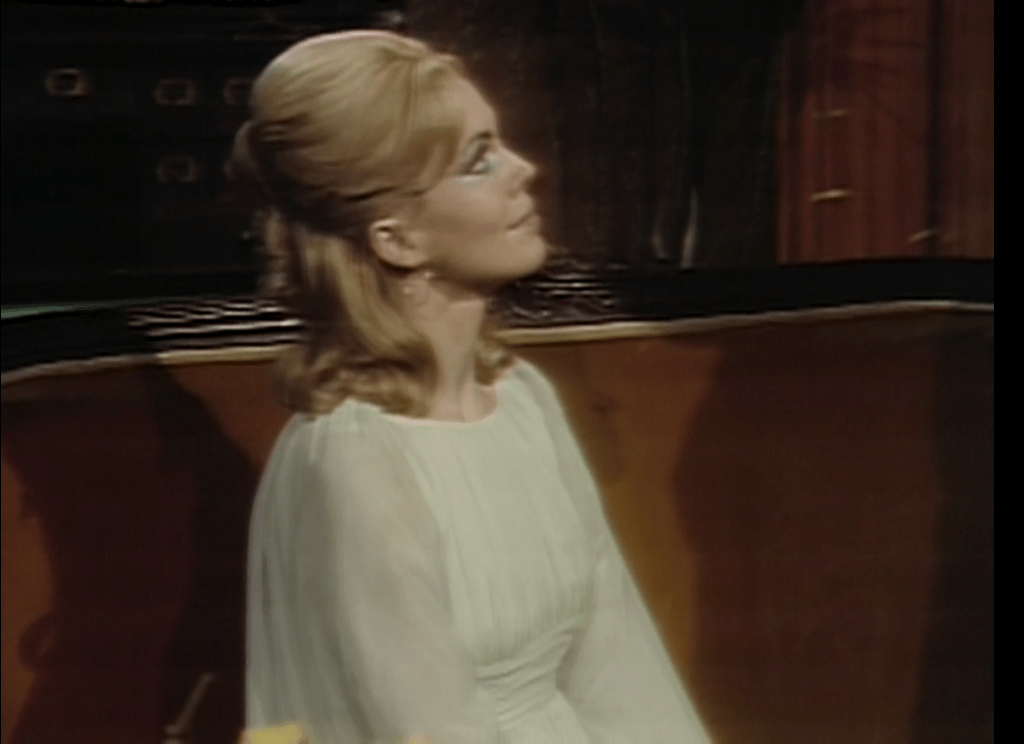
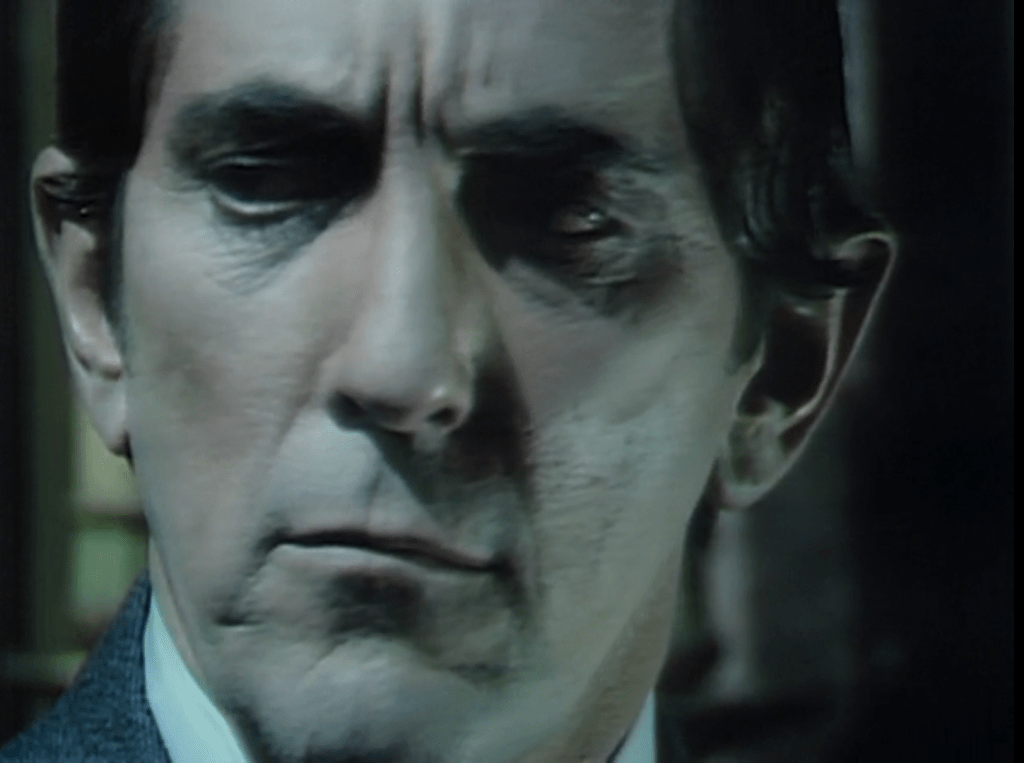
Vampire Barnabas Collins and mad scientist Julia Hoffman have escaped an alternate universe where a fire was raging around them. They find themselves unsinged and in their own timeline, back in the room at the great house where they first passed through the aperture that connects the universes. Barnabas is plunged into self-pity, since he wasn’t able to bring a girl he met while he was in the other universe home with him. She was comatose when they first met, and he goes on about how much he loved that. “She’s the only woman who ever made me forget my dear lost Josette. The moment I saw her, so still, so helpless, I felt a love I haven’t felt since I first met Josette.” Barnabas himself is dead half the time, so necrophilia is not inappropriate or even kinky in his case, but this is still a pretty funny line.
Julia has given up everything in her life for Barnabas’ sake, and she is so deeply implicated in his countless crimes that there is no way she can build a meaningful relationship with anyone else. She has decided to make the best of this, and has fallen in love with him. He does not requite this love in the slightest. When Julia first let Barnabas see how she felt, in 1967, he ridiculed her for it and reveled in showing her that nothing could ever develop between them. Now he is friendlier, most of the time, but still keeps expecting her to assist him while he chases after other women. When he rants about how he has lost his one chance at love, she looks up at him adoringly. She chokes back tears while she says “We forget how rare a life of love can be. You’re not the only one who’s had so little hope. It’s something one learns to live with. We can get used to anything if we have to.”
Barnabas reacts to this anguished little speech with a flash of outrage. He then turns from Julia and resumes lamenting his fate. He seems deeply offended that she started talking about trivial stuff like her feelings when the topic was supposed to be the most important thing in the world, his feelings. Barnabas and Julia’s exchange is not an example of anything that you will ever see described as good scene construction, but between the two of them, as we know them to be, it is magnificently constructed. It’s exactly the kind of non-conversation you would expect to take place between a colossal narcissist and someone who can’t even hope to get free of him.
Julia and Barnabas realize that the room is damp and musty, not at all like it was when last they were there. They find that the house is in a state of collapse. The foyer and drawing room is the only permanent set on Dark Shadows; it is extremely impressive by the standards of 1960s daytime TV, and has always looked very solid. Longtime viewers will find the images of it in ruins unforgettable.
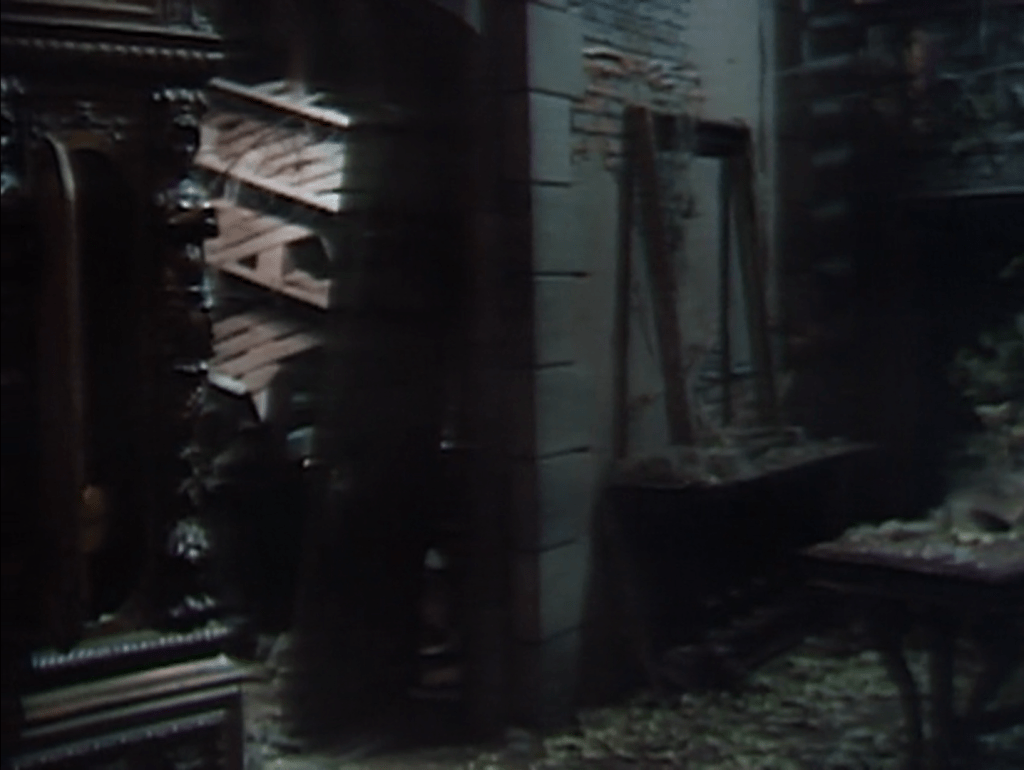
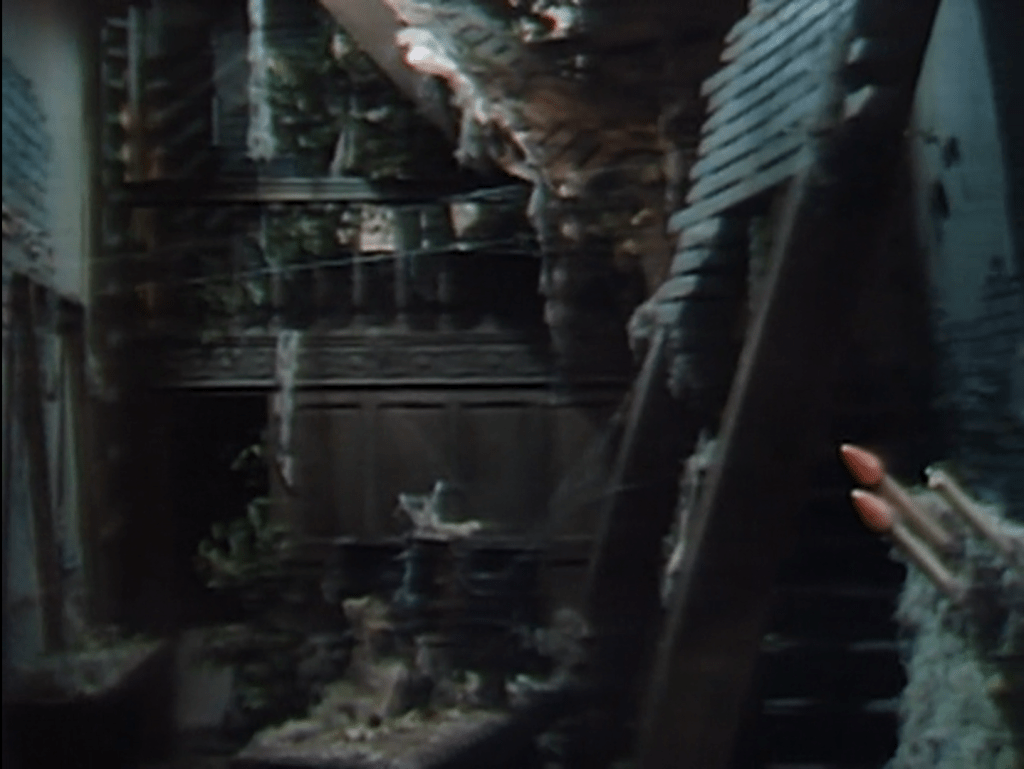
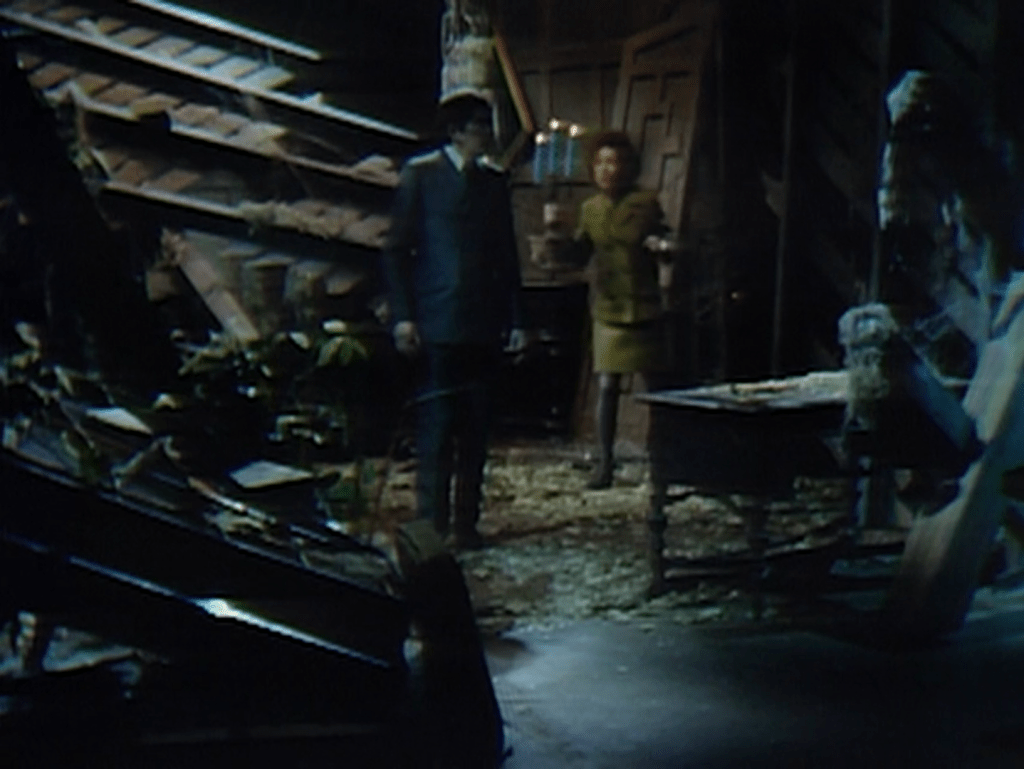
Julia left for the other universe only five weeks ago; she and Barnabas cannot imagine what could have caused the destruction they see in such a short period. Julia wonders if a hurricane or a war is responsible for the damage. When they find some note paper that has yellowed and begun to crumble, Barnabas speculates that some kind of radiation may have accelerated its decay. Barnabas grew up in the eighteenth century and takes only a desultory interest in anything more recent than the Washington administration, so it is rather jarring for regular viewers to hear him talking about radiation and wondering if a thermonuclear exchange has taken place.
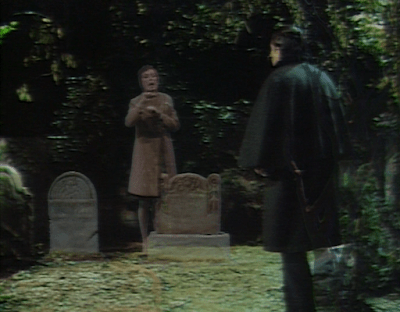
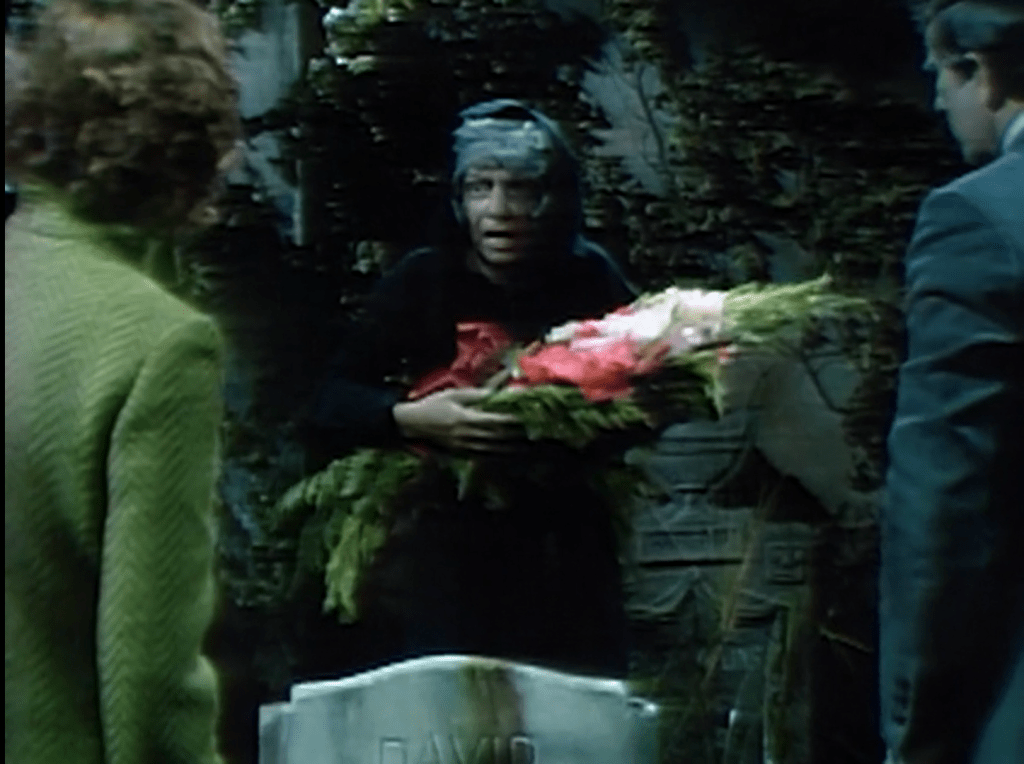
Barnabas and Julia go to the cemetery to find a coffin for him to spend his days in. They see a freshly dug grave with a marker giving the current year as 1995. That explains how the decay at Collinwood could have happened in the time after Julia followed Barnabas into the alternate universe in 1970. The aperture returned them to their own universe, but to a later period of time. They also find a grave marked as that of strange and troubled teen David Collins, whose date of death is given as 1970.
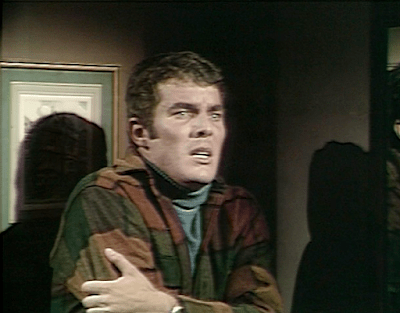
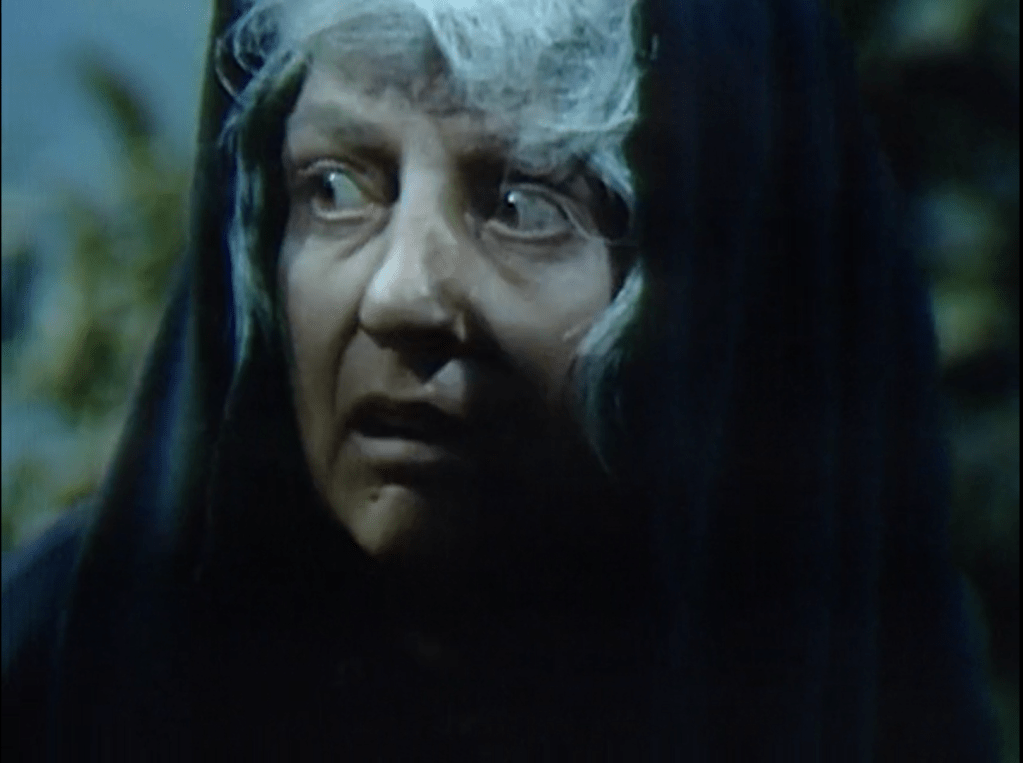
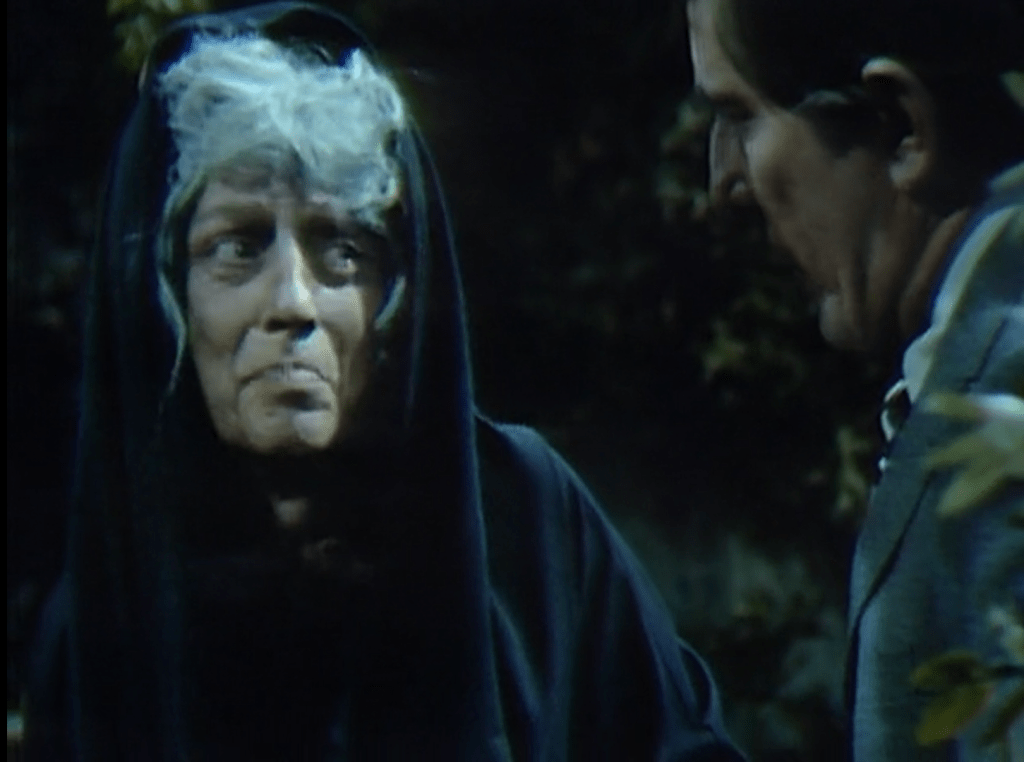
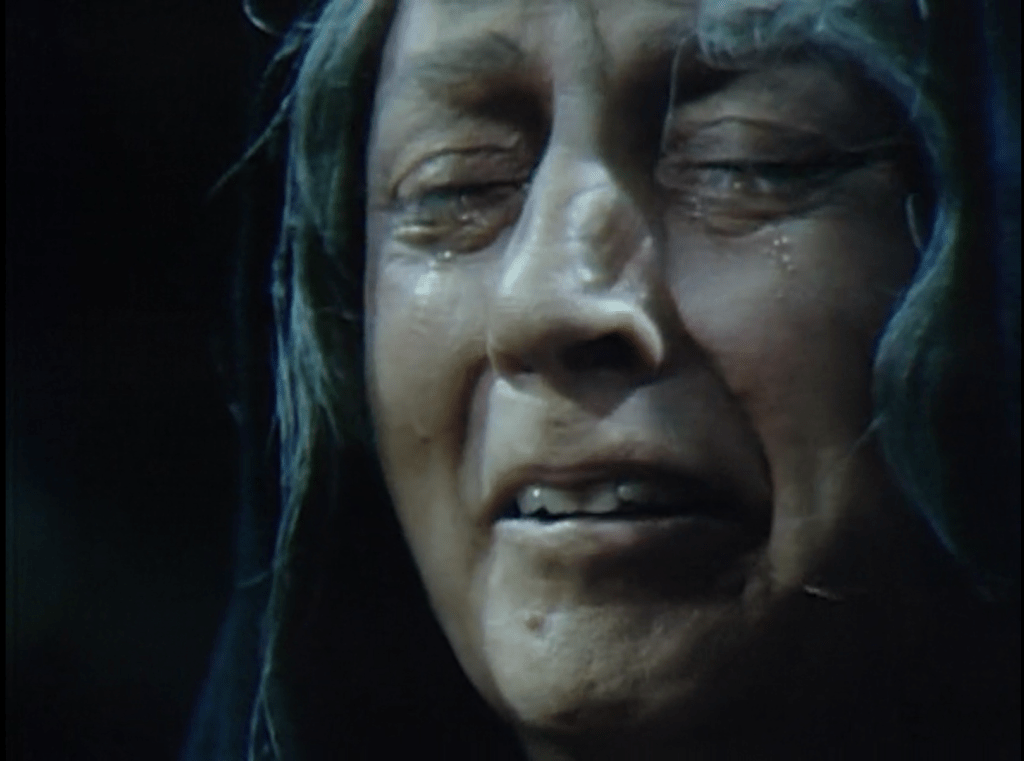
A gray-haired woman cries out to Julia and Barnabas to leave David’s grave alone. They recognize her as Mrs Johnson, housekeeper at Collinwood from 1966 to 1970. Mrs Johnson recognizes them too, and sees that they have not changed since last she saw them. She takes them to be ghosts, and demands they stop haunting David’s place of rest.
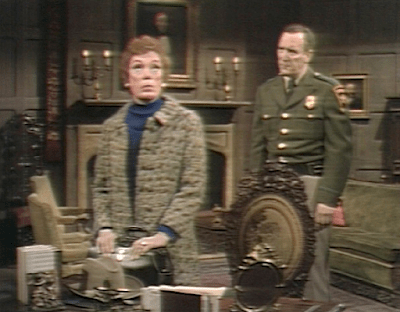
Barnabas and Julia deny that they are ghosts and ask Mrs Johnson what happened after they left. She starts telling transparent lies, claiming that the adult members of the Collins family are alive and well and living overseas. She rushes off, but as she goes she says the name “Fredericks” and “The old shack at Finley’s Cove.” Clarice Blackburn was always excellent, and this scene is one of her very finest turns.

Julia and Barnabas let themselves into a small house at Finley’s Cove. Julia remarks that the house was always vacant when she knew the area. Barnabas says that in the other universe, it was his comatose girlfriend’s house. They notice that the place is chock-a-block with objets d’art from Collinwood. Julia is excited that whoever lives there knew the place; Barnabas surmises that they may have been its destroyers, and that they might have looted the stuff from it. The doorknob turns, and Julia says that they will soon know who lives in the house.