
In episode #1 of Dark Shadows, first broadcast 27 June 1966, Victoria Winters came to the great house of Collinwood to serve as governess to strange and troubled boy David Collins. On her way, Vicki stopped at the Collinsport Inn and had a meal at the diner there. Her waitress was Maggie Evans, a young woman with short blonde hair whom the original story bible identified as “everybody’s pal and nobody’s friend.” Maggie opened their conversation by telling Vicki that she was a “jerk- J-E-R-K” for going to live at Collinwood. Maggie told Vicki that the great house would turn her long black hair gray in two months. When Vicki said she would go there anyway, Maggie offered her a “piece of apple pie on the house- and I won’t take no for an answer.”
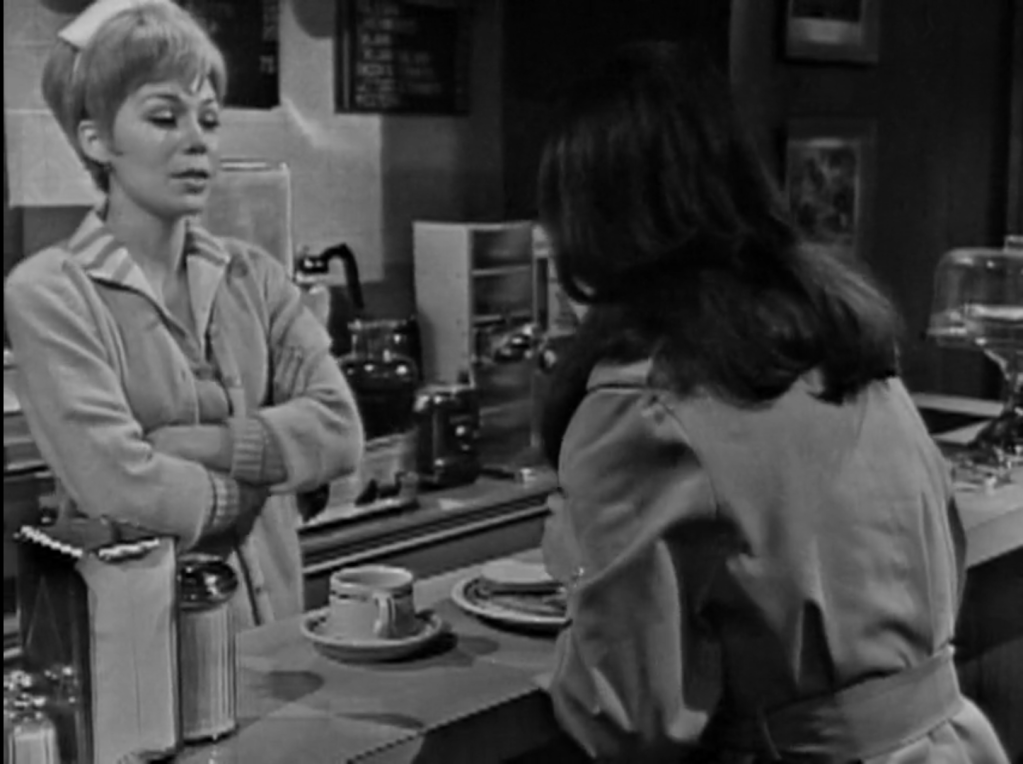
Maggie was the chief representative of Collinsport’s working class in the show’s first months. The diner was a meeting place for a variety of characters, so we saw her wait on all sorts of people. She shared her home, “The Evans Cottage,” with her father, drunken sad-sack Sam Evans. Sam’s career as an artist was ruined when he took a bribe from high-born ne-er-do-well Roger Collins and allowed his one-time friend, Burke Devlin, to go to prison alone for a crime of which Roger was also guilty. Sam’s misery and Maggie’s Adult Child of an Alcoholic (ACoA, they call it) mannerisms, such as laughing awkwardly whenever she begins to speak, attest to the dire consequences for the whole town of what goes on in the big house on the hill. As Maggie and Sam’s territory, the cottage was a space where Burke, who left prison and came back to Collinsport as a corporate raider, could talk about his plans to wrench control of the cannery and fishing fleet from the feudal-minded Collinses and bring the area into the age of capitalism.
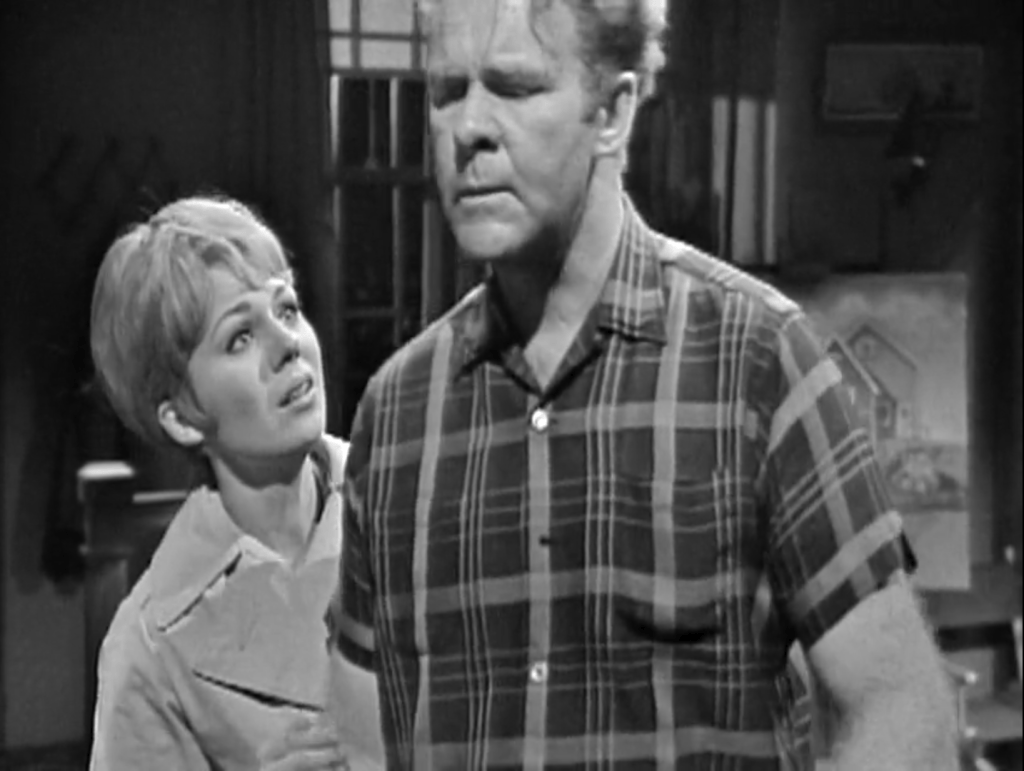
They eased up on the “everybody’s pal and nobody’s friend” business pretty quickly. Maggie’s short blonde hair was a wig seen for the last time in #12; from #20 on, she has Miss Scott’s long brown hair. When Miss Scott’s real hair came out, her real personality started to peek through as well. While Maggie could still make a caustic remark or a tactless one as occasion demanded, the signs were already there of her final form, The Nicest Girl in Town.
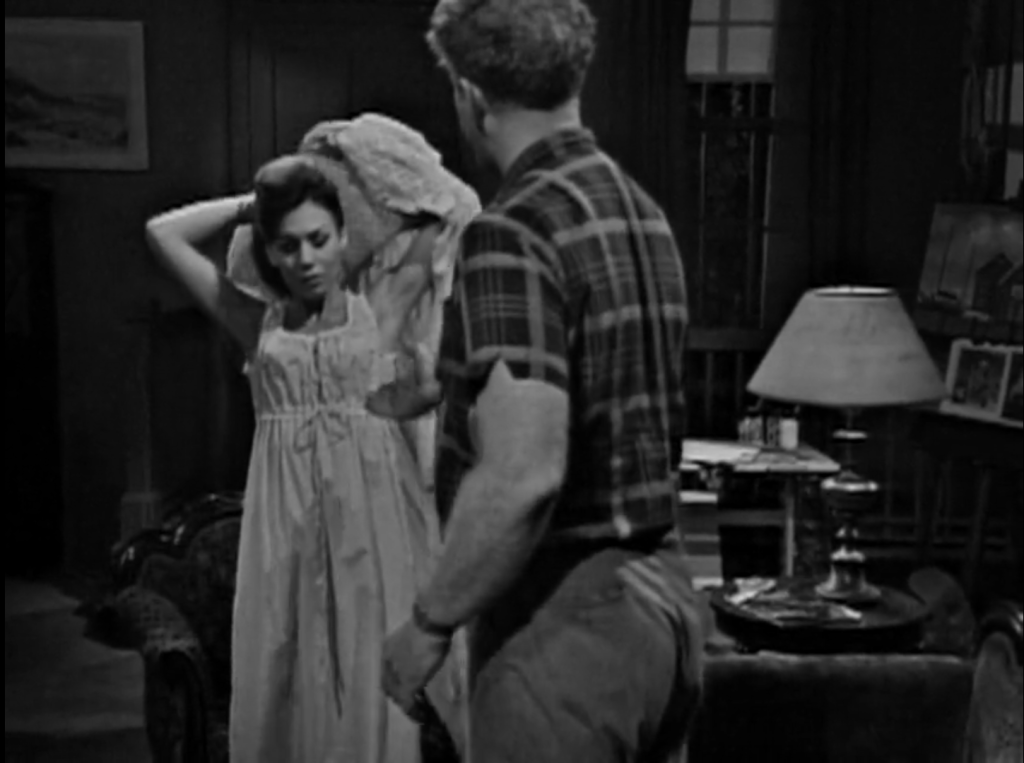
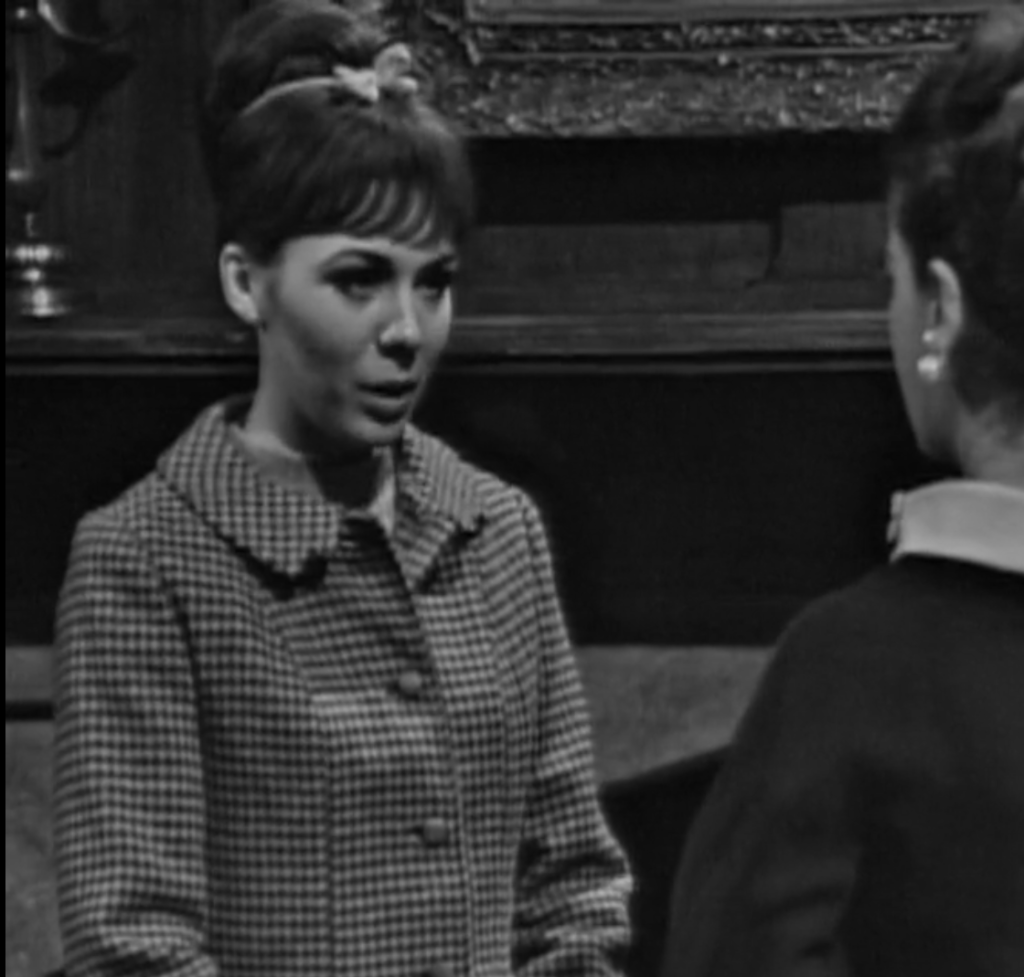
In #63, Maggie made her first visit to Collinwood. She had made a vow never to set foot in the great house, and was ill at ease when she broke it. With a great show of courage she stood up to matriarch Elizabeth Collins Stoddard. She told Liz that she believed that her family had information about what had gone wrong in her father’s life, and she wanted answers.
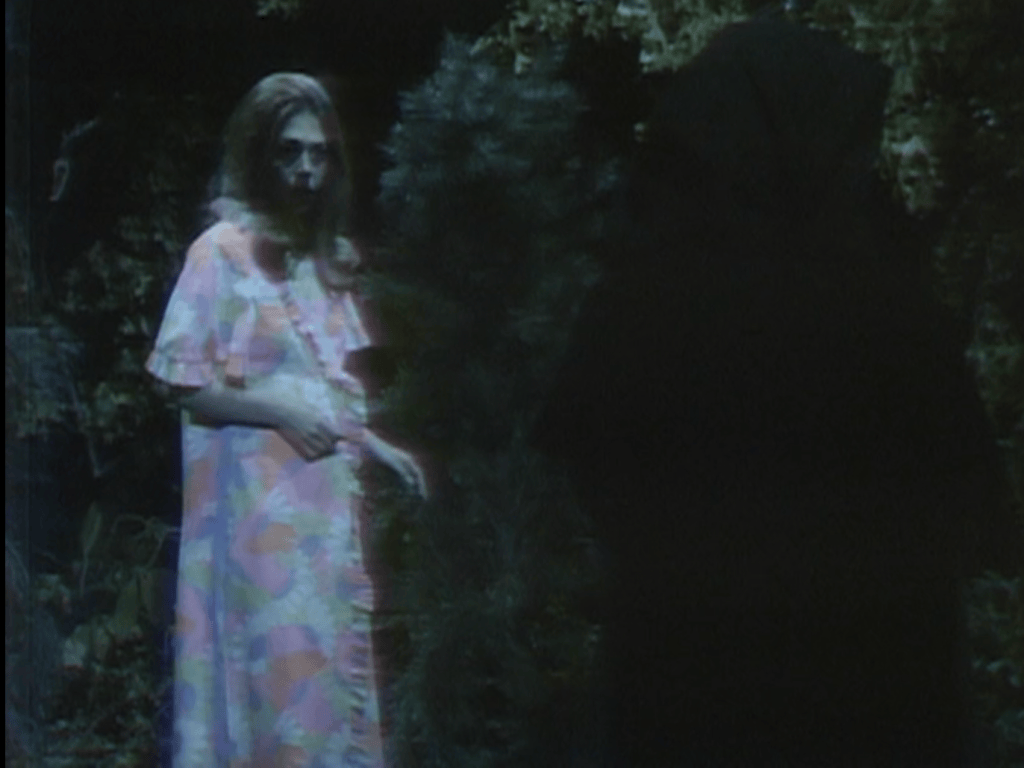
The supernatural was represented in the first months of Dark Shadows primarily by people using the word “ghost” as a metaphor when talking to Vicki, prompting her to reply “Surely you don’t believe in ghosts!?” They would then respond that they damn well did believe in them, and that if she went on living at Collinwood it wouldn’t be long before she believed in them, too. The first unequivocal sign the audience had of supernatural activity came in #70, when the ghost of the gracious Josette Collins emanated from her portrait above the mantel of the Old House at Collinwood, walked outside, and danced among the columns. The figure of Josette was none other than Kathryn Leigh Scott, who volunteered for the task when the original plan to achieve the effect without a performer fell apart.
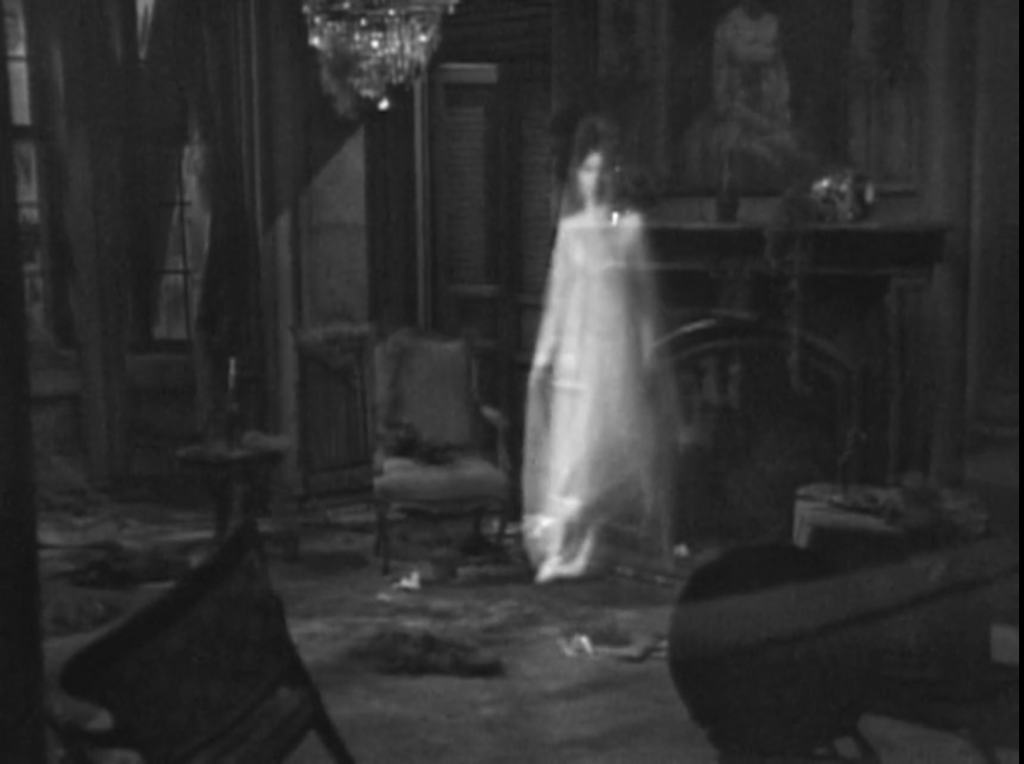
Miss Scott reprised the role of Josette’s ghost in #126, wearing a heavy veil over her face. We hear her voice, with a French accent of sorts, telling Vicki not to be afraid even though a madman has tied her up and is on his way with an ax to cut her head off. Josette then leads the other ghosts of Collinwood in killing the madman before he can harm Vicki.
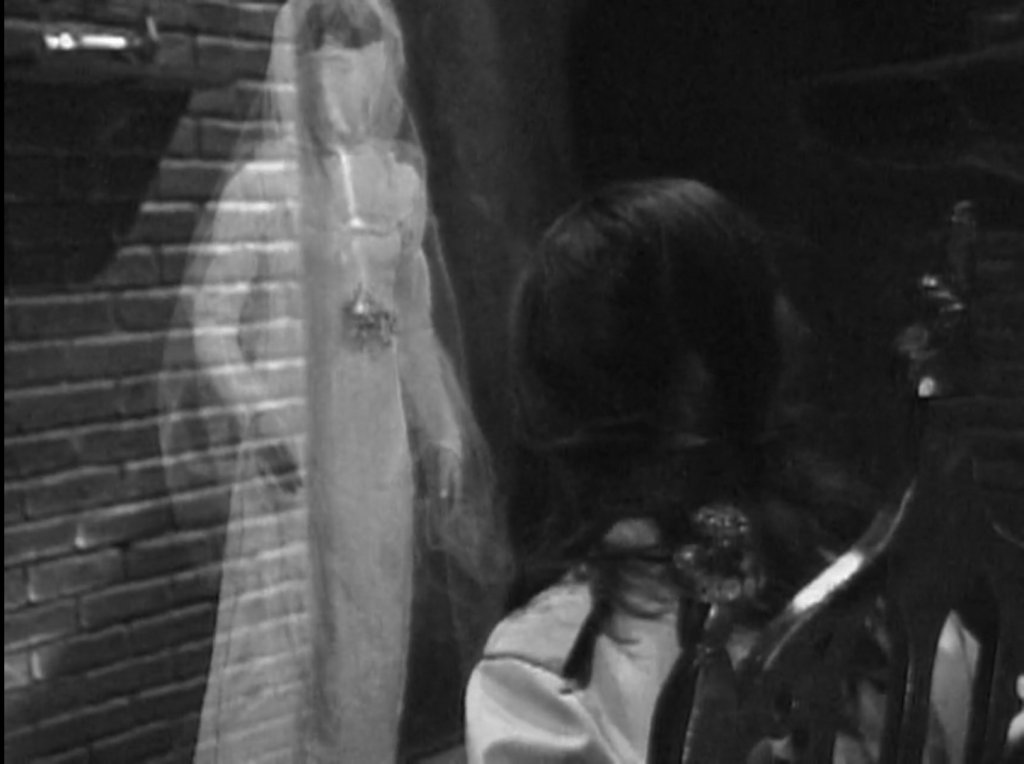
With that, Miss Scott became the first member of the cast to play multiple roles on Dark Shadows. For anyone who happened to recognize her voice in #126 and notice that she was in the credits, even though Maggie was not in the episode, the wised-up waitress and the ghost of Josette would have made an interesting pair. All we knew about Josette at that point was that her maiden name was LaFreniere, that she came to Collinwood in 1830 and married Jeremiah Collins, that she died by jumping off the cliff at Widows’ Hill, and that her ghost could be seen and heard around the estate. For all we knew, the LaFrenieres may have been a humble Franco-American family whom Jeremiah’s haughty relatives snubbed. She may have grown up in a house like The Evans Cottage, and her death might have been the outcome of a class conflict. Later, Josette’s family name would be retconned to DuPrés, her time of arrival to 1795, and she would be presented as a French aristocrat who was the daughter of one of the richest sugar planters on the island of Martinique, a description met in our universe by Joséphine de Beauharnais, wife and empress to Napoleon I.
In the first months of the show, Liz’ daughter Carolyn was dating hardworking young fisherman Joe Haskell. Carolyn and Joe were bored to tears with each other, and only kept going out because Liz thought they should. Joe and Carolyn finally broke up in #84, and he started dating Maggie by #129. Maggie and Joe were happy together, and soon planned to get married once Joe had saved up the money to go into business for himself with a boat and crew of his own. Their cheerful repartee was more agreeable to watch than were the many many scenes of Carolyn and Joe staring silently at each other, but it did not generate any story. It would be helpful that Joe and Maggie each had someone to talk to if they got involved in the plot in any way, but there were long stretches when we did not see either of them.
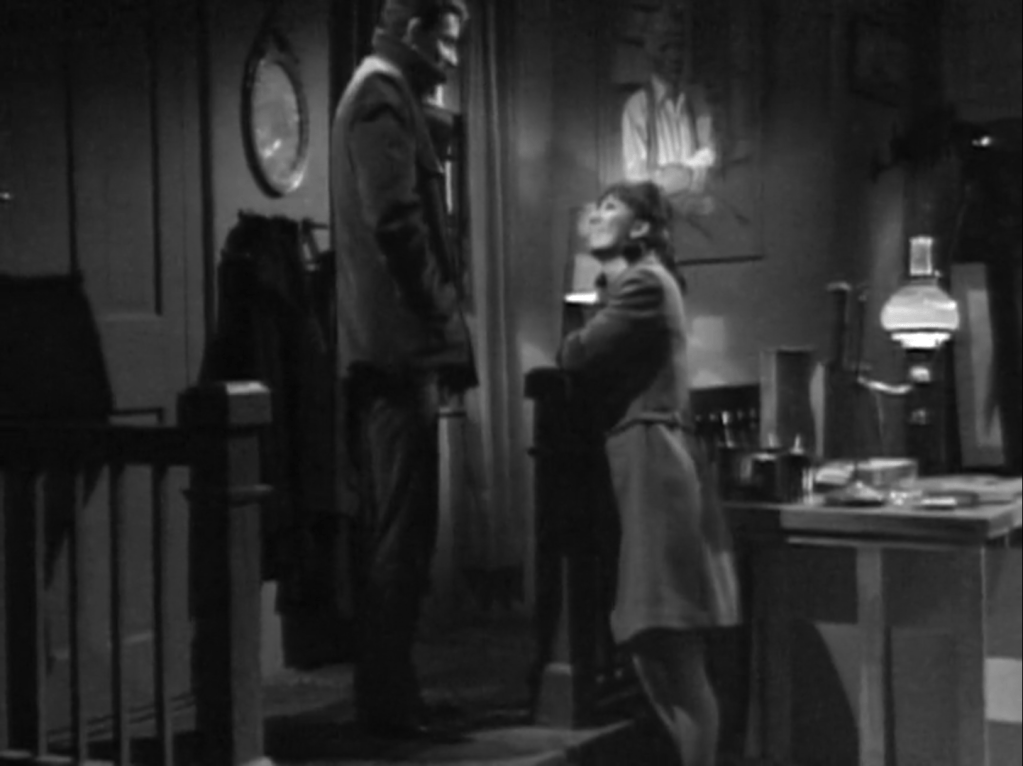
From December 1966 to March 1967, Dark Shadows was dominated by the story of undead blonde fire witch Laura Murdoch Collins. Maggie was very far from the center of the action during that period. Laura’s story gathered up the loose ends of all the ongoing stories, including “The Revenge of Burke Devlin” and the significance it gave to Sam’s alcoholism. That would clear the decks for the transformation of the show from a Gothic romance with occasional nods to the uncanny to a full-blown supernatural thriller.
After Laura went up in smoke in #192, Sam wrestled with the idea of admitting Burke that he had taken a bribe from Roger to stay silent in his case. Maggie had a tearful scene in #199 when Sam told her the truth. She urged him to make a clean breast of it. Even if he went to prison, he would be better off in prison than he has been these last ten years. In #200 and #201, Burke heard Sam’s confession and Roger’s, and decided to peace out. The Revenge of Burke Devlin never was a very exciting storyline, and it was apt that Burke himself eventually gave up on it.
In April 1967, Laura was succeeded as the show’s supernatural Big Bad by vampire Barnabas Collins. Barnabas met Maggie in #221, and shortly after added her blood to his diet. She went through a period bedridden in her room at The Evans Cottage, helplessly weak during the day and aggressively determined to deliver herself to Barnabas at night. Eventually he took her to his home, the Old House, where he set about erasing her personality and replacing it with that of Josette.
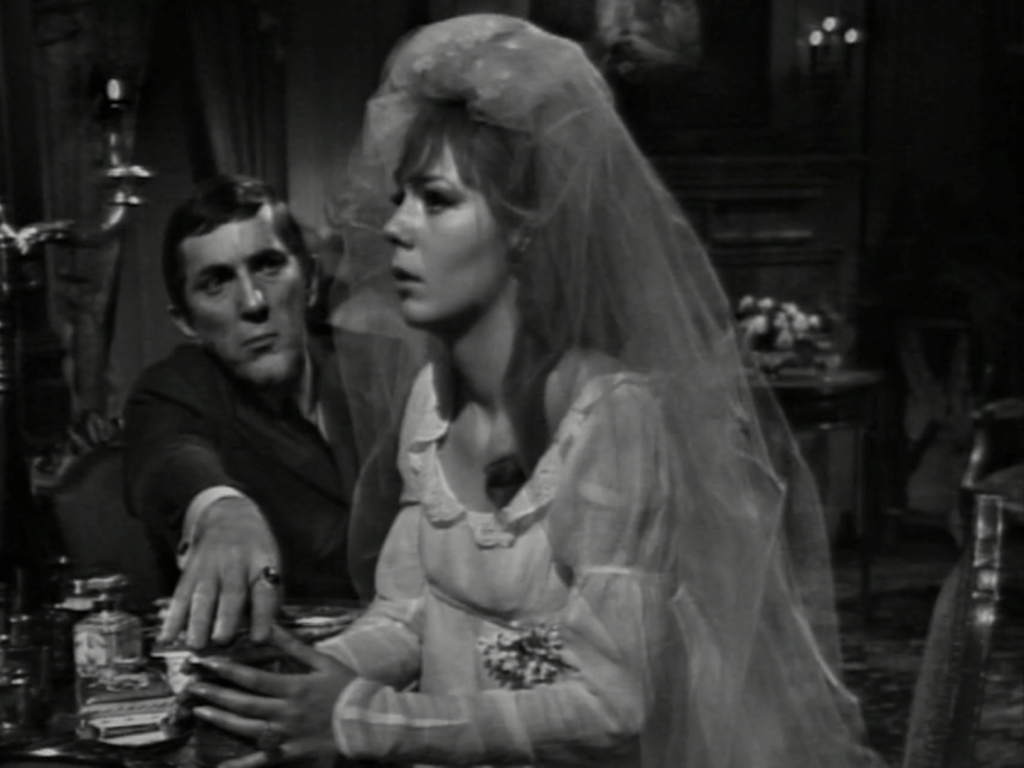
Despite Miss Scott’s appearances as the ghost of Josette in #70 and #126, the show had always associated Josette primarily with Vicki up to that point. At times it seemed Barnabas believed Maggie really was Josette come back to life; he certainly expressed himself with conviction in #260, when he sat with Maggie in the prison cell in his basement to which he had confined her after she started trying to resist him and said “But you are Josette!” And David, who had been very chummy with the ghost of Josette, saw Maggie in the dress in #240 and #241 and took her for Josette, remarking that her face looked exactly the same as it always had. In those moments, the show was nodding to the 1932 film The Mummy, in which Boris Karloff plays the undead Imhotep, who recognizes in Helen Grosvenor (Zita Johanns) the reincarnation of his lost love Ankh-Esen-Amun (also Zita Johanns.)
At other times, it seems that any pretty girl will do for arnabas’ fiendish plan. So in #274, after Maggie escaped and he decided to repeat the experiment with Vicki as the subject, Barnabas tells his sorely bedraggled blood thrall Willie Loomis that if you “Take the right individual, place her under the proper conditions and circumstances, apply the required pressure… a new personality is created.”
While Barnabas was holding Maggie in his basement cell, the ghost of his little sister Sarah showed up and befriended Maggie. It was she who helped Maggie escape. Sarah’s appearances turned out to be at least as big a turning point in Dark Shadows’ development as anything else that had happened up to that point, since it showed that the beings who lurked in the supernatural back-world behind the show’s action are starting to emerge into the foreground. Eventually, they will come on in force.
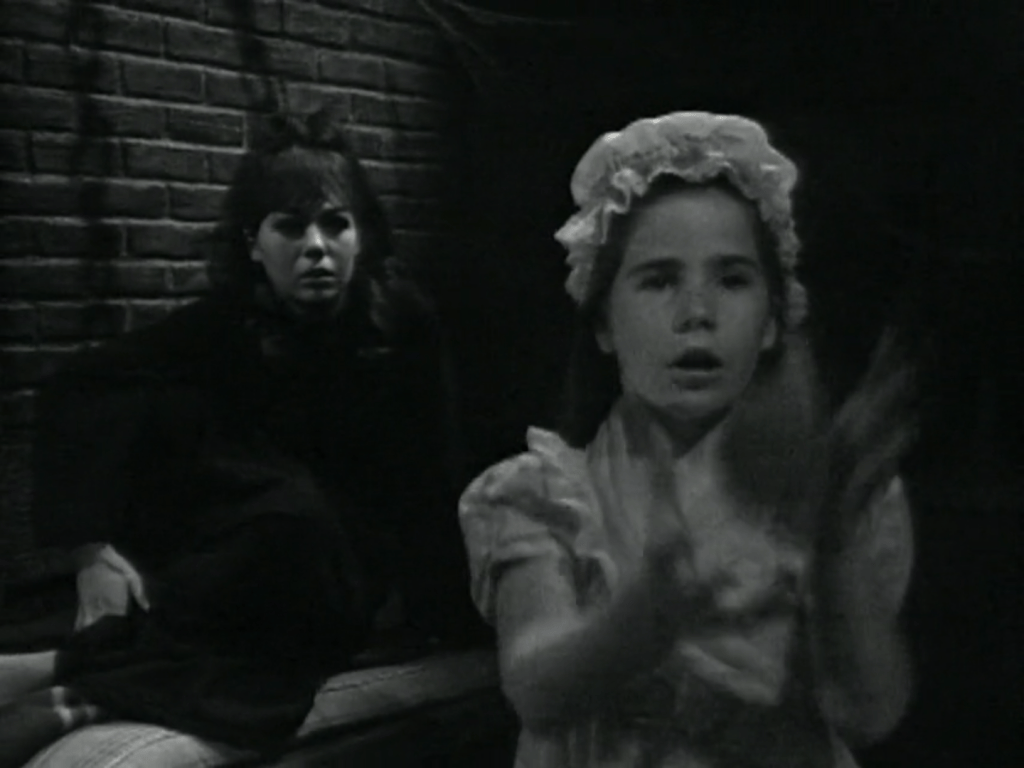
Maggie was sent off to a psychiatric facility called Windcliff after her ordeal as Barnabas’ prisoner. She had lost much of her memory and regressed to an almost nonverbal state. Her doctor, Julia Hoffman, probed into her mind, and soon learned the truth. Julia then went to Collinwood, where it turned out that her true loyalty was not to Maggie at all. She had been working on a cure for vampirism, and wanted to attach herself to Barnabas. When Sarah magically released Maggie from Windcliff and led her back to Collinsport, Julia betrayed her patient completely by using her powers of hypnosis to erase her memory and protect her abuser.
In November 1967, the supernatural back-world switched places with the naturalistic fore-world when Vicki traveled back in time to 1795. There, she met Josette, played by Miss Scott. That casting confirmed that Maggie really was the reincarnation of Josette, as Helen Grosvenor really was the reincarnation of Ankh-Esen-Amun. Those who remember how bleak the show was in May and June of 1967 when Maggie was in Barnabas’ basement can’t help but squirm at the thought that his attempt to torture her into expressing Josette’s personality was motivated by anything other than his utter loathsomeness, yet here the show is telling us that, however unsound his methods may have been, he had a point.
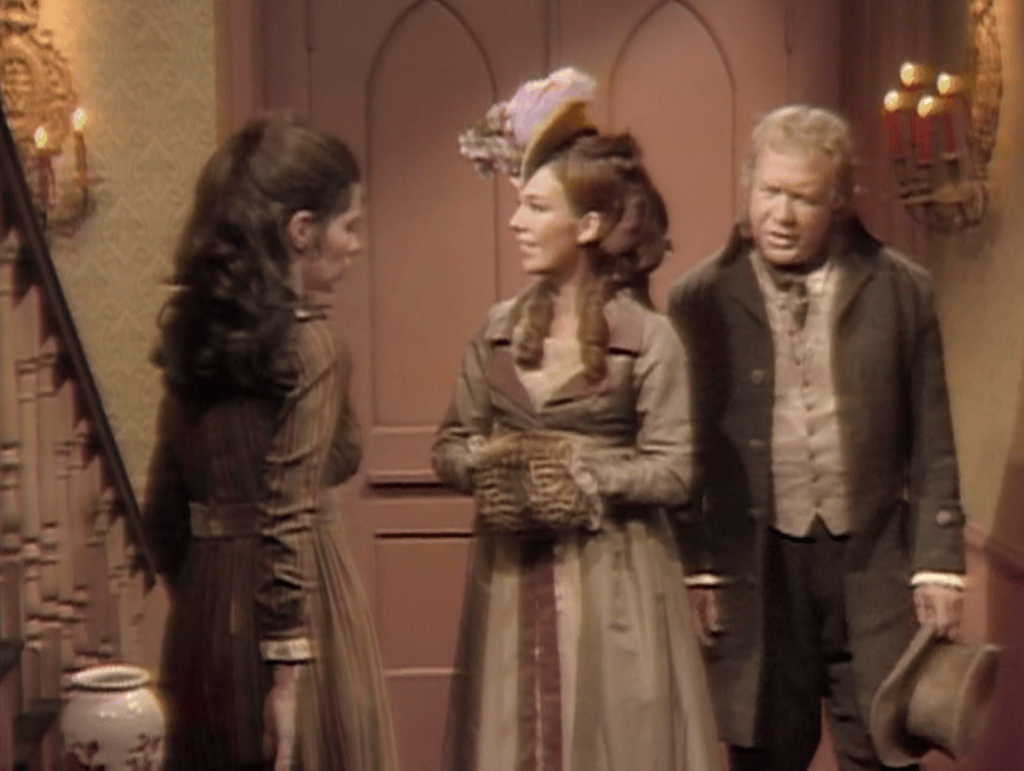
When the show returned to contemporary dress in March 1968, it was a Monster Mash with a cast drawn from the whole back-catalogue of Universal Studios horror pictures from the 1930s. Wicked witch Angelique struck Sam blind; later, he befriended Frankenstein’s monster Adam. Not knowing his own strength, Adam would accidentally kill Sam. The story moved so fast in those days that Maggie didn’t have much time to mourn her father.
Angelique defied her master, suave warlock Nicholas Blair. To punish her, Nicholas turned Angelique into a vampire. Angelique took Joe as a victim, wrecking his relationship with Maggie. In #599, Maggie had recovered her memory of her own time as Barnabas’ victim, and she saw Angelique biting Joe. She pleaded with Joe to run away with her, urging upon him the hope that there was still time for them to escape. Then, Nicholas got hold of them. He erased Maggie’s memory again, leaving her cheerful and Joe beyond help.
Shortly thereafter, Nicholas and Maggie went on some dates. Nicholas had plans for Adam that required a woman to risk her life. In #633/634, Maggie accompanied Nicholas to the basement of the Old House, where he was forcing Julia and Barnabas to do his bidding. Maggie calmly and cheerfully volunteered to serve the function Nicholas had in mind for her. She looked around the basement and mentioned that she had spent a great deal of time there, indicating a knowledge of everything that had happened to her in that place before. When Nicholas threatens to kill both Adam and Barnabas if he does not get his way, Julia tells Maggie to stop him. Maggie blandly asks why she should. Her willingness to risk her life seems to be the measure, not of her resignation to her fate, but of an indifference to human life so total as to include her own life. Maggie was under a spell then, and when Nicholas’ plans failed she became her usual self again. But in that scene, we catch the only glimpse we will ever get of Evil Maggie. It is thrilling.
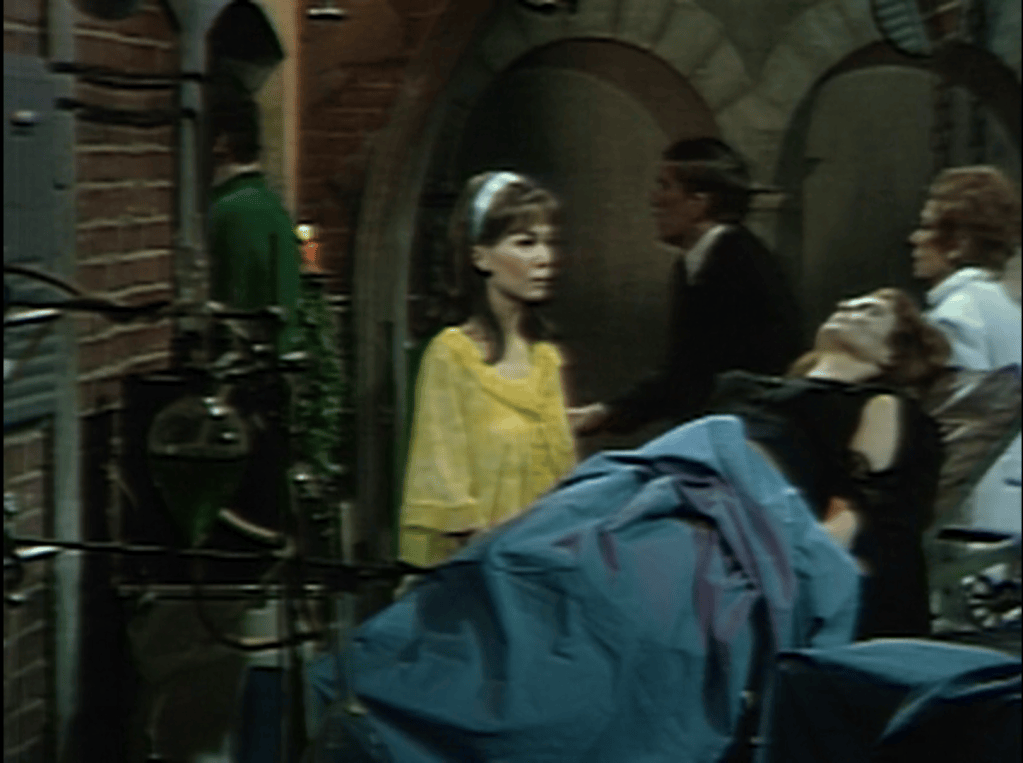
Not long after Nicholas’ defeat, Vicki disappeared. Maggie took her place as the new governess at Collinwood just in time for a story that calls for a new governess, an adaptation of Henry James’ The Turn of the Screw. Unlike the famously unreliable narrator of that novella, Maggie is not an overpowering presence who would obviously a danger to the children in her charge even if she were right about the ghosts. Instead, she is a squish, a completely ineffective teacher whom David and his live-in playmate Amy Jennings easily wrap around their fingers.
That’s a long way from the hard-boiled dame in the short blonde wig. Nor is it what we would have expected of the plucky heroine who fought her way back from dependence on the vampire’s bite to escape Barnabas in June 1968. It works in the story, though, and we’ve all known people who are tough and efficient in one situation but who go to pieces in a different kind of situation. And if we remember #63, we know that even when she was at her most hard-bitten Maggie couldn’t keep from trembling at the thought of Collinwood, so longtime viewers can believe that Maggie would be unable to bring herself to discipline David, who is after all one of Liz’ principal heirs.
The “Haunting of Collinwood” segment ended with another trip back in time, in this case to 1897. In that period, Miss Scott played Rachel Drummond, a neurotic intellectual hired to act as governess to children Jamison and Nora Collins. Rachel had spent the first twenty-odd years of her life under the thumbs of the horrendous Rev’d Mr Gregory Trask and his equally unspeakable family, wife Minerva and daughter Charity. The show gave Miss Scott enough to work with that we could see why Rachel kept going back to the Trasks and submitting to further abuse from them.
Miss Scott’s performance as Rachel was a finely observed and persuasively realized study of the psychology of dependence, which is probably why the fans all hate it so much. Dark Shadows was such a slam-bang adventure show at that point that Rachel seemed to have wandered in from the Strindberg play in the theater down the street. But so far as I’m concerned, she anchors the whole 1897 segment. Every story in it depends on our dread of the Trasks. They are the villains in the part that is concerned with the danger that they will take control of Collinwood. The Collinses are such a mess that the Trasks have to be something special to make us see them as a step down. The other parts of the segment require that we enjoy watching or even root for villains who are so wicked that we might be expected to want them to be stopped immediately. It is because they are a relief from the Trasks that we can find sympathy for werewolf Quentin Collins, can be amused by sorcerer Count Petofi, and can be glad that Angelique makes friends with Julia and Barnabas. Rachel’s torment shows us just how much is at stake in the battle against the Trasks and makes those reactions possible.
Rachel died halfway into 1897. After a bit, Miss Scott returned to the cast as Kitty Soames, a young American woman who is the dowager Countess of Hampshire. Kitty schemes to marry stuffy Edward Collins for his money, while he wants to marry her for her money. As it happens, they don’t have a cent between them. This farcical situation is executed with charm and wit, and as Kitty Miss Scott proved that she could play a character who is not The Nicest Girl in Town.
Kitty’s story came to a bizarre end. It turned out that she really was the reincarnation of Josette, that Josette’s personality was lurking in her subconscious, and that she wanted to trade places with her and live again. Barnabas was all for this, and he and Kitty vanished from 1897 into Josette’s portrait. They came out in 1796, where Kitty was indeed an inchoate memory somewhere in the depths of Josette’s mind. Barnabas tried to prevent Josette dying, but succeeded only in diverting her from her leap off the cliff to a fatal dose of poison. Poison was a suitable way to end that story, since it left a bitter taste in the audience’s mouths.
When the show was back in a contemporary setting in February 1970, Josette’s ghost appeared one last time. In #948, she told Barnabas that it was over between them, and that he should get a new girlfriend. In March, it looked like he and Maggie were becoming an item. She was certainly interested in him. In #973, she asks the newlywed Carolyn how married life is treating her, and mentions that she has a dinner date with Barnabas. When Carolyn responds that “Oh, maybe you and Barnabas…,” with the implied conclusion “will get married soon, Maggie doesn’t contradict her. It is unclear how Barnabas can take Maggie to dinner- she doesn’t know that he’s a vampire, and if she looks up from her salad to see him munching on one of the girls at the docks she will probably catch on. But for a couple of weeks they are getting remarkably cozy.
In #980, Barnabas traveled to an alternate universe, which the show insists on calling “Parallel Time.” In Parallel Time, Maggie’s counterpart is married to Quentin’s. Parallel Quentin is an abusive jerk, and he and Maggie Collins never have a single happy day together. This Maggie stands up for herself in #985. In one of the very best scenes Miss Scott ever played on Dark Shadows, she objects that Quentin insists on talking to her “like a child, and I am not a child, and I refuse to be treated like a child.” She walks out of the house and does not return until #1016.
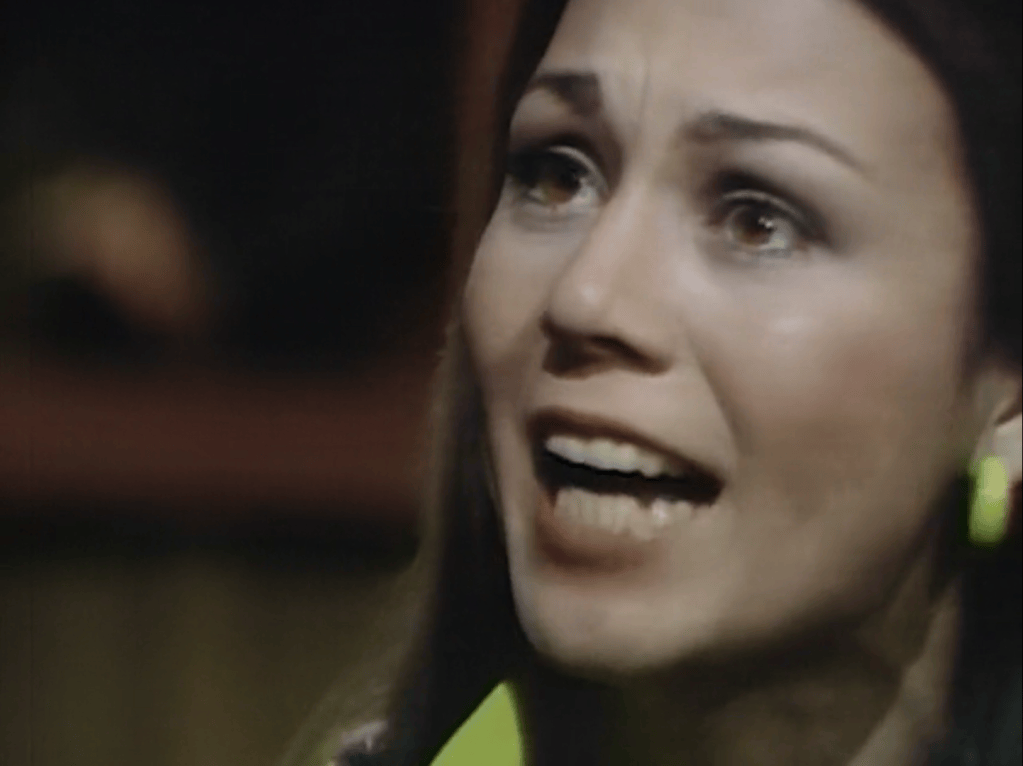
The six weeks of Maggie’s absence were the six weeks Miss Scott was in Tarrytown, New York for principal photography on the feature film House of Dark Shadows, in which she played the lead. When we see Maggie again, she is in her sister’s apartment in New York writing a letter to Quentin saying that it is time to formally end their marriage. She crumples that letter up before the phone rings and she learns that Quentin is gravely ill. Whether she would have written another draft making the same point, we never find out.
Maggie goes back to Collinwood, where Quentin dishes out more of the same stuff. This time she does allow herself to be treated like a child. It is a demoralizing thing to see. We don’t get enough of Maggie Collins’ backstory to give Miss Scott room to etch a portrait of the psychology of defeat like that which made Rachel such a triumph for her. Worst of all, Quentin is not in the position of the Trasks- we aren’t supposed to hate him. On the contrary, we can get invested in the story only to the extent that we like him. Seeing how he treats Maggie, that extent is zero.
In July 1970, Barnabas returned to the original continuity. After a few days we saw that Maggie was distraught that he wasn’t coming around anymore. Other characters tried to explain that he and Julia had learned of a terrible menace facing Collinwood and were busy trying to fight it, and they did eventually enlist Maggie in their efforts. But she is still disappointed that her romance with him has fizzled. Considering that Barnabas’ attempted Josettification of Maggie was the story that first made Dark Shadows a hit, and that it is retold in House of Dark Shadows, you don’t have to be a longtime fan for this attitude to make you queasy.
For the last couple of weeks, Maggie has been the victim of a vampire other than Barnabas. This turns out to be Roxanne Drew, counterpart of a woman Barnabas fell in love with in Parallel Time. Barnabas has taken male victims before, but this is the first time a female vampire has taken a female victim. They never showed Barnabas biting Willie or the luckless Dirk Wilkins, while they often lingered over him biting female victims and Angelique, in her vampire phase, biting male ones. The ABC network’s office of Standards and Practices was vigilantly on guard against any exploration of homoerotic imagery. We never see Roxanne bite Maggie, though the final image of #1104 does show Maggie with a startlingly raw look of longing as she approaches a veiled Roxanne.
We see Maggie for the last time today. She is in a car, being driven back to Windcliff by strangely dressed man Sebastian Shaw. Some speculate that this ending was a private joke on the part of executive producer Dan Curtis, who thought that Miss Scott was crazy to want to leave the show and move to Paris with her husband, photographer Ben Martin.
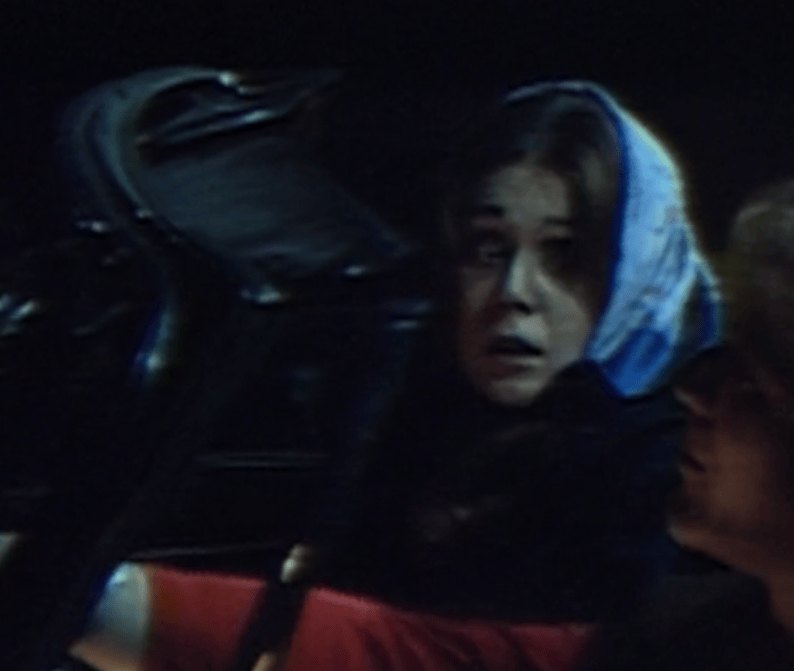
Be that as it may, it is a nice touch that the final reference to Windcliff should be in connection with Maggie, for whom it was invented in the first place. Her stay there brought Julia onto the show, and Julia, for all her villainy, has for some time been the chief protagonist and audience identification character. Sending her there also leaves open the widest range of options for ways to bring her back. Maybe she will still be a patient there, as she was when she played a mad scene in #265 that was the single most frightening moment in all of Dark Shadows. Or maybe she will return to Collinwood, or maybe she will become a monster, or maybe something else will happen. Anything is possible.
Except that nothing is possible. The ratings are going down, Curtis and the writers are exhausted, and the public has moved on from the mood that made Dark Shadows one of the big fads of the late 1960s. The loss of Miss Scott, a performer who gave the show so much of its heart, is a nail in a coffin that was almost fully built already. House of Dark Shadows is in the theaters, and it is a big enough hit that MGM will greenlight another film in the franchise. But the series is on a one-way road to cancellation. In April 1971, Mrs Ben Martin will pick up an American paper from a newsstand in Paris and be astonished to read that Dark Shadows has broadcast its final episode.
In the years since, Miss Scott has been perhaps the most assiduous member of the original cast at keeping the fandom alive. No one has attended more of the conventions; she presided over the last two, held this year. Her publishing firm, Pomegranate Press, has put out many Dark Shadows-themed books, some of which she herself wrote. She, along with Jonathan Frid, David Selby, and Lara Parker, had a cameo in Tim Burton’s 2012 Dark Shadows film. She took roles in many of the audio drama continuations of the show produced by Big Finish, and she is the voice performer for the audiobooks of “Marilyn Ross'” Dark Shadows novels. If Dark Shadows was a projection of the personality of Dan Curtis while he was alive, in the last twenty years Kathryn Leigh Scott has been the first lady of the world of Dark Shadows, and has done more than anyone else to set the cheerful, welcoming tone of its fandom.


I’ve had the pleasure of meeting Kathryn Leigh Scott several times, most recently at the 60th anniversary in Los Angeles. She’s as nice and lovely as you could hope, always having time for fans. Her lines are always the longest. Her new book “Legacy” wasn’t available at the LA event, and she took it upon herself to take orders for the book and ship them later at her expense.
LikeLiked by 1 person