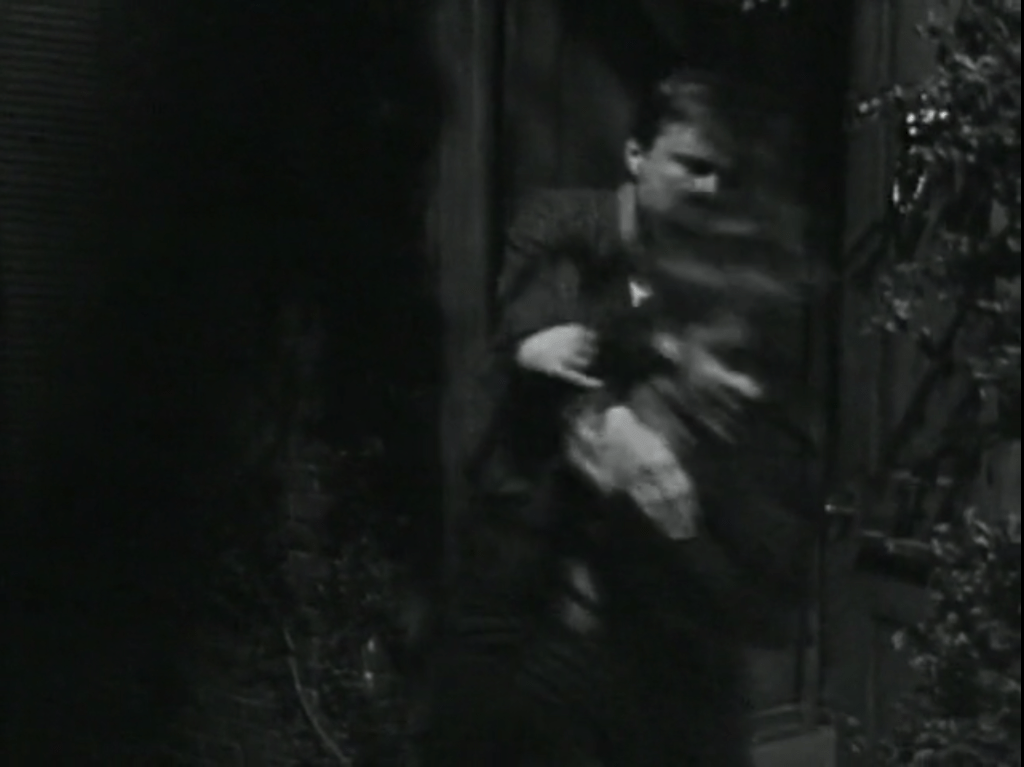
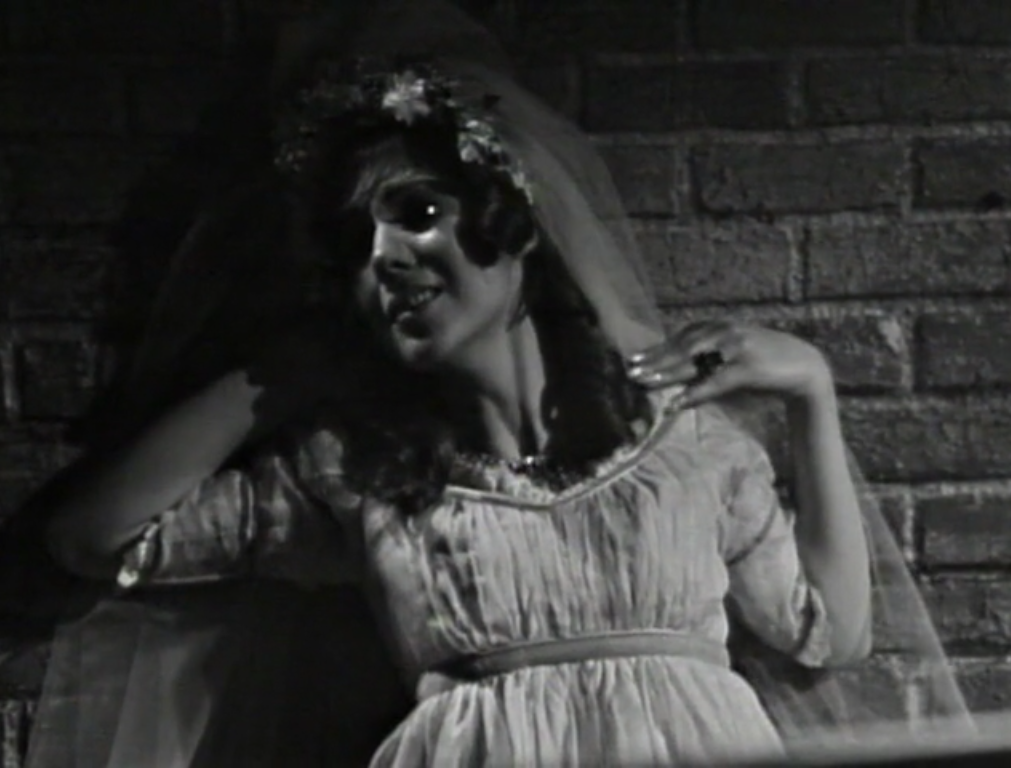
Episode 278: If you become Josette

The first major villain on Dark Shadows was high-born ne’er-do-well Roger Collins, played by Louis Edmonds. Edmonds was a master of the sarcastic remark, so that Roger was often funny. But no matter how often he made the audience laugh, Roger was never a comic villain. That requires a character we can empathize with as we watch them scheme and plot, scramble and improvise, in pursuit of goals that could not be achieved without ruining all the fun. We laugh when we recognize our own foibles in an outlandish character, and laugh again when we realize that our ability to feel with others encompasses even those whose feelings have led them to do dastardly deeds.

Roger’s personality was too cold, his motives too contemptible for us to empathize with him. Where a comic villain thinks fast and puts himself in ridiculous situations, Roger stuck with his fixed ideas, using the same tactics time and again to bully his unwilling co-conspirator Sam to stick with their plan. Even when he bumbled about with a damning piece of evidence, a fountain pen left at a crime scene, he was never the coyote caught in his own over-elaborate trap, but a criminal in a police procedural. He was a melodramatic villain who was only incidentally funny.

The first supernatural menace on the show was Roger’s ex-wife, undead fire witch Laura Murdoch Collins, played by Diana Millay. Millay was hilarious, every bit as funny as Louis Edmonds. It was a shame the two of them didn’t play a married couple in a long-running comedy. They could have raised sarcasm to heights previously unknown to humankind. But while Millay gets laughs every time the script gives her the least chance, Laura was even less of a comic villain than Roger.

It is clear that Laura is a malign presence from beyond the grave and that, if she is not stopped, she will burn her young son David to death. But everything else about her is an impenetrable mystery. She is not part of a familiar mythology, and even the most basic questions about her remain unanswered. We cannot empathize with her motives, since we cannot begin to guess what her motives are or even be sure if she has motives.

The first comic villain on Dark Shadows was seagoing con man Jason McGuire, played by Dennis Patrick. Jason had his first comic turns only after he had been on the show for weeks, during which time we had been subjected to many iterations of a dreary ritual in which he made a demand of reclusive matriarch Liz, Liz resisted, he threatened to expose her terrible secret, and she capitulated. When his henchman Willie slips out of Jason’s control and he starts scrambling to contain the damage Willie is doing to his plan, Patrick finally gets a chance to play Jason as a comic villain, and the result is very engaging. But those scenes are scattered too thinly through Jason’s long-running, relentlessly monotonous storyline to make him a success as a comic villain.

Now, the show has struck gold. Vampire Barnabas Collins is becoming a pop culture phenomenon and bringing the show the first good ratings it has ever had. They have to keep Barnabas on the show indefinitely, and he has to be the most important character. That presents a practical difficulty. Vampires usually figure in folklore and fiction as unstoppable killing machines. Daytime soap operas explore the shifting relationships among large casts of characters. It’s going to be hard to maintain that cast if Barnabas sets about murdering everyone. To square the circle, they try to redefine Barnabas as a comic villain.

Barnabas is giving a costume party for his distant cousins, the living members of the Collins family. He has invited well-meaning governess Vicki to attend and to wear the dress of the legendary Josette Collins. In the first 39 weeks of Dark Shadows, Vicki had developed a close friendship with Josette’s ghost, so she is excited about this. For his part, Barnabas has borrowed an evil scheme from the 1932 film The Mummy. He will erase Vicki’s personality and replace it with Josette’s, then kill her so that she will rise as a vampiric Josette. So he is glad she likes the dress.

Barnabas asks Vicki to come to his house and help him pick out the antique clothes that the family will wear at the party. She enthusiastically agrees, saying that she loves to go through trunks full of old clothes. The clothes are in a trunk in Josette’s old room, which Barnabas has restored.

In the room, we see the ghost of Barnabas’ 9 year old sister Sarah sitting on the trunk. She vanishes a second before Barnabas and Vicki enter. Both of them have a strong feeling that someone just left the room. Barnabas tries to dismiss the sensation as nervousness, but Vicki has had too much experience with ghosts to be put off so easily.

Vicki has been our point of view character for most of the series. At first, that was because she was a newcomer to the great estate of Collinwood and the nearby town of Collinsport, and so we would learn everything we needed to know as we listened to people explain things to her. Later, it was because she was the key protagonist in the stories, so that the action got going once she knew what was going on. So when Barnabas equals Vicki’s sensitivity to Sarah’s presence, he is presented to us as another possible point of view character.

Barnabas keeps talking about the Collinses’ eighteenth century ancestors in terms that make it obvious that he knew them, so that he more than once has to clean up after himself with remarks like “I would imagine.” He does alarm Vicki when he blurts out something about what will happen to her should she “become Josette.” He hastens to say that he means that Vicki will become her for the duration of the party.

“Become Josette?”

Vicki goes back to the great house and talks with Liz about the party. Liz smiles happily, the first time we’ve seen this expression on her face in the whole run of the series.

Happy Liz

Vicki goes on about Barnabas’ connection to the past, saying that he gives the impression of someone who really is misplaced in time. She has the feeling that he needs to recreate a bygone era, and that he is doomed to be unhappy because of the impossibility of traveling backward in time. Vicki does not know what Barnabas’ plans for her are, but she understands his motives perfectly and empathizes with him deeply. That Vicki, Barnabas’ intended victim, can feel this way suggests that we can, too.

Back in Barnabas’ house, Sarah reappears in Josette’s room and sees her blue dress. She is excited to find it. She looks at her reflection in the mirror and smiles. Her good cheer is emphasized when her musical cue, an excerpt from “London Bridge,” is for the first time played in a major key.

Sarah’s reflection looks like it has never seen a ghost before

The minor key was appropriate during Sarah’s previous appearances. The first several times we saw her, Sarah was associated with Barnabas’ imprisonment of Maggie Evans, The Nicest Girl in Town. Maggie was the victim of Barnabas’ first mad attempt at Josettery, and Sarah intervened just in time to keep Barnabas from killing her. The other day, Barnabas killed Jason, and we saw Sarah when Barnabas was forcing Willie to help him hide his old friend’s corpse. Barnabas isn’t killing anyone today, so Sarah can be a bit more cheerful.

Sarah helps to establish Barnabas as a comic villain. As the ghostly sister who returned to the upper world when Barnabas was loosed to prey upon the living, Sarah and he are part of the same eruption from Dark Shadows‘ supernatural back-world into its main continuity. Perhaps she personifies his conscience, certainly she gives him an occasion to make schmaltzy speeches about his days as a human. More important than either of these, when we see that Barnabas’ 9 year old sister is his most powerful adversary, we begin to wonder just how seriously we should take him.

Closing Miscellany

Yesterday and today, Alexandra Moltke Isles delivered the recorded voiceover monologue at the beginning of the episode. The first 270 times she did this, it was in character as Vicki. Now, they’ve given up the idea that Vicki or any other one character will eventually find out about everything that we see on screen, so the openings are delivered by whatever actress is available as a nameless external narrator.

In those first 270 outings, Mrs Isles sounded like Vicki. She adopted Vicki’s distinctive way of speaking, carefully articulating one word at a time and often ending sentences with surprising little inflections- a curl of uncertainty here, a touch of breathy optimism there, a falling note of despair in another place. The voiceovers were usually remarks about the weather or the sea that were supposed to involve some vague metaphor for events in the story, so that it is open to question whether it was really worth Mrs Isles’ time to put so much effort into creating a character with them. But I guess a pro is a pro, and it was a matter of course that she would do her best no matter how little she had to work with.

In these last two, she has used a relatively flat voice, with none of Vicki’s particular vocal traits. The pacing has been structured, not around sentences, but around an attempt to convey an overall sense of urgency. They sound very much like The Narrator. I wonder what Mrs Isles would have made of The Narrator if the voiceover passages had extended beyond the opening moments and run through the episodes.

There is a famous production error under the closing credits, when a stagehand shows up in the window, realizes he’s on camera, and makes himself all the more conspicuous when he tries to escape from his predicament.

From PostImages

Episode 277: Redesigned to live without it

Part One. The Unlamented Man

Vampire Barnabas Collins and his sorely bedraggled blood thrall Willie Loomis talk about the man Barnabas killed the other day, seagoing con man Jason McGuire. Willie has been in town, and assures Barnabas that no one misses Jason. They say a few words about Barnabas’ plan to take control of well-meaning governess Vicki, erase her personality, and replace it with that of his long-lost love Josette. Barnabas then decides to invite the residents of the great house of Collinwood to a costume party.

In the drawing room of the great house, matriarch Liz and her brother Roger talk about the family business. Liz hasn’t willingly left home for 18 years, for reasons that were never very interesting and that the show has now promised to stop bothering us with. So Roger urges her to stop working from home and start coming to the office. She reflexively says that she can’t, but then agrees that she will. It’s an interesting moment of psychological realism- even if Liz’ original motive for cooping herself up had nothing to do with agoraphobia, such a long immurement would breed tenacious habits.

Liz and Roger wonder about Jason. He had been living at Collinwood while blackmailing Liz, and now has disappeared. They are glad to see the last of him, but are puzzled that he didn’t take any of his belongings. Even his razor is still in his room.

That will also strike regular viewers as odd. Willie had been staying at Collinwood when Barnabas claimed him, and they were able to get Willie’s things out of the house without anyone noticing them come or go. You’d think they’d have done the same with Jason’s things, just to prevent any suspicion forming.

Part Two. Gone the Sun

Barnabas comes by the great house. Vicki greets him at the door. He invites her to come outside and look at the scenery. He chats about the loveliness of the sea and the Moon, then starts hating on the Sun. “I find the daylight harsh and cruel, whereas the night is kind and soft… When one considers that the Moon takes on its beauty by reflecting the rays of the Sun, it seems inconceivable that the sun could be so ugly… One cannot even look upon it without being blinded; it burns the skin, it scorches the Earth.” The episode was taped in New York City on 5 July 1967, a fairly hot day, so the part about how the Sun “scorches the Earth” was at least topical.

In reply to this, Vicki says of the Sun that “our whole universe revolves around it. We can’t exist without it… man was designed to live with it.” Vicki may overstate the scientific case with her reference to “the whole universe,” but she is putting the matter into a powerful mythological context. In trying to alienate Vicki from the Sun, Barnabas is trying to lure her into his private world away from the common light in which communities of people live. His world is cut off from the cycle of growth, fertility, aging, and death which the Sun traditionally represents.

Further, the Sun is in many cultures a symbol of the masculine, and its relationship to the Earth represents the union of male and female. Barnabas’ plans for Vicki will short-circuit her sex life and replace it with something that is essentially solitary. Perhaps this aspect of the vampire myth explains why so many pubescent girls in the late 1960s embraced Barnabas. Though within his narrative universe he is a blood-sucking creature of Hell, in terms of the situation such girls are actually uneasy about he is a Non-Threatening Boy who will not push her into something she isn’t ready for.

That may also be part of the reason why LGBTQIAAPP+ people have had such a complicated reaction to the image of the vampire over the years. On the one hand, the vampire promises an escape from compulsory heterosexuality. On the other, that escape leaves in place a whole cosmic order centered on opposite sex relationships. It leads to an absolute dead end of isolation, sterility, and parasitism. A figure like Barnabas shows that a real liberation for sexual minority groups can come only in the course of revolutionary change on the grandest scale, not as a result of individual adventures.

Part Three. A Family Party

Barnabas invites Liz, Roger, and Vicki to his party. Liz initially declines. While Barnabas and Vicki wait in the study, presumably going into greater depth about how ugly the Sun is, Roger exhorts her to give up her reclusive ways. She agrees.

Barnabas explains that he has clothing that belonged to their ancestors in the late eighteenth century, and that he will make it available to his guests. He will dress as his “ancestor” (actually himself,) Barnabas Collins. Roger and Liz will dress as Barnabas’ parents, Joshua and Naomi Collins. He turns to Vicki and says “You will be Josette Collins.” The credits roll.

Vicki reacts to Barnabas’ casting her as Josette

Vicki was excited when Barnabas first invited her to the party, but looks pensive when Barnabas tells her that she will be Josette. My wife, Mrs Acilius, pointed out that for Vicki, Josette is still an active presence. Josette’s ghost appeared and spoke to her in #126, and interacted with her and her friends many times during the arc centering on Roger’s ex-wife, undead fire witch Laura Murdoch Collins. Further, Barnabas’ house had been Josette’s stronghold in the months between her first appearance in #70 and Barnabas’ arrival there in #212. As far as Vicki is concerned, Barnabas is asking her to dress in the clothing of the mistress of the house and to impersonate her while she watches. That would make anyone feel silly.

Episode 256: Always choose the worst things to want

A mysterious little girl in eighteenth century garb shows up outside the dungeon cell where vampire Barnabas Collins is keeping his victim, Maggie Evans. The girl stands with her back to Maggie’s cell and sings a couple of verses of “London Bridge” over and over while tossing a ball. Maggie pleads with her to stop singing, to get away before Barnabas and his sorely bedraggled blood thrall Willie Loomis catch her, and to tell someone that she has seen her. The girl does not acknowledge Maggie in any way.

Seconds after the girl has strolled slowly away, Willie comes by the same path she had taken. Maggie is bewildered that Willie didn’t see her. She urges Willie to escape from Barnabas. Willie gives a big speech about how he thinks about escaping all the time, and that when he is in his car he has sometimes tried to keep driving. But Barnabas’ power keeps pulling him back. Regular viewers will be interested in this confirmation that Willie has a car.*

Willie’s big speech.
Screenshot by Dark Shadows Before I Die

At the great house of Collinwood, strange and troubled boy David Collins is impatient with the geography lesson his governess Vicki is trying to give him. In the first 39 weeks of the show, the only set which consistently saw interesting scenes was David’s room, where he and Vicki became friends during his lessons. They don’t have the studio space to build that set today, so this lesson is conducted in the drawing room. When flighty heiress Carolyn comes into the room, Vicki sends David to play outside. Since the interrupted lesson was about Australia, he hops away kangaroo-style.

Vicki and Carolyn talk about Carolyn’s boyfriend, motorcycle enthusiast Buzz. Buzz is a refugee from Beach Blanket Bingo, so broadly comic a figure that he might have been too silly even for the biker gang in that movie and its sequels. Unfortunately, Buzz doesn’t show up today, and Vicki and Carolyn’s conversation is a pure specimen of old-time soap opera earnestness. There is an odd moment when Vicki asks Carolyn “How far do you intend to go with Buzz?” and Carolyn answers “All the way!” At the end of the scene, Carolyn uses the phrase “all the way” again. She’s talking about her plan to marry Buzz, but “all the way” was such a familiar euphemism for sexual intercourse in the 1960s that it is hard to imagine it wasn’t intentional on some level. When Carolyn tells Vicki that she and Buzz will go “all the way” while Vicki watches, we wonder what weddings are like in Collinsport.**

David has gone to the yard around Barnabas’ house. We see a location insert of him on the swing set there. This footage is reused from #130, when we discovered that he was being watched by his mother, blonde fire witch Laura Murdoch Collins. Laura had died sometime previously, but it didn’t take.

Now, he is being watched again. The mysterious little girl from the dungeon has made her way up to the porch and calls to him as “Boy!” When he tells her his name is David, she says “I know.” She gives her name as Sarah, and asks him to play with her. They toss her ball back and forth, and he finds fault with her fondness for “London Bridge.” She says she used to go to school, a long time ago. She lives around there, but everyone she lives with went away and left her all alone. She excuses herself to go look for them. Willie then comes out of the house. David tells him about Sarah, and Willie shoos him away.

Playing catch as best you can when you’re on a tiny set, photographed in 4X3.
Screenshot by Dark Shadows Before I Die

That Sarah can come and go from the dungeon without being seen shows that she is one of the ghosts who haunt the house. David has seen several of these, but does not recognize her. Her behavior in the opening scenes leaves us wondering if she is aware of Maggie’s presence; if not, she may simply be an apparition, unable to interact with the living characters.

When Sarah meets David, not only is she able to converse with him, but her ability to play catch with him using the ball she brought with her shows that she has a physical body and that she can manipulate material objects. That makes it all the more puzzling that she did not answer Maggie. Was she ignoring her, or was she somehow less capable in the dungeon than she is on the porch?

When Sarah uses the words “a long time ago,” we suspect that she knows she is a ghost and she has been displaced to a future century. But then she becomes confused as to where her people are, and is filled with a terrible urgency to go look for them. Again it is ambiguous just what sort of being Sarah is and what she can do.

There is always a vagueness about the supernatural- if you could explain a phenomenon fully in words and measurements, it wouldn’t be in that category at all. The key to holding an audience’s attention with a story about ghosts and such is to intrigue them with questions that seem like they might have answers and to use them to lead to another, equally imponderable set of questions before the first set gets old. So it is a promising sign that Sarah is introduced while we are still asking what Barnabas can do, what he wants to accomplish, what he needs for survival, and how he got to be the way he is.

That we see David in a lesson with Vicki and then hear him talking with Sarah about how neither of them goes to school anymore is also interesting to regular viewers. Dark Shadows is just about a year old. It started with Vicki’s arrival at Collinwood, where reclusive matriarch Liz had summoned her to teach David. David and his father, Liz’ impecunious brother Roger Collins, had been living at Collinwood for about a month. Before then, they had lived in Augusta, Maine, where David went to school.

When Vicki showed up, Roger objected that he knew nothing about her, and Liz refused to tell him or Vicki how she knew that she existed or why she chose her to be David’s governess. The show has been hinting very heavily that Vicki is Liz’ biological daughter and that Liz is desperate to keep that relationship secret. It is also clear that Liz wants above all for David to grow into her idea of a male Collins, an idea to which her bratty little brother Roger does not in any way conform.

Barnabas’ plan for Maggie is a ghoulish parody of Liz’ for David. He wants to erase her personality and replace it with that of his long-lost love, Josette Collins. Over the generations since her death, Josette has become the patroness of the Collins family and the emblem of its perfect female member. And of course Barnabas is as anxious to hide the secrets in his basement as Liz is to hide those in hers. That Sarah appears to both Maggie and David emphasizes that Barnabas is a funhouse mirror reflection of Liz.

Back in the great house, David hears Buzz’ motorcycle and tells Carolyn that he is there for her. She can’t quite bring herself to tell David that she and Buzz are planning to get married, but does encourage his interest in going for a bike ride with Buzz. As she leaves, he brilliantly mimes motorcycle riding.

David gives Vicki a detailed account of his encounter with Sarah. She is disappointed he didn’t bring her home. Though it is her job to be David’s only friend, Vicki is no more enthusiastic about his isolation from playmates his own age than Willie is about Barnabas’ treatment of Maggie.

Back in the dungeon, Willie finds that Maggie has not eaten. They share a sad moment. He leaves, and Sarah reappears. Maggie talks to her. At first, she doesn’t respond. But then she turns to her and says “If you see my big brother, don’t tell him you saw me. He doesn’t like anybody to come down here.” Then she leaves, a spring in her step.

The last time a ghost spoke to an imprisoned woman was in the same house, in #126. That time, Vicki was bound and gagged and hidden in a secret room on the main floor by crazed handyman Matthew Morgan. When Matthew had gone to get an ax with which to decapitate Vicki, the ghost of Josette had appeared to her and said, in a perfectly cheerful voice,*** “Do not be afraid.” Josette didn’t untie Vicki or anything, she just told her that and vanished. Later in the episode, she and some other ghosts scare Matthew to death before he can kill Vicki. When Sarah goes away from the stunned Maggie and skips along the floor, regular viewers might remember that event and see a promise that Sarah has something up her sleeve.

Closing Miscellany

Sarah is identified in the closing credits as “Sarah Collins,” the name given in #211 for Barnabas’ sister who died in childhood. That rather blunts the surprise of her closing reference to her “big brother.”

Sarah’s identity raises a couple of other questions. Barnabas’ house was the original Collins family home, and he and Sarah would have lived there. The cell in which he keeps Maggie is covered with cobwebs, evidently a feature of the house from its beginning. When she tells Maggie that her big brother “doesn’t like anybody to come down here,” she is speaking from experience- the adults don’t like it when you go near the jail cell in the basement.

Slavery was a legal institution in Massachusetts**** until 1783, and indentured servitude under conditions not so far removed from those to which slaves were subject continued long after. The Old House has been described as a “huge mansion,” so presumably its owners would have held people under at least one of these statuses. As a Collins of the eighteenth century, Sarah’s blithe attitude towards someone held in the cell would seem to be chillingly appropriate.

Sarah’s address to David as “Boy!” when she knows his name is also interesting coming from her. To be sure, if she had called him by name before they met, he would have known right away that there was something very strange about her. Since he has seen many ghosts and knows that ghosts congregate in and around the Old House, he may have identified her as one right away.

On the other hand, during the “Revenge of Burke Devlin” storyline that ran from #1-#201, there was considerable doubt as to whether David was Roger’s natural son or Burke’s. That doubt came to a head when Laura was on the show. Laura only left 13 weeks ago, and Burke is still hanging around. As far as we know, the question may come back up, and David Collins may turn out to be David Devlin. In that case, Sarah may have chosen to call him “boy” because she is a Collins and therefore better than everyone who is not.

I posted a couple of long comments about this episode on Danny Horn’s Dark Shadows Every Day. I won’t copy them here, because they contain spoilers for people who haven’t seen the whole series. But I’ll link to them- under the post about this episode, I argued that Sarah’s introduction was the most important plot development in the entire series; and under a post about a much later episode, I wish one of the words in her closing line had been different.

*Regular viewers are interested in some weird stuff, what can I say.

**My wife, Mrs Acilius, is very much taken with the actresses’ recollections of how Louis Edmonds, who played Roger, would make them laugh so hard during rehearsals that it was sometimes difficult for them to stay in character during filming. She says it is just as well that Roger wasn’t in this episode, because there is no way they could have got through this scene if he had been.

***Provided by Kathryn Leigh Scott, who also plays Maggie.

****Maine was part of Massachusetts until 1821.

Episode 253: Ring cycle

Vampire Barnabas Collins is keeping Maggie Evans, The Nicest Girl in Town, in a prison cell in his basement. He won’t let her out until she discards her personality and adopts that of his long-lost love Josette. That would seem to rule Maggie out as a source of plot development for quite some time.

Writer Joe Caldwell knew that he was not the first dramatist to have to tell a story in which one of the main female characters is cooped up. In ancient Athens, women of citizen rank were supposed to be immured in the house, hidden away from all men outside their immediate families. While the reality was a great deal more complicated, audiences at the city’s dramatic festivals liked to see plays set in a world that approximated that ideal. So tragedians like Euripides, and after him the Greek and Roman playwrights of the New Comedy, devised a whole repertoire of ways that ladies could send messages to their boyfriends without leaving home.

One of the most prominent of these methods was the dispatch of an identifiable token by a household servant. Since many people, both men and women, wore rings with unique decorations, rings were very often used for this purpose. In plays where the heroine has been captured by pirates and is being held prisoner by someone to whom the pirates made a gift of her, as in Plautus’ Miles Gloriosus (sometimes translated into English as The Swaggering Soldier,) the heroine and her accomplices will use the villain’s greed or that of his servant to trick them into taking a valuable ring and showing it to someone who will be able to help her. Plautus would have been relatively familiar to audiences in 1967, and very much front-of-mind for the Broadway-oriented people involved in making Dark Shadows, because of the success of the 1962 show A Funny Thing Happened on the Way to the Forum and its 1966 film version, both of which end with a recognition prompted by the sight of an unusual ring.

Maggie doesn’t seem to be up on her New Comedy. In the first part of the episode, she asks Barnabas to take her ring to her father to let him know she is still alive. Barnabas is insulted that she would think he was dumb enough to do that.

There is some good dialogue in this scene, and Kathryn Leigh Scott and Jonathan Frid are always fun to watch together, but we have to share Barnabas’ reaction. Until today, Maggie had been one of the few characters on the show who had never done or said anything inexplicably stupid, and asking Barnabas to give her father the ring breaks that streak. Barnabas’ complaint lampshades the problem, which does help a bit- it gives us time to think that maybe Maggie is trying to distract Barnabas from another plan she is cooking up, or maybe the script is telling us that she is so desperate she doesn’t know what she’s doing.

Later, Barnabas’ sorely-bedraggled blood thrall Willie Loomis comes to check in on Maggie. Willie is so obsessed with jewels that when Maggie offered him a diamond necklace on Friday, he turned his back on Barnabas’ coffin while she stood there preparing to stab him through the heart. Maggie persuades Willie to take her ring as a token of her gratitude for keeping Barnabas from killing her on Monday. That marks a good recovery from the earlier dumbness, and gets us off to a fresh start.

Strange and troubled boy David Collins sneaks into Barnabas’ house through an unlocked window. He often visited the house in the months before Barnabas was introduced to Dark Shadows, when the ghost of Josette was the principal supernatural presence on the show and the house was her stronghold. David can’t feel her presence there now, and calls for her forlornly as he wanders through the front parlor.

Willie catches David and demands to know why he is in the house. David tries to defend his indefensible behavior, and when that fails he goes on the attack. He says that he knows what Barnabas and Willie are doing. Willie tenses and asks what it is they are doing. David says they are hurting Josette. Willie listens until he is sure that David is talking only about the ghost, not about Maggie. Then he picks David up and throws him out the front door. There is so much hilarious stuff in this part that not even the bit in the middle when Willie briefly thinks he may have to murder David dampens the mood.

Willie picks David up…
…and throws him down.

In the course of bodily ejecting David from the house, Willie drops the ring. David finds it on the ground while he is getting back onto his feet. He calls to Willie and tries to return the ring, but Willie has already locked the door and will give no response but shouts of “Go away!” David takes a good long look at the ring and goes home to the great house of Collinwood.

Well-meaning governess Vicki greets him there, scolding him for having gone so far from the house. She notices the ring in his hand. This moment comes straight out of ancient comedy- David’s clothes have pockets, after all, but this scene is written for an actor wearing a pallium and a terracotta mask. David won’t tell Vicki where he found the ring, and she examines it. She has seen that there is an inscription in it and is just about able to read it when a knock comes at the door.

It is Barnabas. He tells David that he wants to apologize for Willie’s forcible ejection of him from his house. Vicki turns to David and asks if that’s where he was. The boy has little choice but to admit it, and suggests that the ghost of Josette invited him. Vicki asks if he found the ring at Barnabas’ house. Barnabas, startled by the mention of a ring, asks to see it. He claims that it is a family heirloom which he gave Willie to sell. He takes it, and in a genial voice suggests David steer clear of Willie.

Back home, Barnabas returns to Maggie’s cell. She pretends to be coming around to believing that she is Josette. Barnabas shows her the ring and shatters her hopes. He leaves. Rather than end the episode with a shot of her staring helpless through the barred door, we follow Maggie into the cell and see her slam shut the lid of Josette’s music box. We see her thwarted, but no less able to take action than she was when we began.

Caldwell deserves credit for a fine script, aside from the awkwardness in Maggie’s early scene with Barnabas. Director John Sedwick keeps it looking clean and crisp, and the final shot of Maggie in her cell is a triumph of timing. Best of all, the actors all liked each other and were having fun working together today, and that gives an irresistible energy to the finished product. The result is the fourteenth episode, and the first since #182 early in March, that I would label “Genuinely Good.”

Episode 250: A servant’s name

Maggie Evans, the Nicest Girl in Town, has been the prisoner of vampire Barnabas Collins for some time. At rise, she is in front of her mirror, struggling to remember who she is. Her name and her father’s come back to her, but then the music box Barnabas gave her starts playing, and she begins to believe that she is Barnabas’ long-lost love Josette. This scene takes about a minute more than is necessary.

She renews the struggle later, and this time overcomes the hypnotic power of the music box. She decides to pretend that she believes that she is Josette in order to trick Barnabas and Barnabas’ sorely bedraggled blood thrall Willie into giving her enough freedom to escape. She fools them, only to hear Barnabas tell Willie that her compliance means that the time has come for the final part of his plan.

Maggie hears carpentry work, and sneaks down to the basement. She finds Barnabas watching Willie build a coffin. It sits next to the coffin in which Barnabas spends his days. It becomes clear that once Maggie is fully Josettified, she will be a vampire as well. Unfortunately, Jonathan Frid has a great deal of trouble with his lines in this scene. I don’t usually mind Frid’s bobbles, but his line troubles here take us out of what needs to be a terrifying moment.

In the morning, Maggie goes back to the basement. Willie finds her there. He is not convinced that she believes she is Josette. He presses her, and she finally breaks down and gives up the act.

Maggie shows Willie the diamond necklace Barnabas gave her as a present for their wedding, and tells him it will be his if they destroy Barnabas and escape. Willie’s fascination with jewels was what led him to undertake the grave-robbing expedition that freed Barnabas in the first place, and the necklace does distract him for a little while. But then he hears Barnabas’ heartbeat. He heard that sound before, in #208, #209, #210, and #217, but in those episodes no one else could hear it. Maggie can, since Barnabas has been drinking her blood too, but she can still resist the vampire’s spell. She is holding a large awl, ready to drive it into Barnabas’ heart, but Willie cannot overcome his urge to protect his master. He disarms Maggie.

We see Maggie in her room and hear Barnabas’ voice on the soundtrack going over what she heard him say in the basement. This is the first time an interior monologue has played quotes from another character. They aren’t the lines Jonathan Frid actually delivered, but cleaned-up, intelligible lines, presumably the ones that were in the script.

As sunset nears, Willie takes Maggie back to the basement. He leaves, telling her that she and Barnabas must be alone when he completes “the ceremony.” She finds the awl, picks it up, and opens the coffin. Before she can drive it into Barnabas’ heart, he awakens and shows his fangs. She screams and presses herself against the brick wall behind her.

Back to the wall

This is the second episode credited to writer Joe Caldwell, and is certainly the best teleplay Dark Shadows has seen since Francis Swann left the show in November of 1966. Like Swann and Art Wallace, Caldwell understood what actors could do and knew how to give them a platform to show their stuff.

Aside from Frid’s one bad scene, the actors excel. In 1967, Kathryn Leigh Scott was already a highly trained actress. Maggie Evans, on the other hand, has never acted before. When Maggie is pretending to believe she is Josette, Miss Scott shows her giving a crude imitation of Barnabas’ high-flown style, mixed with some prancing movements you might see from a little girl playing the princess in a school play. Barnabas is so desperate to believe that his lunatic scheme is working that he falls for it completely. When he and Maggie are in the front parlor together, he responds to her amateur performance as a sign that she is matching his pomposity, which of course thrills him.

When Willie and Maggie are in the basement, John Karlen plays his earthy skepticism with a simplicity that makes Maggie’s pretending look ridiculous. When Maggie gives up her act and whispers a plea for Willie to help her, Miss Scott matches the force of Karlen’s performance and the resulting encounter is as powerful as anything the show ever achieves.

The episode is good enough that we barely noticed some major lapses in story logic. If Maggie can sneak down to the basement to eavesdrop on Barnabas and Willie, why can’t she slip out the front door? She knows how to get from Barnabas’ house to the great house of Collinwood, where she has friends and there is a telephone to call the sheriff.

And when did she learn that you can destroy vampires by driving stakes through their hearts? She’s lived in Collinsport all her life, and no one in that town has ever heard of vampires. Granted, the show would move a lot faster and could have more layers of irony if the characters had read Dracula and seen movies from Universal and Hammer, but this is the first hint that any of them has.

My wife, Mrs Acilius, was very interested in the fact that Maggie calls herself “Maggie, or Margaret” in this one. First time we hear the name Margaret! I’m not sure why that impressed her so much, but she’s very bright, so I’m sure it’s important. All I can think of is that “Maggie” waits tables in the diner, cleans up after her Pop has had one drink too many, and is everybody’s pal, while “Margaret” is a saint’s name, and a queen’s name. So Margaret might have a bigger destiny than we’ve seen.

Episode 248: The bride of Barnabas Collins

At the end of yesterday’s installment, artist Sam Evans looked out the window of his house and saw his daughter, missing local girl Maggie. Today, the sheriff shows up and reports that he and his men couldn’t find anything to substantiate Sam’s report. The sheriff then tries to convince Sam that he didn’t really see Maggie at all. When last we see Sam, he is telling himself that it was only his imagination.

Maggie had escaped from the custody of vampire Barnabas Collins and Barnabas’ sorely bedraggled blood thrall, Willie Loomis. Today, Barnabas meets Maggie in the graveyard, chokes her, and takes her into the tomb where he spent a century or two. He declares that he will punish her for trying to leave him.

As Barnabas talks, Maggie seems inclined to go along with his plan to annihilate her personality and replace it with that of his long-dead love, Josette. He wonders aloud if the punishment he was planning is necessary after all. But then she remembers that she is holding her father’s pipe, and she calls out “Pop!” Barnabas then takes her to the hidden room in the back of the tomb and shuts her up in his old coffin.

Director Lela Swift was uncharacteristically sloppy with the framing yesterday, but today she makes up for it with one of the most remembered shots of the entire series. When Barnabas shuts Maggie up in the coffin, we see him from her point of view. Claustrophobic viewers beware!

Barnabas closing the lid

The next morning, Willie releases Maggie from the coffin, takes her back to Barnabas’ house, and urges her to convince herself that she is Josette. For a while, she tries it. We start to wonder if Willie will have as much success with Maggie as the sheriff had with her father. But then she looks in the mirror and shouts “I’m Maggie Evans!”

That may not sound like much story for 22 minutes, but it never feels slow. Swift and the actors are all in fine form today.

On the other hand, there are a couple of script problems. The sheriff is written as such a fool that we can’t help but be distracted, and the scene between Maggie and Barnabas in the outer section of the tomb goes on too long. But even at its lowest points the actors just about save it. Dana Elcar always makes it seem that Sheriff Patterson knows more than he’s letting on, so it isn’t until he starts trying to talk Sam into believing he didn’t really see Maggie that we get the sinking feeling that he is absolutely useless. And Jonathan Frid and Kathryn Leigh Scott are electric as Barnabas and Maggie, so much so that we could forgive the scene between them even if it had been twice as repetitious as it fact is. With two consecutive episodes including as much good stuff as was in yesterday’s and today’s, it’s starting to seem like they are due to land one in the ranks of the Genuinely Good Episodes any day now.

Episode 247: A fix on this man’s character

Artist Sam Evans can think of nothing but his daughter Maggie, The Nicest Girl in Town. Maggie disappeared from the hospital weeks ago, and the police haven’t found a clue as to how she got out or where she is. Sam’s friend, dashing action hero Burke Devlin, drops by Sam’s house and offers to take him to dinner. Sam isn’t hungry. Burke urges Sam to work on a painting; he says he can’t concentrate.

Burke brings up the idea of Sam painting a portrait of him. Burke did commission Sam to paint him in #22, and for weeks and weeks afterward Sam vacillated about doing so. That was part of the since-abandoned “Revenge of Burke Devlin” storyline. In the notes about this episode on the Dark Shadows wiki, we read that “the episode’s writer seems unaware of the portrait-painting history between Sam and Burke, the fact that it was a sore subject, and even of the general animosity between the two.” I don’t think that is necessarily so. Burke gave up on his revenge in #201, and everyone was thoroughly bored by the topic well before then. So I suspect this conversation is telling us that Burke and Sam have turned the page on all that.

Before Maggie disappeared, Sam had been painting a portrait of mysterious eccentric Barnabas Collins. Barnabas insisted on working only at night and on doing all the painting at his place, the Old House on the estate of Collinwood, which does not have electricity. Since Maggie vanished, Sam has offered to take the canvas home and work on it there, but Barnabas would not let it leave his house. Tonight, Sam decides to go to Barnabas’ and do some painting by candlelight.

Sam knocks on Barnabas’ door. Barnabas’ servant, Willie Loomis, answers. Before he met Barnabas, Willie was a dangerously unstable ruffian. Willie menaced Sam and Maggie in the local tavern so severely that Burke had to beat him to a pulp, and Sam came away from the experience hating Willie. But in his time working on the portrait, Sam has come to believe that Willie is a changed man.

Willie explains that Barnabas is away, that he doesn’t know when he will be back, and that he isn’t supposed to let anyone in the house in his absence. Sam protests that he is no stranger, and that he is sure Barnabas will want the portrait finished. Willie finally suggests that he take the canvas home and work on it there. That’s what Sam has wanted to do all along, so he is delighted to hear it. He carries the painting to his station wagon while Willie carries the easel. The two are in a jolly mood as they leave the house, seeming very much like good friends.

Sam leaves his pipe on a table in the front parlor of Barnabas’ house. In the first months of the show he went back and forth between smoking this pipe with its white bowl carved into a likeness of George Washington and puffing on cigarettes. We haven’t seen the pipe in a long while, but today we get a number of closeups of it. The first comes before Sam leaves home to go visit Barnabas, and the second when he and Willie are on their way to the station wagon.

The pipe in the Evans cottage
The pipe at Barnabas’ house

As soon as Sam and Willie are outside, a figure draped in white comes down the stairs into the parlor. It is Maggie. It turns out Barnabas is the one who is holding Maggie. He has taken his cue from the 1932 film The Mummy, in which Boris Karloff is an undead creature who tries to convince a woman that she is the reincarnation of his lost love so that he can kill her and bring her back to life as that other person. Barnabas, it turns out, is a vampire. He wants to erase Maggie’s personality, replace it with that of his long-lost Josette, and then turn her into a vampire.

Maggie is sufficiently under Barnabas’ sway that doesn’t know who she is, but she is not fully convinced that she is Josette. When she picks up her father’s pipe she seems to remember something. She doesn’t sniff it, but a pipe is a highly aromatic object, and scents are powerful drivers of memory.

Maggie reaches for the pipe
Something comes back to Maggie’s mind

Maggie wanders back upstairs, keeping the pipe with her. Sam and Willie come in, and Sam is mystified that his pipe has vanished. When Willie says he must have left it outside, Sam starts to argue. Seeing that the pipe isn’t in the room and believing there is no one else in the house, Sam laughingly calls himself absent minded and asks Willie to keep an eye out for it.

Maggie wanders back downstairs after her father has gone. She and Willie argue about whether she ought to leave her room and who she is. She doesn’t let on that she knows anything about the pipe. She goes upstairs again, and Willie goes to the basement.

This is the first time we have seen the basement, and we get a long look at it. There is a metal door with a barred window, big cobwebs, a stone staircase, big candelabra, and a coffin. The coffin lid opens, and we see Barnabas inside. This is the first time we’ve seen him there.

Barnabas asks Willie why he has come. When Willie tells him he has news, Barnabas beckons him closer. When Willie obeys, he grabs him by the throat. When Willie has delivered his report, he flings him to the floor, apparently on general principles. He stands over Willie’s crumpled form and gives a lecture about the importance of keeping visitors out of the house during the day. Notably, he does not object to sending the canvas home with Sam.

Maggie wanders downstairs a third time. We see her face and hear her recorded voice on the soundtrack. This is the third instance of interior monologue on Dark Shadows, after we heard Willie thinking at the portrait of Barnabas in #205 and #208. As Willie did not know who Barnabas was or why he was drawn towards him when we heard his thoughts, so today Maggie does not know who she is or what Barnabas is doing to her. She looks at the pipe in her hand, concludes that there is someone she must take it to, and walks out the front door.

In the Evans cottage, Sam is working on the portrait of Barnabas when Burke comes in with a sandwich to share. They chat about the painting. Sam explains that he can’t get the eyes right- they keep looking cold and forbidding, while he and Burke agree that Barnabas doesn’t seem that way at all.

We cut back to the Old House, where Barnabas is sitting in his armchair, giving Willie some orders. He may not seem cold and forbidding to Sam, but he couldn’t be more blatantly malevolent than he is with Willie. When they discover that Maggie is gone, Barnabas and Willie run out the front door.

This is the first episode in which Barnabas is just a total bastard the entire time. When he is with people who don’t know that he is a vampire, he plays the role of the Collins family’s mild-mannered cousin from England; Barnabas is so committed to that performance that we wonder to what extent he is a monster pretending to be a nice guy, and to what extent he is a nice guy forced to function as a monster. When we’ve seen him alone with Maggie, he has obviously been a crazy person, but a twisted sweetness comes peeping out as he talks about his longing for Josette. Even in his previous scenes alone with Willie, scenes that have more than once ended with him beating Willie unmercifully, Barnabas has allowed Willie to go on talking about his feelings much longer than he would have to if he were entirely sincere when he tells Willie that his inner life is of no consequence. But there isn’t the least flicker of warmth in either of Barnabas’ scenes today.

In the Evans cottage, Sam is puzzling over the portrait while Burke is in the kitchen. Maggie comes drifting into view in the window behind Sam. The Evans cottage has been a prominent feature of the show from its early days, and the foliage visible through the window has changed often enough from episode to episode that regular viewers know there is an actual space behind it, but this is the first time we have seen a person there. In her white dress, with her dazed expression and her wafting movements, Maggie looks like a ghost. Sam sees her and is startled. He calls her name. She disappears. Sam and Burke run out of the house to look for her.

There are some significant flaws in the episode. The opening scene between Sam and Burke goes on too long, the repeated closeups on the pipe are embarrassingly heavy-handed, and Maggie’s three trips downstairs are one too many. There are also some badly framed shots, surprisingly so for director Lela Swift. For example, I cropped the fifth image above to zoom in on Sam and Maggie. Here is what actually appears in the show, cluttered with distracting junk on all sides and devoting more screen space to David Ford’s butt than anyone wanted to see:

Moon over Collinsport

Still, there is a lot of good stuff in the episode, and the ending is very effective. It is far from a gem by any reasonable standard, but it may be the best script Malcolm Marmorstein ever wrote.

Episode 241: What other name?

Much of the first 39 weeks of Dark Shadows consisted of characters telling each other that strange and troubled boy David Collins was a “very imaginative child.” In fact, David showed remarkably little imagination. He simply gave accurate reports concerning ghosts and other topics the adults around him didn’t want to think about.

Today, David Collins sneaks into the Old House on the grounds of the estate of Collinwood. For a long time, the Old House was the stronghold of his friend, the ghost of Josette Collins, and he often went there to visit her. Now, his distant cousin Barnabas is residing there. Unknown to David and the rest of the family, Barnabas is a vampire. Barnabas has somehow stripped Josette of much of her power, and he is holding Maggie Evans, The Nicest Girl in Town, and trying to brainwash her into thinking she is Josette.

David thinks he sees Josette’s ghost in the front parlor, but it is actually Maggie, wearing Josette’s dress and dazedly answering to her name. David hasn’t seen Maggie as often as he has seen Josette, but he’s met her several times and she’s been in the news since she disappeared from the hospital a number of days ago. Granted, he expects to see Josette, and Maggie is using a different voice than she used when she was slinging hash at the restaurant in the Collinsport Inn. But it is a bit odd that he doesn’t at least notice that Josette and Maggie look a lot alike. Perhaps he is finally showing the vivid imagination we heard about for so long, and is so carried away by the atmosphere that he overlooks the obvious.

David studies Maggie’s face

David is delighted by the encounter, since he hasn’t sensed Josette’s presence since Barnabas moved in. After a few minutes, he remarks that it is the longest conversation they’ve ever had. He sees the portrait of Barnabas that Maggie’s father, artist Sam Evans, had been painting, and mentions Sam’s name. That triggers something in Maggie’s memory, and Barnabas’ name triggers something else.

Maggie’s reaction to the name “Evans” does not suggest anything to David

A knock comes at the door. David’s father, high-born ne’er-do-well Roger Collins, and his governess, the well-meaning Vicki, call his name. Maggie slips away. Roger and Vicki scold David for intruding in Barnabas’ house. Roger asks David if he went there looking for Josette. David denies it, and also denies that he did see her. Vicki knows Josette well, a fact which she apparently forgot for the duration of Friday’s episode, but her memory is restored today. She detects the scent of Josette’s perfume, and knows that David is lying.

The three of them are still there when Barnabas comes in. He is irked, and Roger is terribly embarrassed. They scurry back to the great house, where Roger tells Vicki to have David copy the word “honesty” and its definition fifty times in tomorrow’s lesson.

Before David goes to his room, Vicki asks him to tell her the truth about Josette. She listens carefully. He mentions that Josette had a music box, to which Vicki reacts visibly. She has seen the music box and the perfume jar in Josette’s restored bedroom upstairs at the Old House, and looks like she is trying to find the connection. She promises to keep the story between them. This glimpse of Smart Vicki, after Friday’s excruciating Dumb Vicki, revives our hope that someday, something will happen on the show.

Back in the Old House, Barnabas is sitting with Maggie and giving her instructions. She only repeats his words in a quizzical inflection, often just the last word he speaks. She hadn’t known who she was when she was talking to David, but she participated in the conversation so much more actively than this that we might wonder if she is putting on an act to keep distance between herself and Barnabas. At the end of the episode, she wanders back downstairs and calls “Little boy! I need you!”

Episode 239: The lover of her

Vampire Barnabas Collins is taking a page from the 1932 Universal Pictures film The Mummy. Boris Karloff plays Imhotep, who rises from the dead and decides that a young lady named Helen Grosvenor is actually the reincarnation of his lost love, Princess Ankh-esen-amun. He abducts Helen, tells her she is Ankh-esen-amun, and tries to kill her so that she can come back to life as that lady. Likewise, Barnabas has abducted Maggie Evans, The Nicest Girl in Town, and set about brainwashing her into thinking she is his lost love Josette. He has made it clear to the audience, if not to the other characters, that he will kill her so that she can rise as a vampiric Josette.

Today, Barnabas and Maggie are having dinner. Maggie seems to be in a daze, and only repeats what Barnabas says to her. Still, she is smiling at him and answering to the name Josette. We can’t quite tell if she is succumbing to his lunatic plan or is simply playing along with him.

Maggie’s father Sam and boyfriend Joe knock on the door. When Barnabas’ sorely-bedraggled blood-thrall Willie Loomis mentions Joe’s name, Maggie’s head jerks to the side and her eyes open. At that, we know that she was falling under Barnabas’ spell, because we can see her coming out of it.

Maggie recognizes Joe’s name

That it is Joe’s name that breaks Barnabas’ hold over Maggie echoes another of Barnabas’ sources, Bram Stoker’s Dracula. In that novel, Professor Van Helsing is delighted to hear that the vampire’s victim Lucy Westenra is receiving blood from Arthur Holmwood, because Arthur “is the lover of her!” The vampire represents, among other things, a travesty of a sexual relationship, so that real sexuality is a weapon against him.

Willie hustles Maggie upstairs to Josette’s bedroom, which Barnabas has restored complete with hairbrush, perfume, jewelry, and a portrait of the lady herself. Included among these items is a mirror, which will be of no use to Maggie once she becomes a vampire, but which, like the other things, is among the standard appointments of an ancient Egyptian lady’s tomb. Maggie can hear her father and Joe talking in the parlor below, and their voices bring her back to herself. Willie tries to keep her quiet, and does succeed in preventing her from letting Sam and Joe know that she is there, but Barnabas hears enough to know that she is trying to escape.

Sam is an artist. Before Barnabas abducted Maggie, Sam had been coming to Barnabas’ house to paint a portrait of him. He tells Barnabas that with Maggie missing, he can’t concentrate on painting. Barnabas says that of course he wouldn’t dream of asking him to work at such a time. Sam offers to take the painting home and work on it there, but Barnabas insists it stay at the house.

It has been strange that Barnabas wanted Sam to paint at his house. Barnabas only exists at night, and his house has no electricity, so conditions couldn’t be worse for painting. Moreover, he wants to get close to Maggie, and working at the Evans cottage would mean seeing her every night. Perhaps there is some magical quality that will inhere in the painting if it is done in Barnabas’ house. We’ve already seen a number of portraits act as gateways to the supernatural. The ghost of Josette has emerged from her portrait several times. And a few months ago, Josette’s ghost went to the Evans cottage and possessed Sam to literally paint a picture of what blonde fire witch Laura Murdoch Collins was up to. So Barnabas may be leery of letting the portrait out of his sight, lest Josette or some other paranormal adversary of his take control of Sam and use it to reveal his horrible secrets.

In his scenes with Maggie at the dinner table, Jonathan Frid manages to convince us that Barnabas sincerely believes that his plan will benefit her, so much so that here would be no point in trying to appeal to his conscience. It is a tribute to his success that it is startling when the episode ends with Barnabas closing in on Maggie with the intention of doing her some kind of violence. We know that he is a vampire, we know that he has attacked Maggie and other women off-screen, and we’ve seen him beat Willie savagely. But it is still chilling to see his earnest sweetness give way to violent abuse.

Episode 238: This place is becoming a prison

Well-meaning governess Vicki goes to the front door of the great house of Collinwood and brings in an afternoon paper dated 16 April 1967. There is the headline on the front page: “Pfizer Dropping Its Patent Suits on Tetracycline.” Right next to it, “Factory Labor Costs Reached Five Year High Relative to Output in October, Agency Says.” The New York papers had these stories on 24 November 1966, and ran them in the business sections. Apparently Collinsport’s afternoon paper doesn’t believe in rushing into print. There’s also some stuff there about the disappearance of Maggie Evans, The Nicest Girl in Town.

The Collinsport Star, 16 April 1967

Vicki looks directly at the paper for less than four seconds, yet when reclusive matriarch Liz asks her if the articles about Maggie provide any new information, she says no. Speed reading courses were a big fad in the 1960s, evidently Vicki must have taken one. Liz forbids Vicki or flighty heiress Carolyn to go out after dark until Maggie is found.

As soon as Liz leaves the room, Vicki suggests to Carolyn that they go for a walk to the Old House on the grounds of the estate. She wants Carolyn to see the restoration work that has been done since the courtly Barnabas Collins and his irritable servant Willie Loomis have moved in. Carolyn reluctantly agrees. We see a video insert of the women walking through the woods towards the house, with audio of their voices dubbed over it. I believe this is the first new exterior footage we have seen since #174, and the first to include actors since #130.

We see the women from an increasing distance, so that they appear to shrink; then through foliage, so that they appear to be in a trap; and finally from a high angle, as if they are small and weak. Since we know that Barnabas is a vampire and they are on their way to enter his lair, this is effective visual storytelling. In fact, it is the only good scene in the episode.

The beginning of the walk- Carolyn and Vicki at their largest
Approaching the house, they reach their smallest size
On the porch, behind the branches
At the bottom

Carolyn says that it is much colder around the Old House than it is at the great house, and Vicki mentions that they are closer to the ocean. This is something of a retcon. When strange and troubled boy David first took Vicki through the woods to the Old House in #70, not only was it news to her that the place existed, but the trek was a long one, suggesting it was far inland, deep into the grounds of the estate. That impression was reinforced a number of times, and Vicki’s remark is the first to contradict it. Apparently the writers are planning some story point that will require the Old House to be by the shore.

Vicki knocks on the door several times without an answer. As she and Carolyn turn to go, we see the doorknob turn and the door open. When the women see that no one is in the front part of the house, Vicki guesses that her knocking loosened the door. What we saw of the doorknob tells us that some agency opened it. It is still daylight, so Barnabas’ powers are unlikely to be at work, and it doesn’t seem that he would want people wandering into his house.

The Old House has also been the abode of the benevolent ghost of Josette Collins, and it is possible Josette might want Vicki and Carolyn to figure out what Barnabas is up to. But nothing they do today gives them a clue about him, and since it is almost nightfall it is extremely dangerous for them to be there. Josette would be unlikely to put them in that situation without good reason.

That leaves us wondering what other supernatural beings might be operating in and around the Old House. The first time Dark Shadows told a story that was modeled on Bram Stoker’s Dracula, it centered on blonde fire witch Laura Murdoch Collins. In the first weeks of that arc, it seemed that Laura was not simply a single physical body, but that she was a whole complex of material and immaterial presences, some of them working at cross-purposes to each other.

Now we are using another set of ideas from the same book. Barnabas is more dynamic than Laura was in those early days, but he too seems to have brought company with him, perhaps including companions he does not know about and whom he does not control. This is most obvious when he is planning some evil deed and the dogs start howling. Occasionally the dog-noise helps him by intimidating his victims or scaring away their would-be protectors, but more often it gets in his way by acting as a warning that trouble is brewing. If an unknown force that upsets the dogs emerged when Barnabas rose from his tomb, then perhaps still another force has appeared that is fiddling with the doors to the Old House.

Over Carolyn’s objections, Vicki insists on exploring the Old House. Carolyn protests that this is trespassing. They have been confusing about the legal status of the place. In #220, they said explicitly that Liz would continue to own it and would let Barnabas stay there. There hasn’t been any indication since that Barnabas has paid Liz anything or that she has done any paperwork. If the house belongs to Liz, Carolyn, as Liz’ daughter and heir, would be speaking figuratively when she uses the word “trespassing.” But in #223, Liz talked about the house as if it and its contents were Barnabas’ property. So who knows, maybe she signed the place over to him when the show was busy with a day of recapping.

Whether Barnabas is the proprietor of the house or a guest there, Vicki and Carolyn are certainly intruding on his privacy when they go upstairs and examine the bedrooms. Carolyn at least has the presence of mind to point this out, but Vicki just keeps repeating that Barnabas once told her she was welcome to come over any time and she interprets this to mean that she can go anywhere in the house whether he’s there or not. This is one of the most sustained, and most bizarre, of all the Dumb Vicki moments we’ve seen so far. Alexandra Moltke Isles usually tries to find something to put behind her eyes during these scenes to suggest Vicki has a thought we will find out about if we keep watching, but Vicki’s behavior today is so senseless Mrs Isles just grins and looks off into the middle distance like a crazy person. Who can blame her, really.

They find the bedroom of Josette all appointed as if Josette herself were living there, complete with jasmine-scented perfume. The door mysteriously closes, trapping them inside. Again, no one we have met, either living or ghostly, would have any motive to do this. After a moment, Willie comes to the door and demands to know why they are there. Vicki asks about the room and complains about Willie’s manners, as if she had a right to be there.

Downstairs, Vicki asks Willie to tell Barnabas how impressed she and Carolyn are with all the work that has been done. Barnabas shows up and is extremely gracious to the women. After they leave, he scolds Willie for his unfriendliness to them. Maybe he does want visitors letting themselves in and roaming freely about the house while he’s resting in his coffin and keeping a girl prisoner, who knows. That would seem foolish, but no more so than Vicki’s activities today. It was the 1960s and people’s blood had a lot of lead in it. Maybe that’s getting to Barnabas.

Vicki and Carolyn go back to the great house and tell Liz what they saw at Barnabas’. Liz is annoyed that they went to a place where they were likely to see Willie, whom she remembers from his pre-blood thrall days, when he was dangerously unstable ruffian Willie Loomis. She wonders why Barnabas has chosen to restore Josette’s room.

We return to the Old House, where the episode ends with its only scene not including Vicki. Barnabas stands before a small table in the parlor. It is set for a dinner for two. There are two plates, and two glasses. Barnabas has appeared to drink coffee at the restaurant in the Collinsport Inn, Amontillado in the study at the great house, and some kind of booze at The Blue Whale tavern. These glasses also seem to hold something other than human blood, indicating that Barnabas is not sticking strictly to the diet of his people. He tells Willie to bring their guest. Maggie enters, wearing Josette’s bridal gown and offering her hand when Barnabas addresses her as Josette.

It is by no means clear where Maggie has been up to this point. She wasn’t in Josette’s room, and doesn’t seem to be coming from the basement. The secret chamber behind the bookcase is no secret anymore, least of all from Vicki, who was held prisoner there by crazed handyman Matthew Morgan. Perhaps we are to think that her entrance, along with Barnabas’ insouciant attitude towards unexpected visitors, implies that there are spaces in the house only Barnabas can find.