Dangerously unstable ruffian Willie Loomis stares at the portrait of Barnabas Collins hanging in the foyer of the great house of Collinwood. The portrait’s eyes glow and the sound of a heartbeat fills the space. Willie’s fellow unwelcome house-guest, seagoing con man Jason McGuire, comes into the room. Willie is surprised Jason can’t hear the heartbeat.
After consulting the Collins family histories, Willie goes to an old cemetery where legend has it a woman was interred with many fine jewels. The Caretaker of the cemetery stops Willie before he can break into her tomb. Willie hears the heartbeat coming from the tomb, but, again to his amazement, the Caretaker cannot hear it.
Yesterday, strange and troubled boy David Collins had told Willie that in some previous century, a pirate fell in love with Abigail Collins, gave her jewels, and that Abigail took those jewels to her grave. Today, Willie repeats this story to wildly indiscreet housekeeper Mrs Johnson, only he identifies the woman as Naomi Collins. Fandom likes to seize on this kind of thing, presenting it either as an error or as a sign of retcons in progress, but I suspect that it is just a clumsy way of suggesting that the characters are hazy on the details of the legend.
The legend itself is very much the sort of thing that inspired Dark Shadows in its first months. ABC executive Leonard Goldberg explained that he greenlighted production of the show when he saw that Gothic romance novels were prominently featured everywhere books were sold. The idea of a grand lady in a manor house somehow meeting and having a secret romance with a pirate is a perfect Gothic romance plot, as for example in Daphne du Maurier’s Frenchman’s Creek. Willie’s fascination with the tale might reflect an accurate assessment of the situation if Dark Shadows were still a Gothic romance, but the show left that genre behind as the Laura Collins storyline developed from #126 to #193. If Willie had been watching the show, he would know that the story David told him is not the one that is going to shape his future as a character on it.
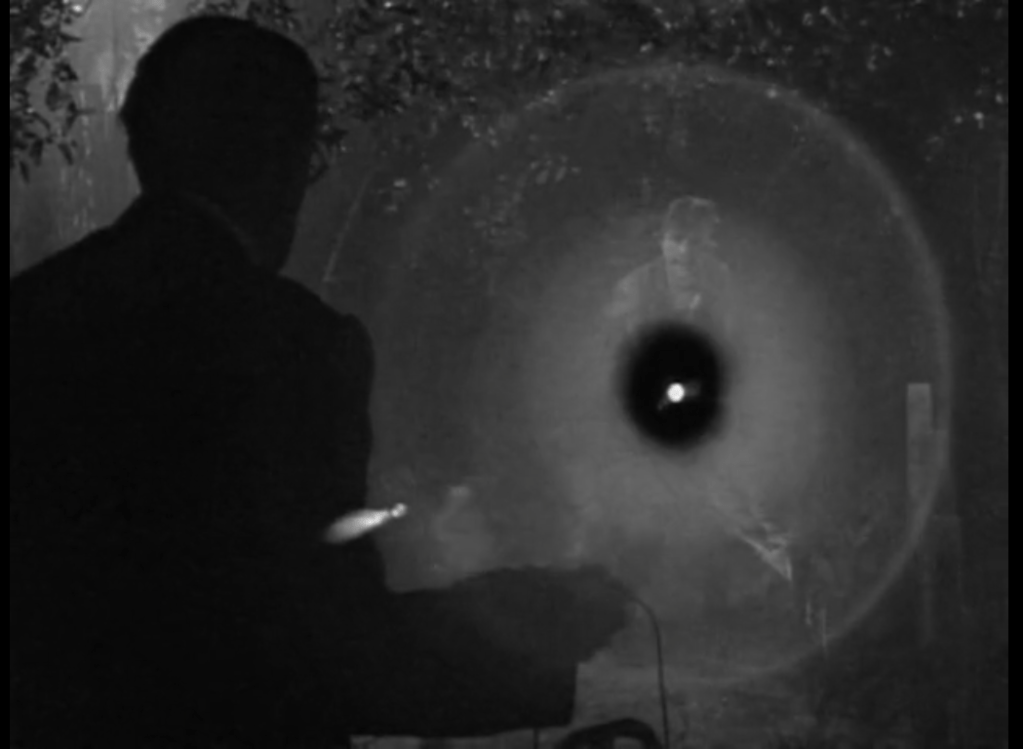
When Willie is wandering around the old cemetery, he twice shines a flashlight directly into the camera and creates a halo effect. The first time might have been an accident on the actor’s part, but the second time the halo frames the Caretaker in a way that is obviously intentional. Patrick McCray’s entry on this episode in his Dark Shadows Daybook describes the Caretaker as “a refugee from the EC universe.” Indeed, Willie’s crouching posture and angry facial expression, the halo filling so much of the screen, the tombstones in the background, and the Caretaker’s silhouetted figure carrying a lantern add up to a composition so much like a panel from an EC comic book that it may well be a conscious homage:
Beware the Vault of Horror!
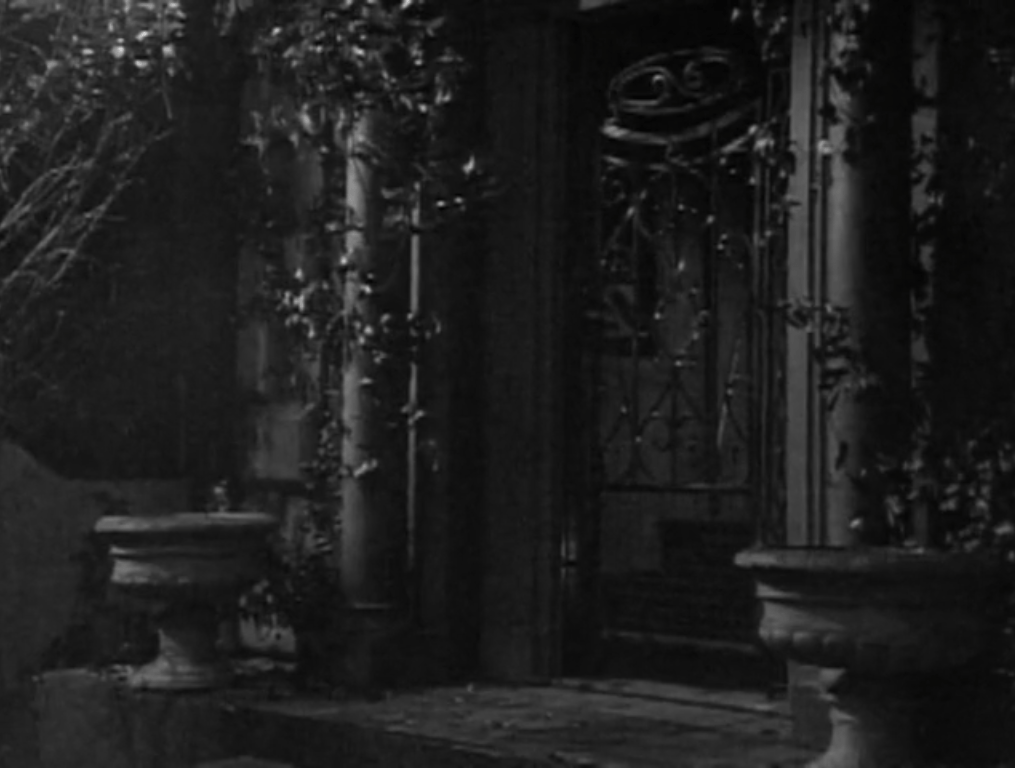
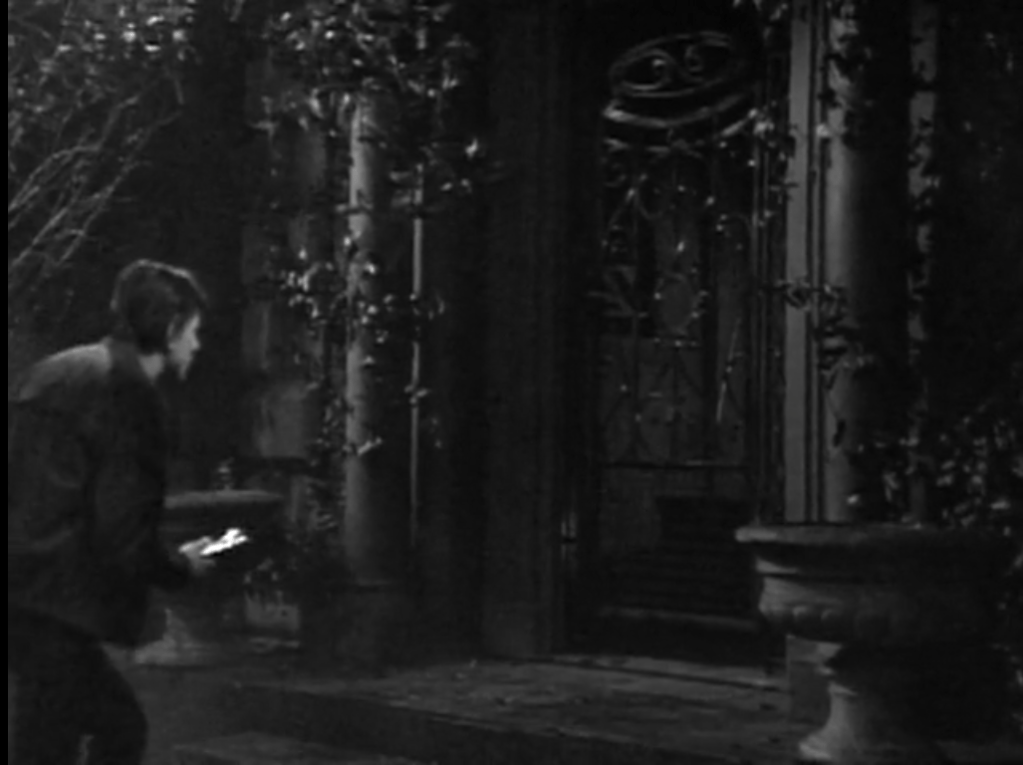
This is our first look at the Tomb of the Collinses.
Introducing the Tomb of the CollinsesWillie sneaks up to the Tomb
It’s also the first time we are told the name of the cemetery five miles north of Collinsport in which the Tomb is situated. Mrs Johnson calls it “Eagle’s Hill Cemetery,” though later it will be called “Eagle Hill.” Mrs Johnson also mentions the Collinsport cemetery two miles south of town, and the Collins’ family’s private cemetery located in some other place. They won’t stick with any of this geography for long, though it all fits very neatly with everything we heard about burial grounds in the Collinsport area during the Laura story.
Friday’s episode ended with an important scene. Strange and troubled boy David Collins cheerfully escorted dangerously unstable ruffian Willie Loomis around the great house of Collinwood, giving him little lectures about the portraits of the Collins ancestors. David pointed to a portrait in the foyer and spoke a name we hadn’t heard before, identifying it as Barnabas Collins. Willie, then played by frenzied Mississippian James Hall, became fascinated with the jewels Barnabas wore, so much so that for the first time on Dark Shadows his thoughts became audible as a recording playing on the soundtrack. After Willie left the house, we heard a heartbeat coming from the painting and saw Barnabas’ eyes glow.
When Willie’s associate, seagoing con man Jason McGuire, first entered Collinwood in #196, an optical trick made it look like a portrait was hanging on the spot where Barnabas’ portrait is now. While the face on the painting would have to wait until the actor was cast, the rest of the work on it was already done at that point, so that trick, inconspicuous as it would have been to the audience, was a sign that the production staff had decided that Jason’s role on the show would be to precipitate the introduction of Barnabas. And the opening voiceover of #2o2, the episode in which Willie joins Jason as a houseguest at Collinwood, referred to Willie as “one who is to awaken and unleash a force that will affect the lives of everyone.” The special effects surrounding Willie’s first encounter with the portrait would suggest that Barnabas represents that force, and that the portrait is a means by which that force is expressed.
Today’s episode begins with Willie taking another look at the portrait, and will end with him staring at it again. In between these two sessions, we learn that among the many impulses Willie is unable to control is a fascination with shiny objects.
We also see the ninth and tenth iterations of Dark Shadows’ dreariest ritual, in which seagoing con man Jason McGuire makes a demand of reclusive matriarch Liz, Liz resists, Jason threatens to expose her terrible secret, and Liz gives in. The first time comes after the opening credits. In the pre-credits teaser, they raised our hopes that we might see a conversation between them which does not conform to this pattern. Liz tells Jason that Willie can no longer be a guest in the house, and Jason agrees. But as soon as we return, he demands that she give Willie a parting gift in the form of $1000 cash. She refuses, and says she will call the police rather than bribe Willie to leave her home. After Jason threatens to send her to prison and lowers his demand to $500, she capitulates.
When Jason breaks the news to Willie that he is to leave immediately and take $500 with him, Willie notices a diamond-encrusted emerald pin and slips it in his pocket. Minutes later, Liz finds the pin missing and tells Jason she will have to call the insurance company. Jason confronts Willie in the kitchen and demands he hand the pin over. After a tense moment, Willie admits that he took the pin, not because he thought he could get away with stealing it, but because it was so pretty. He goes on about how supremely beautiful fine jewels are, saying that he can judge the beauty of a gem simply by touching it. He begs Jason to let him touch the emerald again. After Jason leaves him alone in the kitchen, Willie looks like he has had a new idea and is resolved to act on it.
Willie’s compulsion to touch the emerald creeps Jason out
Willie starts the scene with angry defiance, proceeds to humiliated dependence, and ends with a look of brisk resolve. John Karlen takes Willie through all of these emotions without any apparent discontinuity of feeling. He is still the defiant man even while he is begging, and still the begging man even while he is making up his mind to follow his new plan. That is as different as can be from Hall’s interpretation of Willie, who frightened us largely because of his extremely mercurial temperament. His moods shifted so wildly from second to second that you had no idea what he might do. It is remarkable that two performances can be so utterly unlike each other in every way, yet be equally effective at conveying menace and equally exciting to the audience wondering what comes next.
Jason tries to convince Liz that Willie didn’t take the pin, but that it simply fell to the floor. This effort collapses immediately. Liz is no longer disposed to give Willie any money; she is planning to call the police and let the chips fall where they may. Jason does not believe Willie will go quietly unless he gets a substantial sum of cash, and is afraid of the trouble Willie can make. So he again threatens Liz, this time focusing on the effect of a potential scandal on her daughter Carolyn and on David. Liz looks away in despair, unable to refuse Jason’s demand.
Willie depresses some characters and enrages others. The only exception is David, who brightens and chatters gladly when he sees Willie. David leads Willie into the study, where he shows him pictures of the Collins family’s eighteenth century ancestors and goes on about their fabulous jewels. He identifies one ancestor as his “great-great-grand-uncle.” “Grand-uncle” is a bit of Collinsport English that we will hear again later in the series. David suggests that some very valuable items might be found buried in out of the way places around town. David’s tales send Willie back into the foyer to stare longingly at the jewels in Barnabas’ portrait.
As we heard Willie’s interior monologue on the soundtrack while he stared at the portrait Friday, so today we hear a recording of Willie’s speech to Jason about his love of jewels while he studies the jewelry in the portrait. As his words come to an end, the heartbeat plays again and the eyes glow again. This time, Willie sees and hears and reacts. He has found his destiny.
Today we’re in Collinsport’s night spot, The Blue Whale tavern. Seagoing con man Jason McGuire is at the bar, trying to convince his henchman, dangerously unstable Willie Loomis, to stop acting like he’s about to rape every woman he meets before they get thrown out of town.
A party comes in consisting of artist Sam Evans, Sam’s daughter Maggie, and Maggie’s boyfriend Joe. Dashing action hero Burke Devlin enters and joins Sam, Maggie, and Joe at their table. Burke has confronted Willie a couple of times, and Willie tells Jason that they are fated to have it out sooner or later. Jason tries to persuade him to abandon this idea, telling him that Burke would be a useful friend and a formidable enemy.
Jason delights Willie by telling him that Burke is an ex-convict. John Karlen brings such enormous joy to Willie’s reaction to this news that it lightens the whole atmosphere of the episode.
Jason buys Burke a drink and tells him that Willie is secretly a nice person. He and Burke find that they both have a high opinion of psychoanalysis, of all things, but their shared admiration of the Freudian school does not lead them to agree about Willie.
Sam goes to the bar, leaving Maggie and Joe to themselves. A bit later, Joe has to leave Maggie alone for a few minutes while he makes a telephone call to check in with a situation at work. He urges her to stay at the table and avoid Willie. She notices that Willie is talking to her father, and is alarmed. Joe tells her not to worry- from what they’ve seen, it appears that Willie only likes to hurt girls.
At first, Willie and Sam’s conversation is cheery enough. Willie is impressed with Sam’s beard, and even more impressed that Sam is a professional painter. For a moment, we catch a glimpse of Willie, not as an explosively violent felon, but as an awkward guy who is trying to make a friend. This passes when the idea of nude models pops into Willie’s head, and he asks again and again where Sam keeps the naked ladies. Sam tells Willie that he doesn’t use live models, at first politely, then with irritation. Willie responds with his usual vicious menace.
Maggie goes up to intercede. This would seem to be an odd choice. Jason is at the next table, and when Willie was harassing her and picking a fight with Joe last week she saw Jason rein Willie in. She knows that Jason is eager to smooth things over with the people Willie has already alienated, so it would be logical to appeal to him. Burke and Joe are nearby as well, and have both made it clear that they are ready to fight Willie. If either of them goes to Willie, he will be distracted and Sam will have a clear avenue of escape. And of course Bob the bartender really ought to have thrown Willie out of the tavern long ago. Maggie, on the other hand, will attract Willie’s leering attentions and complicate her father’s attempt to get away from Willie by making him feel he has to defend her.
From his first appearance in #5, Sam was a heavy-drinking sad-sack. Today, Sam seems to have become a social drinker. He’s gone out with friends for a couple of rounds, and is pleasant and calm the whole time. Soap operas are allowed to reinvent characters as often as they like. If Sam’s alcoholism isn’t story-productive anymore, they are free to forget about it.
The problem with this scene is that Maggie hasn’t forgotten. Maggie’s whole character is that of an Adult Child of an Alcoholic. It makes sense that an ACoA, seeing her father in trouble, would cast aside all rational calculations and rush up to protect him. But if Sam isn’t an alcoholic anymore, Maggie is just a very nice girl who laughs at inappropriate times.
Burke comes to Maggie and Sam’s rescue. Willie draws a knife on Burke, they circle, Burke disarms Willie and knocks him to the floor.
We’ve seen many couples move about on the floor of The Blue Whale while music was playing, and usually their movements have been so awkward and irregular that it is not clear that what they are doing ought to be called “dancing.” But Burke and Willie’s fight is a remarkably well-executed bit of choreography. At one point Willie brushes against the bar, and it wobbles, showing that it is a plywood construction that weighs about eight pounds. But it doesn’t wobble again, even though the fighters both make a lot of very dynamic movements within inches of it, and at the end of the fight Willie looks like he is being smashed into it.
After the fight, Willie and Jason meet in a back alley, the first time we have seen that set. Jason assures Willie that he will eventually get his cut of the proceeds of Jason’s evil scheme, but tells him he will have to leave town right away. Willie vows to kill Burke.
The jukebox at The Blue Whale plays throughout the episode. In addition to Robert Cobert’s usual “Blue Whale” compositions, we hear Les and Larry Elgart’s versions of a couple of Beatles tunes and of a Glenn Miller number.
Villains on soap operas can never be quite as destructive as they at first seem they will be, and heroes can never be quite as effective. To catch on, villains and heroes have to seem like they are about to take swift action that will have far-reaching and permanent effects on many characters and storylines. Yet the genre requires stories that go on indefinitely, so that no soap can long accommodate a truly dynamic character.
This point was dramatized in Friday’s episode. The chief villain of the moment, seagoing con man Jason McGuire, stood in front of some candles, placed to make him look like he was the Devil with long, fiery horns. Seconds after this image of Jason, his henchman Willie loses interest in him and wanders off, first listening to a lecture from a nine year old boy, then becoming obsessed with an oil painting. They aren’t making Devils the way they used to.
Jason and Willie look at the portrait of Jeremiah Collins
Today, dashing action hero Burke Devlin goes to the great house of Collinwood and confronts Willie. Well-meaning governess Vicki asks Burke why he wants to defend the ancient and esteemed Collins family from Willie and Jason if the Collinses are his enemies. He gives a flip answer to her, and is equally unable to explain himself to reclusive matriarch Liz. Regular viewers remember that the “Revenge of Burke Devlin” storyline never really led to anything very interesting, and that last week the show formally gave up on it. Without it, Burke has nothing to do. So, if the character can’t keep busy as the Collinses’ nemesis, he may as well try to justify his place in the cast with a turn as their protector.
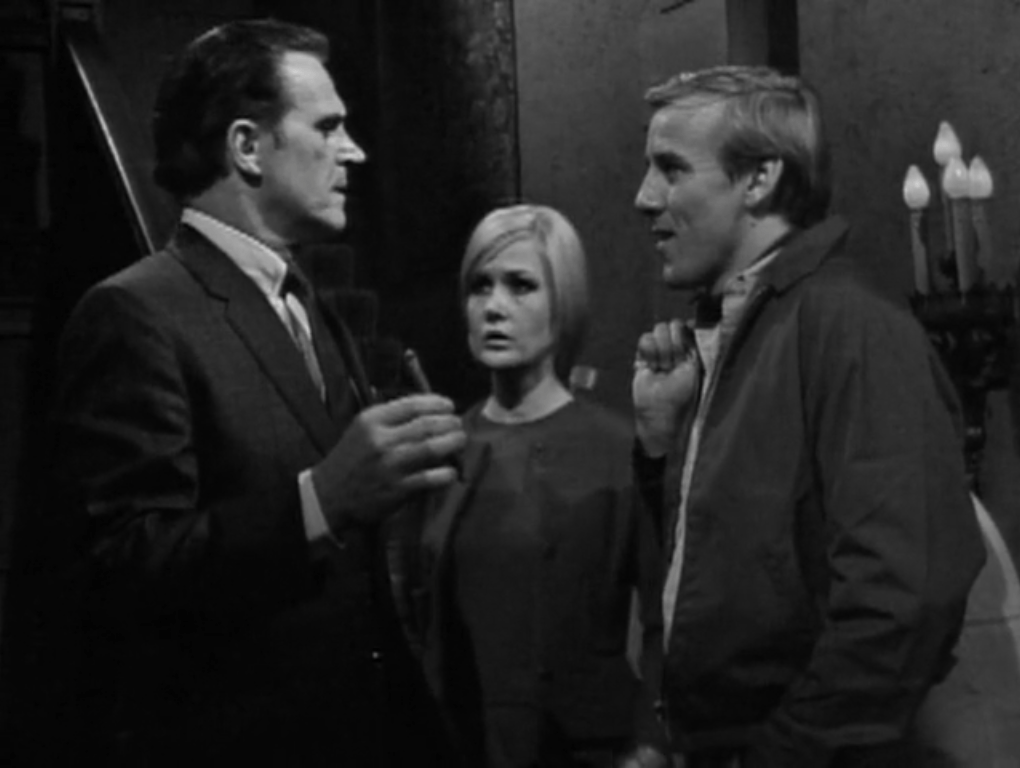
In the foyer of Collinwood, Burke orders Willie to leave Vicki alone. Willie taunts him, and Burke picks him up and holds him with his back against the great clock. Vicki and Liz become upset, demanding that Burke let Willie go. Willie himself remains collected. After Burke releases him, Willie goes to his room, and the ladies scold Burke further. He doesn’t appear to have accomplished a thing.
Willie, off his feet but undisturbed
This is John Karlen’s first episode as Willie Loomis. His interpretation of the character is poles apart from that of James Hall, who played Willie in his previous five appearances. When I was trying to get screenshots to illustrate the moods of Hall’s Willie, I found that I had an extremely difficult task on my hands. His face would fluctuate wildly, showing a mask of calculated menace for a few seconds, then a flash of white-hot rage for a tenth of a second, then sinking into utter depression for a moment before turning to a nasty sneer. These expressions followed each other in such rapid succession it was almost impossible to catch the one I set out to get. The overall impression Hall creates is of a man driven by desperate, unreasoning emotions, lashing out in violence at everyone around him because of the chaos inside himself.
Karlen’s Willie is just as dangerous as Hall’s, but he is as composed as Hall’s Willie was frantic. At rise, he is staring at the portrait of Barnabas Collins, studying the baubles Barnabas is wearing. When housekeeper Mrs Johnson enters, Willie asks her about the Collins family jewels. When she uncharacteristically manages to be less than totally indiscreet, he shows considerably more cleverness and infinitely more calmness than Hall’s Willie ever did in maneuvering her to the subject again. If Hall’s Willie was a rabid dog charging heedless in every direction, Karlen’s is a deliberate hunter, acting coolly and undaunted by resistance.
Hall played Willie with a lighter Mississippi accent than he uses in real life, while the Brooklyn-born Karlen assumes a vaguely Southern accent in parts of this episode. That trace of Hall’s influence will remain for some months- eventually Willie will become a Brooklynite, but between now and then Karlen’s accent will go to some pretty weird places.
This was also the first episode of Dark Shadows which ABC suggested its affiliates broadcast at 3:30 PM. It would not return to 4:00 until 15 July 1968. When the core demographic of the show’s audience shifts from housewives and the chronically ill to school-age kids, as will happen quite soon, this earlier time slot will present a major problem. Those kids are now in their 60s, and they usually begin their reminiscences of Dark Shadows with “I used to run home from school to see it!” If school let out at 3:00 and the TV set at home took as long to warm up as most of them did in those days, you’d have to run pretty fast to be sure to catch the opening teaser even if you lived nearby.
Flighty heiress Carolyn tells her mother, reclusive matriarch Liz, that she has had a problem with one of Liz’ houseguests. Last night, dangerously unstable ruffian Willie Loomis was about to rape Carolyn, who fended him off only by pointing a loaded pistol and telling him she would blow his brains out.
Liz confronts the person who insisted she take Willie into the house, seagoing con man Jason McGuire. She demands that Jason send Willie away at once. This leads to the eighth iteration of the only conversation Liz and Jason have. He makes a demand, she resists, he threatens to expose her terrible secret, she capitulates.
The script varies the ritual slightly this time. It is prefaced with Liz’ demand that Jason evict Willie, and Liz’ final capitulation is delayed by having her stand her ground until Jason says he will get Willie out soon. Later in the episode, Liz walks in on Willie grabbing at Carolyn, and even then settles for Jason’s promise that he will get his henchman out within the week.
The show has given us some scenes of friction between Carolyn and Liz, but has spent a lot more time on Carolyn talking about how strong her mother is. Now that Carolyn realizes that her mother will let an explosively violent hoodlum stay in their house indefinitely after he has twice assaulted her, we are primed to expect that sharper conflicts between Carolyn and Liz will feature in upcoming storylines.
We get another preview at the end of the episode. Strange and troubled boy David Collins shows Willie a couple of portraits of Collins ancestors and talks about the history of the family. One of these portraits is new to us, having made its debut during the closing credits of yesterday’s episode. David identifies it as someone called Barnabas Collins. David has been pivotal to each of the major plot developments on Dark Shadows so far, so when he is the first character to speak a name on screen, we might expect to hear that name again.
The portrait of Barnabas has such a strong effect on Willie that he adds an element to the show’s format. For the first time on Dark Shadows, a character’s internal monologue plays as a voiceover. While we watch Willie study the portrait, we hear his recorded voice going on about the wealth it suggests. Willie walks off. The portrait fills the screen, its eyes start to glow, and we hear a heartbeat.
The portrait of Josette Collins that hangs at the long-abandoned Old House glows when Josette’s ghost is active, and the eyes of a portrait of Laura Murdoch Collins glowed on several occasions when Laura was on the show. So regular viewers are used to seeing the visual effects that accompany Barnabas’ portrait. But the heartbeat is new. Josette’s portrait and Laura’s are silent pictures, Barnabas’ is the first talkie.
This is the last episode in which we will see James Hall as Willie. These episodes were shot out of sequence, so this one was made on 23 March 1967 and yesterday’s was made on 24 March. Most episodes were shot in a single take, as is obvious from the bloopers and production faults that run through them. Yesterday’s- the one produced on Friday, 24 March- was the first since #1 that went to three takes. That evening they called actor John Karlen and asked him to come in on Monday the 27th and take over the part of Willie. So, while Hall may never have been told why he was let go and to this day doesn’t seem to know what happened, it’s hard not to suspect that the producers blamed him for that third take.
Karlen would bring so much to the show that I can’t really regret losing Hall, excellent as he was. Years ago, I was chatting with an old friend of mine about ways that the original Star Trek might have been improved. We agreed that we couldn’t give up the actual show, and that what we were really wishing for was access to an alternate universe where they had made those changes. So that’s how I feel about Dark Shadows. I still want all of John Karlen’s performances, but would like an antenna that I could tune to receive broadcasts from a parallel timeband where he and James Hall swapped careers.
Dangerously unstable ruffian Willie Loomis is staying at the great house of Collinwood, much to everyone’s dismay. Yesterday’s episode ended with a scene in which he appeared to be trying to rape well-meaning governess Vicki in the study. She resisted him pretty vigorously, especially after he trapped her in front of some furniture. When reclusive matriarch Liz interrupted the confrontation and demanded Willie leave the house, Vicki ultimately let Willie off the hook, saying that he didn’t really do anything.
Today, Vicki sees flighty heiress Carolyn in the kitchen and warns her about Willie’s violent ways. After Willie has insulted everyone in the house, Vicki and dashing action hero Burke Devlin run into him while on a date at Collinsport’s night spot, The Blue Whale. Willie enrages Burke, and the two men are about to fight. Vicki urges Burke not to fight, leading him to pause. She shouts at Willie, demanding that he go away. He does. This leads me to wonder if the reason Vicki didn’t back Liz up is that she wants to fight her own battles.
Willie returns to Collinwood. He finds Carolyn alone in the drawing room. He blocks her exit from the room. He grabs at her hair, and tells her that she is, unknown to herself, attracted to him. When she says she wants to leave the room, he orders her to stay until he dismisses her. He closes the doors and approaches her, responding to her protests by saying that he can’t hear her. If they had cut away at this moment, it would have been a fully realized rape scene. There is nothing left to show by putting the actual assault on screen.
But they don’t end it there. Carolyn reaches into the desk drawer and pulls a loaded gun on Willie. Willie does stand there and keeps talking for a moment, but eventually he takes “If you don’t leave me alone I’ll blow your head off” for an answer. He backs out of the room and goes upstairs. Evidently Carolyn doesn’t need rescuing either.
The closing credits run over an image including the spot on the wall to the left of the main doors to Collinwood. That spot has alternately been decorated with a mirror and a metallic device resembling a miniature suit of armor. Lately it has been the mirror; when Jason first entered the house, that mirror reflected a portrait. Now, the spot is decorated with a portrait. It is one we haven’t seen before.
We also see something that hasn’t happened since episode #1. The production slate tells us that this episode went to a Take 3. Considering what they left in for broadcast, it always boggles the mind what might have led them to stop tape.
Everything in this one is designed to induce a sense of claustrophobia.
Dangerously unstable ruffian Willie Loomis has presented himself at the great house of Collinwood as the guest of seagoing con man Jason McGuire. In the opening section, Willie and Jason go into the drawing room. Willie closes the doors of the drawing room, a gesture that had been reserved to reclusive matriarch Liz for the first 32 weeks of the show, and in the five weeks of Liz’ absence was something well-meaning governess Vicki occasionally did when she was effectively in charge of the house. On Monday, dashing action hero Burke Devlin briefly seized control of Collinwood, and he began his fifteen-minute reign by closing the drawing room doors. Regular viewers who see Willie casually assuming this right within minutes of bluffing his way into the house will therefore shudder at the suggestion that he is taking charge of the place.
Willie threatens to wreck Jason’s evil schemes unless he can stay in Collinwood. James Hall has too much trouble with his lines for Willie to be really effective in this scene, but Dennis Patrick has enough tricks up his sleeve that Jason holds our attention throughout.
Jason tries to ease Willie’s way in by lying to housekeeper Mrs Johnson, claiming that Liz wanted her to make up a room for Willie. Hall is still shaky with the dialogue, introducing himself to Mrs Johnson (as he introduced himself to flighty heiress Carolyn yesterday) as “Willie Lomez.”
Later, Mrs Johnson meets Liz on the stairs. She tells her what Jason said, and asks Liz what she wants. This conversation is upsetting to Liz, and taking place between the two women as they try to maneuver around each other in the confined space of the staircase it adds to the claustrophobic feeling.
Close quarters
In the drawing room, Liz and Jason discuss Willie. For the seventh time, Jason makes a demand, Liz resists it, he threatens to expose her terrible secret, and she capitulates. They’d added some variations to this pattern in recent days, but this one is indistinguishable from iterations one, two, and three. The repetition is not only tedious, but confining.
Vicki runs into Willie in the study. Hall and Alexandra Moltke Isles are both on top of their form in this scene, and the result is deeply disturbing. Willie presses into her personal space, forcing her to reach under his arm for a book she needs. She tries to leave, and he repeatedly blocks her exit. She objects, and he traps her between two pieces of furniture. She objects more loudly, and he leans deeper into her space. If they had cut away at this moment, we would have assumed that Willie raped Vicki.
Willie ready to strike
Liz hears what is happening and comes into the study. She tells Willie to go. Jason enters, and she tells him to take Willie away. Jason questions Vicki, who agrees that Willie didn’t touch her, that they talked to each other, and that she supposes he didn’t really do anything. Vicki’s words come as a shock, but it is a shock of recognition- we could see what Willie did, and we know how hard it would be to put a complaint about his behavior into words while you were standing right there being questioned. Since Vicki does not know what Jason and Willie are trying to do or what Liz is facing, it is easy to imagine her deciding to take a pass on fighting this particular battle.
As Vicki backs down, Liz’ resolution to stand up to Jason and Willie crumbles. When the two men have left the room, Vicki asks Liz who they are and why they are staying at Collinwood. Liz says that they are her friends, and that she invited them. At Vicki’s disbelieving reaction, she repeats this statement and hastens away, leaving Vicki alone in the study.
Liz’ resolution to throw Willie and Jason out when she sees what Willie is doing thrills us, both because we care about Vicki and because it promises the end of this jail cell of a storyline. We know that Jason’s threats are hollow, because on Monday we heard him on the telephone telling Willie that if Liz called the police they would have to flee right away. All she has to do is stand her ground, and we will all be free to go. But she doesn’t know that. So the heartbreaking conclusion comes to us as all too familiar a reality.
There is only one ongoing story on Dark Shadows right now, and it doesn’t seem to have much of a future. Seagoing con man Jason McGuire is blackmailing reclusive matriarch Liz, threatening to reveal that she killed her husband Paul Stoddard eighteen years ago and that he buried Stoddard’s body in the basement of the great house of Collinwood. Not only was all of that clear when Liz and Jason had their first conversation several days ago, but yesterday we heard Jason on the telephone making it clear that he is bluffing. If Liz calls the police, he will get out of town as fast as he can. So whatever Liz does in response to Jason’s so-frequently repeated threat, the story can go only so far before it reaches a dead end.
Looking at Jason, audiences at the time would have recognized actor Dennis Patrick as a frequent guest star on prime time television shows and might have suspected that he was too big a name to stay on a daytime soap opera for very long. They would not have known that Patrick always made it a point to have an end date in place anytime he agreed to guest on a soap or that when he played Jason he did not have a contract, and was free to walk away any time he wanted. Seeing him share so many scenes with Joan Bennett, who had been a major movie star for a number of years, they might have thought it was possible he could stick around, but the show so quickly burned through what little story the two of them had that it wouldn’t have seemed likely.
So, what comes next? Alexandra Moltke Isles’ opening voiceover, delivered as always in character as well-meaning governess Vicki, gives us a hint:
My name is Victoria Winters. The foundations of Collinwood house a frightful secret, a secret that has lain dormant for eighteen years, a secret awakened by a stranger. But there is another stranger, one who is to awaken and unleash a force that will affect the lives of everyone.
This other stranger is Jason’s henchman, dangerously unstable ruffian Willie Loomis. At the beginning of this episode, Willie is drinking at the bar in Collinsport’s only night spot, The Blue Whale. There are three other customers in the tavern, an old man at the bar and a young couple in the background* bowing to each other at irregular intervals. If we assume, as I suppose we must, that these movements represent an attempt at dancing, we might wonder if the force Willie is destined to awaken and unleash is choreography.
Maggie Evans, The Nicest Girl in Town, enters. She looks around for a long moment, then slowly makes her way to a table. Willie tells Bob the bartender he wants to buy Maggie a drink. Bob goes to her table, and we see them have a conversation in the course of which Bob gestures to Willie and Maggie shakes her head no. When Bob returns to the bar, Willie tells him that “A good bartender wouldn’t have asked any questions!” Not even what kind of drink the lady would like, apparently. So maybe he’s going to awaken and unleash the force of unconsumed beverages.
Willie goes to Maggie’s table and sits down. When she protests that she’s waiting for someone, he sneers that no one tells him where to sit.** As Willie, James Hall is doing a great job of establishing himself as a clear and present danger to everyone he meets. Maybe Willie was right about one thing- a good bartender would notice Maggie’s discomfort and order Willie out of the bar. It’s obvious that Willie wants to awaken and unleash the force of sexual assault.
Maggie’s boyfriend, hardworking young fisherman Joe, enters. Willie refuses to leave the table and tells Joe to go wait at the bar. Joe squares up for a fight. He and Willie are about to start throwing punches when Jason comes into the bar and commands Willie to back off. At that, Willie awakens and unleashes the force of doing as he is told.
Jason apologizes to Maggie and Joe for Willie’s behavior and tells Bob he wants to treat everyone to a round of drinks. Joe mentions that Maggie’s father, drunken artist Sam, will be sad he missed a free drink. Maggie says that Sam won’t be drinking tonight, because New York art dealer Portia Fitzsimmons is pressing him for more paintings. Evidently Sam will be working more and drinking less now that he is no longer connected to any ongoing storyline.
At the bar, Willie complains to Jason that he’s come to help him, but hasn’t got any money out of the operation yet. Jason gives him some cash and tells him to be patient. The time has not yet come for Willie’s brawn to complement Jason’s brains.
Hall’s Willie does not spend any time processing his emotions or any energy concealing them. When he is getting ready to fight, he displays unfiltered rage; the instant he has to forgo the idea of beating up Joe and raping Maggie, he lowers his eyes and a look of deepest despair comes over him. Much as we hate Willie when he is menacing our friends, the transparency and intensity of his feelings makes it easy to watch him when he is feeling sorry for himself. Why is this strange, horrible man the way he is, and what will he do next? So when he awakens and unleashes the force of whining, it proves to be a strong enough force to keep us watching for a few minutes.
Those are good minutes for Dennis Patrick as well. Monotonous as Patrick’s scenes with Joan Bennett were, his scenes with other members of the cast usually had some element of unpredictability. We don’t know what is going on between Jason and Willie, and Jason himself doesn’t really know what Willie is going to do from one moment to the next. So it’s fun to watch Jason scramble to keep his associate in line. Also, we have a chance to root for Jason, at least for the duration of his two shots with Willie, since his control over Willie is what prevents violence against characters we care about.
Jason’s remark about Willie’s brawn raises the question of what exactly he wants Willie for. Liz is giving Jason everything she has, bit by bit, in response to his blackmail. If that is the whole plan, there doesn’t seem to be any need for brawn at all. Of course, Hall is a short, slender man, so much so that only his well-realized portrait of a violent felon keeps Willie’s confrontation with the substantially taller and more muscular Joe from looking ridiculous. Only Jason’s intervention prevented Willie from awakening and unleashing the force of badly losing a bar fight. Still, we keep wondering what the next phase of Jason’s evil plan will be.
Back at Collinwood, Jason is in the study, smoking a fine cigar. Flighty heiress Carolyn enters, and remarks that the cigar is one of her Uncle Roger’s favorites. Jason says that he knows of even finer cigars, and says that his whole philosophy of life is finding the good things and squeezing whatever he can out of them. Carolyn agrees that he has described himself well, neither hiding her disgust nor disturbing his complacent attitude.
Jason has identified himself as a friend of Carolyn’s father, the long-missing Paul Stoddard. Carolyn explains that she knows very little about her father, and asks Jason to tell her about him. He doesn’t really tell her anything she doesn’t already know, but does remark that “Paul Stoddard and I were very much alike.” He delivers that line in a way that suggests it might become significant. Once Carolyn gets up to go, Jason assures her that he does have stories about Stoddard to tell her some other time. Once she is gone and we are wondering if he really knew Stoddard at all, he steals three more of Roger’s cigars.
When we were watching this episode, my wife, Mrs Acilius, surmised that Carolyn asked Jason about her father less because she wanted to learn about him than because she wanted to figure Jason out. It is strange that she follows her obvious disapproval of Jason’s “philosophy of life” with “I never knew my father…,” unless it is a ploy to get Jason to talk about himself. And indeed, he does tell her far more about himself than about Stoddard. So that may well have been on Nancy Barrett’s mind when she was playing the scene.
A knock comes at the front door. Carolyn opens it to find Willie, identifying himself as a friend of Jason’s and announcing that he has decided to accept Jason’s invitation to stay at Collinwood. Jason is crestfallen to see that he has lost his control over Willie, and we are appalled to see Maggie’s would-be assailant moving into Carolyn’s house.
*This is the man in that couple. He would be a very familiar face on TV for a long time after this. He isn’t listed on either the Dark Shadows wiki or the imdb entry for this episode, and I can’t quite place him.
Hey look, it’s that guy! The one who was on those cop shows, you remember.
UPDATED 7 February 2024: I just spotted him in an episode of Columbo! His name is Paul Jenkins.
Paul R. Jenkins as Sergeant Douglas and Peter Falk as Lieutenant Columbo in The Most Dangerous Match (1973)
Jenkins appeared in a number of feature films, among them Rosemary’s Baby, Chinatown, and Network, and did guest spots on dozens of TV shows, among them the Dark Shadows-adjacent Falcon Crest. Evidently he was friends with Sidney Poitier, the two of them worked together on multiple projects, including Poitier’s 1992 film Sneakers. Most of the images of Jenkins I can find online come from a 1972 episode of M*A*S*H where he played an American NCO who keeps a Korean woman as a slave. This still from The Secrets of Isis illustrates his Wikipedia entry, and the civilian clothing from the 1970s is more typical of his on-screen appearance than was the 1950s Army uniform he wore on M*A*S*H:
Paul R. Jenkins, 1975.
**For some reason, Willie addresses Maggie as “Speedball.” “Listen, Speedball!” he commands. I wonder if Vladimir Nabokov considered Listen, Speedball as the title for a sequel to his Speak, Memory.
The first shot of the first episode of Dark Shadows featured well-meaning governess Vicki sitting on a train next to a window in which we saw the reflection of dashing action hero Burke Devlin. Vicki was on her way to the great estate of Collinwood, where she hoped to learn who her birth parents were. Burke was on his way to the village of Collinsport, where he hoped to exact revenge on high-born ne’er-do-well Roger Collins and other residents of Collinwood.
Vicki’s quest to learn her origins never took off, and hasn’t been mentioned for months. Burke’s pursuit of revenge drove a lot of action in the first twenty-one weeks of the show, but has been fading ever further into the background in the nineteen weeks since. Today, it fizzles out altogether.
In his original story bible for Dark Shadows, titled Shadows on the Wall, Art Wallace had proposed that Burke’s pressure on Roger would culminate in Roger’s death. Roger was to inadvertently reveal to Vicki that he was guilty of the crime that sent Burke to prison long ago. Roger would then try to push Vicki off the cliff at Widow’s Hill, but would miss her and go over the edge himself. The show discarded this resolution when Roger’s relationships with several other characters proved to be consistently interesting, particularly the Bossy Big Sister/ Bratty Little Brother dynamic between him and reclusive matriarch Liz. Besides, Louis Edmonds had such a gift for comic dialogue that he could get a laugh out of even the lines in which Malcolm Marmorstein attempted to be funny. So they couldn’t afford to kill Roger off.
Further, they have gone over Roger’s crime so frequently and made all the details so clear to everyone concerned that a trial wouldn’t give the audience any new information about what happened or show us any characters reacting to shocking news. It would be like a real trial, where all the evidence has gone through a discovery process and there are no surprise witnesses. No one is going to put that on commercial television in 1967.
So when Burke shows up at the great house of Collinwood with drunken artist Sam Evans, who has finally admitted that he saw what happened and took Roger’s bribe to keep quiet about it, the only real question is how Burke can leave the status quo in place.
Burke demands that Roger and Liz meet with him and Sam in the drawing room. Burke demonstrates his mastery by closing the drawing room doors, something that Liz, the mistress of Collinwood, usually does, and that Vicki did several times during the weeks when Liz was away and she was effectively in charge of the place.*
Roger of course tries out a series of lies in his attempts to deny Burke and Sam’s charges, but Liz is convinced. When she picks up the telephone and calls the sheriff, Burke reaches in and disconnects her. He says that she doesn’t have to turn Roger in- it is enough for him to know that she really would do it. She declares that she won’t let Burke keep coming back and using Roger’s guilt to blackmail the family, apparently intending to place another call. Burke says that he will never bring it up again, provided Roger confesses here and now in front of the three of them. He does. Burke tells Roger that he used to want to see him rot in jail but that now he realizes that “People like you rot wherever they are.” Burke and Sam leave, and that’s that as far as they are concerned.
During a few scenes scattered throughout the first forty weeks of Dark Shadows, Burke had considered relenting from his quest for vengeance. Those scenes hadn’t been developed in any great depth, and hadn’t been connected to each other. Only in the climactic week of the “Phoenix” storyline, when Burke and Roger briefly joined forces to save Roger’s young son David from death at the hands of his mother, blonde fire witch Laura Murdoch Collins, did we have a sustained glimpse of something other than all-consuming enmity between the two men. That was such an extreme situation, and was followed so quickly by a renewal of their hostilities, that Burke’s decision to peace out cannot be said to have any foundation in what we have seen the characters do so far. It is simply a convenient way of discarding a story element that has outlived its usefulness.
Most episodes of Dark Shadows have a cast of five actors. The rest are almost evenly divided between casts of six and casts of four. Today is a rarity with eight on screen. Six of these eight have been deeply involved in the Revenge of Burke Devlin storyline, and are at loose ends now that it has reached its abrupt conclusion. Burke, Roger, and Sam suddenly find themselves with nothing in particular to do. Also, flighty heiress Carolyn had a mad crush on Burke that alarmed her mother Liz and terrified her uncle Roger; that ended months ago, and she’s been a utility player ever since. Vicki is starting to date Burke; if Burke is no longer a threat to the family, there’s no obvious drama in that relationship, and she doesn’t have much else going on. David was as fascinated by Burke as Carolyn was; now that Laura is gone and he is happy with Vicki as his substitute mother, he’s pretty well settled in too.
We don’t see wildly indiscreet housekeeper Mrs Johnson today. She had come to Collinwood as Burke’s secret agent. Now that Burke is satisfied, presumably that’s over. Nor does Sam’s daughter Maggie, The Nicest Girl in Town, appear. She’s been dating hardworking young fisherman Joe, rebuffing his suggestions that they think about marriage because she is worried about what is going on with her Pop. Now that Sam’s conflict with Roger has come to its conclusion, there isn’t any reason the two of them shouldn’t get married, or stay unmarried, or whatever. So today’s episode leaves nine of the eleven major characters with no specific connection to any unresolved storyline.
Indeed, there is only one ongoing narrative arc. Long before he wrote Shadows on the Wall, Art Wallace wrote “The House,” a 1954 episode of The Web, an anthology series produced for CBS by Mark Goodson and Bill Todman.** Wallace recycled the story of “The House” for a 1957 installment of an hourlong anthology, Goodyear Playhouse, on NBC. Alternating with Alcoa Theatre in a window known collectively as A Turn of Fate, Goodyear Playhouse featured many pilots. The only one that seems to have been picked up was My World and Welcome to It, which went to series after an interval of more than a decade. I haven’t seen Wallace’s Goodyear Playhouse episode, but the 1954 version is too thin to fill a half hour, so I can’t see that an hourlong reworking would have been likely to catch the eyes of networks that passed on so many other pilots presented in that series, including teleplays by Rod Serling and Paddy Chayefsky. Wallace incorporated the story of “The House” in Shadows on the Wall, and a couple of weeks ago Dark Shadows dredged it up.
Seagoing con man Jason McGuire presented himself at Collinwood, to Liz’ great dismay. So far, they have had five conversations, two of them in Friday’s episode. All have followed the same pattern. Jason and Liz meet in the drawing room; he makes a demand of her; she resists; he threatens to expose her terrible secret; she capitulates. It’s true that on Friday they varied this a bit. Roger was with them during the first session, so that they had to veil their meanings, and in the second session Jason finds that Liz is unable to meet his initial demand, so that he shifts to a second one. In the first scene, they have a lot to show us as Liz and Jason manage to communicate their usual messages without letting Roger in on anything, and in the second they show us that Jason puts a higher priority on keeping Liz under his control than on any particular item he might want her to give him, so they managed to be interesting that day.
Today, Jason and Liz have their sixth conversation. It isn’t in the drawing room this time, but in the basement. While looking for David, Vicki had caught Jason listening at the doors of the drawing room at the moment when Liz was talking about going to the police, and he had rushed up to his room and telephoned*** his associate Willie, telling him they should be ready to get out of town fast. This conversation lets the audience know that Jason’s threat to Liz is a bluff. David had then caught Jason trying to get into the locked room in the basement. David told Liz what he saw Jason doing. Liz then goes down to the basement herself and shines a flashlight directly into the camera. We can see her in the halo, but Jason cannot. He seems helpless while she shines the light at him.
Jason blinded by the light
Jason scrambles a bit to regain control of the situation. Liz tells him he must leave the house immediately. He finally puts into words what the audience has long since figured out is on Liz’ mind, that she killed her husband Paul Stoddard eighteen years ago, that Jason buried him in the room, and that Jason will take this information to the police if she does not comply with his demands. She yields.
Liz’ reaction is interesting in the light of her scenes with Roger. When Burke was in the room, she explained her determination to call the police by saying that blackmail is no life for anyone to live. After Burke and Sam have gone, Roger starts begging Liz to let him and David keep living in her house. She doesn’t seem to know what he is talking about. She says that “Everyone does terrible things,” a remark she had also made to Burke and that is certainly true of characters who last on soap operas. He wants to go on pleading with her, but she just walks off, deep in thought about something else.
Remembering those scenes, we see Liz not simply giving in to Jason, but making a decision to keep going along with him. That makes today’s iteration of Jason Threatens Liz a bit more worthwhile than were the first three, if not quite as lively as the two we saw Friday. We can see something going on in her mind that raises the possibility she might do something different next time.
Two actors have bad trouble with lines today. When Burke is supposed to be saying something very dramatic and powerful about “hypocrites,” Mitch Ryan is actually blabbering about “hippie-crippie… er… hippie-crizz.” And when David Collins meets his Aunt Liz on the stairs and tells her he saw Jason in the basement, David Henesy stumbles over so many lines he falls out of character. Eventually he gets enough of the words out that you can tell what he’s trying to say, but he never really recaptures David Collins’ rhythm and intonations.
This latter slip-up leads to a reminder that there are always people in the audience checking in to a series for the first time with any given episode, so that actors are subject to judgments that don’t take into account what they have done before. At the bottom of their post on this episode, John and Christine Scoleri transcribe a conversation with a friend of theirs who hadn’t seen any of the episodes before this one. He says “Those who think the kid playing David went to any kind of acting school, raise your hand. Now leave the auditorium, please.”
In fact, David Henesy had been working steadily as a professional actor for four years before joining the cast of Dark Shadows at the age of nine. During that time, he had studied under many teachers, among them Uta Hagen. Usually, that background shows through, even when a particular script gives him problems. For example, he had a lot of difficulty with his lines in #191, and I rated that one as one of his weaker efforts. But here’s what Patrick McCray said about it on his Dark Shadows Daybook:
The success of this installment rests on the narrow shoulders of David Henesy. At the end of a big Henesy episode or scene, it’s common to announce that the kid nailed it, and this episode is no exception. His scene partners have it easy. They have straightforward, high stakes objectives to pursue. Either David goes into the fire or he doesn’t. There are only so many ways that people can implore the kid to come to them. On the other hand, Henesy has to stretch out indecision and keep it fresh for twenty minutes… with the help of an “ancient legend” that he recites. Not only does he succeed like a champ, but he concludes one of his better Hagen Days with a tearful catharsis that reads as properly-uncomfortably authentic.
Patrick McCray, Dark Shadows Daybook, 7 March 2018
I disagree with McCray overall about #191- I think Henesy’s line troubles in that one are bad enough that he doesn’t “succeed like a champ,” but I do agree that there are also some good things in his performance, particularly the way he uses his eyes and his posture. And there is no doubt that the last two minutes are very good.
Not even McCray comes to Henesy’s defense regarding #201, though the scene in the basement is all right. David Collins has a pleasant little conversation with Jason, and David Henesy gives sufficient support to Dennis Patrick that we can see just how badly wasted that talented actor is in all of those scenes where Jason repeats his threat to Liz.
*When we were watching the episode, my wife, Mrs Acilius, noticed the significance of Burke’s closing the drawing room doors. She had a lot to say about it, I wish she could remember her WordPress password and write her observations here.
**Later to become game show specialists, Goodson and Todman would be the producers of Match Game, which in the 1960s was on CBS 4:00-4:30 PM Monday through Friday opposite Dark Shadows, and of Password, a version of which would replace Dark Shadows on ABC in that timeslot when the show was canceled in April 1971.
***Just a few weeks ago, Laura nearly succeeded in killing David because there were no telephones upstairs. Apparently that has led Liz to have some new lines installed.






 Dark Shadows Commentary