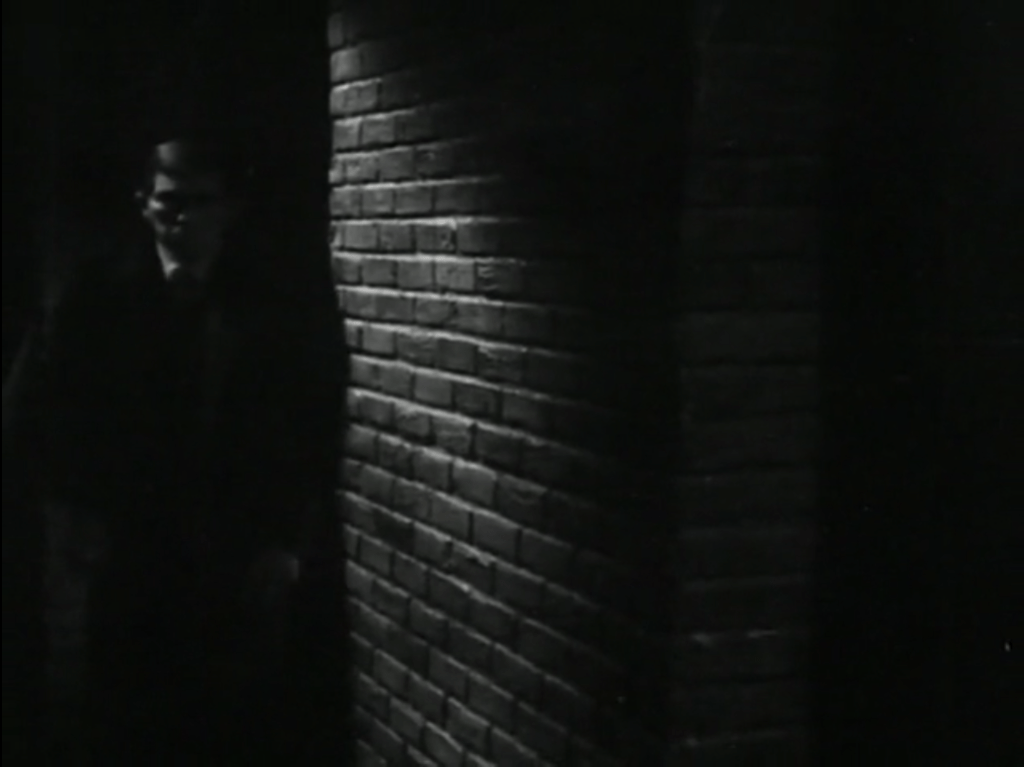
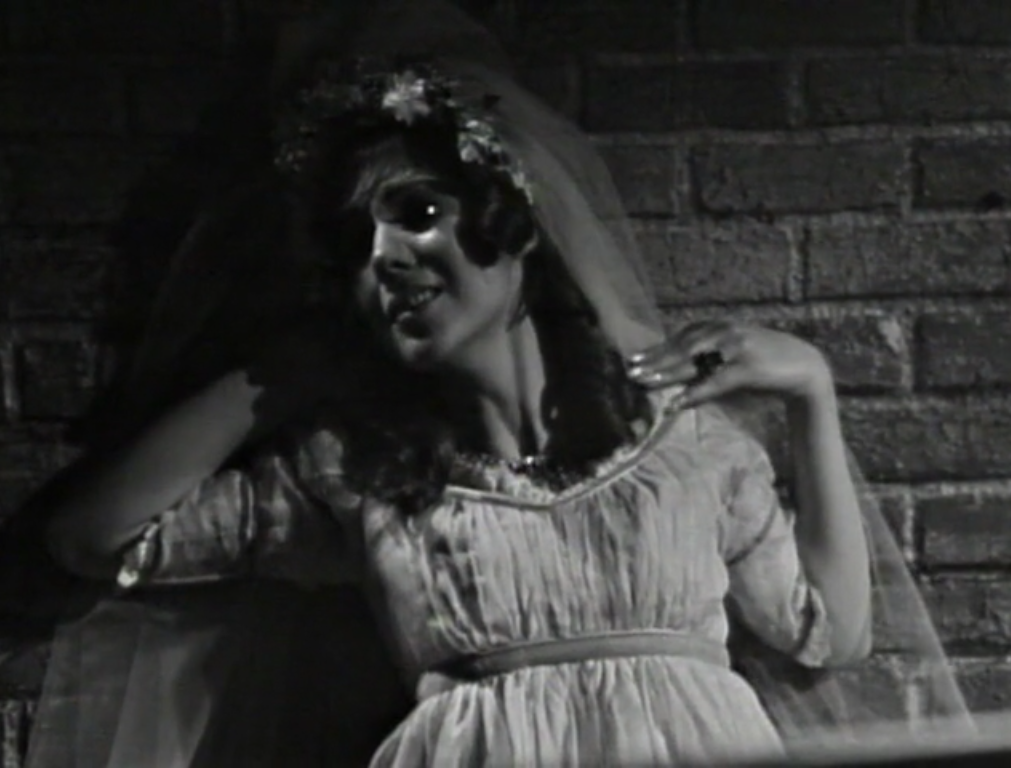
Episode 275: To the end of the Earth

Part One. Her name is not Victoria Winters.

Each of the episodes of Dark Shadows from #1 to #274 began with a voiceover narration delivered by Alexandra Moltke Isles in character as well-meaning governess Victoria Winters. The implicit promise of these little bits of prose was that Vicki would eventually find out about whatever was happening in the episode we were about to see.

Now, vampire Barnabas Collins is a permanent addition to the cast of characters. If Vicki finds out what Barnabas is up to, she will work to destroy him as she worked to destroy the show’s previous undead menace, blonde fire witch Laura Murdoch Collins. If she succeeds, the show will lose the only ratings-maker it has ever had. If she fails, Barnabas will have to kill her and who knows how many other characters, requiring them to start all over with a new cast. So Vicki has to move off the center of the stage.

Today’s opening voiceover is delivered by Nancy Barrett, not in character as heiress Carolyn, but as an unnamed external narrator. The pattern will be that a female member of the day’s cast will play that role. Mrs Isles still does it when she is in the episode, but if she isn’t they give it to another woman. Eventually they will start letting the men do it, and down the line there will be episodes in which Mrs Isles appears but which she does not narrate. Sometimes they are careless and give the voiceover to an actress whose character’s presence in the episode was supposed to come as a big shock, spoiling it for us.

Part Two. “All those years… there was nothing there.”

Matriarch Liz spent the last eighteen years on the great estate of Collinwood. Ostensibly this was because she was afraid that if she left, someone might wander into the locked room in the basement where the remains of her ex-husband Paul Stoddard were buried, and once there would discover that she had killed him.

This never made much sense-the estate is supposed to stretch for miles in every direction, and she roams all over it. If she is spending a day in the gardens by the groundskeeper’s cottage, she is no more guarding the locked room than she would be if she were skiing in the Alps. It made even less sense when we learn, in #249, that nothing untoward can be seen in the room, which Liz has frequently visited over the years, because the tile flooring over Stoddard’s grave had been replaced and cleaned up. It made the least sense of all when we learned in #271 and #272 that Liz herself must have been the one who replaced and cleaned it.

In #259, Liz confided her terrible secret in Vicki. She told Vicki that she had to keep the secret at all costs, not because she feared prison, but because she feared that her daughter Carolyn would hate her if she found out she had killed her father. Now the secret has been revealed and Liz has discovered that she never actually killed anyone. Seagoing con man Jason McGuire helped Stoddard fake his death, buried an empty trunk in the basement, and told Liz she had killed him. Liz never had anything to hide from either the police or her daughter.

Today, Liz is in bed. She appears to be ill, but it turns out the doctor just overdid it a bit with a sedative, she’s fine.

Carolyn left the house before the truth came out, and thinks her mother killed her father. Liz is distraught. We hear her thoughts in a taped voiceover. She is horrified that Carolyn is under this impression and urgently wonders where she is. We fade to a location insert of Carolyn walking along the beach, she’s fine also.

Her shoes aren’t even sandy.

Carolyn comes to Liz’ room and tells her that she was silly to run- she’s sure that whatever Liz did, she did because she had no choice. She vows to stand by her throughout the trial and what may come after, and mentions that after all, she never really knew her father. Liz then tells her there won’t be a trial, because she didn’t actually kill Stoddard.

On his Dark Shadows Every Day, Danny Horn expresses his exasperation with this extreme anticlimax:

So, you know that blackmail storyline where Liz had to do everything that Jason said, because otherwise she’d go to prison and her daughter would hate her forever?

Well, guess what? Liz finally told everybody that she killed Paul, and now she’s going to prison, and her daughter hates her forever.

But not really. It turns out that Liz never killed Paul in the first place, and Carolyn would have forgiven her even if she had.

Carolyn spent the night wandering around outside, in clear violation of Collinsport’s recent curfew. She’s given it a lot of thought, and now she’s ready to stand by Liz through the trial. Except there won’t be a trial, because there was no murder, and the entire four-month storyline was a complete waste of time.

Danny Horn, “Episode 275: The Last Normal Day,” Dark Shadows Every Day, 29 November 2013

Liz then explains that Jason won’t stand trial either. She isn’t going to press charges for the blackmail because she just wants to forget the whole thing. An understandable desire, to be sure. Carolyn says she hopes Jason has gone a million miles away, two million miles away, even further. “I hope he’s gone to the end of the Earth.”

Part Three. He gets what he came for.

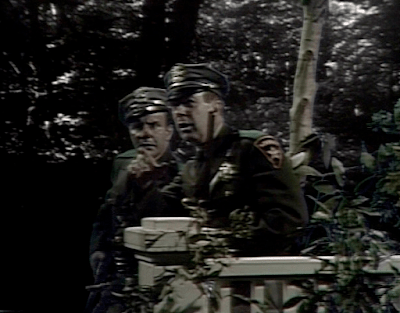
Carolyn gets her wish. As it happens, the end of the Earth is conveniently located right there on the grounds of Collinwood. It is the Old House, where Liz’ distant cousin Barnabas and his sorely bedraggled blood thrall Willie are in residence. Jason broke into the Old House at the end of yesterday’s episode, and is searching the front parlor for a box of jewels he had earlier seen through the window.

Willie catches him there. Willie was once Jason’s henchman, and still has friendly feelings towards him. Willie tries to warn Jason that he is in danger, and even after Jason hits him and twists his arm he resorts to the extreme expedient of telling him the truth- “Barnabas, he isn’t alive. He can walk at night, but he’s dead.” Jason doesn’t believe him.

Jason keeps telling Willie that he is determined to get enough money to start over. The way he expresses it is “I need a stake.” Little does he know how right he is!

Jason forces Willie to accompany him to the basement. He sees Barnabas’ coffin there, and is convinced it is full of treasure. Willie makes one more effort to save his former friend, taking a handful of jewels from a table near the coffin and offering them to Jason if he will leave at once. Jason scoffs at him, and Willie backs sadly away. Jason opens the coffin. A ringed hand shoots out and chokes him. So long, Jason! We can’t say it hasn’t been weird.

Comeuppance

This is only the second on-screen killing we’ve seen on Dark Shadows, after Laura murdered Van Helsing-equivalent Dr Guthrie in #185. Moreover, it’s the first time Barnabas has killed anyone on the show. It’s kind of odd to have a vampire around for thirteen weeks before the first fatality is recorded. We might wonder if he will pick up the pace as he goes on.

Episode 260: One, two, away they flew

Maggie Evans, The Nicest Girl in Town, has been a prisoner of vampire Barnabas Collins for a long time now. Barnabas is planning to kill her tonight. We spend the opening scene with Barnabas’ sorely bedraggled blood thrall, Willie Loomis. We hear Willie’s thoughts as he does the housekeeping. Willie wishes he could save Maggie, but Barnabas has too much power over him. The most he can do is bring her a poisoned glass of milk and invite her to drink it if she wants to die an easy death.

Willie is not Maggie’s only friend. The ghost of Barnabas’ nine year old sister, Sarah, materializes in Maggie’s cell. Sarah asks Maggie why she is crying. Maggie tells her that if she doesn’t get out of the cell very soon, she will die. Sarah is distressed to hear this- “You mustn’t die- I don’t want you to die.”

Maggie hasn’t figured out that Sarah is a ghost, and keeps asking her how she manages to get in and out of the cell. Sarah usually evades this question, but now she says that there is a way. She came upon it accidentally, long ago, and her father ordered her not to tell anyone, not even her brother. She will be punished if she tells. If her father put her in the prison cell in their basement intentionally, Sarah’s fear of punishment is quite understandable.

Sarah overcomes her fear sufficiently to share a riddle with Maggie which she says will give her the answer:

One, two, away they flew.

Three, four, by the door.

Five, six, count the bricks.

Seven, eight, the clue is “grate.”

Nine, ten, home again.

Maggie asks Sarah to repeat the riddle, and she says she can only say it once. Maggie tells her where to find her own father, Sam Evans, and asks her to tell Sam that she has seen her. Sarah disappears.

Sarah’s fear of punishment will ring a bell for regular viewers. Strange and troubled boy David Collins is so intensely afraid that his father, high-born ne’er-do-well Roger, will punish him by sending him away to a boarding school or a jail that he tried to murder Roger. Later, David left his favorite person, well-meaning governess Vicki, to be decapitated by crazed handyman Matthew Morgan because he was afraid that if he helped Vicki his father would find out he had earlier defied him and would punish him. Now, Maggie is in mortal danger because another Collins child, one who lived in a previous century, has a similar fear of punishment. The cell in the basement of the Old House was there before slavery was abolished in the area in 1783; perhaps Sarah’s fear and David’s are a bequest from the slaves and indentured servants whom their forebears locked up in it.

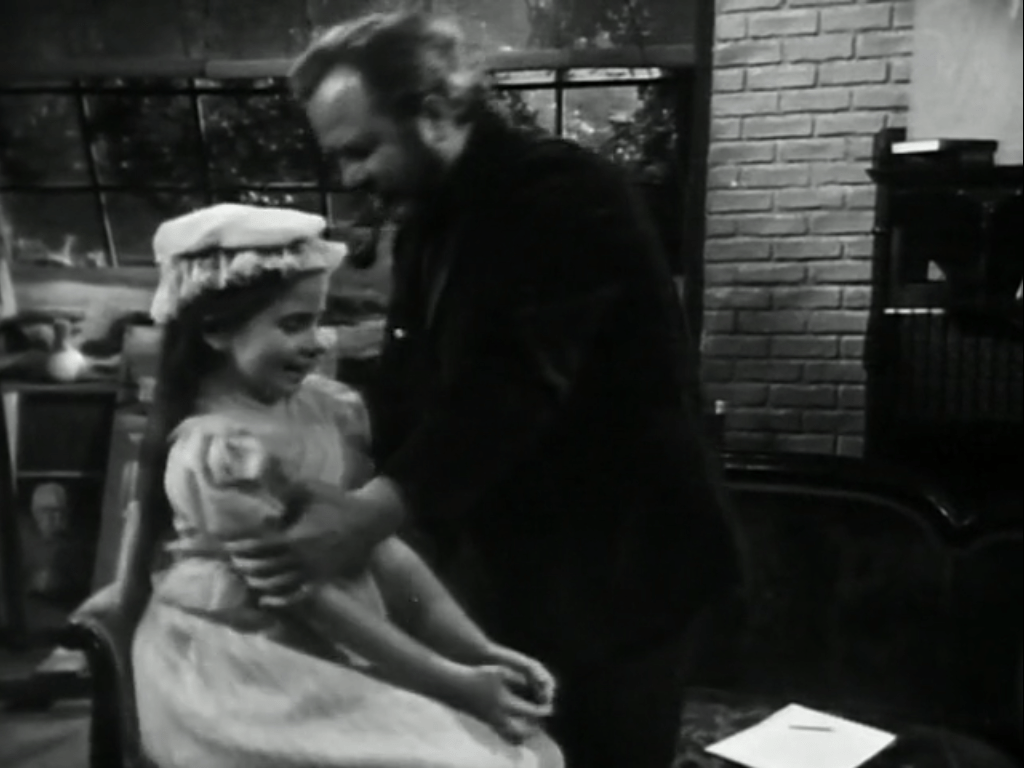
We cut to the Evans cottage. Sam is an artist, and is working. Sarah materializes in the living room. Sam had locked the door and Sarah won’t explain how she got in, but he seems to be delighted with her anyway. She is impressed with his paintings and asks him to paint a picture of her. He offers a drawing instead. When she agrees, he picks her up and sets her on a stool. She flashes a grin at being picked up. She asks if she can keep the drawing when he is done with it.

The most fun Sarah has had the whole time she’s been dead

Sam tells Sarah that her dress is very pretty. He then mentions that you don’t see many dresses in its style. She asks if that means he doesn’t like it. When Sam says that all he means is that it isn’t the sort of thing other little girls wear, she says she doesn’t play with other little girls so she doesn’t care what they wear. She seems to be getting worked up about this, so Sam calms her down with, “All right, all right, I see.” This little exchange gave my wife, Mrs Acilius, a laugh. Sarah may have been born in the same year as Jacob Grimm, but she is very much a nine year old girl.

While Sam draws Sarah, she steers the conversation to Maggie. She asks Sam if he looked for Maggie on the beach under Widow’s Hill. He says he’s looked everywhere he could. She repeats her suggestion that he look for her on the beach. He says he is sure he won’t find her there. She responds “You might, if you go there tonight.” Disturbed by this, Sam looks up, and finds that Sarah has vanished.

This surprises us almost as much as it surprises Sam. Sarah had made it clear that she very much wanted to keep the drawing, yet she disappears before Sam is finished. Evidently, it wasn’t within her power to stay.

Back in the cell, we see Maggie and hear her thoughts as she tries to remember Sarah’s riddle. Like Willie’s voiceover internal monologue in the opening scenes, Maggie’s goes on too long. We can see that Maggie is in an upsetting situation and understand why Sarah’s presence confuses and distracts her. That makes it clear she would have difficulty remembering the exact wording of the riddle, but we really don’t need to hear her go over every part of it.

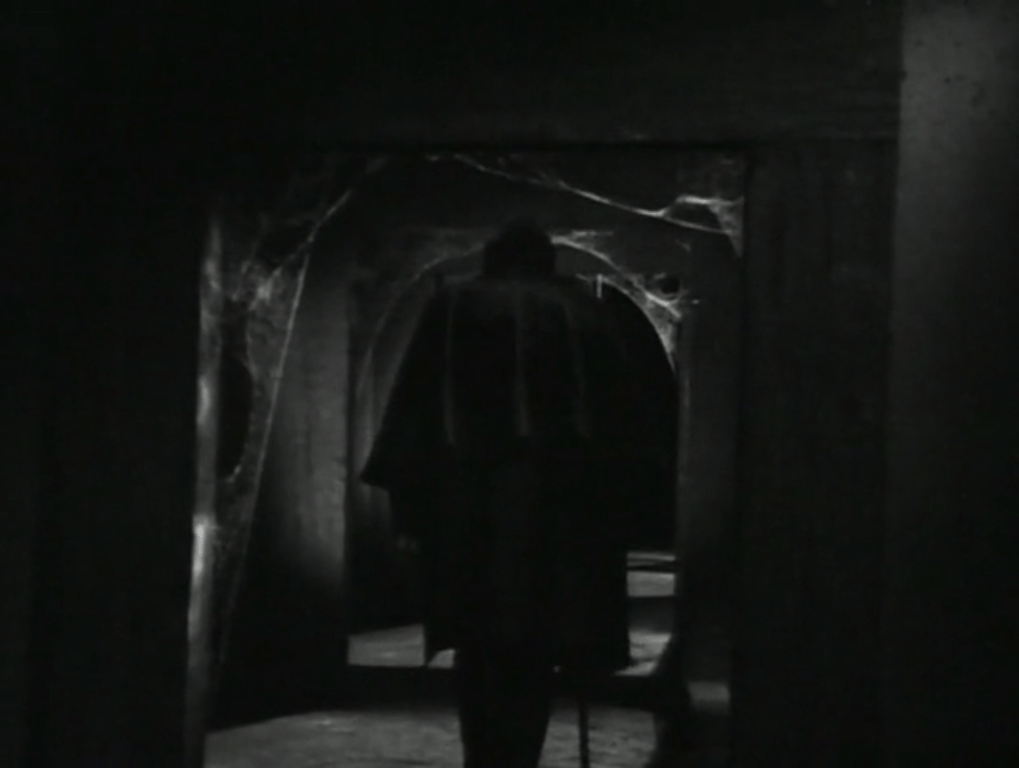
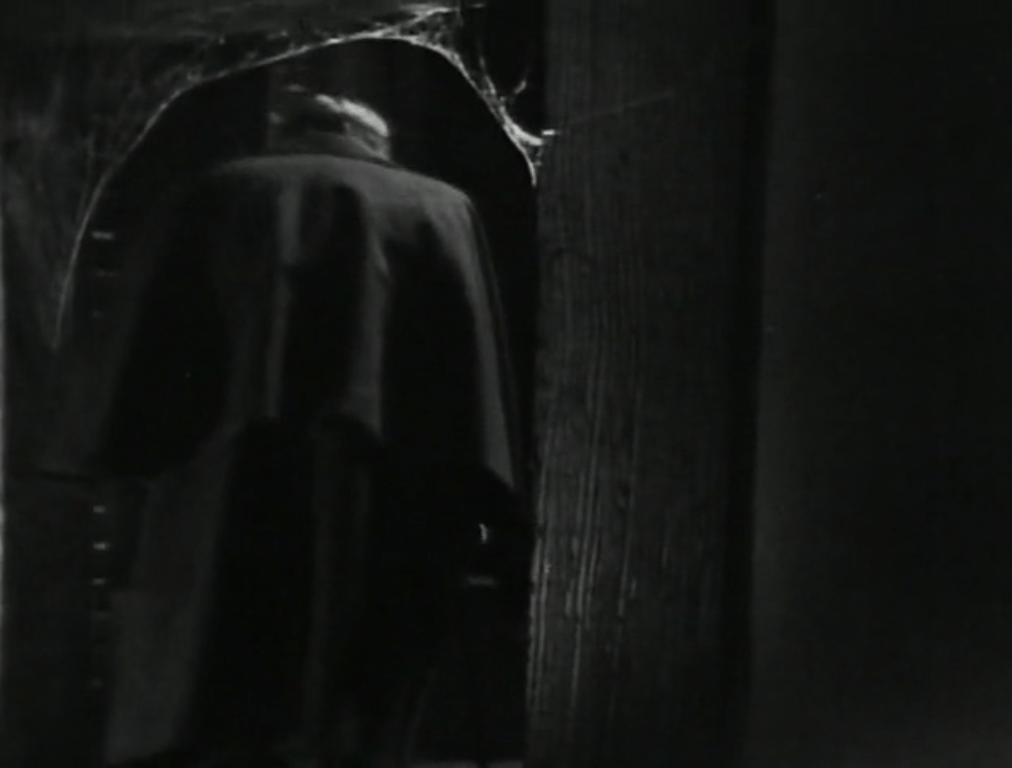
By the time Maggie finds the loose brick that triggers the opening of the secret panel, Barnabas is already rising from his coffin. We cut between Barnabas walking through the basement and Maggie struggling to open the panel. It may sound like we’re describing filler when we say that we see Barnabas traversing three distinct corridors between his coffin and Maggie’s cell, but it doesn’t feel that way. Not only do these shots build suspense as we wonder if Maggie will get out before he reaches her, but in Barnabas shown as a hunched, solitary figure in narrow spaces sketched in shades of gray we see the representative of a world bleak beyond endurance. We can see why the first serious feature film about a vampire, F. W. Murnau’s Nosferatu (1922), devoted so much screen time to showing Count Orlok skulking about the corridors of his castle.

First corridor
Second corridor
Third corridor

Maggie crawls into the secret passage. She doesn’t close the panel behind her. Not only doesn’t Maggie know that Sarah is a ghost, she doesn’t know that Barnabas is Sarah’s brother. When Sarah says that not even her brother knows about the secret panel, she is telling us, but not Maggie, that Barnabas is unfamiliar with this way. We know that if Maggie had closed the panel, Barnabas wouldn’t have known where to look for her, and so we might yell at the screen urging her to do that. But since it is his house, she has to assume that he does know about the panel, and she knows that he might be at the door any second. So it is rational for her to forget the panel and use all of her time moving forward.

The gap between Maggie’s knowledge and ours again adds to the suspense as we watch her flee from Barnabas through the twisting passages beyond the panel. We only see one path, but the looks on the actors’ faces as they look from side to side tell us that there are several. Maggie is moving cautiously, choosing her way with care, the sensible thing to do if Barnabas is familiar with the passages. Since we know that it is new to him as it is to her, we want her simply to pick a path and run.

Maggie beholding the paths before her

Maggie finds two heavy doors, both of them apparently stuck. Barnabas looks around, seems bewildered, and takes a breath. He shouts a speech at Maggie, claiming that she has no chance of escape because he can hear her. He can’t hear much while he’s shouting, so we want her to take advantage of that and bash away at one of the doors during his speech.

Barnabas wondering at part of his house he never knew existed
Maggie with two closed doors in front of her and an angry vampire behind her

This episode ends the 52nd week of Dark Shadows. When ABC* picked the series up in 1966, it gave executive producer Dan Curtis a 26 week commitment, carrying production to #130. After that, the network renewed it for the then-standard 13 week period. The first renewal carried them to #195, the second to this episode. Until just a couple of months ago, the ratings were so low that no one thought it was likely that it would get a third renewal. When the vampire was introduced in April, viewership started to pick up, preventing cancellation and requiring them to come up with a story that they could keep telling.

I do think we can see traces here and there of the original plan. The first part of the plan seems to have been to copy Bram Stoker’s Dracula far more thoroughly than they wound up doing.

The two female characters on the show who had or were about to have boyfriends when Barnabas was introduced were Maggie and Vicki, who are both seeing men who are cut out to be stout-hearted action heroes. The two female characters in Bram Stoker’s Dracula who had boyfriends were Lucy Westenra and Mina Murray, who were both seeing men who emerge as stout-hearted action heroes. Dracula feeds on Lucy, prompting several other people to band together to try to save her. Dr John Seward, MD, contacts his old Professor, the brilliant Abraham Van Helsing, to advise the group. Despite their best efforts, Lucy dies and rises as a vampire, the “Bloofer Lady” who feeds on the children of east London. Lucy’s boyfriend has to destroy her body to free her soul of the vampire curse.

If the show was about to be canceled, it would have been a favor to Kathryn Leigh Scott to have Maggie suffer Lucy’s fate. Going out with a splash like that would certainly have given her something to lead with as she looked for her next job. But once it was decided that the show would continue beyond #260, it was out of the question to lose a character as popular and versatile as Maggie. When the network ordered 65 more episodes, Maggie had to be saved.

The Van Helsing analogue was actually named on screen. In #242, the show’s equivalent of Dr John Seward, addled quack Dr Woodard, said that he was going to call in a specialist to consult on Maggie’s case, a Dr Hoffman, who is “one of the best men in the field.” We haven’t heard about this man since Dan Curtis found out the show was going to be renewed, suggesting that they’ve abandoned the idea to hew quite so closely to Dracula.

In Stoker’s novel, once Van Helsing has corrected the group’s knowledge deficits concerning vampires, Mina emerges as its leader. Attempting to be gallant, the men cut Mina out of their operations, with the result that Dracula escapes them and bites her. Mina is able to resist his influence so far that she can play a pivotal role in the Count’s final destruction.

The first time Dark Shadows modeled a storyline on Dracula, the menace was not a vampire, but undead fire witch Laura Murdoch Collins. In that arc, the men formed a group of stout-hearted heroes advised by Dr Peter Guthrie and led by well-meaning governess Vicki. Guthrie and Vicki were plainly Van Helsing and Mina. Laura killed Guthrie, so he can’t come back to help in the fight against Barnabas, but Vicki is still around, still the chief protagonist, and still the one likeliest to lead the opposition to a villain.

Indeed, Barnabas has expressed interest in Vicki as a replacement for Maggie, and in #233 he blurted out an obvious threat when he realized she was getting uncomfortably close to figuring out the truth about him. So, had Dark Shadows ended with this episode, it is likely that it would have ended with Vicki overcoming Barnabas’ power and driving a stake through his heart.

Of course, the vampire is the source of the ratings, and Vicki and Maggie are needed for future story development. So the makers of the show can’t use any of those plot elements. What in the world they can do is a question that does not, as yet, have a clear answer. So they have been stalling and stalling. Sooner or later, the stalling will have to end.

*The American Broadcasting Company, that is, not the Australian Broadcasting Corporation.

Episode 250: A servant’s name

Maggie Evans, the Nicest Girl in Town, has been the prisoner of vampire Barnabas Collins for some time. At rise, she is in front of her mirror, struggling to remember who she is. Her name and her father’s come back to her, but then the music box Barnabas gave her starts playing, and she begins to believe that she is Barnabas’ long-lost love Josette. This scene takes about a minute more than is necessary.

She renews the struggle later, and this time overcomes the hypnotic power of the music box. She decides to pretend that she believes that she is Josette in order to trick Barnabas and Barnabas’ sorely bedraggled blood thrall Willie into giving her enough freedom to escape. She fools them, only to hear Barnabas tell Willie that her compliance means that the time has come for the final part of his plan.

Maggie hears carpentry work, and sneaks down to the basement. She finds Barnabas watching Willie build a coffin. It sits next to the coffin in which Barnabas spends his days. It becomes clear that once Maggie is fully Josettified, she will be a vampire as well. Unfortunately, Jonathan Frid has a great deal of trouble with his lines in this scene. I don’t usually mind Frid’s bobbles, but his line troubles here take us out of what needs to be a terrifying moment.

In the morning, Maggie goes back to the basement. Willie finds her there. He is not convinced that she believes she is Josette. He presses her, and she finally breaks down and gives up the act.

Maggie shows Willie the diamond necklace Barnabas gave her as a present for their wedding, and tells him it will be his if they destroy Barnabas and escape. Willie’s fascination with jewels was what led him to undertake the grave-robbing expedition that freed Barnabas in the first place, and the necklace does distract him for a little while. But then he hears Barnabas’ heartbeat. He heard that sound before, in #208, #209, #210, and #217, but in those episodes no one else could hear it. Maggie can, since Barnabas has been drinking her blood too, but she can still resist the vampire’s spell. She is holding a large awl, ready to drive it into Barnabas’ heart, but Willie cannot overcome his urge to protect his master. He disarms Maggie.

We see Maggie in her room and hear Barnabas’ voice on the soundtrack going over what she heard him say in the basement. This is the first time an interior monologue has played quotes from another character. They aren’t the lines Jonathan Frid actually delivered, but cleaned-up, intelligible lines, presumably the ones that were in the script.

As sunset nears, Willie takes Maggie back to the basement. He leaves, telling her that she and Barnabas must be alone when he completes “the ceremony.” She finds the awl, picks it up, and opens the coffin. Before she can drive it into Barnabas’ heart, he awakens and shows his fangs. She screams and presses herself against the brick wall behind her.

Back to the wall

This is the second episode credited to writer Joe Caldwell, and is certainly the best teleplay Dark Shadows has seen since Francis Swann left the show in November of 1966. Like Swann and Art Wallace, Caldwell understood what actors could do and knew how to give them a platform to show their stuff.

Aside from Frid’s one bad scene, the actors excel. In 1967, Kathryn Leigh Scott was already a highly trained actress. Maggie Evans, on the other hand, has never acted before. When Maggie is pretending to believe she is Josette, Miss Scott shows her giving a crude imitation of Barnabas’ high-flown style, mixed with some prancing movements you might see from a little girl playing the princess in a school play. Barnabas is so desperate to believe that his lunatic scheme is working that he falls for it completely. When he and Maggie are in the front parlor together, he responds to her amateur performance as a sign that she is matching his pomposity, which of course thrills him.

When Willie and Maggie are in the basement, John Karlen plays his earthy skepticism with a simplicity that makes Maggie’s pretending look ridiculous. When Maggie gives up her act and whispers a plea for Willie to help her, Miss Scott matches the force of Karlen’s performance and the resulting encounter is as powerful as anything the show ever achieves.

The episode is good enough that we barely noticed some major lapses in story logic. If Maggie can sneak down to the basement to eavesdrop on Barnabas and Willie, why can’t she slip out the front door? She knows how to get from Barnabas’ house to the great house of Collinwood, where she has friends and there is a telephone to call the sheriff.

And when did she learn that you can destroy vampires by driving stakes through their hearts? She’s lived in Collinsport all her life, and no one in that town has ever heard of vampires. Granted, the show would move a lot faster and could have more layers of irony if the characters had read Dracula and seen movies from Universal and Hammer, but this is the first hint that any of them has.

My wife, Mrs Acilius, was very interested in the fact that Maggie calls herself “Maggie, or Margaret” in this one. First time we hear the name Margaret! I’m not sure why that impressed her so much, but she’s very bright, so I’m sure it’s important. All I can think of is that “Maggie” waits tables in the diner, cleans up after her Pop has had one drink too many, and is everybody’s pal, while “Margaret” is a saint’s name, and a queen’s name. So Margaret might have a bigger destiny than we’ve seen.

Episode 247: A fix on this man’s character

Artist Sam Evans can think of nothing but his daughter Maggie, The Nicest Girl in Town. Maggie disappeared from the hospital weeks ago, and the police haven’t found a clue as to how she got out or where she is. Sam’s friend, dashing action hero Burke Devlin, drops by Sam’s house and offers to take him to dinner. Sam isn’t hungry. Burke urges Sam to work on a painting; he says he can’t concentrate.

Burke brings up the idea of Sam painting a portrait of him. Burke did commission Sam to paint him in #22, and for weeks and weeks afterward Sam vacillated about doing so. That was part of the since-abandoned “Revenge of Burke Devlin” storyline. In the notes about this episode on the Dark Shadows wiki, we read that “the episode’s writer seems unaware of the portrait-painting history between Sam and Burke, the fact that it was a sore subject, and even of the general animosity between the two.” I don’t think that is necessarily so. Burke gave up on his revenge in #201, and everyone was thoroughly bored by the topic well before then. So I suspect this conversation is telling us that Burke and Sam have turned the page on all that.

Before Maggie disappeared, Sam had been painting a portrait of mysterious eccentric Barnabas Collins. Barnabas insisted on working only at night and on doing all the painting at his place, the Old House on the estate of Collinwood, which does not have electricity. Since Maggie vanished, Sam has offered to take the canvas home and work on it there, but Barnabas would not let it leave his house. Tonight, Sam decides to go to Barnabas’ and do some painting by candlelight.

Sam knocks on Barnabas’ door. Barnabas’ servant, Willie Loomis, answers. Before he met Barnabas, Willie was a dangerously unstable ruffian. Willie menaced Sam and Maggie in the local tavern so severely that Burke had to beat him to a pulp, and Sam came away from the experience hating Willie. But in his time working on the portrait, Sam has come to believe that Willie is a changed man.

Willie explains that Barnabas is away, that he doesn’t know when he will be back, and that he isn’t supposed to let anyone in the house in his absence. Sam protests that he is no stranger, and that he is sure Barnabas will want the portrait finished. Willie finally suggests that he take the canvas home and work on it there. That’s what Sam has wanted to do all along, so he is delighted to hear it. He carries the painting to his station wagon while Willie carries the easel. The two are in a jolly mood as they leave the house, seeming very much like good friends.

Sam leaves his pipe on a table in the front parlor of Barnabas’ house. In the first months of the show he went back and forth between smoking this pipe with its white bowl carved into a likeness of George Washington and puffing on cigarettes. We haven’t seen the pipe in a long while, but today we get a number of closeups of it. The first comes before Sam leaves home to go visit Barnabas, and the second when he and Willie are on their way to the station wagon.

The pipe in the Evans cottage
The pipe at Barnabas’ house

As soon as Sam and Willie are outside, a figure draped in white comes down the stairs into the parlor. It is Maggie. It turns out Barnabas is the one who is holding Maggie. He has taken his cue from the 1932 film The Mummy, in which Boris Karloff is an undead creature who tries to convince a woman that she is the reincarnation of his lost love so that he can kill her and bring her back to life as that other person. Barnabas, it turns out, is a vampire. He wants to erase Maggie’s personality, replace it with that of his long-lost Josette, and then turn her into a vampire.

Maggie is sufficiently under Barnabas’ sway that doesn’t know who she is, but she is not fully convinced that she is Josette. When she picks up her father’s pipe she seems to remember something. She doesn’t sniff it, but a pipe is a highly aromatic object, and scents are powerful drivers of memory.

Maggie reaches for the pipe
Something comes back to Maggie’s mind

Maggie wanders back upstairs, keeping the pipe with her. Sam and Willie come in, and Sam is mystified that his pipe has vanished. When Willie says he must have left it outside, Sam starts to argue. Seeing that the pipe isn’t in the room and believing there is no one else in the house, Sam laughingly calls himself absent minded and asks Willie to keep an eye out for it.

Maggie wanders back downstairs after her father has gone. She and Willie argue about whether she ought to leave her room and who she is. She doesn’t let on that she knows anything about the pipe. She goes upstairs again, and Willie goes to the basement.

This is the first time we have seen the basement, and we get a long look at it. There is a metal door with a barred window, big cobwebs, a stone staircase, big candelabra, and a coffin. The coffin lid opens, and we see Barnabas inside. This is the first time we’ve seen him there.

Barnabas asks Willie why he has come. When Willie tells him he has news, Barnabas beckons him closer. When Willie obeys, he grabs him by the throat. When Willie has delivered his report, he flings him to the floor, apparently on general principles. He stands over Willie’s crumpled form and gives a lecture about the importance of keeping visitors out of the house during the day. Notably, he does not object to sending the canvas home with Sam.

Maggie wanders downstairs a third time. We see her face and hear her recorded voice on the soundtrack. This is the third instance of interior monologue on Dark Shadows, after we heard Willie thinking at the portrait of Barnabas in #205 and #208. As Willie did not know who Barnabas was or why he was drawn towards him when we heard his thoughts, so today Maggie does not know who she is or what Barnabas is doing to her. She looks at the pipe in her hand, concludes that there is someone she must take it to, and walks out the front door.

In the Evans cottage, Sam is working on the portrait of Barnabas when Burke comes in with a sandwich to share. They chat about the painting. Sam explains that he can’t get the eyes right- they keep looking cold and forbidding, while he and Burke agree that Barnabas doesn’t seem that way at all.

We cut back to the Old House, where Barnabas is sitting in his armchair, giving Willie some orders. He may not seem cold and forbidding to Sam, but he couldn’t be more blatantly malevolent than he is with Willie. When they discover that Maggie is gone, Barnabas and Willie run out the front door.

This is the first episode in which Barnabas is just a total bastard the entire time. When he is with people who don’t know that he is a vampire, he plays the role of the Collins family’s mild-mannered cousin from England; Barnabas is so committed to that performance that we wonder to what extent he is a monster pretending to be a nice guy, and to what extent he is a nice guy forced to function as a monster. When we’ve seen him alone with Maggie, he has obviously been a crazy person, but a twisted sweetness comes peeping out as he talks about his longing for Josette. Even in his previous scenes alone with Willie, scenes that have more than once ended with him beating Willie unmercifully, Barnabas has allowed Willie to go on talking about his feelings much longer than he would have to if he were entirely sincere when he tells Willie that his inner life is of no consequence. But there isn’t the least flicker of warmth in either of Barnabas’ scenes today.

In the Evans cottage, Sam is puzzling over the portrait while Burke is in the kitchen. Maggie comes drifting into view in the window behind Sam. The Evans cottage has been a prominent feature of the show from its early days, and the foliage visible through the window has changed often enough from episode to episode that regular viewers know there is an actual space behind it, but this is the first time we have seen a person there. In her white dress, with her dazed expression and her wafting movements, Maggie looks like a ghost. Sam sees her and is startled. He calls her name. She disappears. Sam and Burke run out of the house to look for her.

There are some significant flaws in the episode. The opening scene between Sam and Burke goes on too long, the repeated closeups on the pipe are embarrassingly heavy-handed, and Maggie’s three trips downstairs are one too many. There are also some badly framed shots, surprisingly so for director Lela Swift. For example, I cropped the fifth image above to zoom in on Sam and Maggie. Here is what actually appears in the show, cluttered with distracting junk on all sides and devoting more screen space to David Ford’s butt than anyone wanted to see:

Moon over Collinsport

Still, there is a lot of good stuff in the episode, and the ending is very effective. It is far from a gem by any reasonable standard, but it may be the best script Malcolm Marmorstein ever wrote.

Episode 208: From generation to generation

Friday’s episode ended with an important scene. Strange and troubled boy David Collins cheerfully escorted dangerously unstable ruffian Willie Loomis around the great house of Collinwood, giving him little lectures about the portraits of the Collins ancestors. David pointed to a portrait in the foyer and spoke a name we hadn’t heard before, identifying it as Barnabas Collins. Willie, then played by frenzied Mississippian James Hall, became fascinated with the jewels Barnabas wore, so much so that for the first time on Dark Shadows his thoughts became audible as a recording playing on the soundtrack. After Willie left the house, we heard a heartbeat coming from the painting and saw Barnabas’ eyes glow.

When Willie’s associate, seagoing con man Jason McGuire, first entered Collinwood in #196, an optical trick made it look like a portrait was hanging on the spot where Barnabas’ portrait is now. While the face on the painting would have to wait until the actor was cast, the rest of the work on it was already done at that point, so that trick, inconspicuous as it would have been to the audience, was a sign that the production staff had decided that Jason’s role on the show would be to precipitate the introduction of Barnabas. And the opening voiceover of #2o2, the episode in which Willie joins Jason as a houseguest at Collinwood, referred to Willie as “one who is to awaken and unleash a force that will affect the lives of everyone.” The special effects surrounding Willie’s first encounter with the portrait would suggest that Barnabas represents that force, and that the portrait is a means by which that force is expressed.

Today’s episode begins with Willie taking another look at the portrait, and will end with him staring at it again. In between these two sessions, we learn that among the many impulses Willie is unable to control is a fascination with shiny objects.

We also see the ninth and tenth iterations of Dark Shadows’ dreariest ritual, in which seagoing con man Jason McGuire makes a demand of reclusive matriarch Liz, Liz resists, Jason threatens to expose her terrible secret, and Liz gives in. The first time comes after the opening credits. In the pre-credits teaser, they raised our hopes that we might see a conversation between them which does not conform to this pattern. Liz tells Jason that Willie can no longer be a guest in the house, and Jason agrees. But as soon as we return, he demands that she give Willie a parting gift in the form of $1000 cash. She refuses, and says she will call the police rather than bribe Willie to leave her home. After Jason threatens to send her to prison and lowers his demand to $500, she capitulates.

When Jason breaks the news to Willie that he is to leave immediately and take $500 with him, Willie notices a diamond-encrusted emerald pin and slips it in his pocket. Minutes later, Liz finds the pin missing and tells Jason she will have to call the insurance company. Jason confronts Willie in the kitchen and demands he hand the pin over. After a tense moment, Willie admits that he took the pin, not because he thought he could get away with stealing it, but because it was so pretty. He goes on about how supremely beautiful fine jewels are, saying that he can judge the beauty of a gem simply by touching it. He begs Jason to let him touch the emerald again. After Jason leaves him alone in the kitchen, Willie looks like he has had a new idea and is resolved to act on it.

Willie’s compulsion to touch the emerald creeps Jason out

Willie starts the scene with angry defiance, proceeds to humiliated dependence, and ends with a look of brisk resolve. John Karlen takes Willie through all of these emotions without any apparent discontinuity of feeling. He is still the defiant man even while he is begging, and still the begging man even while he is making up his mind to follow his new plan. That is as different as can be from Hall’s interpretation of Willie, who frightened us largely because of his extremely mercurial temperament. His moods shifted so wildly from second to second that you had no idea what he might do. It is remarkable that two performances can be so utterly unlike each other in every way, yet be equally effective at conveying menace and equally exciting to the audience wondering what comes next.

Jason tries to convince Liz that Willie didn’t take the pin, but that it simply fell to the floor. This effort collapses immediately. Liz is no longer disposed to give Willie any money; she is planning to call the police and let the chips fall where they may. Jason does not believe Willie will go quietly unless he gets a substantial sum of cash, and is afraid of the trouble Willie can make. So he again threatens Liz, this time focusing on the effect of a potential scandal on her daughter Carolyn and on David. Liz looks away in despair, unable to refuse Jason’s demand.

Willie depresses some characters and enrages others. The only exception is David, who brightens and chatters gladly when he sees Willie. David leads Willie into the study, where he shows him pictures of the Collins family’s eighteenth century ancestors and goes on about their fabulous jewels. He identifies one ancestor as his “great-great-grand-uncle.” “Grand-uncle” is a bit of Collinsport English that we will hear again later in the series. David suggests that some very valuable items might be found buried in out of the way places around town. David’s tales send Willie back into the foyer to stare longingly at the jewels in Barnabas’ portrait.

As we heard Willie’s interior monologue on the soundtrack while he stared at the portrait Friday, so today we hear a recording of Willie’s speech to Jason about his love of jewels while he studies the jewelry in the portrait. As his words come to an end, the heartbeat plays again and the eyes glow again. This time, Willie sees and hears and reacts. He has found his destiny.

Episode 205: Barnabas Collins was rich, too

Flighty heiress Carolyn tells her mother, reclusive matriarch Liz, that she has had a problem with one of Liz’ houseguests. Last night, dangerously unstable ruffian Willie Loomis was about to rape Carolyn, who fended him off only by pointing a loaded pistol and telling him she would blow his brains out.

Liz confronts the person who insisted she take Willie into the house, seagoing con man Jason McGuire. She demands that Jason send Willie away at once. This leads to the eighth iteration of the only conversation Liz and Jason have. He makes a demand, she resists, he threatens to expose her terrible secret, she capitulates.

The script varies the ritual slightly this time. It is prefaced with Liz’ demand that Jason evict Willie, and Liz’ final capitulation is delayed by having her stand her ground until Jason says he will get Willie out soon. Later in the episode, Liz walks in on Willie grabbing at Carolyn, and even then settles for Jason’s promise that he will get his henchman out within the week.

The show has given us some scenes of friction between Carolyn and Liz, but has spent a lot more time on Carolyn talking about how strong her mother is. Now that Carolyn realizes that her mother will let an explosively violent hoodlum stay in their house indefinitely after he has twice assaulted her, we are primed to expect that sharper conflicts between Carolyn and Liz will feature in upcoming storylines.

We get another preview at the end of the episode. Strange and troubled boy David Collins shows Willie a couple of portraits of Collins ancestors and talks about the history of the family. One of these portraits is new to us, having made its debut during the closing credits of yesterday’s episode. David identifies it as someone called Barnabas Collins. David has been pivotal to each of the major plot developments on Dark Shadows so far, so when he is the first character to speak a name on screen, we might expect to hear that name again.

David shows Willie the portrait of Barnabas Collins. Screenshot by Dark Shadows Before I Die

The portrait of Barnabas has such a strong effect on Willie that he adds an element to the show’s format. For the first time on Dark Shadows, a character’s internal monologue plays as a voiceover. While we watch Willie study the portrait, we hear his recorded voice going on about the wealth it suggests. Willie walks off. The portrait fills the screen, its eyes start to glow, and we hear a heartbeat.

Glowing eyes. Screenshot by Dark Shadows Before I Die

The portrait of Josette Collins that hangs at the long-abandoned Old House glows when Josette’s ghost is active, and the eyes of a portrait of Laura Murdoch Collins glowed on several occasions when Laura was on the show. So regular viewers are used to seeing the visual effects that accompany Barnabas’ portrait. But the heartbeat is new. Josette’s portrait and Laura’s are silent pictures, Barnabas’ is the first talkie.

This is the last episode in which we will see James Hall as Willie. These episodes were shot out of sequence, so this one was made on 23 March 1967 and yesterday’s was made on 24 March. Most episodes were shot in a single take, as is obvious from the bloopers and production faults that run through them. Yesterday’s- the one produced on Friday, 24 March- was the first since #1 that went to three takes. That evening they called actor John Karlen and asked him to come in on Monday the 27th and take over the part of Willie. So, while Hall may never have been told why he was let go and to this day doesn’t seem to know what happened, it’s hard not to suspect that the producers blamed him for that third take.

Karlen would bring so much to the show that I can’t really regret losing Hall, excellent as he was. Years ago, I was chatting with an old friend of mine about ways that the original Star Trek might have been improved. We agreed that we couldn’t give up the actual show, and that what we were really wishing for was access to an alternate universe where they had made those changes. So that’s how I feel about Dark Shadows. I still want all of John Karlen’s performances, but would like an antenna that I could tune to receive broadcasts from a parallel timeband where he and James Hall swapped careers.