Strange and troubled boy David Collins got himself trapped in the secret chamber of the old Collins mausoleum in #310, and everyone has been searching for him ever since. Most of them want to get him home safe, but his distant cousin, Barnabas, has a different agenda. He suspects that David has learned that he is a vampire, and is determined to be the first to find him so that he can kill him.
Friday, David got out of the secret chamber and walked outside, straight into Barnabas’ hands. Today, we open with a reprise of that scene. After Barnabas greets his young cousin with a richly sinister “Hel-lo, David!,” he questions him sharply. He expresses dissatisfaction with David’s answers, then tells him that because no one is at home in the great house of Collinwood, he will be taking David to his own house. David grows more and more uncomfortable. Just as he is coming to be really frightened, the voice of local man Burke Devlin calls his name.
When Burke reaches them, David throws his arms around him and Barnabas squirms guiltily. Burke dislikes Barnabas, and gives him a suspicious look while he and David explain what has happened. When Burke says that there are people at home in the great house, David flashes a look of alarm at Barnabas. Barnabas says that no one had answered when he knocked on the door earlier, so he assumed everyone had joined the search. The two men take David home.
There, David eats a sandwich in his room while his father Roger asks him where he has been. This conversation is just magnificent. Roger is trying to be stern, but is such a flagrantly neglectful father that David knows full well that he can’t be bothered to punish him. So while Roger puts a series of pointed questions to him, David ignores him and muses aloud about Barnabas. “Barnabas is mysterious, isn’t he, Father?…You know, we don’t know anything about him. He just showed up one night.” Roger keeps urging David to forget about Barnabas and start answering his questions, but gets nowhere. Louis Edmonds and David Henesy were both talented comic actors, and they worked well together, so it’s no surprise this scene is laugh-out-loud funny.
Along with the comedy comes the thrill of a potential change in the show. In his post about this episode, Danny Horn writes: “It’s a great moment. It’s like the ‘logical explanation’ spell was suddenly broken, and David just realized how bizarre his life is.” The structure of Dark Shadows’ storylines has been that someone has a terrible secret, they are deep in denial about the extent to which the secret is deforming their lives, and when they finally let go of their secrets they are free. So matriarch Liz had a terrible secret that kept her from leaving her house for over eighteen years, she revealed the secret in #270, and now she’s happy to go anywhere. She’s on an extended visit to Boston at the moment. Roger had a secret connected with an incident for which Burke went to prison years ago and he spent all his time making a fool of himself as he struggled to keep it hidden; he admitted the truth in #201, and since then he has been a carefree fellow who can make anyone laugh. So the Collins family curse that Barnabas embodies is made up chiefly of denial, and it can be defeated by facing facts. If David has seen through all the lies and is willing to reckon with the truth, he has the power to bring everything to a conclusion. So when he says that Barnabas “just showed up one night,” we catch a glimpse of what it would be like if the entire series came to its ultimate climax.
We end with David still in his room, telling well-meaning governess Vicki that he feels someone evil is watching him. We cut to Barnabas in his own house, staring out the window at the great house in the distance, thinking his sinister thoughts. David’s feeling should be familiar to him- when his mother, undead fire witch Laura Murdoch Collins, was staying in the cottage in the estate, she often stared out her window and caused David to have nightmares.
Laura was a threat to David because the basic conditions of her existence drove to kill her son. Barnabas’ threat to him is a result of circumstances that were always likely to arise, but that might not have, and that might yet be changed. So when Laura was on the show, the suspense was how she would be destroyed before she could kill David. Now with Barnabas, there is a question whether he will try to kill David at all. So the suspense is more complicated, and there are more options for pacing. The plot doesn’t have to be either glacial or rapid, as it did with Laura, but can move at any of a variety of speeds depending on which of the many possible directions they decide to take the story.
Sarah Collins has taken her friend and distant cousin, strange and troubled boy David Collins, home with her. Since Sarah is a ghost, her home is in a mausoleum. She has decided to show David one of the most interesting features of the place.
As we open, David is following Sarah’s instructions. He is standing on the sarcophagus of her mother and pulling a metal ring in the mouth of a stone lion’s head. The ring comes forward and a panel opens, revealing a room that was hidden for more than a century and a half.
The lion’s head.Pulling the ringThe panel opens
The first time we saw the panel open was in #210, when dangerously unstable ruffian Willie Loomis happened upon the ring and ended up releasing vampire Barnabas Collins from his coffin in the hidden room. Now that we see this gimmick again and see it in color, it’s starting to seem odd that all you have to do to open the panel is pull the ring. The ring stands out as the only piece of metal in the tomb. Anyone entering the space would be tempted to tug on it, if only to polish it. If you’re wanting to make sure your vampire doesn’t get loose, I’d think you’d install a more secure system. Maybe you could add two or three additional decorative doodads to the wall, one of which you turn, say, three quarters of the way to the left, the other of which you turn some other way, and between them they release the ring.
Be that as it may, Barnabas’ old coffin is still in the hidden room. Sarah announces they will be opening it, and David resists the idea. He debates with Sarah for a while before curiosity gets the better of him.
Sarah the psychopomp. David wants to let the dead rest.David’s resistance crumbles.
He is shocked to see that it is empty. David asks Sarah why an empty coffin would be put in such a place, and she happily tells him that it wasn’t always empty. There was someone in it once, but he got up and left. David protests that the dead don’t walk away, to which Sarah replies that “Sometimes they do.”
David is shocked.Nobody’s home.
When David first met Sarah in #256, she was outside Barnabas’ house, puzzled that she couldn’t find her parents or anyone else she knew. Now it is starting to seem that she knows that she is a ghost haunting a time long after her own, but Sarah’s lines here are the first clear indication that she knows what is going on with her brother Barnabas.
David’s bafflement that the coffin is empty echoes #273. In that episode, matriarch Liz was shocked to find that the chest seagoing con man Jason McGuire buried in her basement did not contain the murdered remains of her husband. Liz kept asking “Why is there nothing there?” David seems almost as appalled as his aunt had been at the sight of some clean fabric unadorned with a rotting corpse. A few days after Liz found out Jason hadn’t really buried her husband in her basement, Barnabas killed Jason. Regular viewers will already have this story in mind, because in #276 Barnabas and his sorely bedraggled blood thrall Willie buried Jason in the floor of the very room David and Sarah are visiting at this moment. Clearly Barnabas would not be happy were he to find out that David knows about the room.
That wasn’t the first vacant grave in Dark Shadows. From #126 to #191, the show was mainly about David’s mother, undead fire witch Laura Murdoch Collins. As the Laura arc progressed, graves of various women named Laura Murdoch were revealed to be empty. Now Laura’s son is coming face to face with an unoccupied coffin, suggesting to loyal fans that he may yet learn something about his own origins.
To Sarah’s consternation, David says he has to go home. He tells her that if he does not, his governess, the well-meaning Vicki, will be upset with him. He simply refers to Vicki by name, as if Sarah already knows who she is. Regular viewers have reason to believe she does know who Vicki is, but it is not clear why David assumes that he can just say “Vicki” without explaining to Sarah who he means. Sarah swears David to secrecy about the existence of the room.
By the time David gets back to the great house of Collinwood, it is 9:30 PM and Vicki is indeed worried about him. Apparently no one else is at home; certainly, no one else has missed David. Vicki sits David down on a seat that’s been in the foyer from the beginning of the series, but which has only been used once or twice before. They have an earnest little talk that recalls the scenes they shared in the first 39 weeks of Dark Shadows, when their complicated relationship was the one storyline that consistently worked.
Rarely used seat.
David describes Sarah to Vicki. It finally dawns on her that Sarah is the little girl she saw on top of the stairs at Barnabas’ house in #280. When the light flashed in Vicki’s eyes, my wife, Mrs Acilius, shouted at the screen “Tell him!” Vicki and David again look like the fast friends they had become by #140, so we would indeed expect her to tell David that she thinks she has seen Sarah, and to tell him where and when she saw him. If she and David join their lines of inquiry and work together to find out about Sarah, the plot will move more quickly and on a much bigger scale than it can so long as everyone pursues their own questions in isolation.
Vicki catches on.
But, Vicki is also very fond of Barnabas, and reluctant to believe anything bad about him. Sarah has been seen in several places connected to the abduction of Maggie Evans, The Nicest Girl in Town. Vicki doesn’t want anyone to add Barnabas’ house to that list, so perhaps it is not a “Dumb Vicki” moment when she decides to keep the information to herself.
Meanwhile, Barnabas is at home. He is irritated with mad scientist Julia Hoffman. Julia is attempting to cure Barnabas of vampirism, and he is dissatisfied with the progress of the treatment. He is also irked that Sarah broke Maggie out of the mental hospital where Julia was keeping her locked up, and blames Julia for failing to ghost-proof the place. He declares that Julia is “a meddlesome and domineering woman,” and that he, as a native of a different century, has no intention of tolerating such a person.
Barnabas and Julia discuss Vicki’s depressing boyfriend Burke. Burke has been investigating Barnabas, and his operatives have come upon some information that would raise questions Barnabas would have a hard time answering. Julia agrees that Burke must be stopped, and urges Barnabas to let her handle the matter. He says that he will take care of it, and that he will do so with “finesse” of a sort unfamiliar to the loutish inhabitants of the twentieth century.
Barnabas’ masterful finesse consists of telling Vicki what Burke is doing and asking her to make him stop. Those eighteenth century guys must have been amazing, to come up with something so complex and subtle in just a couple of days.
Julia comes into the great house as Barnabas is leaving. She asks Vicki if David is back yet. Vicki tells her that he had been out playing with Sarah in some location he refuses to disclose. Barnabas tries to conceal his alarm with a laughing remark about leaving Vicki and Julia to investigate the mystery of David’s playmate.
David comes out of his room to ask for food. While Vicki goes to fetch the housekeeper for him, Julia meets him at the top of the stairs and they talk about Sarah. David points out that she is repeating questions she has asked in previous episodes. He tells her that he doesn’t mind questions and neither does Sarah, but cautions her that the answers Sarah gives don’t make much sense.
The stained glass windows at the top of the stairs look great in color, and it is a relief when David shares the audience’s awareness that we’ve heard Julia’s lines before. Even so, the scene is a disappointment. David and Julia were fun to watch in their previous scenes because they were so relaxed together. Perhaps that was because David Henesy and Grayson Hall understood each other right away. Not only did they have similar ways of working as actors, but her son Matthew is about his age, so she might already have been familiar with a lot of things in his life that the other adults on set wouldn’t have known about.
Today, though, they are both having trouble with their lines. That keeps them from making enough eye contact with each other to sell the scene. David Henesy keeps looking at the teleprompter, which he could evidently read from the top of the stairs with only a little squint; Grayson Hall couldn’t read from that distance, but she does tilt her head back and look up when she’s searching her memory for her next line. Since the characters aren’t looking at each other, we don’t feel an emotional connection between them.
Hall has to thread a particularly small needle in this scene. Julia is trying to make her interest in Sarah seem casual in the same way Barnabas affected a lack of interest in her, by delivering lines about her with a jokey inflection. We know that she is urgently concerned with finding Sarah, and her efforts have to leave David unsure whether she really is the easygoing adult he has so far taken her to be or whether she is trying to pull a fast one.
In the course of a friendly chat between two people who obviously like each other, onetime Academy Award nominee and frequent Broadway luminary Hall could certainly have accomplished all of this. But in the course of this awkward encounter, it all falls flat. Especially so with Julia’s last line to David. After he has told her how difficult it is to get a straight answer from Sarah, she puts on a goofy voice and says that she’ll keep that in mind if she ever meets her. Since she isn’t looking at him when says this, it comes off not as an affectionate gesture acknowledging that they’ve run out of things to say, but as a high-handed dismissal. Even though she pats him on the shoulder and he smiles after that line, it still doesn’t seem that David would come away from the interaction with as complex an emotional response as he is supposed to have. Most likely he would just be irritated with Julia, as indeed the audience is likely to be.
“I’lll kee-e-ep that in mind.” Departure.
We end back at Sarah’s place. Barnabas is in the cemetery looking pathetic. He hears the strains of “London Bridge” coming from the mausoleum. We see Sarah sitting on her mother’s sarcophagus moving her fingers on her recorder far more rapidly than the music we hear would call for. She looks more like she’s playing a rock ‘n’ roll number.
Jammin’ with the Junior Funky Phantom of 1967.
Barnabas calls out to Sarah. He identifies himself as her brother and says that he has come to take her home. He goes into the mausoleum only to find that she has vanished. Wracked with sorrow, he pleads with her to come back, saying that he loves her and needs her. He touches the plate marking her grave. This underscores the futility of his desire to take her home. Leading him here, it is she who has brought him to what is in fact her home, and what ought also to be his.
Sad Barney.The impassable barrier.
This shows us a Barnabas we can sympathize with, but it also sets him on a collision course with David. Barnabas has been so harmless lately that we might wonder if his part is going to be recast with a purple felt puppet counting “Vun peanut butter saand-veech!” If he sets out to kill a child, he’ll be back on track as a horrifying menace.
Besides, David is not just any child- as the last bearer of the Collins name, David’s survival has a great symbolic importance to the show. He was central to everything that happened on Dark Shadows in its first 39 weeks. So if Barnabas becomes a threat to David, it will be a case of conflict between the current main character and the previous main character. Since Vicki originally represented the audience’s point of view and is still a major character, the divided loyalties between Barnabas and David that we first see influencing her behavior today could create a high level of dramatic tension. Especially so if Barnabas turns her into a vampire, and she winds up like Lucy in Dracula, the “Bloofer Lady” who herself preys on children.
In a clearing in the woods, strange and troubled boy David Collins runs into his friend, the ghost of his distant cousin Sarah Collins. Sarah wants him to spend time with her, but he explains that he has to go and have dinner. Sarah persuades him to come with her to Eagle Hill cemetery, where she will show him a secret.
The secret turns out to be the hidden chamber inside the Tomb of the Collinses. David objects when Sarah tells him they will be opening the coffin there. His curiosity finally overcomes his scruples. He is shocked by what is inside, Sarah is pleased.
The whole interaction between Sarah and David is charming beyond words. At first she is lonely, and her simple rendition of this one emotion is sad enough to explain why David cannot stick with his resolution to get home in time for dinner. Once they are in the cemetery, she is brisk and commanding, insisting David open the door to the tomb, instructing him to release the secret panel inside, assuring him that it will be all right for him to stand on the sarcophagus of Naomi Collins* to reach the lever that controls the panel, directing him to open the coffin, and smiling when he does so.
Sarah shows such raw emotion in the scene in the woods and such verve in the cemetery sequence that I wonder if this may be the episode taped on the day of one of the more infamous moments in Dark Shadows history. Nine year old Sharon Smyth and eleven year old David Henesy would play on the set while the crew was preparing for taping. Mrs Sharon Smyth Lentz now tells the story that one day, they were playing hide-and-seek and she decided it would be a good idea to hide inside a coffin. She heard David Henesy approach the coffin, and just as she expected him to open it and find her inside, he jumped on top and sat there. She could hear the director calling out “We’re ready for Sharon! Where is Sharon?” but couldn’t open the lid of the coffin or make herself heard from within. Behind the scenes between Sarah and David C. may be a bit of unfinished business between Sharon and David H.**
There’s also some stuff in the Old House on the great estate of Collinwood. Vampire Barnabas Collins is feeling sick, and thinks it may be due to the efforts mad scientist Julia Hoffman is making to cure him of vampirism. He tells his sorely bedraggled blood thrall Willie to kill Julia if he suspects Julia is doing anything to harm him.
Barnabas also tells Willie that he is deeply worried about Sarah’s presence. He has no idea why she has come back or what she wants. Indeed, no one seems to know what Sarah is up to. David keeps complaining to her today of her mysteriousness, and everyone else who has mentioned her is full of unanswered questions. The audience hasn’t seen anything that would explain what she intends to do; it isn’t even clear that she has a plan. Whether she does or not, the writers are definitely making her story up as they go along. Which, oddly enough, turns out to be enormously compelling. The very wackiness of their improvisations gives us a feeling that Sarah really is a visitor from another plane of existence, one that does not follow any of the rules we expect to see in our daylight world.
Julia then comes in, and Barnabas tells her that he will kill her if the treatments do not work. She is irritated, and asks why he must continually pester her with death threats. Julia’s refusal to be frightened by Barnabas is so funny that the comedy must be intentional on the part of the actors and directors, if not of the writers.
*Her mother, as David doesn’t quite know. In the first year of the show, David had been on friendly terms with a number of the ghosts; as recently as #288, he wondered aloud if Sarah were a ghost. But now he seems to have forgotten all about the supernatural back-world of the action. In his post about this episode, Danny Horn writes that stripping David of his ghost-awareness just as Dark Shadows is going all-in on paranormal stories amounts to “grinding up his character for the sake of plot mechanics.” Considering that they are in the process of grinding several other characters up in the same way for the same short-sighted reason, it’s a worrying development.
Reclusive matriarch Liz is standing on the edge of a cliff, staring out to sea. Her distant cousin, Barnabas the vampire, comes up stealthily behind her. He grabs her, and she screams.
For months, Liz has been stuck in a go-nowhere storyline about blackmail. So it is exciting to see the beginning of a new story where she is under Barnabas’ power. Or it would be, if that were what was happening. Instead, we come back from the opening credits to find that Barnabas approached Liz that way only because he was afraid she might go over the cliff if he made a noise and startled her.*
As a result of the blackmail arc, Liz is suicidal. Barnabas fears that she may be trying to jump, and tries to cheer her up by spending several minutes delivering a semi-coherent oration about how wonderful it is to be dead.
The scene started with a disappointment, and the dialogue doesn’t make much sense, but it is always fun to see Jonathan Frid and Joan Bennett work together. Frid’s acting style was a bit of a throwback to the nineteenth century, which made him an ideal scene partner for a daughter of Richard Bennett.
In #264, Barnabas had made some remarks to Liz’ brother Roger about the importance of family. Barnabas had then gone on to bluster uselessly at Liz’ blackmailer, seagoing con man Jason. He later told his sorely bedraggled blood-thrall Willie that he might kill Jason soon. As a vampire, Barnabas is a metaphor for extreme selfishness, and his hostility to Jason fits into that- Jason does represent a possible inconvenience for him. But today, we see a hint that Barnabas might actually have some measure of concern for Liz and the rest of the Collinses. After he walks Liz home, he confides in the perpetually well-meaning Vicki that he was afraid Liz would jump off the cliff. He tells Vicki that she seems to be the person most able to help Liz.
Yesterday, housekeeper Mrs Johnson had grabbed Liz as she was about to plunge off the same cliff, and had told Vicki of the incident. But Mrs Johnson just thought Liz was fainting. Vicki had noticed yesterday that Liz was deeply depressed, but she is shocked and disbelieving when Barnabas breaks the news that she seems to be suicidal.
On his way into the house with Liz, Barnabas had seen strange and troubled boy David Collins. David had seen Liz, but Liz neither saw nor heard him- she walked silently away from him, even though he twice called out “Aunt Elizabeth!”
In #256, David had met a little girl wearing eighteenth century dress hanging around outside Barnabas’ house. Unknown to anyone but the audience, the little girl is the ghost of Barnabas’ sister Sarah. David told Willie about Sarah, and Willie himself saw her in #264 and told Barnabas about her. Today, Barnabas tells David that if he sees Sarah again he should tell her to stay away from his property.
Barnabas’ message to Sarah and David
David denies that Sarah is his girlfriend, and says that her habit of singing “London Bridge” gets on his nerves. Barnabas is startled by the mention of “London Bridge.” David says that he isn’t likely to see Sarah near the Old House again, because “I’m not allowed to play at the Old House.” He delivers this line with a pungency that led us to laugh out loud. The whole scene is a lot of fun.
Barnabas had turned his creepy, anachronistic charm on at full force when talking to Vicki, and was obviously disappointed when she told him she had a date with fake Shemp Burke Devlin. He politely responded to this news by describing Burke as “a very interesting man.”
We then go to the Blue Whale tavern, where we see that “very interesting man” drinking and smoking by himself for a minute and a half. He wanders from his table to the bar to get another drink, passing some people whom first-time viewers will believe to be suffering from spastic disorders, but whom regular viewers will recognize as Collinsport residents who think they are dancing.
Notice her right hand- she has her guard up in case the convulsions spread to his arms
Burke goes to the pay phone to call Vicki. She enters, and he tries to get his dime back. He takes the receiver off the hook, replaces it, probes around in the coin return, bangs the side of the phone, explores the coin return again, and sadly tells Vicki that he has lost his dime. She tells him that if the purpose of calling was to get her to show up, he got his money’s worth. He agrees, but keeps looking back at the phone with longing.
Burke and Vicki dance. She tries to take his mind off the lost dime by recapping the last couple of episodes, but too little of interest has happened to refocus his attention. Vicki gives up and says she’s going home. We don’t see Burke resume his battle with the coin return slot, I guess they decided they had already given us our thrill for the day.
Back in the house, Liz is sitting in front of a table on which there is an open book. She is staring blankly into space. David enters the room. He greets her. She smiles vaguely, mumbles “Oh, David,” then gets up to leave. When Vicki comes in and says hello, Liz mutters “Hi, Vicki,” but doesn’t turn her head to look at her.
David calls Vicki’s attention to the book. It is the Collins family Bible, and was open to some plates that have been inserted bearing birth-dates for Liz and other members of the family. That’s the end of the episode. I must say, it’s quite an anti-climax after Burke’s attempt to retrieve his lost dime.
Closing Miscellany
Bob O’Connell is not on hand to play Bob the Bartender at the Blue Whale today. Instead, the bartender is Tom Gorman, who played the same role in #104 and will reprise it again in #607.
The birth-dates in the Collins family Bible are:
Roger Collins, 14 September 1925
Elizabeth Collins, 28 February 1917
Carolyn Stoddard, 16 July 1946
By comparison, the actual birth-dates of the actors were:
Louis Edmonds, 24 September 1923
Joan Bennett, 27 February 1910
Nancy Barrett, 5 October 1943
So it looks like they adjusted Edmonds’ and Bennett’s birth-dates by a few days plus a few years in setting their characters’ births, but ignored Miss Barrett’s actual birth-date in setting Carolyn’s. Maybe she refused to tell them what it was!
The show has been hinting heavily that Vicki is Liz’ biological daughter. A birth-date of 16 July 1946 for Carolyn would tend to pull against that- Vicki had apparently just turned 20 when the show started late in June 1966. Unless they were twins, one or the other of those characters is going to have to have her birth-date adjusted if they are going to resolve the question of Vicki’s origin that way.
*That’s a concern we’ve heard several times on this set- in #2, Roger introduced himself to Vicki by startling her as she stood at the edge of the cliff, and in #75 Vicki did the same thing to Roger. In #139, David was at the edge of the cliff when his mother, blonde fire witch Laura Murdoch Collins, surprised him; the episode ended with a literal cliffhanger after Laura made a move David wasn’t expecting. We’ve heard many times that the legendary Josette Collins was “the lady who went over the cliff,” as artist Sam Evans calls her in #185. It’s unclear why she did- maybe someone startled her.
Strange and troubled boy David Collins is in the Old House on the estate of Collinwood with his aunt, reclusive matriarch Liz. David laments to Liz that he can no longer feel the tutelary presence of the ghost of their ancestor Josette Collins. For more than 24 weeks, from #70 when the Old House was introduced to #191 with the conclusion of the storyline centered on David’s mother, blonde fire witch Laura Murdoch Collins, the Old House had been Josette’s sanctuary. Now it is “a new house, a new place,” and she’s gone. David is particularly sad that the house’s new occupant, the newly arrived Barnabas Collins, has removed Josette’s portrait from its place above the mantle in the front parlor and plans to hang a portrait of himself there.
Back in the great house on the estate, David sees dashing action hero Burke Devlin. He sits on the stairs with Burke and talks about his feelings concerning Barnabas, Josette, the portrait, and the Old House. Burke suggests he ask Barnabas to give him the portrait. David is thrilled by this suggestion, and declares that he will go to the Old House at once to ask him. Burke points out that Barnabas probably isn’t home. That doesn’t make an impression on David, but he does stop before going out the door. Burke asks if he is afraid to go there alone, apparently preparing to volunteer to go with him. David says he isn’t afraid, but doesn’t explain what feeling he does have that is holding him back.
David and Burke talk it out
David goes to the Old House and calls to Barnabas. No one answers. The howling of dogs fills the air from every side, frightening David. He calls to Josette. He does not feel her presence. The doors slam shut on their own; when he runs to them, he cannot open them. We conclude with a closeup of his terrified face.
Those three scenes might have appeared in a good episode, but this is not that episode. In fact, it is a real stinker, very possibly the single worst we have seen so far. There is one funny line, when Liz remarks that Willie Loomis’ “illness appears to have caused him no end of convenience.” And the actors and director do what they can. But the script defeats them all.
As David Collins, David Henesy appears to be delivering the lines Ron Sproat actually wrote when he says things like “If I blame [Barnabas] for anything, it’s for changing things around [at the Old House]… I just hope he hasn’t changed [the Old House.]” Some of the words that come out of his mouth may be flubs, but most of it is of a piece with what the adult actors are saying in response to him, and nothing anyone says is close to intelligible. This is one of the rare episodes when Henesy winds up roaming about the sets declaiming like some kid actor in a 60s TV show.
As well-meaning governess Vicki, Alexandra Moltke Isles is trying so hard to remember her own pointless lines that she stands stiff as a board every time she is on camera. Vicki and David’s scenes were the heart of the first 39 weeks of the show, often in spite of writing nearly as bad as what the cast is stuck with today, but their conversation on the stairs today is terribly dull to watch.
Joan Bennett and Mitch Ryan each had star quality in abundance, and so they manage to hold their scenes together. The opening scene between Liz and Vicki has some snap to it, David’s conversation with Burke is appealing, and when Liz and Burke have a scene in the study arguing about a business deal she made with a man called Hackett* things start to crackle. But even in that scene Bennett and Ryan stumble over Sproat’s awful dialogue and wind up in the ditch more than once. Her frequent glances at the teleprompter and a couple of alarmingly long pauses from him turn the crackle to a fizzle well before it is over.
Burke and Liz argue about the Hackett deal
The scene between David and Liz in the Old House is another defeat for Joan Bennett. David Collins’ nonsensical lines and David Henesy’s flailing attempts to find some kind of through line in them leave her standing in mid-air, and the scene goes on so long they repeat every point they have to make at least twice. By the third time through the sparse material they have to work with, not even she could make it interesting.
Moreover, regular viewers will be puzzled when Liz tells David over and over that the Old House and its contents belong to Barnabas. On Monday, in #220, Barnabas and Vicki had a conversation in the foyer of the great house about the fact that he was not going to own the Old House. There hasn’t been any indication of a change in that plan, but Liz goes out of her way to say three times, not that Barnabas is staying in the house, but that it is his. We are left wondering what she is talking about.
Burke and Vicki spend some time together. They stand in front of the portrait of Barnabas Collins in the foyer of the great house talking about Barnabas’ decision to hire Willie as his servant. Burke remarks that “Cousin Barnabas doesn’t seem too bright.” That’s a fun moment, but then Vicki sticks up for Barnabas and they have nowhere to go with it. The scene doesn’t end until they’ve spent a few more moments standing there jabbering.
Burke and Vicki sit on the sofa together in the drawing room. The nonverbal communication between them raises the question the show has been teasing for some time, whether Burke and Vicki are dating. As with Burke’s paternal moment with David, it shows that the actors and directors can create little stories to keep us interested when they can keep the dialogue out of the way.
Burke says he’s going to talk with Liz about a business matter that he can’t tell Vicki about. He then tells Vicki why he is concerned about the matter. These mutually contradictory lines are no better than David being upset that Barnabas has changed the Old House, and just hoping that he hasn’t changed the Old House. For a moment, friend Burke doesn’t seem too bright.
*A name we have never heard before on Dark Shadows.
The first shot of the first episode of Dark Shadows featured well-meaning governess Vicki sitting on a train next to a window in which we saw the reflection of dashing action hero Burke Devlin. Vicki was on her way to the great estate of Collinwood, where she hoped to learn who her birth parents were. Burke was on his way to the village of Collinsport, where he hoped to exact revenge on high-born ne’er-do-well Roger Collins and other residents of Collinwood.
Vicki’s quest to learn her origins never took off, and hasn’t been mentioned for months. Burke’s pursuit of revenge drove a lot of action in the first twenty-one weeks of the show, but has been fading ever further into the background in the nineteen weeks since. Today, it fizzles out altogether.
In his original story bible for Dark Shadows, titled Shadows on the Wall, Art Wallace had proposed that Burke’s pressure on Roger would culminate in Roger’s death. Roger was to inadvertently reveal to Vicki that he was guilty of the crime that sent Burke to prison long ago. Roger would then try to push Vicki off the cliff at Widow’s Hill, but would miss her and go over the edge himself. The show discarded this resolution when Roger’s relationships with several other characters proved to be consistently interesting, particularly the Bossy Big Sister/ Bratty Little Brother dynamic between him and reclusive matriarch Liz. Besides, Louis Edmonds had such a gift for comic dialogue that he could get a laugh out of even the lines in which Malcolm Marmorstein attempted to be funny. So they couldn’t afford to kill Roger off.
Further, they have gone over Roger’s crime so frequently and made all the details so clear to everyone concerned that a trial wouldn’t give the audience any new information about what happened or show us any characters reacting to shocking news. It would be like a real trial, where all the evidence has gone through a discovery process and there are no surprise witnesses. No one is going to put that on commercial television in 1967.
So when Burke shows up at the great house of Collinwood with drunken artist Sam Evans, who has finally admitted that he saw what happened and took Roger’s bribe to keep quiet about it, the only real question is how Burke can leave the status quo in place.
Burke demands that Roger and Liz meet with him and Sam in the drawing room. Burke demonstrates his mastery by closing the drawing room doors, something that Liz, the mistress of Collinwood, usually does, and that Vicki did several times during the weeks when Liz was away and she was effectively in charge of the place.*
Roger of course tries out a series of lies in his attempts to deny Burke and Sam’s charges, but Liz is convinced. When she picks up the telephone and calls the sheriff, Burke reaches in and disconnects her. He says that she doesn’t have to turn Roger in- it is enough for him to know that she really would do it. She declares that she won’t let Burke keep coming back and using Roger’s guilt to blackmail the family, apparently intending to place another call. Burke says that he will never bring it up again, provided Roger confesses here and now in front of the three of them. He does. Burke tells Roger that he used to want to see him rot in jail but that now he realizes that “People like you rot wherever they are.” Burke and Sam leave, and that’s that as far as they are concerned.
During a few scenes scattered throughout the first forty weeks of Dark Shadows, Burke had considered relenting from his quest for vengeance. Those scenes hadn’t been developed in any great depth, and hadn’t been connected to each other. Only in the climactic week of the “Phoenix” storyline, when Burke and Roger briefly joined forces to save Roger’s young son David from death at the hands of his mother, blonde fire witch Laura Murdoch Collins, did we have a sustained glimpse of something other than all-consuming enmity between the two men. That was such an extreme situation, and was followed so quickly by a renewal of their hostilities, that Burke’s decision to peace out cannot be said to have any foundation in what we have seen the characters do so far. It is simply a convenient way of discarding a story element that has outlived its usefulness.
Most episodes of Dark Shadows have a cast of five actors. The rest are almost evenly divided between casts of six and casts of four. Today is a rarity with eight on screen. Six of these eight have been deeply involved in the Revenge of Burke Devlin storyline, and are at loose ends now that it has reached its abrupt conclusion. Burke, Roger, and Sam suddenly find themselves with nothing in particular to do. Also, flighty heiress Carolyn had a mad crush on Burke that alarmed her mother Liz and terrified her uncle Roger; that ended months ago, and she’s been a utility player ever since. Vicki is starting to date Burke; if Burke is no longer a threat to the family, there’s no obvious drama in that relationship, and she doesn’t have much else going on. David was as fascinated by Burke as Carolyn was; now that Laura is gone and he is happy with Vicki as his substitute mother, he’s pretty well settled in too.
We don’t see wildly indiscreet housekeeper Mrs Johnson today. She had come to Collinwood as Burke’s secret agent. Now that Burke is satisfied, presumably that’s over. Nor does Sam’s daughter Maggie, The Nicest Girl in Town, appear. She’s been dating hardworking young fisherman Joe, rebuffing his suggestions that they think about marriage because she is worried about what is going on with her Pop. Now that Sam’s conflict with Roger has come to its conclusion, there isn’t any reason the two of them shouldn’t get married, or stay unmarried, or whatever. So today’s episode leaves nine of the eleven major characters with no specific connection to any unresolved storyline.
Indeed, there is only one ongoing narrative arc. Long before he wrote Shadows on the Wall, Art Wallace wrote “The House,” a 1954 episode of The Web, an anthology series produced for CBS by Mark Goodson and Bill Todman.** Wallace recycled the story of “The House” for a 1957 installment of an hourlong anthology, Goodyear Playhouse, on NBC. Alternating with Alcoa Theatre in a window known collectively as A Turn of Fate, Goodyear Playhouse featured many pilots. The only one that seems to have been picked up was My World and Welcome to It, which went to series after an interval of more than a decade. I haven’t seen Wallace’s Goodyear Playhouse episode, but the 1954 version is too thin to fill a half hour, so I can’t see that an hourlong reworking would have been likely to catch the eyes of networks that passed on so many other pilots presented in that series, including teleplays by Rod Serling and Paddy Chayefsky. Wallace incorporated the story of “The House” in Shadows on the Wall, and a couple of weeks ago Dark Shadows dredged it up.
Seagoing con man Jason McGuire presented himself at Collinwood, to Liz’ great dismay. So far, they have had five conversations, two of them in Friday’s episode. All have followed the same pattern. Jason and Liz meet in the drawing room; he makes a demand of her; she resists; he threatens to expose her terrible secret; she capitulates. It’s true that on Friday they varied this a bit. Roger was with them during the first session, so that they had to veil their meanings, and in the second session Jason finds that Liz is unable to meet his initial demand, so that he shifts to a second one. In the first scene, they have a lot to show us as Liz and Jason manage to communicate their usual messages without letting Roger in on anything, and in the second they show us that Jason puts a higher priority on keeping Liz under his control than on any particular item he might want her to give him, so they managed to be interesting that day.
Today, Jason and Liz have their sixth conversation. It isn’t in the drawing room this time, but in the basement. While looking for David, Vicki had caught Jason listening at the doors of the drawing room at the moment when Liz was talking about going to the police, and he had rushed up to his room and telephoned*** his associate Willie, telling him they should be ready to get out of town fast. This conversation lets the audience know that Jason’s threat to Liz is a bluff. David had then caught Jason trying to get into the locked room in the basement. David told Liz what he saw Jason doing. Liz then goes down to the basement herself and shines a flashlight directly into the camera. We can see her in the halo, but Jason cannot. He seems helpless while she shines the light at him.
Jason blinded by the light
Jason scrambles a bit to regain control of the situation. Liz tells him he must leave the house immediately. He finally puts into words what the audience has long since figured out is on Liz’ mind, that she killed her husband Paul Stoddard eighteen years ago, that Jason buried him in the room, and that Jason will take this information to the police if she does not comply with his demands. She yields.
Liz’ reaction is interesting in the light of her scenes with Roger. When Burke was in the room, she explained her determination to call the police by saying that blackmail is no life for anyone to live. After Burke and Sam have gone, Roger starts begging Liz to let him and David keep living in her house. She doesn’t seem to know what he is talking about. She says that “Everyone does terrible things,” a remark she had also made to Burke and that is certainly true of characters who last on soap operas. He wants to go on pleading with her, but she just walks off, deep in thought about something else.
Remembering those scenes, we see Liz not simply giving in to Jason, but making a decision to keep going along with him. That makes today’s iteration of Jason Threatens Liz a bit more worthwhile than were the first three, if not quite as lively as the two we saw Friday. We can see something going on in her mind that raises the possibility she might do something different next time.
Two actors have bad trouble with lines today. When Burke is supposed to be saying something very dramatic and powerful about “hypocrites,” Mitch Ryan is actually blabbering about “hippie-crippie… er… hippie-crizz.” And when David Collins meets his Aunt Liz on the stairs and tells her he saw Jason in the basement, David Henesy stumbles over so many lines he falls out of character. Eventually he gets enough of the words out that you can tell what he’s trying to say, but he never really recaptures David Collins’ rhythm and intonations.
This latter slip-up leads to a reminder that there are always people in the audience checking in to a series for the first time with any given episode, so that actors are subject to judgments that don’t take into account what they have done before. At the bottom of their post on this episode, John and Christine Scoleri transcribe a conversation with a friend of theirs who hadn’t seen any of the episodes before this one. He says “Those who think the kid playing David went to any kind of acting school, raise your hand. Now leave the auditorium, please.”
In fact, David Henesy had been working steadily as a professional actor for four years before joining the cast of Dark Shadows at the age of nine. During that time, he had studied under many teachers, among them Uta Hagen. Usually, that background shows through, even when a particular script gives him problems. For example, he had a lot of difficulty with his lines in #191, and I rated that one as one of his weaker efforts. But here’s what Patrick McCray said about it on his Dark Shadows Daybook:
The success of this installment rests on the narrow shoulders of David Henesy. At the end of a big Henesy episode or scene, it’s common to announce that the kid nailed it, and this episode is no exception. His scene partners have it easy. They have straightforward, high stakes objectives to pursue. Either David goes into the fire or he doesn’t. There are only so many ways that people can implore the kid to come to them. On the other hand, Henesy has to stretch out indecision and keep it fresh for twenty minutes… with the help of an “ancient legend” that he recites. Not only does he succeed like a champ, but he concludes one of his better Hagen Days with a tearful catharsis that reads as properly-uncomfortably authentic.
Patrick McCray, Dark Shadows Daybook, 7 March 2018
I disagree with McCray overall about #191- I think Henesy’s line troubles in that one are bad enough that he doesn’t “succeed like a champ,” but I do agree that there are also some good things in his performance, particularly the way he uses his eyes and his posture. And there is no doubt that the last two minutes are very good.
Not even McCray comes to Henesy’s defense regarding #201, though the scene in the basement is all right. David Collins has a pleasant little conversation with Jason, and David Henesy gives sufficient support to Dennis Patrick that we can see just how badly wasted that talented actor is in all of those scenes where Jason repeats his threat to Liz.
*When we were watching the episode, my wife, Mrs Acilius, noticed the significance of Burke’s closing the drawing room doors. She had a lot to say about it, I wish she could remember her WordPress password and write her observations here.
**Later to become game show specialists, Goodson and Todman would be the producers of Match Game, which in the 1960s was on CBS 4:00-4:30 PM Monday through Friday opposite Dark Shadows, and of Password, a version of which would replace Dark Shadows on ABC in that timeslot when the show was canceled in April 1971.
***Just a few weeks ago, Laura nearly succeeded in killing David because there were no telephones upstairs. Apparently that has led Liz to have some new lines installed.
Yesterday, the “Phoenix” story had its climax. Today is taken up with the denouement of that story. Throughout the thirteen weeks of this arc, there has been so much recapping and re-recapping that a denouement may not seem necessary, but this is a satisfying episode.
We open in the woods, where well-meaning governess Vicki and strange and troubled boy David are running from the flames engulfing an old fishing shack in which David’s mother, blonde fire witch Laura, has tried to lure him to a fiery death. Laura did not burn, but disappeared amid the flames.
Vicki holds David by the hand. He is no longer under the trance in which his mother held him while they were in the shack, but neither is he clear in his mind. When Vicki tells him she is taking him home, he looks at the fire and exclaims “That is my home!”
Dashing action hero Burke comes tumbling out of the woods. Vicki tells him what happened. He wants to rescue Laura from the fire, and leaves Vicki no choice but to explain that she saw Laura simply vanish. David is standing by them when they have this conversation, but evidently does not hear it. He is quiet for a while, then looks at Burke and asks if what he sees burning is the fishing shack.
Back home in the great house of Collinwood, Vicki tucks David into bed. He asks her if the fishing shack burned. She says yes. He is dismayed- he had a lot of fishing equipment there. He then asks if his mother left. Vicki says yes. He talks about the situation with her for a while, finally saying that he might visit her sometime. Vicki tells him that he should know that his mother loves him.
Downstairs in the drawing room, Vicki tells Burke that David doesn’t seem to remember anything of his terrible experience. She hopes he never will.
David’s father, high-born ne’er-do-well Roger, comes home. He reacts to the sight of Burke with distaste, indicating that the hiatus in their feud while they were working together to protect David is now over. Roger is complaining that he was having a pleasant evening in town until he had to come home because of some foolish talk about a fire at Collinwood. Vicki asks Burke to leave the room so that she can talk to Roger privately.
Roger is thunderstruck by the news that Laura is no more. He is even more shocked to learn that Vicki had to struggle to keep David from joining Laura in the flames. “She wanted to kill him? She wanted him to burn?” “You saved him?” “What can I say?” For the whole of the series until the last few days, Roger has openly hated his son and wanted to be rid of him. Now that David has come so close to death, Roger has begun to understand what he has thrown away by refusing to love his son.
Roger goes up to David’s room. David wakes up. Roger says he didn’t mean to wake him. David is bright, cheerful, polite. He makes a comment about Roger’s grammar, then apologizes for correcting his elders. He asks Roger if he heard about the shack, and says he will miss his fishing gear. He mentions a particular pole that groundskeeper Matthew Morgan made for him a long time ago; David’s acquaintance with Matthew ended under circumstances scarcely less traumatic than what he went through in the fishing shack in yesterday’s episode, but his reference to Matthew is as chirpy and upbeat as is everything else he says. David keeps asking Roger why he came and what he wanted. Roger, who is supremely fluent when the conversation consists of sarcastic, belittling remarks, can barely complete a sentence. He can’t even maintain eye contact with David. He finally stumbles through something about how there are things that are hard to understand. It is a beautiful, terrible, wonderful little scene.
Roger realizes that his gigantic belt buckle is no compensation for what he and David have missed
In a hospital room in Boston, reclusive matriarch Liz has emerged from the catatonic trance in which Laura trapped her five weeks ago. Liz’ daughter, flighty heiress Carolyn, is overjoyed at her mother’s apparently complete recovery.
Carolyn telephones Collinwood with the good news. Vicki tells her what happened in the fishing shack. It dawns on them that Liz emerged from her trance as the flames were surrounding Laura. They don’t know what we saw yesterday, that David began to break from the trance in which Laura held him when he heard the sound of Liz shouting in her hospital room almost 300 miles away. They do realize that Laura’s power was at the root of Liz’ troubles, even if they never find out that Liz was able to exercise some power of her own. Carolyn wonders if all the strange goings-on have really finished going on, if the residents of Collinwood are now free to live quiet, uneventful lives.
Disturbingly for fans of the show, they really are free, at least for the time being. Liz is antsy today when she asks if a stranger has gone through the basement of the house. Carolyn is at one with the audience in finding this question completely uninteresting, but Liz was obsessed with keeping people out of the basement in the early weeks of the show, and the unexplained reason for that obsession is the closest thing they have to an unresolved storyline. Roger and Burke’s mutual dislike also ties into some unanswered questions that no one who isn’t desperate for a cure to insomnia really wants to ask again. So it is not at all clear where the show is heading. They could just stop here, say “They all lived happily ever after,” and that would be fine. But they’ve sold ABC another 65 episodes, so some misfortunes have to turn up in the next couple of days.
We open in an old, abandoned fishing shack loaded with junk, much of it made of dry, brittle wood. The floor of the shack is on fire. Flames leap from the floor several feet up to the ceiling. Over the next half hour, none of the junk will catch fire, nor will the walls. During that period, strange and troubled boy David Collins and his mother, blonde fire witch Laura, will stand around in the shack, carrying on a conversation. David slowly recites the legend of the Phoenix. There are also several cuts away from the burning shack. We see well-meaning governess Vicki in the drawing room at the great house of Collinwood; we see reclusive matriarch Liz in her hospital room in Boston. Evidently it’s one of those leisurely shack fires that don’t demand your undivided attention.
In the pre-credits teaser, Laura calls David to come to her, deeper into the flames. He takes a few steps in her direction. After the credits, David is back where he started. This sets the amazingly dilatory tone that persists throughout the whole episode.
David has got this far towards Laura at 1 minute 35 seconds into the episode.
In the drawing room, Vicki is shouting at the ghost of Josette Collins, asking where David is. My wife, Mrs Acilius, says that on this viewing of the series she is starting to identify with the ghost of Josette. Josette must be getting pretty frustrated that after everything she and the other ghosts have done to try to explain the situation to them, the living still don’t get it. Vicki really ought to have thought of the fishing shack several days ago, when a ghost told her that there would be a deadly fire in a very small house by the sea, but it doesn’t dawn on her until some minutes into today’s episode, by which time a wooden shack would have burned to ashes.
Laura asks David to tell her the legend of the Phoenix. He announces the title: “The Legend of the Phoenix!” Then he looks at the teleprompter, intones a few more words, and looks at the teleprompter again. It is very unusual for David Henesy’s memory to fail him, and even more unusual for him to bellow his lines like some kid actor on a 1960’s TV show. Usually he’s letter-perfect and remarkably natural. But Diana Millay is also a good study, and she’s looking at the teleprompter today as well.
Maybe writer Malcolm Marmorstein didn’t get today’s script to the actors at the usual time. It’s easy to imagine that the producers might have kept sending Marmorstein back to do rewrites- this is the grand finale of the most ambitious storyline they’ve had, and it stinks to high heaven. Maybe by the time they realized they weren’t going to get a decent piece of writing out of Marmorstein, it was too late for the actors to learn their parts properly.
In a hospital room in Boston, flighty heiress Carolyn is sitting with her mother Liz. Liz has been in a catatonic state and off the show since #160, immobilized by Laura’s evil spell and Joan Bennett’s annual five week vacation. It’s the first hospital room we’ve seen on Dark Shadows, and it comes equipped with Ivor Francis, who would be one of the busiest and most distinguished character actors on American television in the 1970s. Francis plays the doctor who very patiently and calmly tells Carolyn that there isn’t any point in sitting with Liz tonight. Francis is always interesting to watch- you can tell that the doctor has a thousand interesting things on his mind, and are engrossed in his every word, expecting him to say one of them out loud. But of course he never does.
Vicki makes her way to the shack, where the fire hasn’t made the slightest progress. Maybe the real danger David is facing is asbestos exposure. Vicki tries the door and finds it locked. She stands at the window, which has no glass but is crossed with stout wooden beams, and shouts at David to come out. Laura urges him to finish telling the story of the Phoenix, Vicki urges him to stop telling the story and get out of the shack. Vicki can stick her hand into the shack, but can’t quite touch David.
Vicki realizes she can’t reach David
Laura looks up at Vicki and says that David can’t hear her. Vicki keeps talking, and Laura sounds as exasperated as we imagine Josette must be. After all the research she and her allies have done, hasn’t she figured out that this was what was going to happen?
Returning viewers share Laura’s exasperation, because we know that Vicki has indeed figured it out. She’s spent weeks warning all of her friends that exactly this scenario would play out. But suddenly today she has forgotten everything. It’s the ultimate Dumb Vicki moment, when the writers paint themselves into a corner and escape by making Vicki act like a moron. Marmorstein has to keep the shack burning and David in it from 4:00 to 4:30 PM Eastern time, and if that means Vicki has to develop some kind of amnesia, too bad for her.
Laura says that David, like her, will attain immortality if he burns in the fire. We know that is false.The ghost of David Radcliffe, a son whom she burned in a previous incarnation, spoke through David at a séance the other day and told us that he was separated from his mother in the fire and has been an unquiet spirit since. Laura may not know this, and may sincerely believe that David will share in her resurrection. But Vicki was at the séance. It’s a bit odd she doesn’t try to correct Laura on this point, since they have plenty of time for chit-chat while the flames burn in place.
In Boston, Liz wakes up. Evidently Laura’s impending immolation has broken the spell she cast on Liz. After some minutes of preliminaries, Liz starts shouting “David! Fire! David in fire!” Carolyn and the doctor try to calm her, but she keeps shouting. Almost 300 miles away at Collinwood, David can hear Liz’ voice.
After he hears Liz, David can hear Vicki as well. Evidently all of Laura’s spells are breaking. Laura keeps pleading with David to join her in the flames, Vicki keeps yelling at him to stay where he is. Two minutes before the end of the episode, a burning beam falls, and Laura looks terrified. She delivers her lines after this with the utmost intensity. In an Archives of Television interview, Diana Millay explained that the beam wasn’t supposed to fall, that she really was frightened, and that after all those weeks on the show she had developed a maternal feeling for David Henesy that nearly led her to break character and try to protect him at that moment. She uses those feelings to great advantage, selling the audience on the idea that this is Laura’s last chance to take David with her into the flames.
A fiery shot we were supposed to seeNot supposed to happen
Finally Laura tells David it is too late. David looks back and forth between Laura in the flames and Vicki at the window. The flames consume Laura as she cries out “From these ashes, the Phoenix is reborn!” David is horrified as he watches his mother disappear in the blaze.
David pulls at the window in an attempt to escape. Vicki calls him to come out the door. He does, and she embraces him as he weeps.
David tries to get out through the windowThe climactic moment of Dark Shadows 1.0
The last couple of minutes of the episode work well enough to show us what we are supposed to be feeling. Mostly that is down to the emotions Millay and Henesy are able to project when they aren’t burdened with a lot of lines they got at the last minute and that don’t make much sense anyway. It also rests on the foundation of the only relationship that has been interesting every time we’ve seen it, the growing friendship between David and Vicki.
Now that David has chosen the life Vicki is offering him over the death his mother represented, that relationship has nowhere to go. None of the unresolved stories has ever been interesting, and there is no reason to suppose that will change now. So today marks the end, not only of the Laura arc, but of Dark Shadows 1.0. ABC has renewed the show for thirteen more weeks, taking them to episode 260. At this point, there is no indication of what they could possibly do to keep the characters busy for that long.
Yesterday, the group trying to keep blonde fire witch Laura Murdoch Collins from immolating her son, strange and troubled boy David Collins, agreed on a plan. Dashing action hero Burke Devlin would take David away very early in the morning on a trip to a fishing cabin far to the north, near the border between Maine and Canada. David’s father, high-born ne’er-do-well Roger Collins, would evict Laura from the cabin where she has been staying on the great estate of Collinwood. This plan was unsatisfactory to well-meaning governess Vicki, who believed that the time of greatest danger to David was before dawn. So she sat in David’s room overnight and watched him sleep.
Today, David wakes up after dawn and Vicki urges him to go back to sleep. When he stays up, they spend the morning on lessons. When Burke finally shows up around lunchtime, he announces that come evening he will be taking Vicki to dinner at the local tavern, the Blue Whale. Apparently the fishing trip to the cabin far to the north has somehow morphed into a couple of hours in the afternoon on a boat nearby. This is such a jarring break in continuity that Mrs Acilius and I wondered if the writer of today’s episode, Ron Sproat, just hasn’t been watching the show.
Vicki agrees to go out with Burke on condition that the housekeeper, the wildly indiscreet Mrs Johnson, keep David in her sight at all times. When Mrs Johnson was hired, David took it for granted she would be his “jailer.” He used that word with his aunt, reclusive matriarch Liz, in #77, and again with Burke in #79. Today, it turns out he was right. At one point, Mrs Johnson picks up a chair, sets it between David and the door, and plants herself in it to keep him from getting out. Sproat may not know what happened in yesterday’s script, but he does manage to set up an echo with what was going on five months ago.
Jailer
The scenes between David and Mrs Johnson start off with some chuckles. David Henesy and Clarice Blackburn were both talented comic actors, and while they establish themselves as a restless boy and his irritable babysitter they seem like they are about to be funny. But they just don’t have the lines to keep us laughing. By the time Mrs Johnson tells David that she’s tired of watching him “doodling around,” we know the feeling- doodling around is all Sproat has to offer today.
At the Blue Whale, Vicki is too worried about David to keep her mind on Burke. Burke keeps trying to calm her fears. He saw Laura get on a bus out of town in the morning, and according to Vicki’s analysis it was last night that David was in the greatest danger. She still isn’t convinced.
Hardworking young fisherman Joe shows up. He tells them that he had looked at the nineteenth-century newspaper clipping that led Vicki to believe it was last night that Laura would make her move. Laura Murdoch Radcliffe, whom Vicki believes to have been an earlier incarnation of Laura Murdoch Collins, burned herself and her son David to death one hundred years before. Re-reading it, Joe realized that it was ambiguous whether last night was the anniversary of that event or tonight will be. So he went to the hall of records, and found that it was in fact one hundred years ago tonight that the Radcliffes burned.
Vicki wants to rush back to Collinwood at once to check on David. Burke suggests she telephone first and ask Mrs Johnson if he is all right. Vicki agrees.
This is one of the “Dumb Vicki” moments the writers make a disastrous habit of falling back on. When they can’t think of an interesting or even plausible way to get from one story point to the next, they have a character do something inexplicably stupid. Since Vicki is on screen more than anyone else, she is usually the Designated Dum-Dum.
At this point in the series, the only telephones in the great house of Collinwood are downstairs, one in the foyer, the other in the drawing room. Vicki has been living in the house since June, so she ought to know where the telephones are by now. Since David’s room is upstairs, the only way Mrs Johnson can answer a call is by leaving him unattended. Vicki knows that Laura’s power is so strong that she can do all sorts of bizarre things given a few seconds; it makes no sense at all that she accedes to Burke’s suggestion and gives Laura those seconds.
Mrs Johnson is reluctant to leave David alone, but he seems to be getting ready for bed. So she rushes down to get the phone. When Vicki asks her about David, she rushes back upstairs and finds that he has gone missing.
There are a couple of firsts in this episode. Burke has been trying to take Vicki out to dinner since the beginning of the series. They’ve had several near-misses, but this is the first time he buys a meal that she actually eats.
Burke first met Joe in #3, and within minutes he’d alienated him with an offer of a bribe. Joe found further reasons to dislike Burke as time went on. Those reasons have dissipated, and so today is the first time Joe greets cheerfully Burke and calls him by his first name. Joe and Burke were never particularly important to each other and there is no reason to expect they will become so now, but earlier this week we did see Burke and Roger, whose mutual hatred is a major theme in the show, act like friends for a little while. If Burke and Joe can make up, we might wonder if Burke and Roger’s brief détente might also point the way to some kind of reconciliation.
Hardworking young fisherman Joe Haskell is having a drink at the bar in Collinsport’s tavern, The Blue Whale. Dashing action hero Burke Devlin enters and annoys Joe by sitting next to him. Burke and Joe had some conflicts earlier in the series, and Joe had formed a decided dislike of Burke in those days. The conflicts are no longer generating any action, so Burke has been trying to befriend Joe. Joe isn’t having it.
Burke tells Joe that he hears he has been having some adventures. Joe says that he doesn’t know what Burke is talking about, and isn’t sure he cares. Burke says that he has heard that Joe and parapsychologist Dr Guthrie went to the old graveyard north of town, opened a couple of graves, and found them empty. This is true, and since the only people who knew about it were either sworn to secrecy or strangers to Burke Joe is mystified as to how he found out.
Burke tells him that well-meaning governess Vicki told him. “Vicki wouldn’t tell you that,” says Joe. Burke explains that she had to tell him, because she needed his help. Strange and troubled boy David Collins adores Burke, and Vicki is the leader of a group who are afraid that David’s mother, blonde fire witch Laura Murdoch Collins, is going to burn David alive.
Burke dated Laura years ago, and was still hung up on her when she came back to town. He’d been urging David to get closer to his mother and to go live with her. He several times made it clear that he hoped to marry Laura and become David’s stepfather. Vicki laid out the evidence that she, Dr Guthrie, and the rest of her group have assembled in support of their view about Laura’s unearthly nature and horrifying plans. Since he heard Vicki out, Burke has joined her side.
Joe is taking all this in when we hear a tinkling sound and a muffled voice. The bartender comes to him and says “Mr Haskell, there’s a call for you.” I believe this is only the third time we’ve heard the bartender speak, after #3 and #156.
We see Joe take the call. He is shocked by what he hears. He returns to his spot and tells Burke that Dr Guthrie is dead. His car ran off the road and burst into flames.
Joe mentions Vicki and David, and Burke is alarmed at the thought that Vicki and David might have been with Guthrie. Joe calms him, explaining that Guthrie was on his way to meet Vicki and David. They, along with drunken artist Sam Evans, are waiting for Guthrie at the long-abandoned Old House on the grounds of the estate of Collinwood. They planned to hold a séance there to contact the ghost of Josette Collins, in hopes that Josette, who has been giving them hints and clues all along, will be able to tell them how to defeat Laura. Burke insists on going to the Old House with Joe.
Joe and Burke exchange all this information in normal conversational tones punctuated with shouts. We don’t see any other customers, but the bartender is right there, and while they are on the way out we even see him react to their mention of the séance.
Bob the bartender, wishing those two would keep their gobs shut
I’m sure they are relying on the bartender’s professional discretion. Still, they are catching on that Laura is extremely dangerous, participating in séances can wreck the reputation of people in the businesses Joe and Burke are in, and Joe and Guthrie’s grave-opening expedition was quite obviously something that could get them sent to jail. You’d think they would want to spare him the responsibility for so much sensitive information. It’s just inconsiderate to dump all that on a guy in return for the tips you give him for two beers.
At the Old House, Vicki, David, and Sam spend more than one scene waiting for Guthrie to show up. There is quite a bit of filler in this episode; when Sam says “I hate waiting like this!,” we can sympathize. Even after Joe and Burke show up with the news of Guthrie’s death, there is yet another scene of filler, in which Sam rants about Laura as the cause of Guthrie’s death and can’t decide whether he is willing to join Vicki and David in going through with the séance.
Of course they do go through with it. A ghost begins speaking through David, but it is not the spirit of Josette. It is David Radcliffe.
David Collins had not heard of David Radcliffe, but Vicki and others know that in 1867, Laura Murdoch Radcliffe burned herself alive with her young son David. A contemporary newspaper account reported that David Radcliffe happily joined his mother in the flames, refusing to be rescued. Vicki and her group believe that the current Laura Murdoch Collins is a reincarnation of that other Laura Murdoch, and that, as a humanoid Phoenix, she achieves a cyclical immortality by burning herself alive and rising from the ashes. They fear that Laura Murdoch Collins will take David Collins into the flames with her, and that he, like his namesake, will choose to burn to death.
They do not know whether David Radcliffe shared his mother’s immortality, or whether David Collins will rise again if he burns with his mother. The show has repeatedly identified ghosts as unquiet spirits of the dead, so David Radcliffe’s appearance as a ghost speaking through David Collins would by itself militate against the idea that Laura’s resurrections are shared by her sons. In his speech, David Radcliffe describes himself being held by his mother while the fire rages and wanting to be with her forever, but ends with an tortured cry as he asks where she has gone. In agony, David screams and collapses.
This scene is a remarkable tour de force for David Henesy, and completes the audience’s understanding of what Laura is and what danger she represents. Her son is a means to the end of her own immortality, not a partner in that immortality. That Laura Murdoch Collins gave her son the same name her previous incarnation gave to the son she killed for her own sake shows that it was her plan all along to make him a human sacrifice to her inhuman survival. If Vicki can rescue David from the fate Laura has in store for him, she will not only prolong his life, but give him an altogether new life and give him herself as the mother of that life.
So, there are two sources of suspense. First, what further obstacles will Vicki encounter on the way to rescuing David, and what will be lost as she makes her way through them? There might be further deaths- Guthrie might have been the most readily disposable character on the show at the end of last week, but there are several others without whom Dark Shadows could go on just fine. There could also be lots of changes in relationships among characters, or in the personalities of characters we like as they are.
That brings us to the second source of suspense. It is a question that has been on the minds of regular viewers since the Phoenix story began approaching its climax. What will the show be about once Laura is gone? The only consistently interesting relationship on Dark Shadows so far has been that between Vicki and David, and once Vicki has established herself as David’s de facto mother that is going to be defined pretty securely. There might be periodic threats to their friendship, but once Vicki has managed to replace David’s mother there won’t be much doubt that she can overcome any lesser disruptions.
Art Wallace’s original story bible for the series, Shadows on the Wall, called for Laura Robin Collins to die under mysterious circumstances and for Vicki to be put on trial for her murder. That does not sound promising. We’ve spent months of episodes, most of them dismally slow-paced, figuring out information about Laura. Most of the characters now know as much about her as we do. An entire narrative arc spent rehashing what they’ve already rehashed beyond endurance would be impossible for even the most devoted fans to watch.
Vicki is to some extent based on Jane Eyre, a governess who ends by marrying her charge’s father, Mr Rochester. David’s father is named Roger, which is as close as they could get to “Rochester” without making people miss Eddie Anderson. They brought up the idea of Vicki and Roger going on dates in #72, #78, and #96, but in each case Roger was merely trying to keep Vicki from making trouble for him, very possibly by killing her.
Further, the show has been hinting very heavily from the first day that Roger is Vicki’s uncle, the biological daughter of his sister Liz. Wallace McBride mentions the single most compelling piece of evidence:
In Dark Shadows, your reflection always tells the truth.
Duality was a series theme from the very first episode, which implemented a shocking amount of symbolism in its photography. As a daily series, it was never designed to withstand the scrutiny of re-runs, let alone the far-flung fantasy concept of “home video.” The series was as disposable as a newspaper, something to be enjoyed for a few minutes and then forgotten. The writers and directors of Dark Shadows did not get that memo, though, and set about creating afternoon entertainment that was more psychologically complex than it had any right to be.
The first episode established this dynamic immediately. Victoria Winters is riding on a train through the night, her reflection in the glass beside her. We discover that she’s a “foundling,” anonymously abandoned to the state as an infant. She’s traveling to Collinsport, Maine, to take a job — and to learn the truth about her own mysterious past.
In other words, she’s looking for the real Victoria Winters — represented throughout this episode by her own reflection. We see Victoria reflected back in the window of the train carriage, the mirror in the restaurant of the Collinsport Inn, and in a mirror (in a flashback!) at her bedroom at the foundling home.
Most telling is the reveal in the episode’s final scene. When she arrives at her destination, the doors of Collinwood open to show Elizabeth Collins-Stoddard standing in the entrance, looking very much like Victoria’s reflection. (For me, this is all the evidence I’ve ever needed that Liz was Victoria’s mother.)
Among soap opera characters, attempted murder is frequently a prelude to romance, and an engagement between two people who are, unknown to themselves, closely related can build suspense as we wonder whether a third person who does know the truth will tell before it is too late.
But as Roger’s character develops it becomes ever clearer that he is not interested in marrying anyone. He is a narcissist, a coward, and devoid of family feeling. Worst of all, he’s spent all of his money. If she marries him, Vicki will either join him as his sister Liz’ charity case or get a blue-collar job and support him in a style to which he has no conceivable intention of becoming accustomed. That might work on another show, but it doesn’t sound at all right for Dark Shadows.
There are some odds and ends lying around from previous storylines, but those didn’t take off the first time we saw them and aren’t likely to be any more exciting now. Why is Liz a recluse? They haven’t shown us anyplace she’d be interested in going. Will Burke be avenged on Roger? Not if it requires writing Roger off the show- he’s hilarious. Will Joe marry Maggie Evans, The Nicest Girl in Town and daughter of Sam? Why not, they’re happy together and no one is against it. Will a serious romance blossom between Vicki and instantly forgettable young lawyer Frank? That’s such an urgent question that no one has noticed Frank isn’t on the show anymore. There just isn’t an episode’s worth of story in any of those questions. You may as well ask whether any more of Burke’s custom-made fountain pens will show up in town, or what happened to the dartboard Roger used to have in his office, back when he had an office.
Once it finishes with Laura, Dark Shadows is going to need a reboot. Both Laura’s storyline and the one that immediately preceded her, that of crazed groundskeeper Matthew Morgan, led us into the supernatural back-world of the show’s universe. That’s clearly where Dark Shadows 2.0 will be heading, and probably in a way too dynamic for the wispy presences of Josette and the Widows to survive. There may also be an attempt to mine some of the leftover pieces from Shadows on the Wall, but it’s hard to see how anything in there will get you very far.

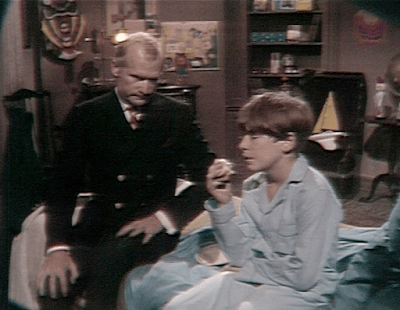

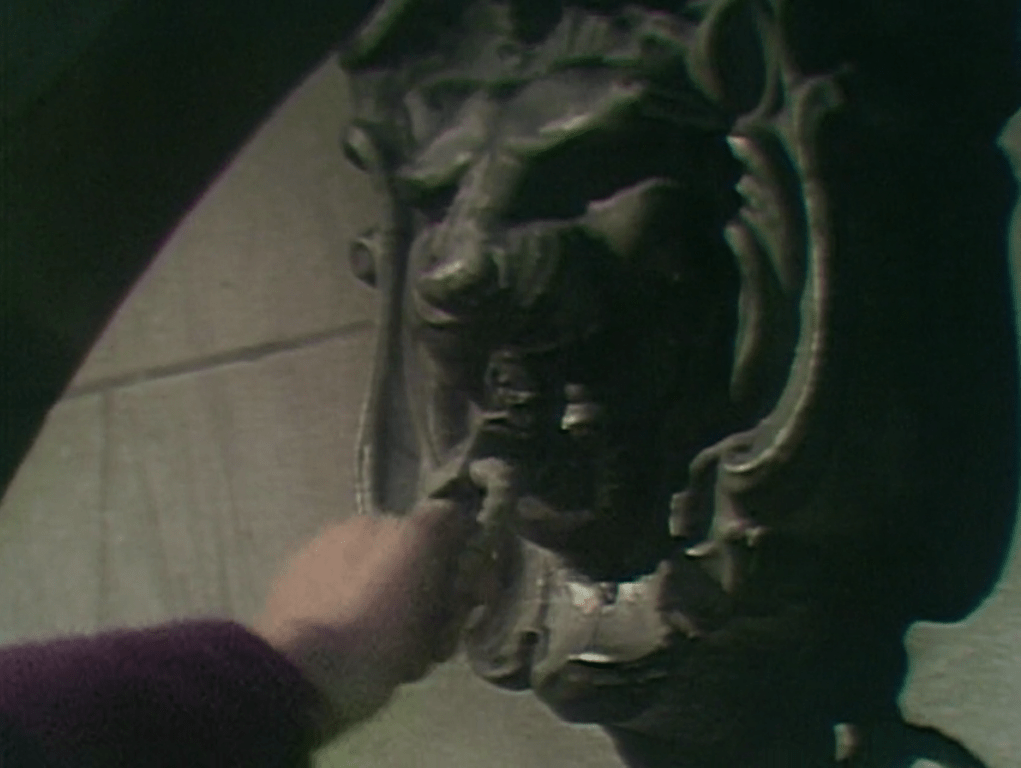


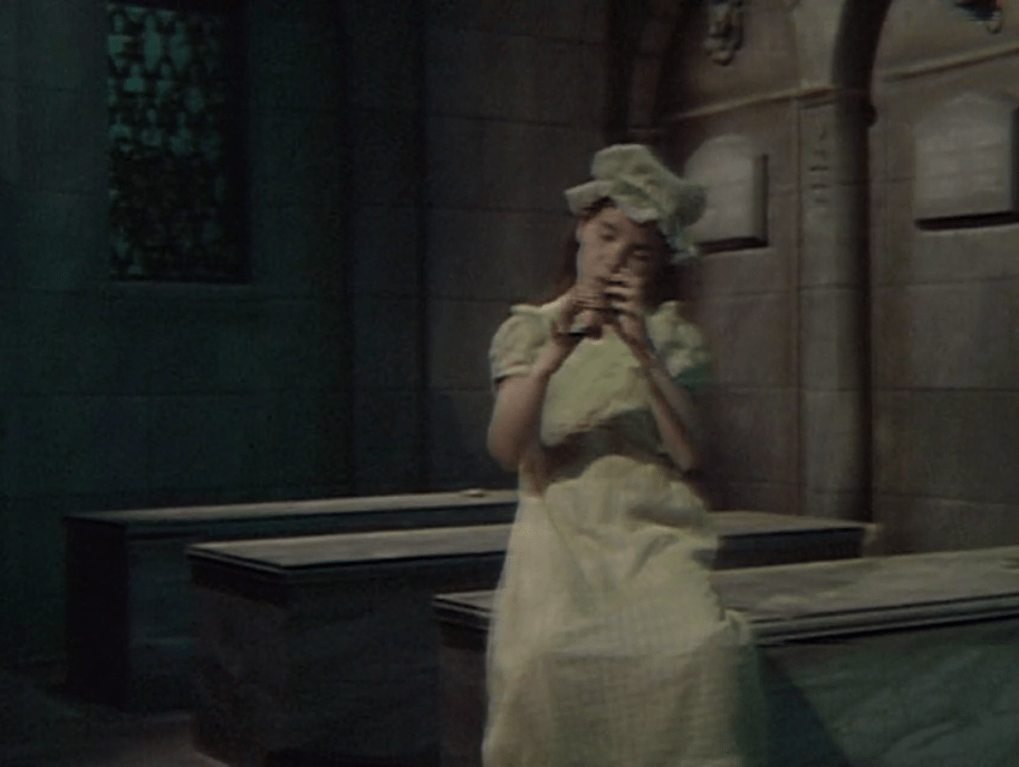




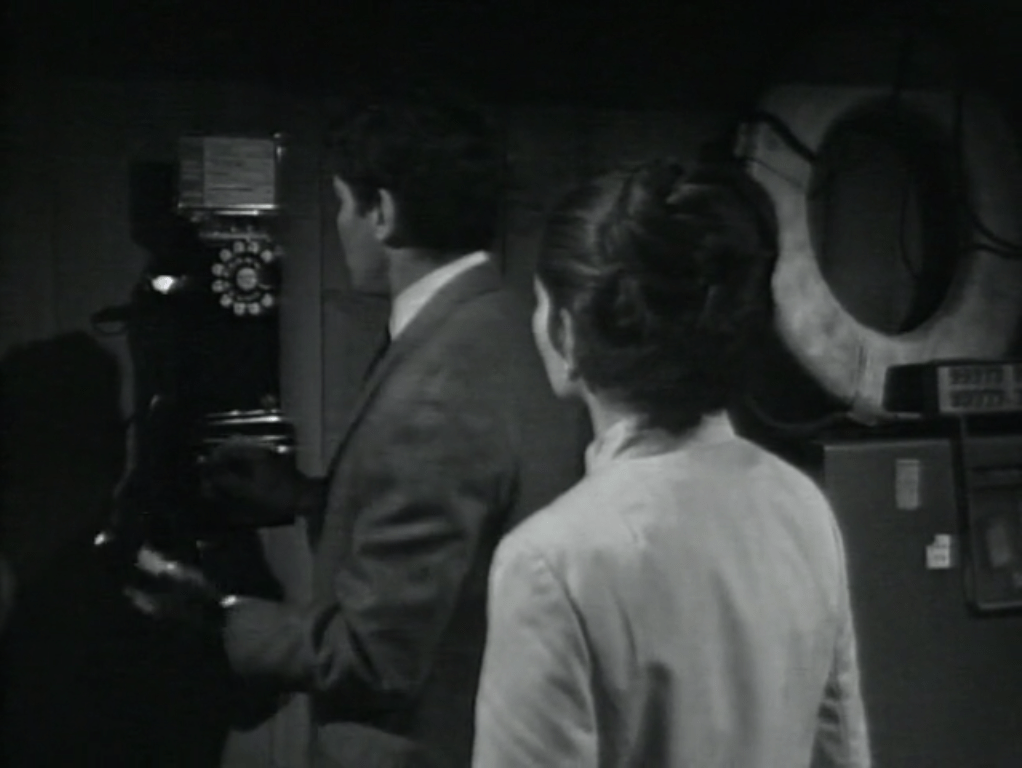
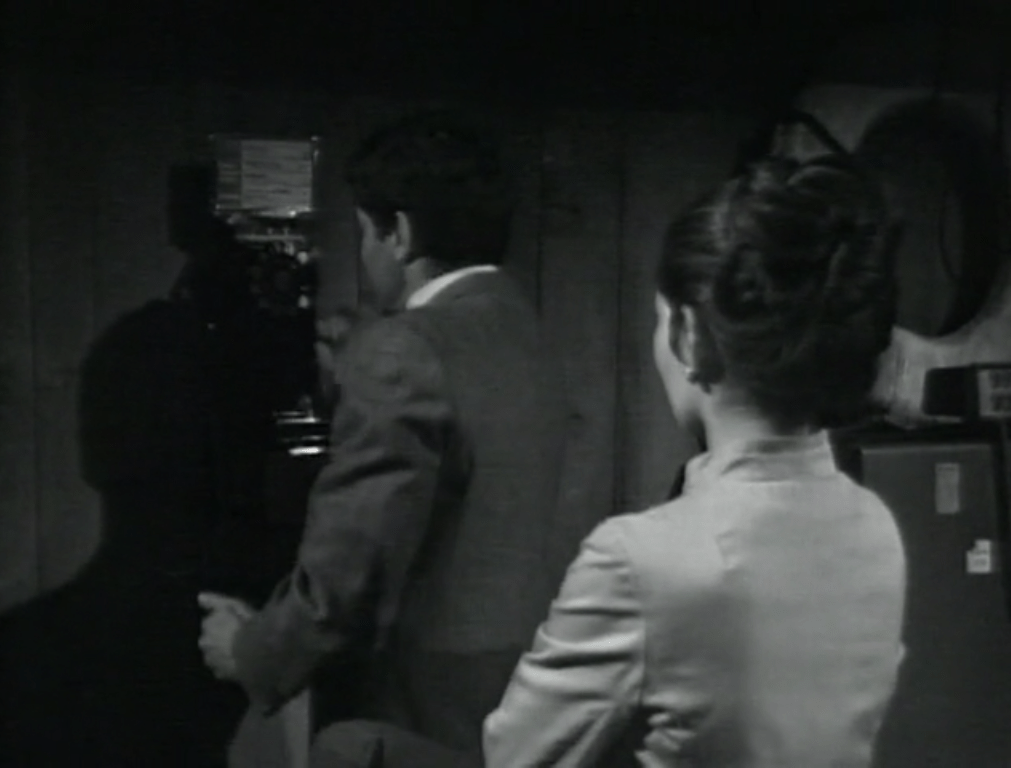


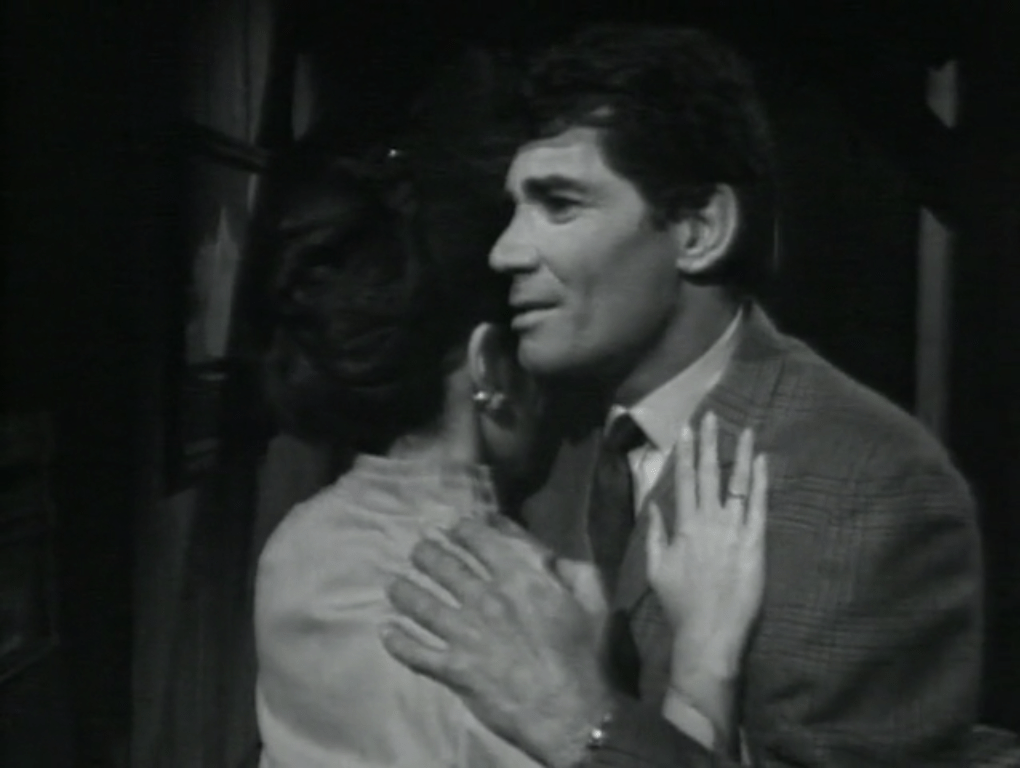
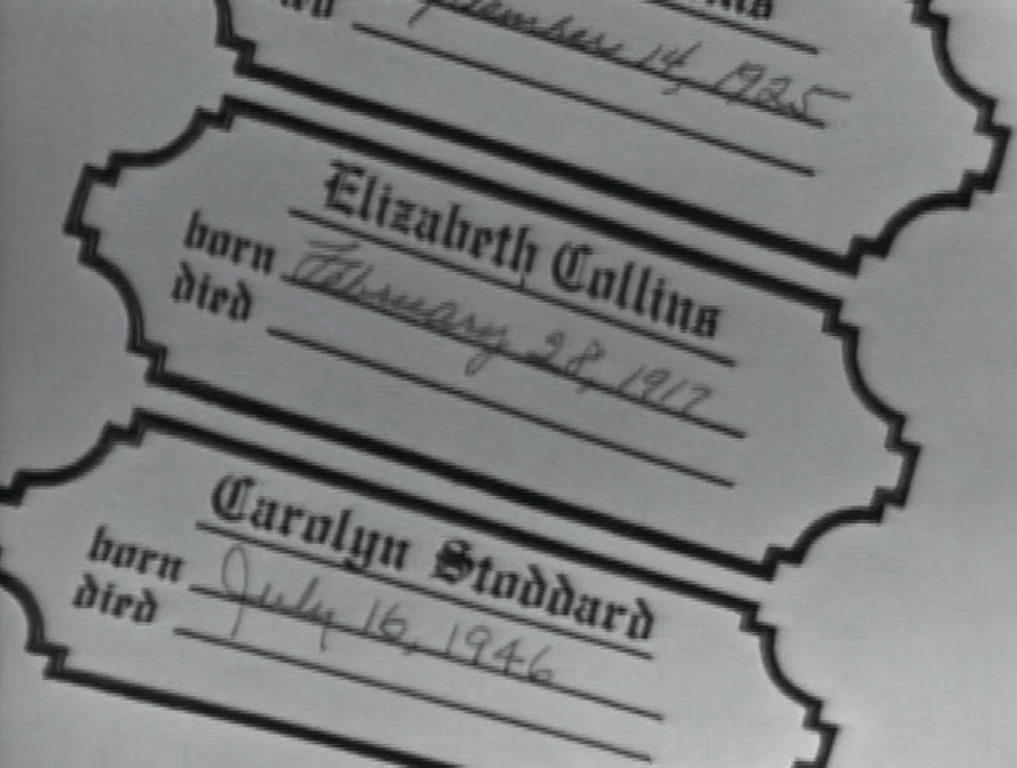
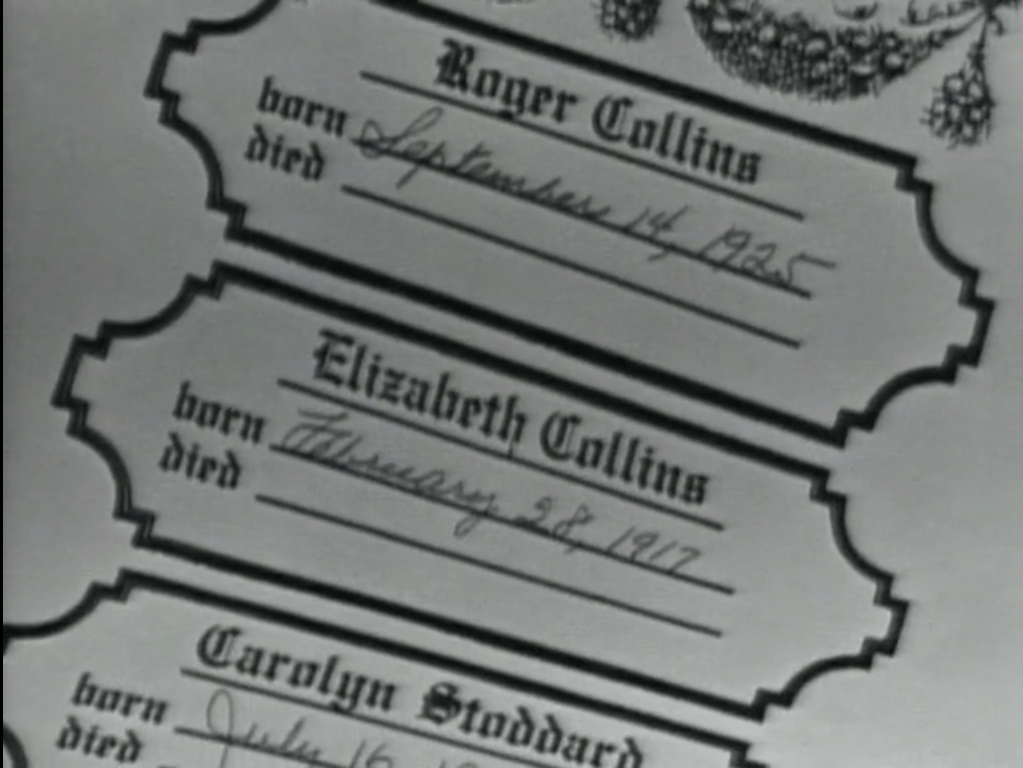
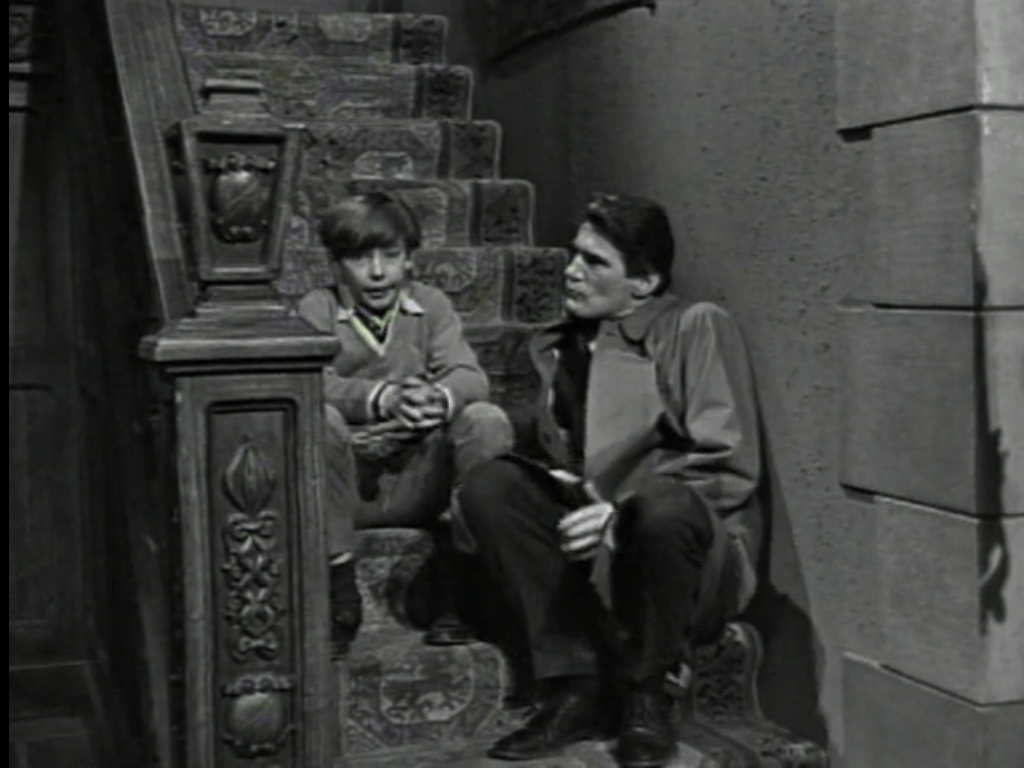
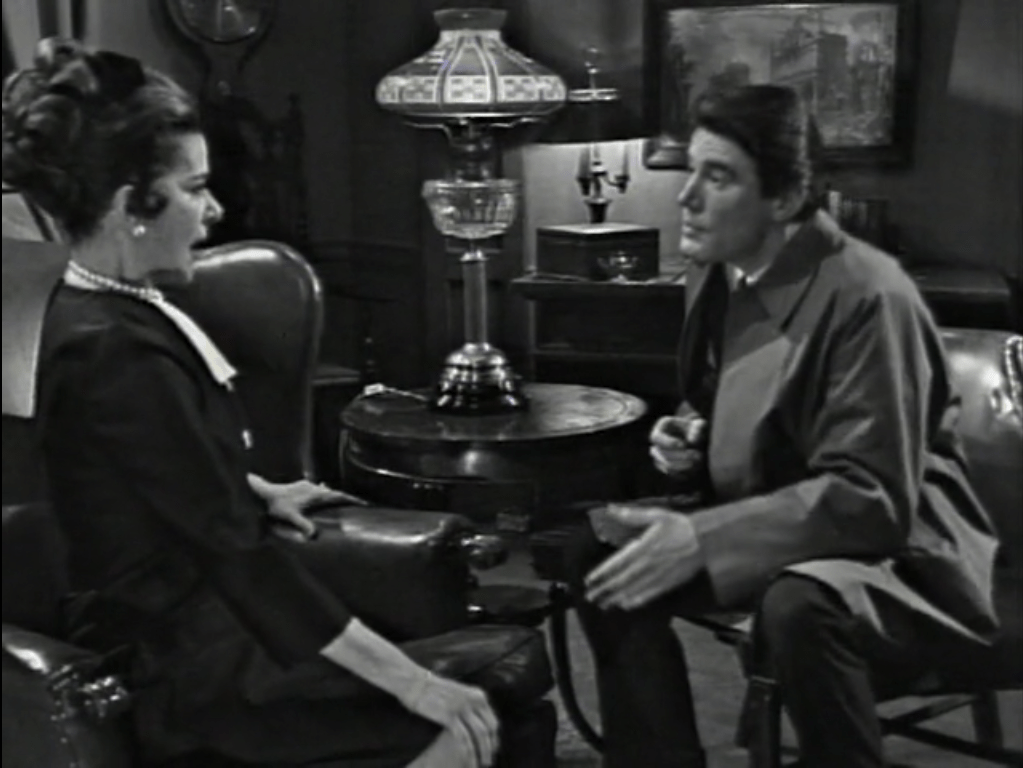

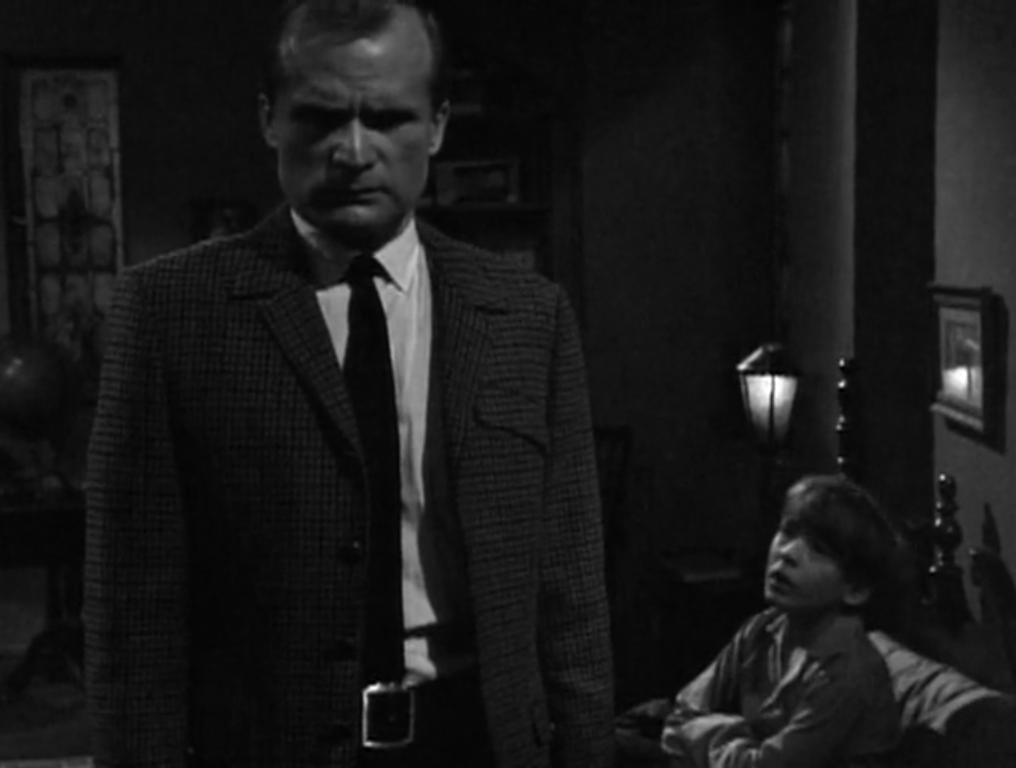

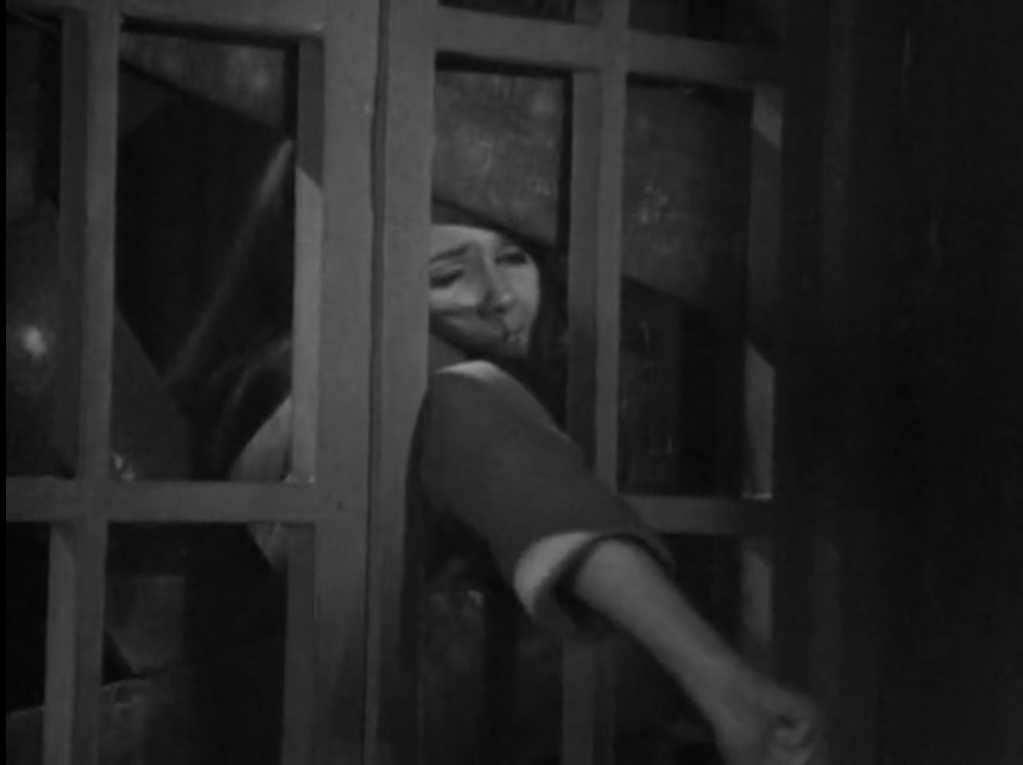


 Dark Shadows Commentary