Haughty overlord Joshua Collins, master of the estate of Collinwood in this year 1795, has gone missing. His sister, repressed spinster Abigail Collins, is convinced this is the result of witchcraft. One of the Collinses’ house-guests, the Countess DuPrés, agrees with Abigail, and like Abigail is sure that the witch is well-meaning governess Victoria Winters (whom we know as “Vicki.”) Abigail and the countess also blame Vicki’s black magic for the fact that Joshua’s brother Jeremiah and the countess’ niece Josette have apparently eloped, jilting Josette’s fiancé. That sad man is Jeremiah’s nephew and Joshua’s son, Barnabas Collins.
In fact, Vicki is the audience’s point-of-view character. One night in 1967, she was attending a séance, attempting to contact the ghost of Joshua’s ten year old daughter Sarah, when Sarah spoke through her, said she wanted to tell the whole story from the beginning, and yanked Vicki back through time to 1795, while her own governess Phyllis Wick took Vicki’s place at the table. Vicki can hardly tell this story, and the makers of Dark Shadows have decided not to show her being a con artist, or doing anything else interesting. So Vicki flails about, calling attention to the fact that she is profoundly alien to her surroundings.
If Sarah brought Vicki back to her own time so that she could see what happened then, Vicki’s failure to pick up where Phyllis Wick left off would seem to defeat her plan. Surely Phyllis didn’t go around telling everyone she met that they are being played by actors who had other parts in the first 73 weeks of the show, or constantly blurt out information that she learned from reading the Collins family history. Nor did she show up carrying a copy of that history and wearing clothes from 1967. In the first episode of the 1795 arc, we learned that Phyllis’ carriage overturned, that she is missing, and everyone else aboard is dead. If Vicki was going to become a part of what already happened, she should have been found at the scene of that accident, wearing Phyllis’ clothes and suffering a minor injury that left her unable to speak until she figured out when she was and that she had to pretend to be Phyllis.
Today, we begin with a shot of Vicki being silent while her voice plays in the background, thinking that she must somehow keep from verbalizing her every thought. This might not seem like a great challenge, but she hasn’t managed it yet. The countess enters and confronts Vicki about the evil she believes she has done. Vicki can only feign ignorance and run away.
We cut to the lady of the house, Joshua’s wife Naomi. Naomi is an alcoholic, a fact of which we are reminded when virtually every scene she is in begins with a shot of her alone, pouring herself a drink. This scene is no exception.
Abigail enters. After nagging Naomi about her drinking, she denounces Josette for being French and Vicki for being a witch. Naomi likes Vicki and dismisses the idea that she is a witch. She also likes Josette, but can’t deny that she is French.
The countess joins them. She is just as French as her niece, but Abigail is willing to overlook that fault, since they share a desire to persecute Vicki. Naomi resists their arguments.
Unable to persuade Naomi, Abigail goes on her own authority to Vicki’s room. She tells her Naomi wants to see her at once. Vicki asks her if she will be coming along. Abigail says she will stay in Vicki’s room. Vicki says she wouldn’t stay in Abigail’s room without her permission; Abigail replies “You don’t own this house. We do.” As the governess in the house in 1967, Vicki may have had an expectation of privacy in her room, but that is clearly not the case in 1795.
Vicki exits, and Abigail starts to rummage through Vicki’s things. Since she was looking through the family history right before Abigail came in, we expect her to find that book, which would be a pretty hard thing to explain. Before she can, a cat that had been squatting on Vicki’s bed disappears in a puff of smoke and Joshua takes its place.
Returning viewers know that the wicked witch is the countess’ maid Angelique, and that Angelique turned Joshua into a cat last week for reasons of her own. Abigail doesn’t know anything about that, and she is so discombobulated by the experience that she calls her brother “Josh.. ua!” As soon as he stands up, she faints in his arms.
Back in Naomi’s room, she and the countess are questioning Vicki about her life before coming to Collinwood and her many strange utterances since. Vicki pleads amnesia about the first topic and makes feeble responses about the second. Even so, Naomi is satisfied. Then Abigail and Joshua enter.
Joshua remembers nothing about his time as a cat, and is shocked by the news about Jeremiah and Josette’s disappearance. He and Naomi send Victoria downstairs to do some chores, and excuse Abigail and the countess.
Abigail and the countess let themselves into Vicki’s room and start searching through her things. They find the clothes she was wearing when she showed up. In them they discover a charm bracelet. Among the charms is a cartoon devil.
The ladies are horrified by this blasphemous thing. Abigail says that she will write to a clergyman in Salem, Massachusetts, a Reverend Trask. The countess is glad to hear that the Reverend Trask has a way with witches.
We can only wonder whether Abigail and the countess called on the Reverend Trask to investigate Phyllis Wick in the original timeline, and if so, what it was about her that aroused their suspicions. Perhaps Angelique simply chose her as a convenient patsy. Or maybe Phyllis made some decisions that generated an interesting story leading up to it. Either way, it would have been significantly different from Vicki’s woeful blunderings.
In 1966 and 1967, supernatural menaces Laura Murdoch Collins and Barnabas Collins would often be seen staring out the windows of their houses on the great estate of Collinwood, sending psychic energy towards the targets of their sinister plans. In 1795, Barnabas is neither supernatural nor menacing, but we already see him peering out one of those windows. He is not projecting bad vibes into the world, but is worried about his beloved fiancée, Josette DuPrés. She is supposed to arrive soon, in fact was supposed to arrive some time ago. Now there is a storm, and he hopes she is not at sea.
The audience’s main point-of-view character in 1966 and for most of 1967 was well-meaning governess Vicki. Now Vicki has come unstuck in time, and found herself in this extended flashback to the eighteenth century. Since she will know Barnabas and regard him as a close friend in the 1960s, she is at her ease talking to him now. Although she is a member of the staff in his family’s house in a period when it was customary for masters to summon their servants with bells and communicate with them only in direct commands, Barnabas is a remarkably genial and democratic sort who welcomes her casual manner.
Vicki has already annoyed the audience several times by blurting out information that makes it obvious to the other characters that she does not belong in their world. She does that again in this scene. Barnabas is worried something may have happened to Josette, and Vicki tells him that she will arrive safely. He is surprised by the assurance with which she delivers this prediction, and asks if she is clairvoyant. She realizes that she has been indiscreet, and denies that she is. He is unconvinced.
Barnabas’ father, haughty overlord Joshua Collins, enters. He is appalled to find his son socializing with a servant. He dispatches Vicki to the nursery to look after her charge, his young daughter Sarah. He demands to know why Barnabas is not tending to his own duties at the family’s shipyard. They begin to quarrel, when a knock comes at the door.
Barnabas opens the door to find a woman named Angelique, whom he identifies as maid to Josette’s aunt, the Countess DuPrés. Angelique says that the countess was on her way to Collinwood, but that her carriage is stuck in the mud. Joshua orders Barnabas to send a footman to rescue her. Angelique is the first character we have met in 1795 who is not played by a performer we have seen in the first 73 weeks of the show.
Joshua goes to his wife, Naomi. Naomi is an alcoholic, a fact of which we are made aware because almost her every scene begins with a shot of her drinking alone. That’s what she is doing before Joshua finds her. He scolds her for her drinking; she complains that he doesn’t allow her to do anything else. She can’t even pass the time with a book- we saw Monday that Naomi is completely illiterate.
Naomi’s alcoholism is both a nod to the concern of first-wave feminism with the atrophy of the elite housewife, and a suggestive side-light on Barnabas as we knew him in the 1967 segment. Then, Barnabas abducted Maggie Evans, The Nicest Girl in Town, and tried by more or less magical means to replace her personality with that of Josette. For the first 40 weeks of Dark Shadows, Maggie’s father’s alcoholism had been a substantial story element, and she would always retain a number of classic Adult Child of an Alcoholic (ACoA, in the lingo of the recovery movement) characteristics, such as beginning utterances with a little laugh to prove that she is happy. Now that we know that Barnabas is also an ACoA, we can wonder if that shared experience was part of the reason he was drawn to Maggie.
The countess arrives. Since she is played by Grayson Hall, who also plays mad scientist Julia Hoffman in the parts of the show set in the 1960s, Vicki blurts out “Julia!” when she sees her. Hall had also been nominated for an Academy Award for her performance as Judith Fellowes in the 1964 film Night of the Iguana; if Vicki is going to keep the audience up to date on the cast’s resumes, it would have been more interesting if she’d exclaimed “Judith!” Vicki explains that the countess looks like someone she once knew who was named Julia, a remark which irritates the countess, who would like to think her appearance is distinctive. Vicki has certainly not made a favorable impression on this grand lady.
Joshua tells the countess he is surprised that “You still affect a title” when “France has followed our example and become a republic.” His pride in this development, after the Terror and in the bloodiest year of the wars in the Vendée, marks Joshua as a member of the Jeffersonian party in US politics. The Federalists and others had long since turned against the French Revolution by that year.
The countess tells Joshua that it is precisely because France has become a republic that she chooses to live on the island of Martinique. That answers a question that some fans ask about Angelique- why is she white? If the DuPrés family lives on Martinique and are major sugar planters there, they must hold a great many African people in slavery. When we hear that they are bringing a servant with them, we expect that servant to be Black. When we learn that the the countess is an emigré, we realize that she brought Angelique with her from France.
The countess may solve one puzzle for us in her exchange with Joshua, but she presents us with another. Josette’s father André is the countess’ brother, yet he is never referred to as a count. Indeed, when he appears, we will see him answer to “Mr DuPrés.” Perhaps he renounced his title, as many French aristocrats did during the Revolution.
Whatever the explanation, “DuPrés” would seem to represent a missed opportunity. When Josette was first mentioned, in the early months of Dark Shadows, her maiden name was given as “LaFrenière.” It would have been a nice touch to have kept that name for Josette and her father, and to have reserved “DuPrés” as the name of the countess’ late husband.
“LaFrenière” had been a perfect choice because of its class ambiguity for a show about an aristocratic family in the state of Maine- it was originally the family name of the barons of Fresnes, and could therefore be a sign of a senior order of nobility, but is also a very widespread name in Quebec. So “Josette LaFrenière” might either have been a French noblewoman who deigned to marry into the mercantile Collins family at the apex of their prestige, or a working class girl from the north who eloped with the boss’ son.
The choice of Martinique as Josette’s place of origin might add a new twist to this class ambiguity. The Empress Josephine grew up there as a member of the untitled but ancient Tascher family, who, like the fictional DuPrés family, owned an enormous sugar plantation on the island. The Taschers of Martinique went back and forth between Martinique and metropolitan France, and Josephine herself was living there in 1779 when she married her first husband, the Vicomte de Beauharnais. Josephine herself was in prison when the vicomte was guillotined in 1794, one of the last to die in the Reign of Terror, and she was freed just a few days later. The next year, she recovered her husband’s property, and a year after that married the young general Napoleon Bonaparte. It seems likely that the similarity between the names “Josephine” and “Josette” was writer Sam Hall’s inspiration for placing Josette’s origins on Martinique. Association with a figure who was at once a grand lady and an example of very steep upward social mobility could synthesize the two possible Josettes LaFrenière into a single figure.
Had they developed the story of the family’s relationship with the town of Collinsport more richly in Dark Shadows 1.0 and 2.0, they could have used this ambiguity to build up suspense that would be resolved today, in the third episode of Dark Shadows 3.0. Since they did so little with that theme in those days, when the story was moving very slowly and it would have been relatively easy to fit just about anything in, I suppose we shouldn’t be surprised that they drop it so completely at this period of the show, when the story is flowing at a breakneck speed.
The countess’ lofty aristocratic manner stings Joshua. Alone with Naomi, he loudly proclaims his belief that all men are equal. We already know enough about Joshua’s tyranny over his household that this absurd little speech must be an intentional spoof of the rich landowners who supported the Jeffersonian party in the early decades of the Republic. Again, this would be funnier and more poignant if the show had done more with social class in its first 73 weeks.
Barnabas sees the countess dealing out tarot cards. He tells her she is too sophisticated for them, and is reluctant to sit with her while she uses them to read his fortune. The moment she says that the cards suggest a connection between him and the concept of infinity, his skepticism evaporates instantly and he excitedly asks if that means he will live forever. The countess cautions that his jubilation at this idea may be misplaced. She notices the “Wicked Woman” card, and takes a significant look at Vicki. Evidently the audience is not alone in objecting to Vicki’s brainless nattering about what the show used to be like.*
Angelique comes to Barnabas’ room. It turns out the two of them had a brief affair when he was first on Martinique, and she expects to resume it. He is not at all pleased at her attentions.
Not how every man would react to a passionate embrace from Lara Parker… Screenshot by Dark Shadows Before I Die.
Barnabas explains that he was already falling in love with Josette when he and Angelique had their fling, but that he didn’t really know her. He couldn’t believe that she would reciprocate his feelings, and consoled himself by dallying with Angelique. This explanation goes over with her about as well as you’d expect, and she storms out of the room, vowing that she will get her way in the end.
We know that the tarot cards are giving accurate information, because the show leans heavily on the uncanny and they wouldn’t have spent so much time on a gimmick that wasn’t meant to advance the plot. We also know that Vicki is not the Wicked Woman the countess is looking for. That leaves Angelique, and we can assume that her wickedness will express itself in some supernatural action taken to avenge herself on Barnabas. Since we know that Barnabas will become a vampire, we wonder if it is Angelique who makes him one.
Closing Miscellany
I usually refer to surviving cast members with courtesy titles and to deceased ones by surname alone. So Alexandra Moltke Isles is “Mrs Isles,” which has been her professional name for 56 years, David Henesy is “Mr Henesy,” Nancy Barrett is “Miss Barrett,” etc, while Jonathan Frid, Joan Bennett, Louis Edmonds, and Grayson Hall are just “Frid,” “Bennett,” “Edmonds,” and “Hall.” Until last month, I’d been looking forward to saying lots of things about “Miss Parker” and her portrayal of Angelique, but Lara Parker died on 12 October 2023. So she’s just going to be “Parker,” and I’m going to be sad about it.
Artist Teri S. Wood has created a number of short animations about Angelique and Barnabas. This one is based on their two-scene at the end of today’s episode:
Patrick McCray has a post about this episode that mystifies me. He writes that “After seven months of hearing about Angelique, today, she enters. So, no pressure Lara. You only have to live up to a half year of build-up.” Uh, what? There has been absolutely no reference to Angelique on the show before today. I can think of an interpretation of the story that might retroject Angelique into episodes #211-365, and I will talk about it next week. But I don’t think it is an interpretation Patrick would favor.
He also talks about David Ball’s method of reading plays from the ending back to the beginning and then from the beginning forward, so that the ending comes to seem implicit in everything else. He allows that Dark Shadows has more than one ending, but I would say he doesn’t go far enough. I’d say the series has ten endings. The first came in #191, when Laura went up in smoke while her son David found refuge in Vicki’s arms. That ending defined Dark Shadows 1.0 as the story of David’s escape from his evil, undead mother Laura, and his adoption of Vicki as his new, life-affirming mother. The second came in #364, when Barnabas met the ghost of his little sister Sarah, she commanded him to be nice to the living, and he went right on with his murderous plans. That ending defined Dark Shadows 2.0 as the story of Barnabas’ irredeemable evil.
Two of the other endings will feature Angelique dying in Barnabas’ arms, and Patrick suggests that those make the whole show the story of their relationship. I don’t buy it at all. Each of the ten parts is about what it is about, and even those two episodes with Angelique dying derive more dramatic charge from other moments.
*Making connections with the first 73 weeks is my job!
Episode #359 included a recreation of a shot from #69, harking back to a long-forgotten storyline in which housekeeper Mrs Johnson was a secret agent spying on the ancient and esteemed Collins family for their arch-nemesis, Burke Devlin. In #69, Mrs Johnson followed Burke’s orders and eavesdropped on a conversation between him and blonde heiress Carolyn Collins Stoddard. In #359, Carolyn herself is a secret agent, spying on the household for vampire Barnabas Collins. She follows Barnabas’ orders to eavesdrop on a conversation between him and mad scientist Julia Hoffman. The reference showed just how drastically both Carolyn and the show itself had changed from week fourteen to week seventy-two.
The puzzle is why writer Sam Hall watched #69. He wasn’t connected to Dark Shadows in those days, and it would be very far down the list of episodes you would watch in an attempt to get up to speed on what was happening when he came aboard. That puzzle is solved today.
As Mrs Johnson, Clarice Blackburn had a big turn in #69. Angrily denouncing the Collinses, she twisted up her face in a lunatic expression and loudly declared “I believe in signs and omens!” She appeared as the sworn enemy of the people we have been following all along, and as someone who is superstitious even by the standards of the haunted house where most of the action takes place.
Today, we and well-meaning governess Victoria Winters have been transported back in time to 1795. Blackburn reappears in the role she will be playing in the segment of the show set in that year- Abigail Collins, unmarried sister of haughty overlord Joshua. Abigail is a Puritan busybody out of Nathaniel Hawthorne by way of The Crucible. She renews the promise of all the mischief we had hoped Mrs Johnson would make when we first met her, long ago.
Vicki wakes up in the manor house and sees Abigail. She thinks Abigail is Mrs Johnson and is relieved that she has awakened from a nightmare. Abigail quickly makes it clear that the year is still 1795, that she is not “the friendly housekeeper,” and that she finds everything about Vicki to be appalling. She loses no time in declaring that Vicki is possessed by the Devil. Vicki denies this, but does not convince Abigail.
When Abigail leaves Vicki’s room, she locks the door from the outside. The rooms in the servants’ quarters are surprisingly large and well-appointed for the 1790s, but when we see that they can double as jail cells it offsets the apparent luxury. Vicki escapes through the window.
The great house of Collinwood, where Vicki lives in 1967, is under construction, and she goes there. Danny Horn, on his Dark Shadows Every Day, often said that the real subject of the series was the house. This scene corroborates his interpretation. When the ghost of little Sarah Collins said she would tell “the story from the beginning,” she sent Vicki back to the time when the great house was being built.
Vicki finds a man in the foyer played by Anthony George. George had been the second actor to play the part of Burke. You might think her experience with Abigail would break Vicki of her habit of telling her cast-mates what characters they played in the 1960s part of the show, but no such luck. She reacts to George’s new character as if he were Burke. After a moment, she tells him that she can see he isn’t the same man. This is a riddle- if the characters played by the same actor look so much alike that it makes sense for Vicki to keep mistaking them for each other, what does she see in this Anthony George character that sets him apart from the other?
As it happens, George is playing Jeremiah Collins, builder of the great house and brother of Joshua. In #280, Barnabas had given a costume party and George’s Burke had attended it dressed as Jeremiah. Barnabas, a native of the late eighteenth century, had been thunderstruck by the sight of Burke in that costume, unable to do anything but say “Jeremiah!” and glare at him. So there is a strong resemblance, perhaps suggestive of some spiritual linkage between the two men. Vicki’s constant confusion of the actors with their roles indicates that such linkages are to be found throughout the cast. Having her babble about the resemblances out loud so frequently is the most annoying possible way to make this point. If Barnabas had kept mistaking the 1960s characters for their 1790s counterparts, it’s hard to imagine that they would have accepted him and certain that the audience would not have.
Vicki tells Jeremiah that Abigail thinks she is a witch. Jeremiah makes it clear that he finds Abigail’s hostility to be a strong recommendation, and the fact that Sarah is a fan of Vicki’s clinches the deal. He takes her back to the main house.
Once Vicki is back in her room, Jeremiah brings her 1967 clothes. He asks her why she wants them so much, telling her that they will bring nothing but trouble if they are found. She tells him that she will need them when she gets home. Combined with her habit of blurting out remarks that could only strike people in the 1790s as bizarre, Vicki’s attachment to her belongings from her own time suggests that she will very soon find herself in huge trouble. That’s unwelcome- this voyage to the past is shaping up to be interesting, and it would be nice to stay here long enough to get to know all of the characters. If Vicki keeps acting like this, she’ll get herself kicked out of 1795 and drag us back to the 1960s before Dark Shadows has had a chance to show us what they can do with a period piece.
Vicki tells Jeremiah that she has amnesia about her life until her arrival at Collinwood the day before. He tells her that she will have to make up a better story than that. She is shocked that he is telling her to lie, and he says that she will never find a place in the world if she doesn’t.
When Barnabas left 1795 and showed up in 1967, we didn’t see anyone patiently explaining to him that he would have to conceal his true identity and maintain a convincing cover story. He had figured that out by the time we met him. Most of the time he was on screen in those first months, he was trying to play the role of a modern man, a distant cousin from England whom the Collinses had forgotten about. It was fascinating to watch him essay that part. Occasionally he would stumble and blurt out information only someone from an earlier century would know; Vicki caught him doing that more than once, most notably in #233, when it seems for a moment that he might be thinking of killing her to cover his indiscretion. Other times he would face questions he couldn’t answer, and we would wonder what he would set in motion with his attempts to evade them. Quite frequently actor Jonathan Frid would have trouble with Barnabas’ lines, and it would seem that Barnabas, not he, was the one groping for words. When we first realized yesterday that Vicki was taking Barnabas’ journey in reverse, we might have hoped that it would be as interesting to watch her trying to pass as a native of the eighteenth century as it was watching Barnabas trying to pass as a native of the twentieth. That hope took a beating before the day was done, and her conversation with Jeremiah reduces it to a still lower order of probability.
Downstairs, Abigail is telling Joshua and his wife Naomi that they ought to turn Vicki over to “the authorities.” Jeremiah opposes this plan. Naomi makes a great show of screwing up her courage and “for the first time” speaks out against Abigail’s ideas.
This is quite a reversal from what we saw in the part of the show set in the 1960s. Joan Bennett plays Naomi here and matriarch Elizabeth Collins Stoddard there; Louis Edmonds plays Joshua here and Liz’ brother Roger there. But where Joshua is an iron-willed, self-assured tyrant and Naomi his cowed and isolated dependent, Liz is the mistress of Collinwood and Roger a shameless, sybaritic wastrel who lives as a guest in her house and collects a salary from her business. We saw yesterday that Naomi is entirely illiterate; we see today that this inability, though it is an anachronism in a wealthy New England lady of the 1790s, is of a piece with her cramped position in the world. Not only is she supposed to obey her husband; she is supposed to defer to his sister, and is sidelined even in the management of her own household.
The show has been hinting heavily from the first episode that Vicki, played by Joan Bennett lookalike Alexandra Moltke Isles, is Liz’ unacknowledged daughter. It’s certainly no surprise when Liz goes out of her way to stick up for Vicki. Regular viewers, connecting Bennett’s two characters, may not be surprised that Naomi also takes Vicki’s side, but she doesn’t really have much reason within the story to do so. It might have been better if they had given the two of them more time together before this scene, and shown us why Naomi would be especially well-disposed towards Vicki.
Naomi carries her point, and Joshua offers Vicki a position as Sarah’s governess. Vicki is surprised when he asks if she can read; he says that “Many people can’t, these days,” a reference to yesterday’s demonstration of Naomi’s illiteracy. She is startled by his offer of four dollars a week; he angrily asserts he could get someone else for less, and she remembers herself sufficiently to agree that the pay is ample. Joshua is very much the haughty overlord, but he does have some closeups in which we see him looking vulnerable as he tries to figure out who Vicki is and why his wife and brother have taken her side against Abigail. It is a strong scene, and it raises our hopes that Joshua will make exciting things happen.
We open on a new set, the bedroom of heiress Carolyn Collins Stoddard in the great house of Collinwood. Dark Shadows has been in color since #295 in August. Though directors Lela Swift and John Sedwick were both ambitious visual artists, they haven’t been able to do much with color so far. With Carolyn’s bedroom, Swift and the staging team have accomplished one of their first real essays in color. It is composed mostly of shades of yellow, pink, and orange.
The color schemes of the other interiors we’ve seen up to this point run the gamut from sedate to subdued to drab to dank, so we already know we are in a unique space. The only other room in Collinwood that might have matched this one for brightness was the kitchen, but we haven’t seen that since #208.
Carolyn’s young cousin, strange and troubled boy David, lets himself into her room. He touches her, and she awakes with a scream. He explains that he just dropped in to make sure she wasn’t dead. When she turns on the light, the screen is so bright that I reflexively squinted, a reaction I’d never before had to an image on Dark Shadows.
Bright room.
David can’t quite explain why he was afraid Carolyn might be dead, but he does insist that she take an antique toy soldier, saying that she will be safe if she keeps it with her. Carolyn’s mother, matriarch Liz, comes into the room to investigate Carolyn’s scream. Liz wonders what David is doing there. Carolyn hastens to say that he was just making sure she was all right.
David goes, and Carolyn tells Liz she doesn’t think anything can be done for him at home. Liz is reluctant to send him away. Regular viewers will not be surprised by this. We know that Liz took David and his father, her ne’er-do-well brother Roger, into Collinwood at the beginning of the summer of 1966 and summoned her unacknowledged daughter, well-meaning governess Vicki, to come look after David starting with #1 on 27 June 1966, so that her conviction that the family ought to look after him got the whole show started. Nonetheless, Liz is so disturbed by David’s unusual statements and depressive affect that she agrees that he needs residential care.
We cut to the Old House on the estate. Vampire Barnabas Collins is sitting in a basement room where mad scientist Julia Hoffman maintains a laboratory. The room is full of electrical equipment, a bit odd since the Old House has no electricity; the laboratory itself is lit by flaming torches. But if we’ve ever seen a Universal Studios production from the 1930s, we know that where you find a mad scientist, you will find electrical currents, so naturally things start buzzing when Julia flips a switch.
Barnabas confined
Julia is trying to implement a medical cure for Barnabas’ vampirism. In the first shot of this scene, we see a visual metaphor for that project. Barnabas, an uncanny being, is confined to a small space in the middle of an elaborate collection of technology. If Julia succeeds, the supernatural will be vanquished altogether and scientific rationality will fill the whole world. The color scheme emphasizes the contrast between Julia’s optimistic goal and the terrain on which she operates. The walls and floor are dominated by the grays and browns of the basement, but the frames and tubing of her equipment are a bright metallic hue, light plays on the glass components, and the intense greens, reds, and blues of the potions are distributed in a slightly unbalanced, lively pattern. The irregular shapes of the frames and tubing emphasize this pattern, and contrast with the solid gray of the floor and the even grid of the brickwork on the walls.
This image not only represents Julia’s plans, but also one of the major themes the show is exploring at this period. Too many characters have encountered too much evidence of supernatural forces and beings for anyone to simply deny that such things exist. But even those who have been most heavily exposed to them keep reverting to a naturalistic frame of reference. Sure, Julia spends all her time hanging around with a vampire and has encountered a couple of ghosts, but she’s determined to ring all of those phenomena around with scientific explanations and technological interventions until they yield to rational control.
Julia’s project has hit its first major setback, as the latest treatment led Barnabas’ hands to age dramatically. He expresses the fear that time will catch up with him, and his apparent age will soon catch up with his actual age, something like 200 years. Julia’s hope that her experiment will not only free Barnabas of his curse, but found a new kind of medicine that will free everyone else of aging and death, will thus be defeated.
Barnabas gives a remarkable little speech about the situation he finds himself in:
I’ve been granted privileges given to few other men… For most men, time moves slowly, so very slowly. They don’t even realize it. But time has revealed itself to me in a very special way. Time is a rushing, howling wind raging past me, withering me in one relentless blast and then continues on. I have been sitting here passively, submissive to its rage, watching its work. Listen. Time, howling, withering.
Writer Joe Caldwell has a fine sense of what actors can do, and this odd little bit of purple prose is right in Jonathan Frid’s wheelhouse. It doesn’t make a whole lot of sense, but the sound of his voice delivering it is so gorgeous it may as well be Shakespeare. Well, maybe not Shakespeare, but Ben Jonson at least.
It is possible to read this speech as a programmatic statement. Daytime soap operas of the 1960s were famously slow-paced; the old joke was that a viewer saw an episode that ended with a character hearing a telephone ring, missed four months of the show, and tuned back in to see the episode that started with the same character saying “Hello.” Even by the standards of the period, the first months of Dark Shadows were notoriously leisurely, with action often as not playing out in real time. When we are watching the 21 episodes centering on Roger’s attempts to find a fountain pen he misplaced, it is indeed the case that “time moves slowly, so very slowly.” But those days are behind us. The show is whipping through plot points at a pace that many prime time series contemporary with it would have had a hard time matching.
If the speech is programmatic, it is also autobiographical on the part of the screenwriter. A fast pace promises excitement for the viewers, but makes life hard for a writing staff that never numbered more than three. Indeed, this is the last episode Joe Caldwell will write for two and a half years. Perhaps he felt the demands of the new pace as “a relentless blast” withering his talents, and had to bow out.
We return to Carolyn’s room. She is in front of her mirror, contemplating the toy soldier. She hears the strains of “London Bridge” playing on a wooden flute, which she has learned is a sign that the ghost of ten year old Sarah Collins is present. Carolyn grew up in this haunted house, so it may not be entirely surprising that her response is to lean back and enjoy the music. But she sits up when Sarah manifests herself in visible form.
Ghost in the mirror
Sarah speaks, and Carolyn sees her reflected in her mirror. The following scene is so extraordinary I’m going to transcribe all of the dialogue:
Sarah: David must have given you that.
Carolyn: Sarah!
Sarah: He told you my name.
Carolyn: Sarah, how did you get in here?
Sarah: Didn’t David tell you?
Carolyn: Tell me what?
Sarah: All about me.
Carolyn: I’m not sure I understand.
Sarah: I think I’m a ghost. Matter of fact, I’m sure I am.
Giving the facts
This is the first time Sarah has described herself in any terms, certainly the first time she has called herself a ghost. Her coyness about herself had left David confused about what she was; it was not until #325 that he finally concluded that she was a ghost. After that, she became more forthright with him. When he wasn’t sure what she was, she would wait until she was out of his line of sight to appear and disappear. But in #327, she fades away while he’s looking right at her.
Coming out to David not only allowed Sarah to relax around him, but has led her to discard her coyness altogether. She is startlingly blunt with Carolyn as this conversation goes on:
Carolyn: B-but- I don’t believe in-
Sarah: Yes you do. Or I wouldn’t have been able to come here. You’re not afraid of me, are you?
Carolyn: No…
Sarah: If you are, I understand.
This is the first confirmation that Sarah can appear only to those who are prepared to believe in her. It’s true that most of the people who have seen and heard her- David; Maggie Evans, The Nicest Girl in Town; Maggie’s father Sam; Vicki; Barnabas; Julia; Barnabas’ sometime blood thrall Willie; and local physician Dave Woodard- have either had extensive contact with the supernatural or had reasoned their way to the conclusion that she existed. But she also showed herself to Maggie’s nurse at the mental hospital Julia runs, and we don’t know anything about her background or beliefs. And local man Burke Devlin heard Sarah when she and David were talking in #327. While Burke has had plenty of contact with supernatural beings and in the early days of Dark Shadows, when he was fun, was willing to believe in them, he was at that point tearing around bellowing that there were no such things as ghosts. So this is new and unexpected information.
Carolyn’s denial that Sarah frightens her is given in a trembling voice that shows it to be a lie. Still, she isn’t as frightened as she might be. The other day, in #344, Carolyn was in David’s room when Sarah manifested there, not in the visible form of a little girl, but as the sound of “London Bridge” and as information appearing in David’s mind about Burke’s imminent death. Carolyn was terrified of Sarah when she came that way.
Carolyn: Well, what do you want?
Sarah: Don’t send David away.
Carolyn: How do you know about that?
Sarah: I don’t know, I just do.
At this point, we see Carolyn’s fear fading. She is starting to react to Sarah as if she really were a ten year old girl.
Carolyn urging Sarah to be reasonable.
Carolyn: But Sarah, we have to send David away. It’s the only way we can help him.
Sarah: But if you send David away, I won’t have anyone to play with.
Carolyn: Well, maybe it isn’t good for David to play with you.
Sarah: Why do you say that?
Carolyn: Because it leads him into believing all sorts of things that aren’t true.
Sarah: How do you know they’re not true?
Carolyn: Well, they’re just not, they couldn’t be.
Sarah: He wasn’t lying about me, was he?
Carolyn: No.
Sarah: Well.. then maybe David is acting the way he is because no one will believe him.
Carolyn: But… it isn’t possible.
Sarah: People say I’m not possible, but I am. Why doesn’t that make the rest possible?
Carolyn: Sarah, maybe you don’t know the stories David’s been telling!
Sarah: Why do you think that?
Carolyn: Because they’re too fantastic! And besides, they’ve all been proved false.
Sarah: How do you know they’ve been proved false?
Carolyn: Sarah, are you trying to tell me that Barnabas actually slee-
This exchange is the ultimate example of a character accepting the existence of a particular supernatural being and then snapping back into a frame of reference that does not allow for supernatural beings. Carolyn knows that Sarah is a ghost, and starts arguing with her about how fantastic the world is permitted to be.
There comes a knock at the door. Carolyn turns away from Sarah to look at the door, and when she looks back, Sarah has vanished. Regular viewers know that Sarah was Barnabas’ little sister, that she wants to keep him from doing horrible things to people she likes, but that she will not say anything against him. So when Carolyn says Barnabas’ name, we know that Sarah is about to vanish.
Sarah’s part is an outstanding example of writing to an actor’s abilities, even more so than was Barnabas’ speech. Caldwell knew that Jonathan Frid had a flair for making flowery gibberish appealing, because that is what he has been doing the whole time he’s been on Dark Shadows. What Sharon Smyth has been doing well as Sarah is being a cutie pie and creating a vague and mysterious impression. When she has more than a few lines to deliver, things tend to get very wobbly. Today, she has to maintain a commanding tone and an adult demeanor throughout an extended patch of rapid-fire dialogue. Absolutely nothing we have seen on screen would suggest that she could handle that. But she pulls it off, more than competently. There are a few glances at the teleprompter, but at no point does she break out of the patient and authoritative manner she has to adopt. It is an impressive job of acting by any standard.
The person at Carolyn’s door is Liz. Liz is Dark Shadows‘ queen of denial. Viewers who have been with the show from the beginning have seen a few cracks in her facade of disbelief in the supernatural. In #10, she dozed off in the drawing room and started talking in her sleep about ghosts. When Vicki insisted to her in #127 that she had seen a ghost, Liz said she believed her. And in #280 and #281, Liz reluctantly agreed to participate in a séance, and afterward agreed that Vicki had been possessed by a spirit. But even in those moments Liz was fighting to keep the topic of ghosts at bay, and the rest of the time she has presented a blank wall to any attempt to face facts about the strange goings-on. So it is not surprising that Carolyn tells her mother she was talking to herself while tidying up her room.
Having talked Liz into sending David away, she now has to talk her back out of it. She manages to get her to agree to wait a few days. “London Bridge” plays. Carolyn reacts to it, Liz does not.
In his room, a distraught David is looking at a mobile. Its whimsical black and white markings suggest a puzzle and make a stark contrast with the vivid colors around them.*
Puzzling shapes.Back to the wall.
Carolyn comes in. She brings the toy soldier and tells David she doesn’t think she will need it. He insists that she will, but she explains that Sarah visited her and now she believes him and knows how to help him. David is horrified by this. He says that Sarah visited Dr Woodard, that Woodard believed him, and that led to his death. He begs Carolyn not to believe him and claims to have been lying. He sobs and clutches her.
Anguished embrace.
Back in the Old House, Julia prepares to give Barnabas another treatment. He snaps at her. She tells him that whatever happens, she wants him to know that she always wished him well. That prompts him to unload a further stream of sour remarks about her competence and intentions. Julia carries out the treatments, only to find that the aged appearance of Barnabas’ hands has spread to his head.
In his post about this episode on Dark Shadows Every Day, Danny Horn puts it well when he says that “This is just good soap opera construction. People that we care about, facing terrible danger, and desperate to help each other.” He’s referring specifically to the scenes between David and Carolyn and Liz, but it applies to everyone. We care not only about the good people in the great house (well, they’ve been relatively good, lately,) but also about Barnabas and Julia, evil people who are the terrible danger David and Carolyn and Liz are facing, but who make the show fun to watch. We care about Sarah too, and she’s desperately trying to accomplish exactly the result we most want to see, an outcome in which David, Barnabas, and everyone else we enjoy watching stays on the show.
*Evidently this mobile was a commercially produced item. One of the commenters on Danny Horn’s Dark Shadows Every Dayreports having had one like it as a child.
Gordon Russell’s script contains an interesting scene. A psychiatrist brought in to examine strange and troubled boy David Collins gives a little speech attributing David’s fear of his cousin Barnabas to various unresolved traumas he has recently experienced. This speech sounds very plausible to the adults who listen to it, and might go some way towards explaining the appeal of Dark Shadows to its audience. But we know that David’s fears are entirely rational and that Barnabas really is a vampire. When the psychiatrist mentions that Barnabas had fangs in one of David’s dreams, family doctor Dave Woodard catches up with us and realizes that Barnabas really does have fangs and that he used them to inflict bite marks on some of his patients.
Episode 335 of Dark Shadows was a scab job done during the October 1967 National Association of Broadcast Employees and Technicians strike. In March of that year, at a time when Dark Shadows was at rock bottom in the ratings, the actors stayed out in support of the announcers and newscasters when they went on strike, and the show survived even though it went dark by the time the strike ended. Now, the vampire story is pulling in more viewers every week, making it a valuable property to ABC. But it is at this time that executive producer Dan Curtis told the cast that he would pay their union fines if they crossed the NABET picket line, and most of them did, with network executives and their stooges handling the equipment.
Sad to say, only two cast members did the right thing by the technicians. Robert Gerringer, who played Woodard, was one of those. Even if he had been a good actor, the scab stealing food from the mouths of Robert Gerringer’s children wouldn’t have been able to deliver on the moment when Woodard figures out that Barnabas is a vampire- we need Gerringer for that. He is the person we’ve grown used to seeing in the part, and his self-consciously soap operatic style of acting sets him apart from the rest of the cast and highlights the weirdness of this story playing out on a daytime serial in 1967.
But the scab isn’t a good actor. His most memorable moment comes when Joan Bennett, as matriarch Liz, bobbles a line, and he corrects her. She flashes a look of anger, but what does she expect? What she is doing is no better than what he is- if anything, it’s worse, because she was a big star and could have called a halt to the whole filthy disgrace if she’d lived up to her obligations as a member of AFTRA.
I’m writing this in September 2023, month three of the SAG-AFTRA actors’ strike and month five of the Writer’s Guild of America strike, so I’m even angrier about the whole thing than I usually would be. But I always find it hard to watch material produced under these conditions.
The character of Maggie Evans wasn’t in any of the episodes produced during the strike, so Kathryn Leigh Scott wasn’t involved in breaking it. She is walking a picket line today, and in her column she wrote about the particular issues at stake in the 2023 strikes. Different matters hung in the balance in 1967, but it’s always true that we live in a society, for the love of God, and if working people don’t stick together they don’t have anything.
When new writers start working on Dark Shadows, they do some inventorying of ongoing and disused storylines. When Ron Sproat came aboard in November of 1966, he contrived a lot of scenes that served to mark storylines as “To be developed” or “To be discarded.” Now Gordon Russell has begun to be credited with scripts. He addresses continuity questions with brief lines of dialogue.
For example, for the last forty weeks the show has been equivocating about when it was that Barnabas Collins lived as a human being. Sometimes they say that he died and became a vampire in the 1830s. That fits with the original idea that Jeremiah Collins built the great house of Collinwood for his bride Josette in that decade, because Barnabas is supposed to have loved Josette and hated Jeremiah. At other times, they have pushed Barnabas, Josette, and Jeremiah back into the eighteenth century.
Now Barnabas has risen from the grave. Mad scientist Julia Hoffman has developed a series of injections to cure him of vampirism and turn him into a real boy. When Julia finds that Barnabas has heard the ghostly voice of his sister, nine year old Sarah, she declares that “The injection can wait!” and wants to talk all about Sarah. When Barnabas tries to avoid the subject, saying that Sarah has been dead for nearly 200 years, Julia replies “So have you.” That would seem to nail down that continuity question.
Julia speculates that Barnabas has subconsciously willed Sarah to return to the living, because she symbolizes the kindly side of his nature. There have been a bunch of possible explanations for why Sarah emerged shortly after Barnabas did; evidently this is the one we will be going with, at least for a while.
Barnabas has been looking through an album of family portraits, Sarah’s among them. He tells Julia that he is particularly intrigued by another portrait in the same volume, that of Jeremiah. He says that Burke Devlin, depressing boyfriend of well-meaning governess Vicki, bears a striking resemblance to Jeremiah. This point was first made in #280, when Burke came to a costume party at Barnabas’ in Jeremiah’s clothing and Barnabas was shocked by the resemblance. Barnabas says that he will be a happy man when Burke is as dead as Jeremiah. This tells us, not only that Barnabas is serious about his hostility to Burke, but also that we can expect some connection between Jeremiah and Burke to be developed.
Julia chases Barnabas around his living room until he hangs his head and mutters a promise not to hurt anyone, not even Burke, as long as there is a chance the injections will work. This helps both to explain why Barnabas has been so harmless lately and to reinforce the Bossy Big Sister/ Bratty Little Brother dynamic that is forming between him and Julia.
Julia goes to the great house. Matriarch Liz is under the impression that Julia is an historian writing a book about the old families of New England, and letting her stay in the mansion on the understanding that she is doing research into the Collinses. Liz asks about Julia’s previous books. Julia evades the question, saying that only scholars have ever heard of them. Liz mentions that she was a recluse for eighteen years, during which time she read so widely that she became aware of many scholarly books. Julia seizes on Liz’ reference to her time as a recluse, and asks a series of questions about it. Observing Julia’s facility at deflecting questions she doesn’t want to answer, Liz says that “If you are as nimble with the written word as you are with the spoken, you must be a very interesting writer.” This conversation not only marks Liz’ period of seclusion as an extinct topic, but also shows that Julia’s cover story is not going to be solid enough to cover her operations indefinitely. Moreover, it gives Joan Bennett a chance to show what Liz sounds like when she is smart.
Vicki meets Burke in the courtyard of the great house. She asks him why he’s late. He says he had a meeting with his lawyer, James Blair (a character we last saw in #95 and last heard mentioned in #133.) The reference to Blair tells regular viewers that Burke’s business interests may have something to do with an upcoming storyline.
Vicki asks what the meeting was about. Burke says it was to do with a message from London, then declares he didn’t come to talk about business. At the end of yesterday’s episode, Burke placed a call to London to initiate an investigation of Barnabas, so we know that he has already received some information about him. We also know that he is keeping the investigation secret from Vicki.
Burke brings up the marriage proposal he made to Vicki when last they saw each other. She says that she doesn’t know enough about him to be comfortable making a decision. In particular, she doesn’t know how he made his money or who his business associates are. In response to that, he launches into a speech dismissing those concerns as matters of “the past,” saying that he wants her to think only about “the future.” Considering that Burke won’t even tell Vicki what business he was conducting twenty minutes ago, “the past” that is off limits to her stretches right up to the present. This tells even first time viewers that Burke is a secretive and untrustworthy man likely to drag a wife into some shady enterprises.
It rings even louder warning bells for regular viewers. At this point in Dark Shadows, “the past” is how the characters refer to the vampire arc, which is the only ongoing storyline. Several times, Burke has angrily demanded Vicki renounce interest in “the past,” by which he means her attempts to stay relevant to the plot. As he has made those demands, he has accused her of being crazy when she told him that she saw and heard phenomena that we also saw and heard, in some cases phenomena that Burke himself is in a position to know are real. On Thursday, Burke enlisted Julia’s support in his effort to gaslight Vicki; in that conversation, Julia asked Burke if, when he said Vicki must “live in the present,” he meant that she must live with him, and he confirmed that he did. So Burke’s evasiveness in this scene shows that he is likely to be an abusive husband who will devote himself to controlling Vicki and stifling her contributions to the story.
The show is making something of an effort to launch a storyline in which Vicki and Burke will get married and move into a long-vacant “house by the sea” that has some kind of association with Barnabas and therefore with the supernatural. So the parade of red flags that Burke sends marching in front of his proposal may tell us to expect a story in which Vicki, the long-suffering wife confined to a haunted house, loses contact with the world of the living.
Perhaps that is where we will see Burke’s connection to Jeremiah. Maybe Burke will be possessed by the spirit of Jeremiah, and under that possession his abuse of Vicki will intensify. It is also possible that Burke will be revealed as a descendant of Jeremiah. On Friday, the story of Burke’s childhood was retconned, introducing the idea that his father left the family when Burke was nine. Perhaps it will turn out that he did this after he found out that Burke was the product of an extramarital dalliance with a Collins. That in turn might revive another paternity question concerning a nine year old boy. For months, the show hinted that Burke, not Liz’ brother Roger, was the father of strange and troubled boy David Collins. If Burke is a Collins bar sinister, then David can be his natural son and still retain his symbolic importance as the last in the male line of the family.
Whatever the nature of Burke’s connection to Jeremiah, Vicki’s eventual flight from him might lead her into the vampire story. Since Barnabas thinks he wants Vicki to be his next victim, he has been solicitous towards her, and she regards him warmly. My wife, Mrs Acilius, points out a sort of visual pun implicit in the prospect of Vicki choosing Barnabas over Burke. As played by Anthony George, Burke is an astonishingly poor kisser. As a vampire, Barnabas gives what might be called “the kiss of death.” A woman might prefer a single kiss of death to a lifetime of the impossibly awkward kisses of George.
Vicki caves in and agrees to marry Burke, even though he won’t answer any of her questions. They go into the drawing room and announce this ominous news to Liz, Barnabas, and Julia. Barnabas responds by looking off into space and exclaiming “Jeremiah!” Again, whatever relationship develops between Burke and Jeremiah, we know that Barnabas is committed to resisting its influence on Vicki.
Barnabas cannot conceal his dismay. He and Julia leave, explaining that they had planned to spend the evening together in town. Liz remarks that Barnabas was happy when he came, and sad when he left. Still, the idea that he and Julia might be going on a date is enough to keep Burke smiling.
In the courtyard, Barnabas tells Julia that he will give her his full cooperation as she tries to cure him of vampirism. He explains he wants to become human again so that he can prevent Vicki from marrying Burke.
This is rather alarming for the viewers. Dark Shadows became a hit when a vampire joined the cast. If the Burke/ Vicki/ Barnabas story is going to be just another daytime soap love triangle among humans, you may as well watch The Guiding Light. The foreboding dun dun DUNN! that ends each episode has rarely seemed more apt than it does coming on the heels of this grim prospect.
In the first year of Dark Shadows, every major storyline came to its climax after well-meaning governess Vicki found out what was going on. Now, the only ongoing storyline is centered on vampire Barnabas Collins. If Vicki finds out Barnabas is a vampire, she will lead an effort to destroy him, as she led an effort against Dark Shadows’ previous undead menace, blonde fire witch Laura Murdoch Collins. Barnabas is a hit, bringing far and away the biggest ratings Dark Shadows has had. So we are in suspense as we wonder how Vicki will find out about Barnabas, and in another kind of suspense as we wonder how they will manage to keep him on the show after she does.
As we open today, we see an intriguing possibility. Vicki is staying over at Barnabas’ house, sleeping in the bedroom of his lost love Josette. Barnabas is standing over her, about to bite. If he does, perhaps he will turn her into a vampire. Then we might find out what kind of vampire Vicki could be. Perhaps she would be like Lucy in Bram Stoker’s Dracula, who became the “Bloofer Lady” and preyed on the small children of the East End of London. Since Vicki’s whole thing has been her role as protector of strange and troubled boy David Collins, it would be a heartbreaking reversal to see her become a threat to David. And perhaps she might emerge as a rival to Barnabas. He is a lackadaisical vampire, who was on the show for 13 weeks before he got round to killing anyone and even then it wasn’t a premeditated murder. Maybe Vampire Vicki will be the killing machine who shows Barnabas how it’s done.
But Barnabas wimps out. He keeps looking at Josette’s portrait, and slinks out of the room without biting Vicki. If they go on like this much longer, we will stop wondering how and when Vicki will be incorporated into the vampire story and start wondering why she is still on the show.
Vicki is bustling out the front door of Barnabas’ house when his sorely bedraggled blood thrall, Willie, offers to make breakfast for her. He keeps asking her if she sensed anything wrong while she was sleeping, and holds onto the topic until she remembers the dangerously unstable ruffian he was before Barnabas got hold of him. She sternly asks if he slipped into the room while she was sleeping, and he denies it.
Back at the great house, mad scientist Julia Hoffman, pretending to be an historian studying the early history of the ancient and esteemed Collins family, is trying to convince matriarch Liz to cooperate with her project. Liz is too worried about Vicki to pay Julia much attention. Vicki had left for Barnabas’ house after everyone in the great house was asleep, planning to be back before they awoke, but because she felt such profound peace in Josette’s room she overslept. Vicki comes in and explains the situation. Liz seems like she is about to weep for joy, and talks about how wonderful it is that Vicki was with Barnabas. Julia has figured out the truth about Barnabas, and reacts to Liz and Vicki’s swoony attitude towards him with alarm. This is one of the first times someone other than Vicki has served as the audience’s representative while Vicki is on screen.
Julia does not share Liz’ conviction that Barnabas is the best host a girl could hope forJulia takes a look at Vicki’s complexion and her neck
Vicki backs Julia’s efforts to win Liz over. When Julia says that she is sure she will uncover important information if Liz and “Mr Collins” help her, Liz replies that her brother Roger is even less interested in the past than she is.
Julia explains that she was referring to Barnabas, but the mention of Roger reinforces the concern Barnabas’ failure to bite Vicki raised. When Dark Shadows started, Roger was its principal villain. That all ended, and he hasn’t had a storyline in months. Louis Edmonds was such a talented actor and such a funny person that the whole cast is loose and zestful in episodes that do include Roger, but in terms of the plot he is surplus equipment. Now that Barnabas is driving the story, “interested in the past” is synonymous with “relevant to the plot,” so that when Liz says that neither she nor Roger is interested in the past, she is saying neither of them is likely to make anything happen.
The biggest draw for the first episode of Dark Shadows was that onetime major movie star Joan Bennett was in the cast, but none of Liz’ storylines really clicked, and now all she does is spend a scene or two objecting to plot developments that we all know she won’t be able to prevent. If those two characters could end up on the junk-heap, there is no reason why the same might not happen to Vicki.
Indeed, Julia’s project suggests that Vicki may be heading for the fringes of the story. The last time a researcher was at Collinwood under false pretenses was during the Laura story. As the leader of the good guys, Vicki had advised parapsychologist Dr Peter Guthrie to keep his specialty a secret from Roger and others to reduce the danger that Laura would catch on to what they were doing. Now, Vicki is one of the people from whom the secret is being kept.
After Liz caves in and tells Vicki that, as a favor to her, she will allow Julia to proceed, Julia goes to Barnabas’ house. This gives us a bit of chiasmus. As the episode began with a scene involving Vicki and Barnabas followed by a scene in which Willie delays Vicki’s departure from the house, so it will end with a scene in which Willie delays Julia’s entry into the house followed by a scene between Barnabas and Julia. That structural device is another hint that Julia will be occupying a space where we had expected to find Vicki.
Julia keeps interrupting Willie’s demands that she leave the house with questions that he can’t resist answering. She is impressed that the restoration of the house is so consistently faithful to the period, and asks if Barnabas referred to pictures when they were doing the work. Willie answers with a flat no. She asks how he managed to create something so convincing that it looks like the work was supervised by someone who saw the house when it was originally in that condition in a previous century, and Willie says that he did have pictures. She asks him why he lied to her, and he is tongue-tied. She asks if Barnabas is such a difficult man to work for that he feels he has no choice but to lie, and Willie panics all the more.
Willie is still trying to get out of the trap when Barnabas appears. As usual when he has to talk to a visitor whom Willie has failed to scare off, Barnabas apologizes for Willie’s unfriendliness. He is his usual gracious “cousin from England” self at first, but very bluntly refuses to cooperate with Julia’s efforts. She prods him, and he becomes rather crude. Her amused response to his arrogant remarks leaves him uneasy, knowing that she has made him look foolish and limited the options available to him in future encounters.
A wedding is being held in the drawing room of the great house at Collinwood. Matriarch Liz is marrying seagoing con man Jason. Carolyn, Liz’s daughter by her first husband, Paul Stoddard, has a pistol in her purse, which she is planning to use to shoot Jason before the ceremony can be completed. Well-meaning governess Vicki is distressed, because Liz confided in her in #259 that she is marrying Jason only because he is blackmailing her. Liz killed Stoddard long ago and Jason buried the body in the basement, facts he will reveal if she does not comply with his demands. The other guests hate Jason, but they share neither Vicki’s understanding of the situation nor Carolyn’s sense of initiative, so they just stand around and scowl.
When the judge asks Liz if she takes Jason to be her lawful wedded husband, she exclaims that she cannot. She points to him and declares “I killed Paul Stoddard and that man was my accomplice.” Carolyn drops the gun, Vicki flashes a defiant look at Jason, and everyone else is stunned.
Vicki triumphant
The judge excuses himself. He claims that he might be required to act as a judicial officer in a case that could arise from what Liz is about to say. That may not make sense in terms of the laws or canons of judicial conduct actually in effect in the State of Maine in 1967, where what he has already heard would be far too much to avoid being called as a witness. But it fits nicely with the logic of Soap Opera Law, in which neither the police nor the courts may be notified of any criminal matter until the prime suspect has completed his or her own investigation.
Carolyn says “You killed my father.” Before Liz can say much in response, Carolyn announces that she was about to kill Jason. Vicki’s boyfriend, Fake Shemp Burke Devlin, finds Carolyn’s gun. For some reason, Burke holds the gun up. He points it at whomever he is facing. When Jason announces he will be leaving the room, Burke is pointing the gun at him and forbids him to go. Again, giving orders to a person on whom you have a deadly weapon trained may be a felony in our world, but it is all well and good under Soap Opera Law.
Liz mentions that Vicki already knows that she killed Stoddard and that Jason has been blackmailing her. This prompts Liz’ brother Roger to tell Vicki “That was a secret you had no right to keep.” Liz responds that, had Vicki told anyone, she would have denied it and sent her away. Liz then describes the events of the night eighteen years before when she and Stoddard had their final showdown. We see them in flashback, on this same set.
Stoddard told Liz he was leaving her, never to return. She replied that she did not object to his going, but that the suitcase full of bonds, jewels, and other valuable assets he was planning to take was Carolyn’s property and would have to stay.
When the show started, just over a year ago, Stoddard’s disappearance had been 18 years in the past. So it still is, moving its date from 1948 to 1949. At that time, Stoddard was last seen six months before Carolyn was born. Later, they would say she was a newborn when her father vanished. In the flashback today, he answers Liz’ assertion of Carolyn’s right to the contents of the suitcase by saying that he has been putting up with the child for two years. We saw her birth-date as 1946 the other day, so apparently they are planning to stick with the idea that she was a toddler when Stoddard was last seen.
Stoddard and Liz quarrel over the suitcase. He confirms that he and his friend Jason have a plan to convert its contents into a big bundle of cash. He is walking away from her when she takes a poker from the fireplace and hits him on the back of the head. This may be another deed entirely unjustifiable by real-world law, but under Soap Opera Law any act committed against a man who openly despises his two-year old daughter and tries to steal from her is outside the jurisdiction of the courts.
Stoddard fell to the floor, bled, and remained very still after Liz hit him. Shocked by what she had done, she reeled out of the drawing room and closed the doors behind her. As she stood in the foyer wishing she were dead, Jason entered the house. Liz sent him into the drawing room to look at Stoddard. He came out, told her Stoddard was dead, and offered to bury him for her. After all, everyone in town knew he was leaving- there need be no scandal to cloud Carolyn’s future.
Liz asks why Jason wants to help her- he was Stoddard’s friend, planning to help Stoddard steal from her. Jason explains that Stoddard is beyond help now. Liz goes along with his plan.
In this flashback, Jason’s Irish accent is convincingly realistic. It sounds like he’s from Antrim, or someplace else in Norn Iron. That’s a contrast with what we’ve heard so far, when he’s been more than a little reminiscent of this guy:
Hearts, moons, clo-o-overs
My in-universe, fanfic theory is that Jason hadn’t been home or spent much time with other Irishmen in the years between 1949 and 1967, and so his accent drifted into a music hall Oyrish. My out-of-universe theory is that Dennis Patrick spent some time with a dialect coach after joining the show, but by the time he had learned to sound plausible Jason’s silly accent was already such an established part of the character that he couldn’t change it.
When Jason was done with his work downstairs, he showed Liz the storage room where he buried Stoddard in the floor. We got a long, long look at that floor in #249, when it was clean and tidy and there were many boxes and crates on it. When Jason left it to Liz “18 years ago,” there was dirt piled up all over the floor, a shovel in the corner, and few boxes or crates. Evidently Liz cleaned it up herself and organized its contents at some point. That doesn’t fit with the idea she had before #249, that a person entering the room would immediately discover her secret. Since Liz had often gone into the room in the early months of the show, it never had made sense she would believe such a thing, but it is annoying to be reminded of it.
In voiceover, Liz tells us that when Jason left her with the key to the room she knew she would be a prisoner of the house forever. The episode then ends, after less than 18 minutes of scripted content. That’s the shortest installment so far. The closing credits roll slowly, so slowly that they run out of music. The names scroll by in silence for 25 seconds before ABC staff announcer Bob Lloyd says “Dark Shadows is a Dan Curtis production.”
That cannot have been Plan A. This episode has eight speaking parts, two segments of events set in different decades, voiceover narration, a costume change, etc. So there was plenty of stuff that might have proven impossible in dress rehearsal, requiring a quick rewrite that might have left them running a little short. But they’ve been ambitious before, and have never ended up like this. So I suspect that the late script change that got them into trouble was more complicated than that.
Art Wallace’s original story bible for Dark Shadows, titled Shadows on the Wall, called for the mystery of Vicki’s parentage to be resolved at the same time as the blackmail plot. Wallace’s first idea was that Vicki would be shown to be the illegitimate daughter of Paul Stoddard, and that Liz’ interest in her well-being began with guilt after she responded to the news of Vicki’s existence by attacking Stoddard. Wallace also said that if it were more story-productive, they could say that Vicki was Liz’ illegitimate daughter.
Casting Alexandra Moltke Isles as Vicki committed them to that second course of action. Famously, when Joan Bennett first saw Mrs Isles on set she mistook her for her daughter, and the show has often capitalized on their resemblance to present Vicki as a reflection of Liz. For example, notice how the two women stand in this shot from today’s episode:
Pay particular attention to their legs- it’s the same posture
Moreover, the ghost of Josette Collins took a lively interest in Vicki in the first 39 weeks of the show, and Josette is specifically a protector of members of the Collins family. If Vicki is Paul’s illegitimate daughter, she is not a Collins and not linked to Josette.
The only advantage we’ve ever seen of establishing Vicki as a non-Collins would be the possibility of a romance between her and Roger. Since Vicki the foundling-turned-governess is Jane Eyre and Roger the father of her charge is Mr Rochester, this is an obvious direction to go. The show took a few feints towards such a relationship in the early days, but those clearly led nowhere. Vicki came to town in #1 on the same train as Burke, so they are fated to get together. Roger and Burke openly hate each other and often seem to secretly love each other, making for a potentially explosive love triangle if Vicki comes between them, but neither Roger and Burke’s much-advertised enmity nor their barely concealed homoerotic connection ever developed into a very interesting story. The whole thing fizzled out completely months ago. So there doesn’t seem to be a point in resolving the question of Vicki’s parentage any other way than with Liz admitting maternity.
So the first question is, when did they decide that this episode would not include that admission? The short running time would seem to suggest that it was only a few days before taping.
The second question is, why did they make that decision? Liz’ line today that she would fire Vicki if she had betrayed her secret, coupled with all the remarks she has been making to Vicki in the last few weeks about how Carolyn is the one and only person she really cares about, would suggest that the producers and writers are thinking of moving away from the idea of Vicki as Liz’ natural daughter. But the directors are still committed to it, as are the actresses.
We begin to suspect that the producers and writers are hoping that the viewers who have joined the show since the vampire came on in April won’t care about Vicki’s origin, so that they can just drop the whole thing. Since the only storylines they have going are the blackmail arc, which Liz is bringing to its end with her confession today, and the vampire arc, in which nothing at all is happening at the moment, you might think they would be glad to fill some screen time with Vicki and the rest of them reorienting themselves around a newly revealed family relationship. But, maybe not!
Matriarch Liz stands at the edge of a cliff. Rather than let seagoing con man Jason McGuire blackmail her into marrying him, she has resolved to throw herself to her death on the rocks below. As she takes a running start, well-meaning governess Vicki grabs her. Vicki talks Liz out of killing herself, and Liz hugs her.
Liz hugs Vicki
In #140, Vicki had rescued strange and troubled boy David Collins, hauling him to safety as he hung from this same cliff. He too reacted by hugging Vicki. David had been impeding the progress of the story by refusing to spend time with his mother, undead fire witch Laura Murdoch Collins. Since Vicki is our point-of-view character, she represents the audience. To embrace her is to embrace the viewers, and to promise to do something we will find interesting, or at least intelligible. Laura’s arc consumed most of the non-paranormal story elements and committed Dark Shadows to become a supernatural thriller/ horror story.
The blackmail arc is meant to finish off the few daylight-world themes left unresolved and to complete that transformation. It has been slow and monotonous, taking a story that Art Wallace had to pad pretty heavily to fill a half hour in 1954 and stretching it over sixteen weeks. Liz’ suicidal moping has been terribly dull. As David’s embrace of Vicki at the cliff’s edge signaled that the real story of Laura and David could start and bring Dark Shadows 1.0 to its conclusion, so Liz’ embrace of Vicki signals that the she will now take action to get Dark Shadows 2.0 off the ground. That signal is amplified a moment later. Liz and Vicki are back in the drawing room, and Liz tells Vicki that she has made her want to live again.
Jason enters the drawing room. He presents Liz with a wedding ring and asks her to try it on. When she refuses to wear it before the wedding, he insists. Liz has already told Vicki about the terrible secret Jason is using to control her. Vicki offers to stay, and looks ready for a fight. The idea of a battle-royale among Vicki, Liz, and Jason is exciting, to the extent that anything within the blackmail story can be exciting, but it doesn’t come off. Liz looks confident and tells Vicki that she can handle the situation herself now. Vicki goes, and we have another dreary scene between Liz and Jason.
We cut to the Blue Whale tavern, where Vicki’s boyfriend, fake Shemp Burke Devlin, is using the pay phone. Burke is talking with a private investigator who has sent him a report about Jason. Seems like a call you’d want to take in a more private setting, but now that they have to keep the Old House set up all the time they no longer have the studio space to build the set for Burke’s hotel room. So Burke lives in the tavern now, and runs his business from there.
Vicki joins Burke. He shows her the report. Jason is wanted by the police in port cities around the world. In no country do the authorities have enough evidence against him to send an extradition request to the USA, but it does explain why he chose this time to put his sea papers away and try his luck with Liz.
Vicki and Burke go back to the house and show the report to Liz. She doesn’t care about it, and Burke admits that he has no means of fighting Jason. Jason kisses Liz, and Burke and Vicki see her recoil in disgust. If Liz has found the means to oppose Jason and break out of the dead end he has confined her to, neither they nor we can see what that means is.
Reclusive matriarch Liz is standing on the edge of a cliff, staring out to sea. Her distant cousin, Barnabas the vampire, comes up stealthily behind her. He grabs her, and she screams.
For months, Liz has been stuck in a go-nowhere storyline about blackmail. So it is exciting to see the beginning of a new story where she is under Barnabas’ power. Or it would be, if that were what was happening. Instead, we come back from the opening credits to find that Barnabas approached Liz that way only because he was afraid she might go over the cliff if he made a noise and startled her.*
As a result of the blackmail arc, Liz is suicidal. Barnabas fears that she may be trying to jump, and tries to cheer her up by spending several minutes delivering a semi-coherent oration about how wonderful it is to be dead.
The scene started with a disappointment, and the dialogue doesn’t make much sense, but it is always fun to see Jonathan Frid and Joan Bennett work together. Frid’s acting style was a bit of a throwback to the nineteenth century, which made him an ideal scene partner for a daughter of Richard Bennett.
In #264, Barnabas had made some remarks to Liz’ brother Roger about the importance of family. Barnabas had then gone on to bluster uselessly at Liz’ blackmailer, seagoing con man Jason. He later told his sorely bedraggled blood-thrall Willie that he might kill Jason soon. As a vampire, Barnabas is a metaphor for extreme selfishness, and his hostility to Jason fits into that- Jason does represent a possible inconvenience for him. But today, we see a hint that Barnabas might actually have some measure of concern for Liz and the rest of the Collinses. After he walks Liz home, he confides in the perpetually well-meaning Vicki that he was afraid Liz would jump off the cliff. He tells Vicki that she seems to be the person most able to help Liz.
Yesterday, housekeeper Mrs Johnson had grabbed Liz as she was about to plunge off the same cliff, and had told Vicki of the incident. But Mrs Johnson just thought Liz was fainting. Vicki had noticed yesterday that Liz was deeply depressed, but she is shocked and disbelieving when Barnabas breaks the news that she seems to be suicidal.
On his way into the house with Liz, Barnabas had seen strange and troubled boy David Collins. David had seen Liz, but Liz neither saw nor heard him- she walked silently away from him, even though he twice called out “Aunt Elizabeth!”
In #256, David had met a little girl wearing eighteenth century dress hanging around outside Barnabas’ house. Unknown to anyone but the audience, the little girl is the ghost of Barnabas’ sister Sarah. David told Willie about Sarah, and Willie himself saw her in #264 and told Barnabas about her. Today, Barnabas tells David that if he sees Sarah again he should tell her to stay away from his property.
Barnabas’ message to Sarah and David
David denies that Sarah is his girlfriend, and says that her habit of singing “London Bridge” gets on his nerves. Barnabas is startled by the mention of “London Bridge.” David says that he isn’t likely to see Sarah near the Old House again, because “I’m not allowed to play at the Old House.” He delivers this line with a pungency that led us to laugh out loud. The whole scene is a lot of fun.
Barnabas had turned his creepy, anachronistic charm on at full force when talking to Vicki, and was obviously disappointed when she told him she had a date with fake Shemp Burke Devlin. He politely responded to this news by describing Burke as “a very interesting man.”
We then go to the Blue Whale tavern, where we see that “very interesting man” drinking and smoking by himself for a minute and a half. He wanders from his table to the bar to get another drink, passing some people whom first-time viewers will believe to be suffering from spastic disorders, but whom regular viewers will recognize as Collinsport residents who think they are dancing.
Notice her right hand- she has her guard up in case the convulsions spread to his arms
Burke goes to the pay phone to call Vicki. She enters, and he tries to get his dime back. He takes the receiver off the hook, replaces it, probes around in the coin return, bangs the side of the phone, explores the coin return again, and sadly tells Vicki that he has lost his dime. She tells him that if the purpose of calling was to get her to show up, he got his money’s worth. He agrees, but keeps looking back at the phone with longing.
Burke and Vicki dance. She tries to take his mind off the lost dime by recapping the last couple of episodes, but too little of interest has happened to refocus his attention. Vicki gives up and says she’s going home. We don’t see Burke resume his battle with the coin return slot, I guess they decided they had already given us our thrill for the day.
Back in the house, Liz is sitting in front of a table on which there is an open book. She is staring blankly into space. David enters the room. He greets her. She smiles vaguely, mumbles “Oh, David,” then gets up to leave. When Vicki comes in and says hello, Liz mutters “Hi, Vicki,” but doesn’t turn her head to look at her.
David calls Vicki’s attention to the book. It is the Collins family Bible, and was open to some plates that have been inserted bearing birth-dates for Liz and other members of the family. That’s the end of the episode. I must say, it’s quite an anti-climax after Burke’s attempt to retrieve his lost dime.
Closing Miscellany
Bob O’Connell is not on hand to play Bob the Bartender at the Blue Whale today. Instead, the bartender is Tom Gorman, who played the same role in #104 and will reprise it again in #607.
The birth-dates in the Collins family Bible are:
Roger Collins, 14 September 1925
Elizabeth Collins, 28 February 1917
Carolyn Stoddard, 16 July 1946
By comparison, the actual birth-dates of the actors were:
Louis Edmonds, 24 September 1923
Joan Bennett, 27 February 1910
Nancy Barrett, 5 October 1943
So it looks like they adjusted Edmonds’ and Bennett’s birth-dates by a few days plus a few years in setting their characters’ births, but ignored Miss Barrett’s actual birth-date in setting Carolyn’s. Maybe she refused to tell them what it was!
The show has been hinting heavily that Vicki is Liz’ biological daughter. A birth-date of 16 July 1946 for Carolyn would tend to pull against that- Vicki had apparently just turned 20 when the show started late in June 1966. Unless they were twins, one or the other of those characters is going to have to have her birth-date adjusted if they are going to resolve the question of Vicki’s origin that way.
*That’s a concern we’ve heard several times on this set- in #2, Roger introduced himself to Vicki by startling her as she stood at the edge of the cliff, and in #75 Vicki did the same thing to Roger. In #139, David was at the edge of the cliff when his mother, blonde fire witch Laura Murdoch Collins, surprised him; the episode ended with a literal cliffhanger after Laura made a move David wasn’t expecting. We’ve heard many times that the legendary Josette Collins was “the lady who went over the cliff,” as artist Sam Evans calls her in #185. It’s unclear why she did- maybe someone startled her.


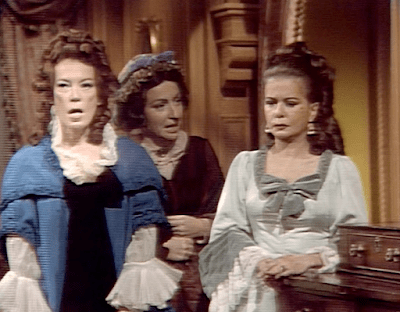




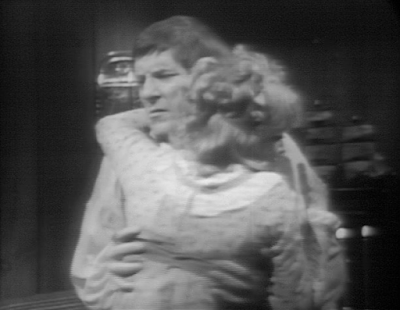

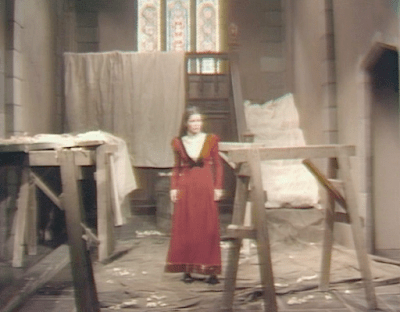
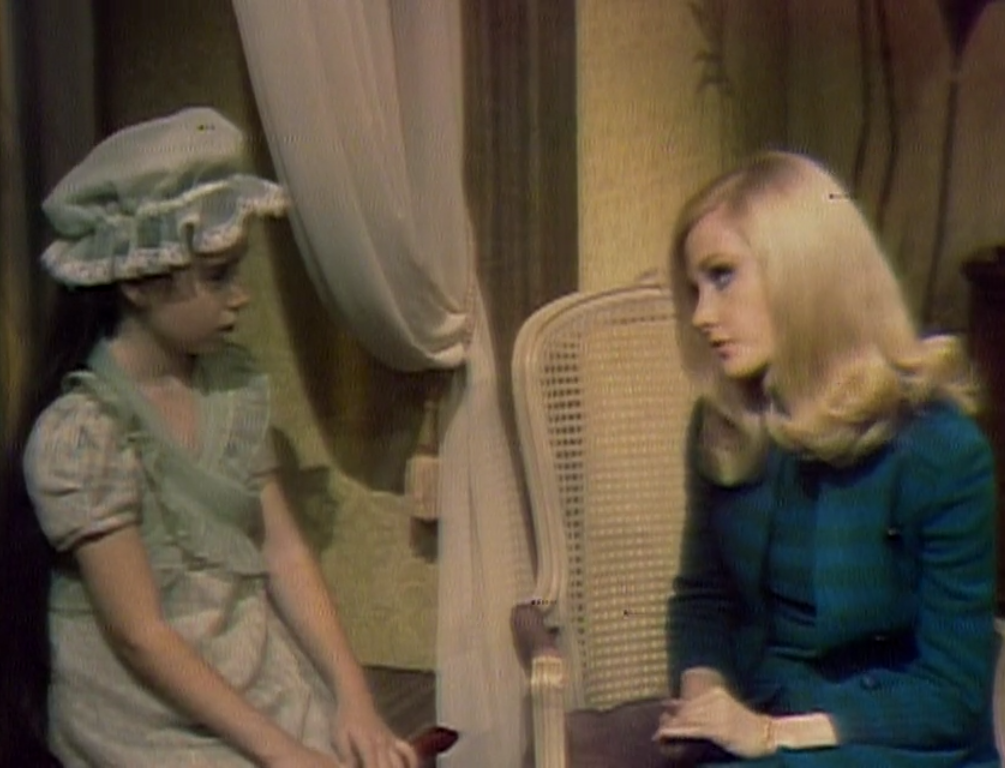
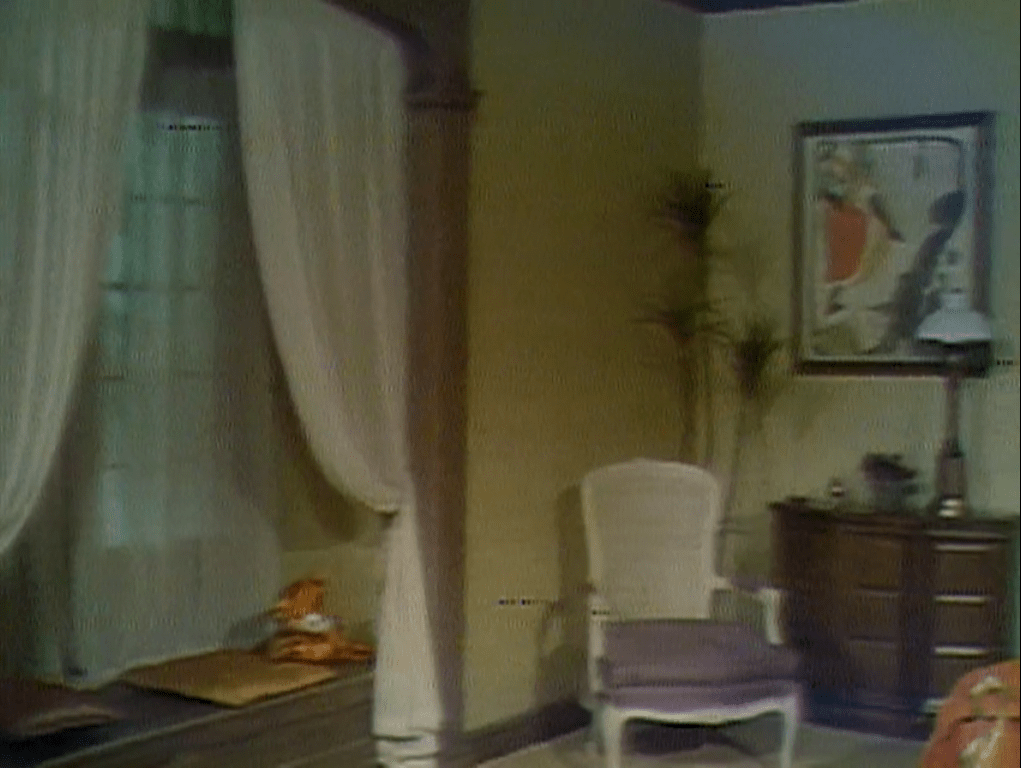
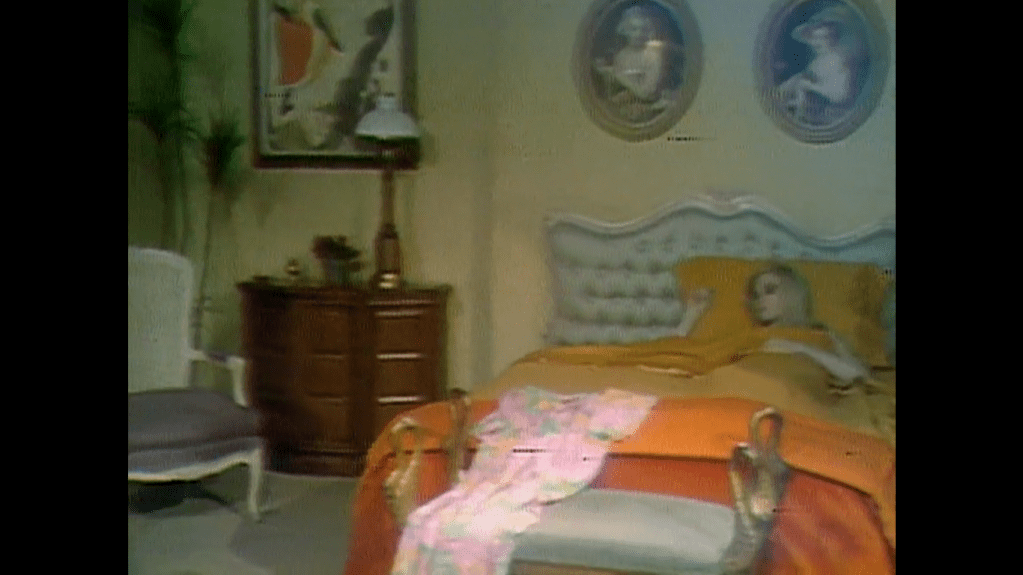
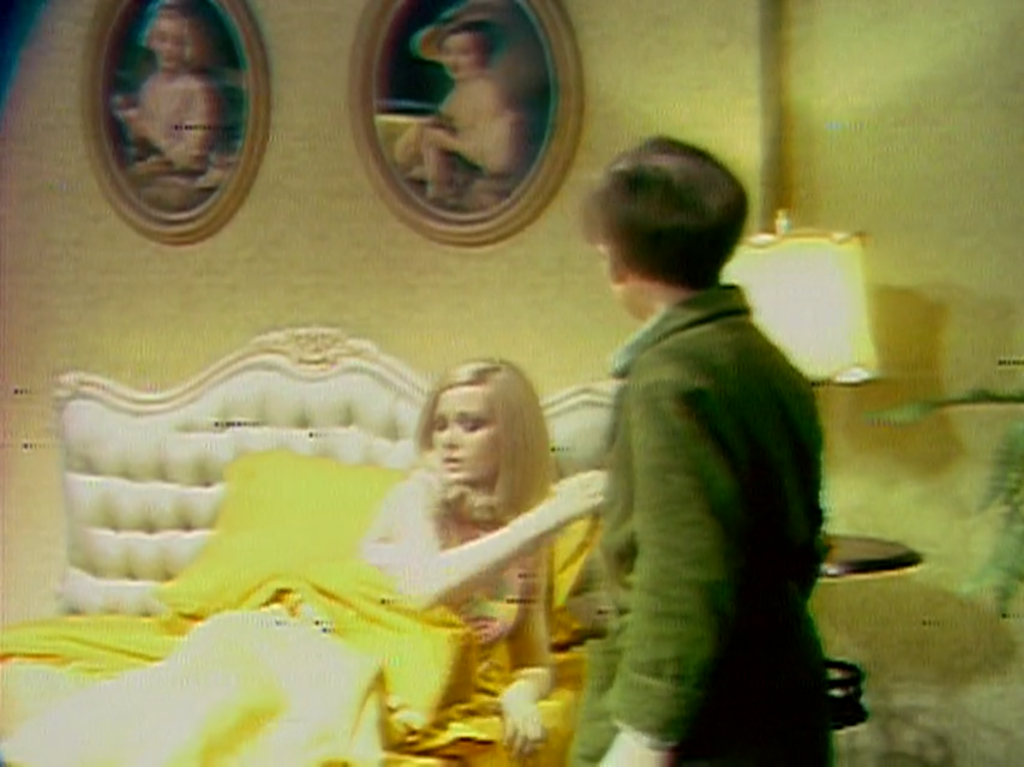


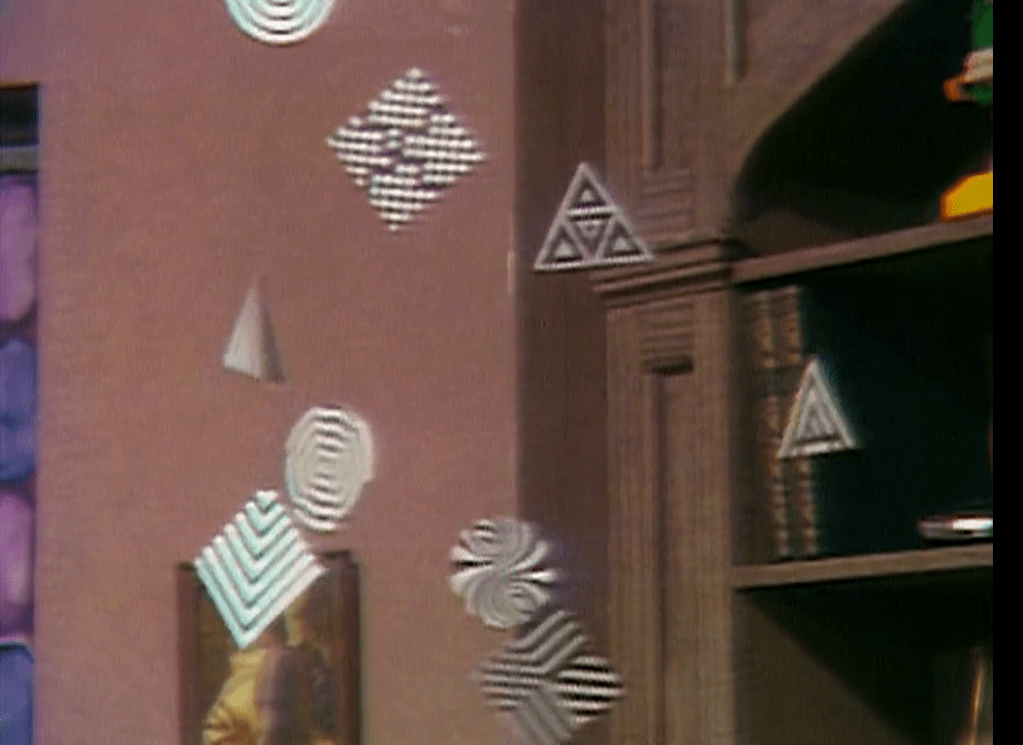


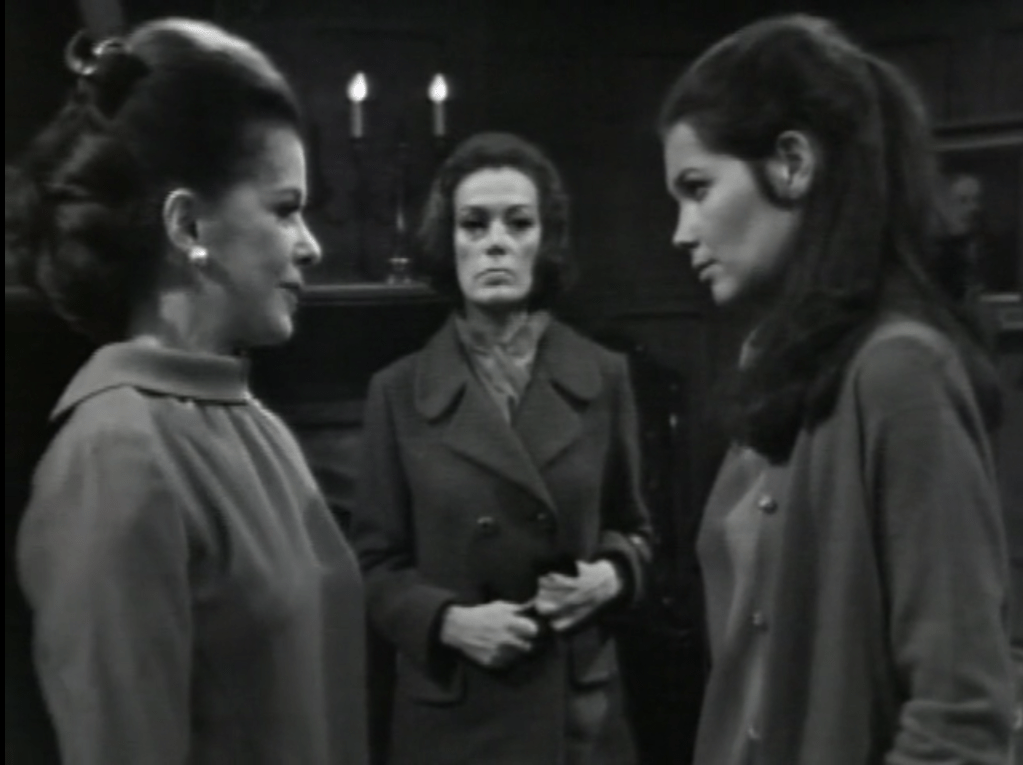
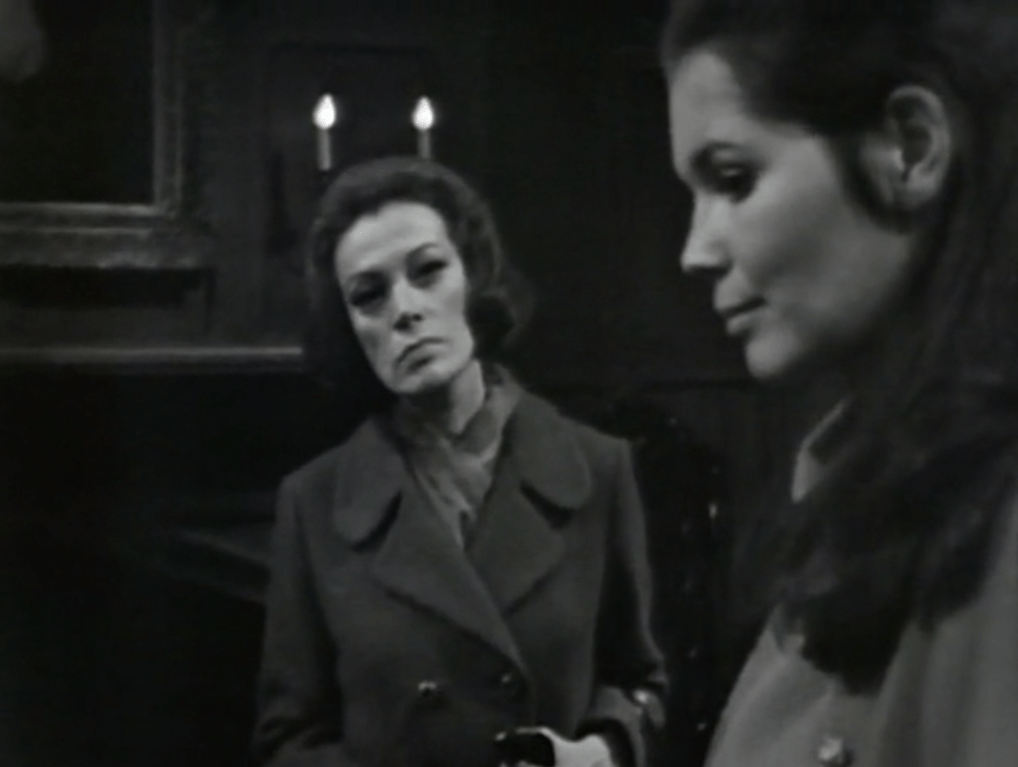


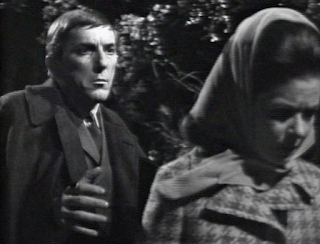


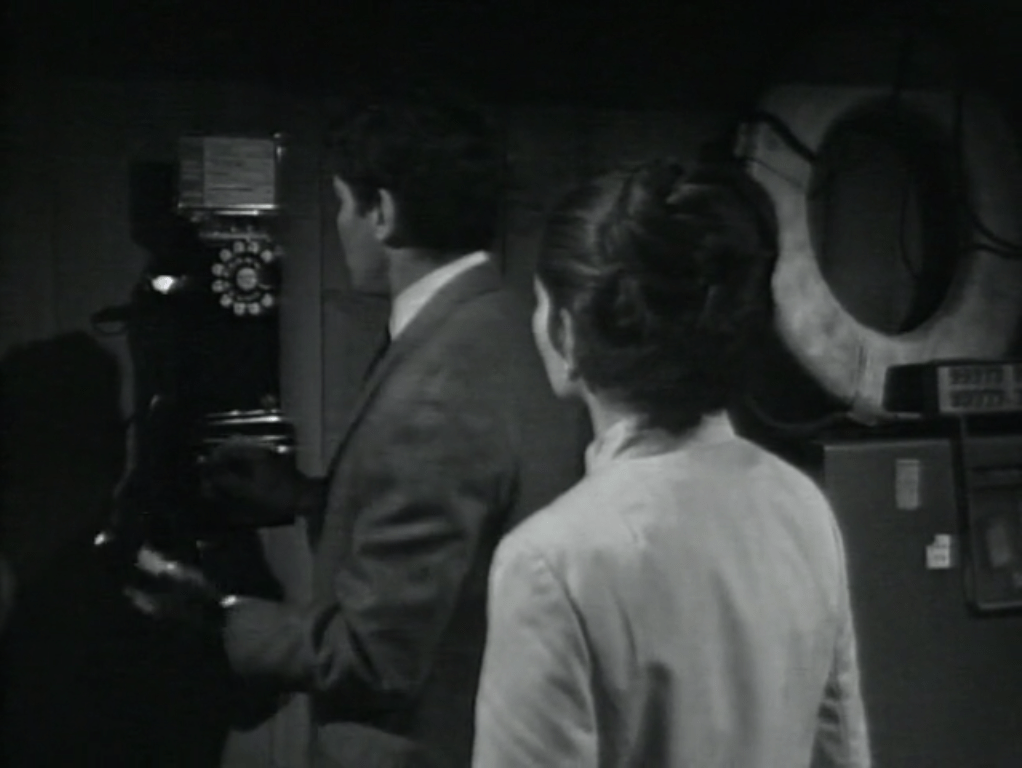


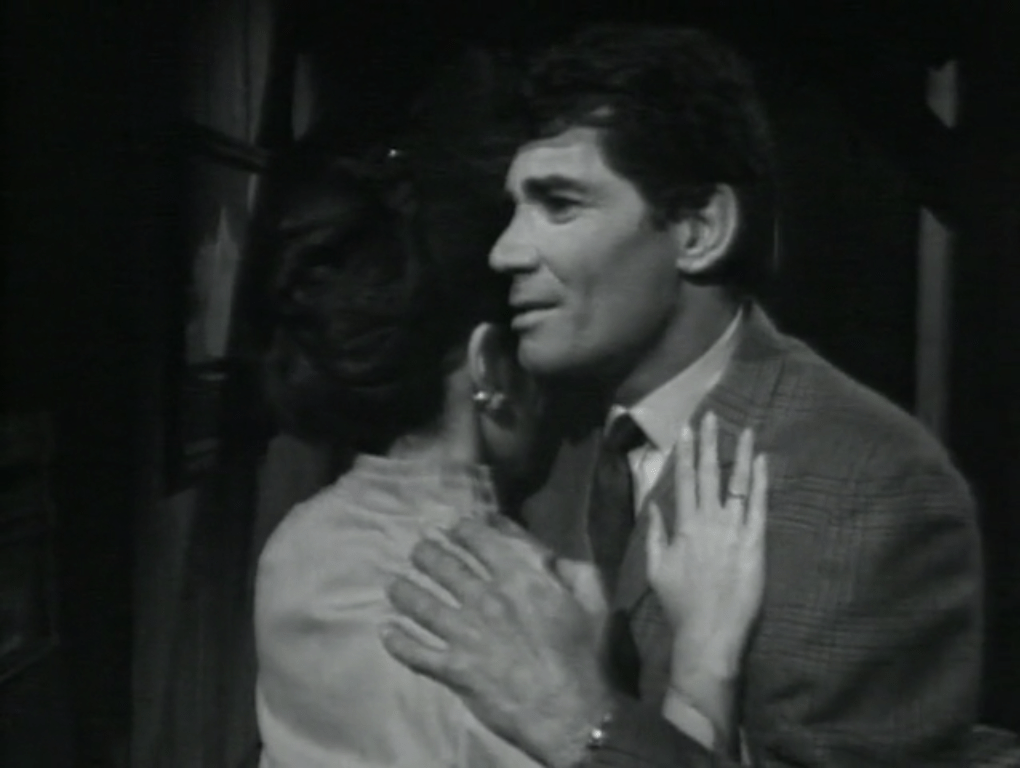
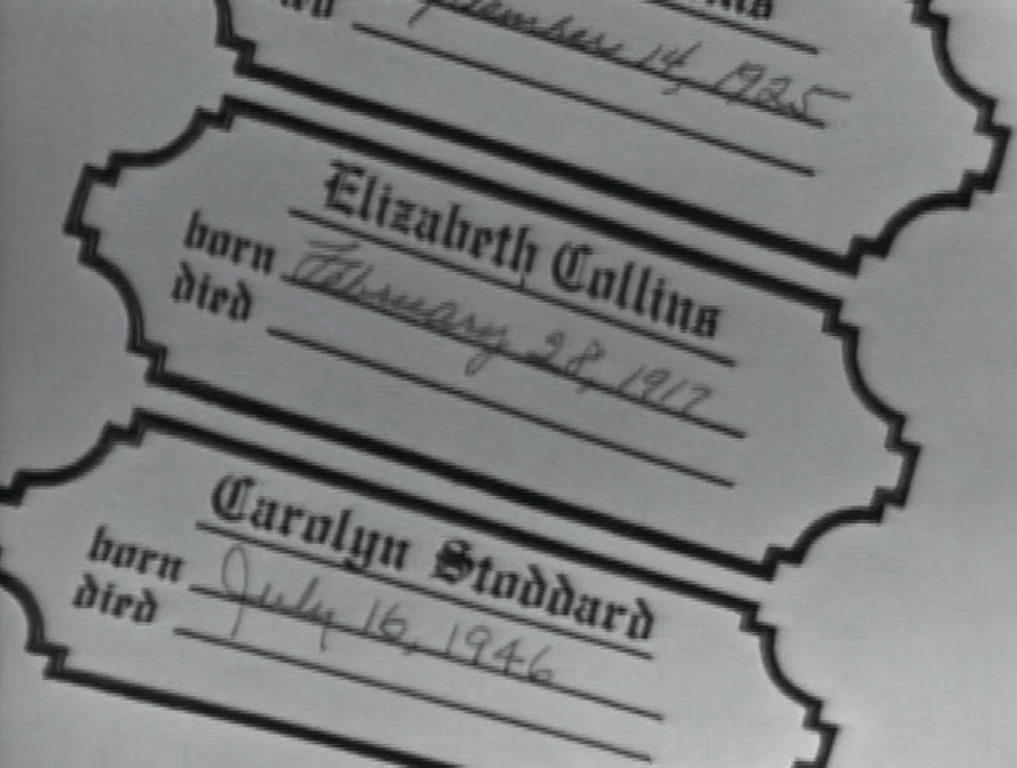
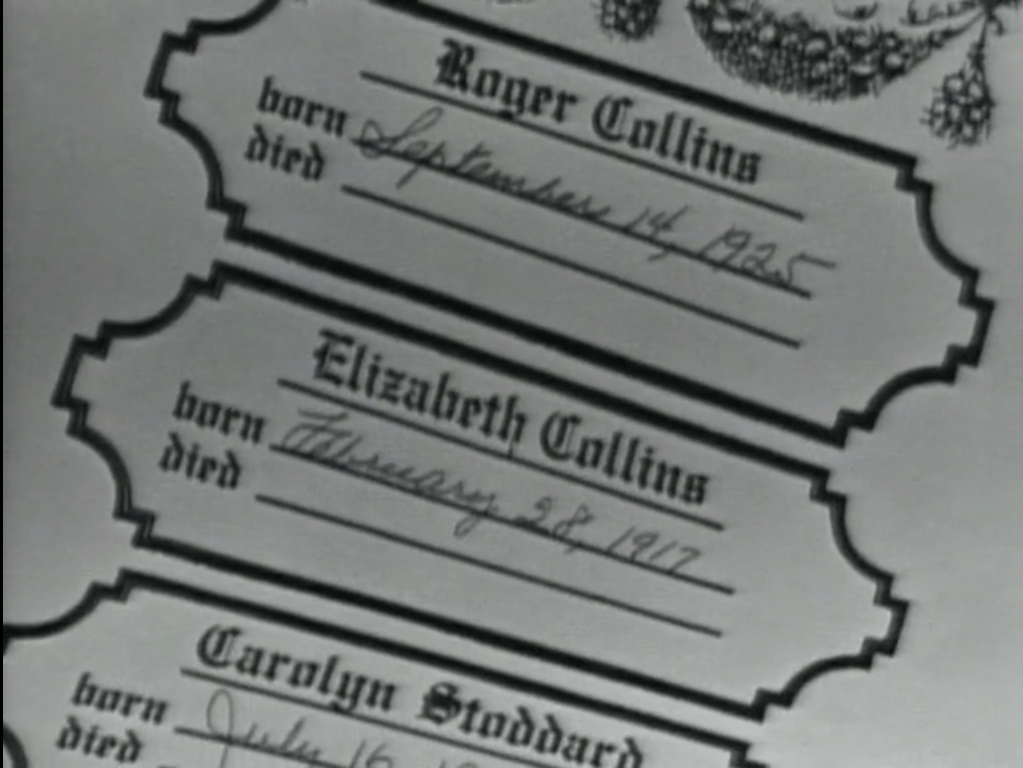
 Dark Shadows Commentary