Haughty overlord Joshua Collins, master of the estate of Collinwood in this year 1795, has gone missing. His sister, repressed spinster Abigail Collins, is convinced this is the result of witchcraft. One of the Collinses’ house-guests, the Countess DuPrés, agrees with Abigail, and like Abigail is sure that the witch is well-meaning governess Victoria Winters (whom we know as “Vicki.”) Abigail and the countess also blame Vicki’s black magic for the fact that Joshua’s brother Jeremiah and the countess’ niece Josette have apparently eloped, jilting Josette’s fiancé. That sad man is Jeremiah’s nephew and Joshua’s son, Barnabas Collins.
In fact, Vicki is the audience’s point-of-view character. One night in 1967, she was attending a séance, attempting to contact the ghost of Joshua’s ten year old daughter Sarah, when Sarah spoke through her, said she wanted to tell the whole story from the beginning, and yanked Vicki back through time to 1795, while her own governess Phyllis Wick took Vicki’s place at the table. Vicki can hardly tell this story, and the makers of Dark Shadows have decided not to show her being a con artist, or doing anything else interesting. So Vicki flails about, calling attention to the fact that she is profoundly alien to her surroundings.
If Sarah brought Vicki back to her own time so that she could see what happened then, Vicki’s failure to pick up where Phyllis Wick left off would seem to defeat her plan. Surely Phyllis didn’t go around telling everyone she met that they are being played by actors who had other parts in the first 73 weeks of the show, or constantly blurt out information that she learned from reading the Collins family history. Nor did she show up carrying a copy of that history and wearing clothes from 1967. In the first episode of the 1795 arc, we learned that Phyllis’ carriage overturned, that she is missing, and everyone else aboard is dead. If Vicki was going to become a part of what already happened, she should have been found at the scene of that accident, wearing Phyllis’ clothes and suffering a minor injury that left her unable to speak until she figured out when she was and that she had to pretend to be Phyllis.
Today, we begin with a shot of Vicki being silent while her voice plays in the background, thinking that she must somehow keep from verbalizing her every thought. This might not seem like a great challenge, but she hasn’t managed it yet. The countess enters and confronts Vicki about the evil she believes she has done. Vicki can only feign ignorance and run away.
We cut to the lady of the house, Joshua’s wife Naomi. Naomi is an alcoholic, a fact of which we are reminded when virtually every scene she is in begins with a shot of her alone, pouring herself a drink. This scene is no exception.
Abigail enters. After nagging Naomi about her drinking, she denounces Josette for being French and Vicki for being a witch. Naomi likes Vicki and dismisses the idea that she is a witch. She also likes Josette, but can’t deny that she is French.
The countess joins them. She is just as French as her niece, but Abigail is willing to overlook that fault, since they share a desire to persecute Vicki. Naomi resists their arguments.
Unable to persuade Naomi, Abigail goes on her own authority to Vicki’s room. She tells her Naomi wants to see her at once. Vicki asks her if she will be coming along. Abigail says she will stay in Vicki’s room. Vicki says she wouldn’t stay in Abigail’s room without her permission; Abigail replies “You don’t own this house. We do.” As the governess in the house in 1967, Vicki may have had an expectation of privacy in her room, but that is clearly not the case in 1795.
Vicki exits, and Abigail starts to rummage through Vicki’s things. Since she was looking through the family history right before Abigail came in, we expect her to find that book, which would be a pretty hard thing to explain. Before she can, a cat that had been squatting on Vicki’s bed disappears in a puff of smoke and Joshua takes its place.
Returning viewers know that the wicked witch is the countess’ maid Angelique, and that Angelique turned Joshua into a cat last week for reasons of her own. Abigail doesn’t know anything about that, and she is so discombobulated by the experience that she calls her brother “Josh.. ua!” As soon as he stands up, she faints in his arms.
Back in Naomi’s room, she and the countess are questioning Vicki about her life before coming to Collinwood and her many strange utterances since. Vicki pleads amnesia about the first topic and makes feeble responses about the second. Even so, Naomi is satisfied. Then Abigail and Joshua enter.
Joshua remembers nothing about his time as a cat, and is shocked by the news about Jeremiah and Josette’s disappearance. He and Naomi send Victoria downstairs to do some chores, and excuse Abigail and the countess.
Abigail and the countess let themselves into Vicki’s room and start searching through her things. They find the clothes she was wearing when she showed up. In them they discover a charm bracelet. Among the charms is a cartoon devil.
The ladies are horrified by this blasphemous thing. Abigail says that she will write to a clergyman in Salem, Massachusetts, a Reverend Trask. The countess is glad to hear that the Reverend Trask has a way with witches.
We can only wonder whether Abigail and the countess called on the Reverend Trask to investigate Phyllis Wick in the original timeline, and if so, what it was about her that aroused their suspicions. Perhaps Angelique simply chose her as a convenient patsy. Or maybe Phyllis made some decisions that generated an interesting story leading up to it. Either way, it would have been significantly different from Vicki’s woeful blunderings.
The Countess DuPrés meets her brother, André DuPrés, Josette’s father, in the gazebo on the grounds of the great estate of Collinwood. She starts talking to André about evil powers at work in the house, and he tells her to stop wasting his time with her mumbo-jumbo. She tells him that she is not talking about something she learned by studying her tarot cards. She was hiding in the bushes next to the gazebo the night before, where she saw and heard a tryst between Josette and Jeremiah Collins, uncle of Josette’s fiancé Barnabas.
Since Josette is apparently in love with Barnabas, barely knows Jeremiah, and has always been a good girl, André finds this difficult to believe. The countess assures him it is so, and says that there is no sensible explanation but that Josette and Jeremiah are under a spell. André says that that isn’t a sensible explanation, either.
André goes back to the manor house. He confronts Jeremiah. The two of them do something virtually unprecedented on Dark Shadows– they address a problem directly in candid, rational conversation. In this narrative universe, that qualifies as a plan “so crazy that it just might work!” And, apparently, it does- Jeremiah apologizes for his behavior, admits that he himself is unable to explain what came over him, and promises that he and Josette will never again be alone together. That satisfies André.
The first and last intelligent conversation ever to take place on Dark Shadows. Screenshot by Dark Shadows Before I Die.
Later, the countess is in the front parlor with the lady of the house, the alcoholic Naomi Collins. The countess tries to interest Naomi in the tarot. She deals a twelve card layout, and is horrified by what she sees. She tells Naomi that the card signifying the Lovers is inverted, that Death is near them, etc. She talks about a force of evil at work in the house, and asks about well-meaning governess Vicki. We can see why a sensible adult like André was reluctant to listen to his sister in the opening scene, but we also know that Dark Shadows is the sort of show where things like this are reliable guides to upcoming story beats.
After dealing with the countess, Naomi needs some sleep. She doesn’t get much, though. She dreams of a giant tarot card floating up from the foot of her bed. It is unclear whether she is awake or still dreaming when she rises from bed and follows the card. She sees Jeremiah walking past in the corridor outside her room. She follows him to the front parlor, and sees him locked in an embrace with a woman. She can see the woman’s arms caressing Jeremiah’s back and can hear her voice, but cannot see her face. She sees a simple trident shape on the woman’s hand. Jeremiah orders Naomi out of the room. Rather than comply, she grabs the woman’s arm. It comes off in Naomi’s hand, prompting her to scream.
The arm is so obviously made of plastic that we laughed out loud when it came off. I’m sure it looked less bad on the average TV set in 1967, at least in areas where ABC was on a station that didn’t come in particularly well, which was most of them.
The woman’s voice Naomi hears sounds like that of Kathryn Leigh Scott, who plays Josette; it also sounds like it is playing on a record. The woman Jeremiah is kissing is Dorrie Kavanaugh. Kavanaugh stood in for Miss Scott in #224, #225/226, #238, and #240, and had a speaking part as Phyllis Wick in #365. Sad to say, this is Kavanaugh’s last appearance on Dark Shadows; her brief turn as Phyllis was sensational, I was disappointed not to see her again. Even sadder, she would die of cancer in 1983, at the age of 38.
On Wednesday, we met a new arrival from Paris by way of the island of Martinique. She is Angelique, maidservant to the Countess DuPrés and onetime bedfellow of rich young gentleman Barnabas Collins. Barnabas is engaged to marry the countess’ niece Josette, and is anxious to keep Angelique in the background. Angelique does not share either of Barnabas’ goals.
At rise, Angelique meets Barnabas’ uncle Jeremiah in the front parlor of the manor house of Collinwood. She has found a toy soldier and asks Jeremiah about it. When he identifies it as one of the toys Barnabas was most fond of in his boyhood, he volunteers to take it to the playroom himself. She asks to keep it for a while, so that she can study its workmanship. He doesn’t object, and exits. Once she is alone in the parlor, Angelique starts talking to herself. She says that she will use it to cause Barnabas unimaginable pain. This is the first direct suggestion we have seen that Angelique is involved in witchcraft.
Time-traveling governess Vicki enters. She tells Angelique that they should be friends, because they are both servants in the house, and it is a foreign setting to both of them. Angelique asks what Vicki means by describing herself as foreign, since she is an American. Vicki realizes that she can’t tell someone she has just met that she is a time traveler thrust here from 1967 by the ghost of the little girl she is supposed to be educating, and so she mutters something about how Angelique wouldn’t understand. After they part, we hear Angelique musing that Vicki has no idea what she understands. At no point does Angelique show any interest whatever in becoming friends with Vicki.
Later, we see Angelique alone in her room with the toy soldier and Barnabas’ handkerchief. She is talking to herself about her evil plans again when she is interrupted by a knock at the door. She hides the things and answers it. Barnabas enters.
Barnabas renews the effort he made at the end of Wednesday’s episode to friendzone Angelique. Again, she isn’t having it. After he leaves, she takes the soldier and the handkerchief back out and tells them that she has decided to wait for Josette’s arrival to enact her revenge on Barnabas.
She won’t have to wait long. Josette’s father, André, is entering the parlor, grumbling about the lack of servants at Collinwood. He beckons his daughter, and she follows him into the house. She is played by Kathryn Leigh Scott.
A major cast member of the parts of Dark Shadows set in the 1960s as Maggie Evans, The Nicest Girl in Town, Miss Scott has played Josette’s ghost more than once. She created the part in #70, when she was the shimmery figure who emerged from Josette’s portrait in the very house we are in today and danced among its pillars. She reprised the part in #126, again in this house, when Josette led the other ghosts in rescuing Vicki from crazed handyman Matthew Morgan. For some months Barnabas, who is in 1967 a vampire, held Maggie prisoner here and tried to replace her personality with that of Josette. Barnabas often seemed convinced that Maggie really was Josette, and when strange and troubled boy David saw Maggie wearing Josette’s dress in #240 he said that her face was “exactly the same” as it was on the many occasions when he had seen Josette’s ghost.
Barnabas’ plan to Josettify Maggie is drawn from the 1932 film The Mummy, in which the undead Imhotep (Boris Karloff) is released from his tomb, holds Helen Grosvenor (Zita Johanns) prisoner, and tries to replace Helen’s personality with that of his lost love Princess Ankh-Esen-Amun. In that movie, there is a flashback to ancient Egypt, where we see that Zita Johanns also plays Ankh-Esen-Amun and we realize that Imhotep’s crazy plan was rooted in some supernatural connection between the two women. The connection between Josette and Maggie has been equivocal until now- Miss Scott was always veiled when she played Josette’s ghost, and stand-in Dorrie Kavanuagh was the one wearing the dress in #240. Moreover, after Maggie got away in #260, Barnabas soon turned his attentions to Vicki, and decided he would try the same gimmick with her. But now we see that Barnabas really was onto something with regard to Maggie, and we wonder where it will lead. I remember the first time we watched the show, my wife, Mrs Acilius, reacted with great excitement to Josette’s entrance in this episode and exclaimed “Of course! Maggie is Josette!”
Vicki spent the first three days of this week telling the actors what parts they played in the first 73 weeks of Dark Shadows, an annoying habit. But there is a reason for it. She knew Barnabas and Sarah as supernatural beings in 1967, so she will recognize them as the same people here. And Josette’s looks reveal her connection to Vicki’s friend Maggie, so she will recognize that. Since only Angelique, of the characters we have met so far in 1795, is played by someone who did not appear previously, the writers are in a difficult position with regard to all of the other members of the company.
I wish they had solved that problem by having Vicki show up in 1795 unable to speak. The suggestion I made in my post about #366 is that she could have materialized in the midst of the accident that upset the carriage bringing the original governess, Phyllis Wick.* Vicki could have sustained a slight injury that left her mute for a week or so, could have had voiceover monologues registering her recognitions of Barnabas, Sarah, and Josette/ Maggie, and would not have had audible monologues when she saw the others. By the time she could talk again, Vicki would know that she was supposed to pretend to be Phyllis Wick.
Clearly Vicki is supposed to get into some kind of trouble in 1795; she is still the heroine, and the first rule of all soap operas is that the heroine must always be in danger. But she is supposed to be seeing the events that started the phase of the Collins family curse that involves Barnabas’ vampirism, and those events did not involve a governess who went around calling people by the wrong names and blurting out information she learned from reading the Collins family history. The logic of the plot requires that whatever trouble Vicki gets into is more or less the same trouble Phyllis Wick would have got into, and the appeal of the character requires that the audience watch to see what kind of con artist Vicki might turn out to be. Both of those imperatives demand that she try to masquerade as Phyllis.
Vicki does manage to keep herself from telling André and Josette that they are being played by the actors who took the parts of Sam and Maggie Evans in other parts of Dark Shadows. She can’t help staring at Josette, however. Josette is quite cheerful when she asks Vicki why she is staring; André, a more conventional aristocrat than his relaxed daughter, is visibly annoyed with Vicki’s impertinence.
There was an opportunity here for Vicki to show some quick thinking. She could have told Josette that Barnabas has gone on at length about her appearance, and that she is amazed at the accuracy of his descriptions. That would have endeared her to Josette as the bearer of the message that her fiancé is very much in love with her, and would have reassured her that, while Vicki is an attractive young woman who lives under Barnabas’ roof, she is not a rival for his affections. As it is, Vicki just mumbles something about not having known she was staring.
Angelique enters. She and Josette rush into each other’s arms and speak French. Miss Scott tells a funny story about that moment. She and Lara Parker had talked about the script and agreed that two Frenchwomen excited to see each other after a long separation ought to greet each other in French, and they persuaded the producer of their point. Only when they got the revised script with the dialogue in French did it dawn on them that neither of them could speak the language. Fortunately, several other members of the cast were fluent in it, and coached them through.
We can see that Josette really regards Angelique as a friend. Viewers who have been with the show from the beginning will remember Josette’s ghost as a powerful and stalwart force for good, and will also know that Maggie is The Nicest Girl in Town. So whatever grievance Angelique may have against Barnabas, and however unjust may be the social system that has exalted Josette and subordinated Angelique, when we see Angelique faking friendship for Josette while planning to make her watch her lover suffer, we know that she is really evil.
Barnabas enters. Josette tells him that her long, difficult journey was worthwhile now that she is with him. This is a very sharp retcon. In #345, mad scientist Julia Hoffman asked Barnabas if Josette ever came to him of her own free will, and he responded with a silent grimace that left no doubt as to the answer. Now, we see that she has gladly sailed from Martinique to central Maine in late autumn to be with him.
Barnabas and Josette are alone, and he wants to kiss her. She is bashful and says that their parents might be upset if they don’t wait for the wedding. He says they might pretend to be, but that in reality it is expected. That is a sweet little conversation, and it ends in a sweet little kiss.
Angelique is back in her room. She twists Barnabas’ handkerchief around the neck of his toy soldier.
The episode ends with Barnabas on the floor, apparently asphyxiating, while Josette looks on in horror.
Wednesday, Barnabas made it clear that he had his affair with Angelique because he didn’t think Josette could love him. That gives Angelique a perfectly understandable motive for seeking revenge on him. A rich man exploited his position to trifle with her, a servant, giving no thought to her feelings or interests.
The selfishness and entitlement Barnabas exhibited thereby is jarring in the mild-mannered, apparently egalitarian fellow we have seen so far this week, but it fits perfectly with his behavior as a vampire in 1967. Seen from another angle, his behavior is consistent with everything the Collinses have done to get themselves in trouble since we first met them. He was tempted to take advantage of Angelique because he had underestimated his own lovability and despaired of making a real connection with Josette.
Barnabas is still underestimating himself and Josette now. Never once does it occur to him to come clean to her about what he did with Angelique. While Josette would no doubt be saddened to learn that her beloved fiancé had dallied with her pet servant, as a rich French girl from Martinique she has after all lived her whole life among wealthy men surrounded by enslaved women, and so could hardly have been shocked by what Barnabas had done. Surely she would have decided to go ahead with the wedding, and she would have known to be wary of Angelique.
By failing to trust Josette with the truth about his misdeeds, Barnabas puts her and himself at Angelique’s mercy. We think of 1966, when matriarch Elizabeth Collins Stoddard and her brother, high-born ne’er-do-well Roger Collins, were both prisoners of shameful secrets they dared not share even with each other. In 1967, when those secrets were finally laid bare to the whole world, Liz and Roger found they were free to go on about their business as if nothing had happened. In Barnabas’ petrified silence, we see all of the shadows that have kept his relatives in darkness for so long.
*Whom Dorrie Kavanaugh played in her brief appearance at the end of #365.
In 2021, I left a comment on Danny Horn’s blog post about episode 256. I found great significance in the introduction of the ghost of ten year old Sarah Collins:
I’d say Sarah’s introduction is the single most important moment in the whole show, more important than Barnabas coming out of the box, more important even than Barnabas’ first decision not to kill Julia.
From the beginning they’d been playing with the idea that there was another cast of characters hidden behind the characters we’ve been watching, supernatural characters who can make their influence felt at certain moments. The most prominent of these was the ghost of Josette. This ghost is a serene, distant, imperturbable. When her ghost and the ghosts of the widows rescue Vicki from Matthew in 126, there is an amused smile in Josette’s voice, the sound of someone for whom nothing very important is at stake in the affairs of this world.
When David sees Maggie in Josette’s clothes and mistakes her for the ghost of Josette in 240 and 241, it is clear that if the ghost of Josette returns, it will not be in that mode. After that sight, Josette’s ghost can return only as a terrifying spirit of vengeance. And David’s confrontation with Willie in 253 makes it clear that the protecting ghost will not return at all.
So the show has discarded the old supernatural realm of Josette and the widows, a realm that was, as you say, never more than slightly accessible. With Sarah’s appearance, we are introduced to an entirely new part of the show. Once again we have a set of characters hidden in the supernatural background, but they can interact with the characters from the main continuity more directly and at greater length than Josette and the widows ever could.
The puzzle of Sarah’s connection to Barnabas, and her talk about looking for the members of her family, indicates that this new order of supernatural beings have complex and unsettled relationships with each other, and that characters from the main continuity can have an influence on those relationships. We will have to figure those relationships out in the weeks and months to come, but as soon as Sarah demands Maggie not tell her big brother that she saw her, we know that they might come to enmesh the living beings. Every scene with Sarah, then, is a step leading directly to the time-travel and parallel universe storylines that will come to define the show.
By the end of last week, Dark Shadows had, for the second time in its 73 weeks on the air, run out of stories to tell. When Dark Shadows 1.0 ended with the disappearance of blonde fire witch Laura Murdoch Collins in #191 and #192, the way forward was clear- introduce another supernatural menace to succeed Laura. That came in the form of vampire Barnabas Collins. As people tuned in to see how a daily soap opera could fit a vampire into its pattern, Dark Shadows 2.0 became a bona fide hit and a major pop culture phenomenon.
The first version of the show came to an end because none of the non-Laura stories ever really took off and the only danger Laura presented was that she would incinerate her son David when she herself vanished in flames. Once that was prevented, her threat profile was closed and the show needed to start over.
The second version crackled along quite well for months. It’s true that a number of the storylines had reached their natural conclusions, but they made little to no effort to replace them. On the contrary, they went out of their way to close off possible narrative directions. While even the slowest parts of Dark Shadows 1.0 left us guessing what might come next, the final weeks of Dark Shadows 2.0 present us with nothing but a series of blank walls. The first time I saw the show, I watched #365 without a single idea as to what they could do in #366.
What they actually do is to launch Dark Shadows 3.0 by flipping the back-world of the dead past into the foreground, while the characters and events of 1967 are thrust behind the action into a realm only we and Vicki know anything about. Indeed, it is Sarah who executes the switch.
We had a glimpse of what that might look like in #280, when Barnabas hosted a party in the Old House on the estate of Collinwood, restored in an eighteenth century style, to which the living members of the Collins family came dressed as their ancestors of that period. In Friday’s episode, we saw a séance in the great house on the estate on a dark and stormy night. Sarah spoke through well-meaning governess Vicki and said she would “tell the story from the beginning.” At that, Vicki vanished from the table, her eighteenth century counterpart Phyllis Wick appeared in her place, and Vicki found herself outside the Old House on a sunny day in the year 1795. Today, she meets the living versions of Barnabas and Sarah, as well as some of those who were impersonated at Barnabas’ costume party.
The first person Vicki meets in 1795 is Barnabas. She has spent a great deal of time with him in 1967, so she assumes he is just in costume. He is startled by her clothing- she is still dressed as she was at the séance. He assures her they have never met, and when she keeps insisting they have he begins to suspect that she is insane.
Sarah meets them and declares that Vicki is her new governess. Evidently she had some kind of premonition as to what her new governess would look like, and Vicki meets the description. Barnabas brightens and asks Vicki if she is a governess. She acknowledges that she is. Before she can explain that she is governess to a boy who won’t be born for 160 years, he ushers her into the house.
The writers faced a thorny problem with this segment of the series. Vicki has spent a great deal of time with Barnabas and has seen Sarah, so she must recognize them. On the other hand, most of the rest of the people she meets in 1795 will be played by the actors who have played characters she knew in 1966 and 1967. When Victoria is alone in the front parlor of the house, we find out how they have decided to handle this situation. Joel Crothers, who in the contemporary segment of Dark Shadows played hardworking young fisherman Joe Haskell, enters in the character of bon vivant naval officer Nathan Forbes. Vicki throws herself in his arms and gushes about how happy she is to see him. Nathan is quite happy to see her, since she is a remarkably beautiful young woman and extremely friendly, but he is puzzled that she insists on calling him Joe.
The scene between Nathan and Vicki is pretty funny, and it’s understandable that Vicki would react as she does. But it’s also ominous. When we see actors at work, we may remember other parts they have played, but we don’t expect their scene-mates to bring them up. They are just supposed to accept them as whoever they are supposed to be at that moment. When Joan Bennett enters, not as twentieth-century matriarch Elizabeth Collins Stoddard, but as Liz’ ancestor Naomi Collins, we wonder how Vicki will react to her. Indeed, she does slow things down with a lot of wailing about how she can’t believe she isn’t Mrs Stoddard, a person of whom Naomi has never heard. It then dawns on us that every time Vicki meets anyone, she’s going to drag us through this same business where she mistakes them for another character the actor has played. That’s going to annoy us and make the other characters think she is deranged.
One of the reasons Vicki’s yelling about the cast’s resumes annoys us so much is that we all know how to look at the various characters an actor has played and see how they illuminate each other. We don’t need her to tell us to do that. Academics put that into a category of practices called “iconography,” which is shorthand for the idea that we remember what we’ve seen more than once in various kinds of movies and shows and notice when we see it again.
As Liz, Joan Bennett was the sort of imposing matriarch she often played as a major star of feature films and the Broadway stage. Virtually every event we saw in the first 25 weeks of Dark Shadows had its origins in Liz’ reactions to the events around her, and she was still the single most powerful figure in the whole gallery of characters for 30 weeks after that, right up to the death of seagoing con man Jason McGuire in #275. Everyone else was dependent on her, in one way or another.
Naomi is the lady of the manor in 1795, as Liz is in the 1960s. But we quickly learn that she is at the opposite extreme from her descendant. When invitations come for Barnabas’ upcoming wedding, she asks Nathan to read them to her. While Liz dominates the family and the town from her desk, Naomi is entirely illiterate.
This is something of an anachronism. Colonial New England was founded by Puritans who thought everyone ought to read the Bible, and so provided elementary schooling for all children, boys and girls. Scholars estimate that by the end of the eighteenth century, over 90 percent of men and about half of women in that region would have been able to read the Bible easily. A woman as wealthy as Naomi would certainly have had this ability, and the basic literacy which Naomi lacks would have been a rarity at any level of society. Perhaps the writers and producers of Dark Shadows were unaware of this history. Perhaps they are suggesting that she, like her son’s fiancée Josette DuPrés, came from some part of the world that valued literacy less highly than did New England. In any case, they do show us how severely disadvantaged she is in any disagreement with the men in her life, and how narrowly the bounds of her activities are circumscribed.
Barnabas comes back with the news that the carriage bringing Sarah’s governess overturned. The governess herself is missing from the scene of the accident; the other three people aboard were killed. When Phyllis Wick appeared in Vicki’s place at the séance, she did indeed say that she had just been in a carriage wreck, so this news will not come as a complete surprise to returning viewers.
This brings up a question and points to a missed opportunity. The question is whether Phyllis’ carriage had overturned in the original course of events. If so, perhaps she was killed along with the other three, and Sarah never did get a new governess. If not, then Sarah’s ghost killed three people when she sent Vicki back in time. Sarah has always been nice to people we liked, and has declared her allegiance to goodness. But she is also pretty clumsy, so she might have killed them inadvertently.
The missed opportunity is that Vicki could have entered 1795 at the scene of the accident. Had she been found in the wreckage, in Phyllis’ dress, with a wound that kept her from speaking for the first week of the segment, it would make sense that she was taken for the new governess. Of course, we wouldn’t have to see a carriage- some sound effects and a shot of Vicki on the ground, with some smudges on her face and the rim of a wagon wheel partly visible near her, would have been plenty. Surely the budget would have allowed that much.
Had Vicki been mute for the first week of the story, we could have seen her face and heard her thoughts in pre-recorded voiceovers as she saw Barnabas and Sarah and recognized them; we could have seen her face but not heard her thoughts as she saw other familiar actors in new roles, leaving it open whether she saw them as the same people she knew in the 1960s. By the time she had regained the ability to speak, she would have caught on that she had to pretend to be Phyllis Wick, to be a native of the eighteenth century, and to be new to Collinsport.
That way, she would start off with a reasonable chance of making a go of life in that era. Moreover, as we were drawn to Barnabas when we watched him trying to pass as a native of the twentieth century, we could be excited to see Vicki try to present herself as a native of the eighteenth. As it is, she is constantly drawing attention to herself as an alien, so much so that it is hardly likely the Collinses would want her in their house in any capacity, certainly not as tutor to their beloved daughter. Moreover, starting Dark Shadows 3.0 with Vicki doing what Barnabas did in Dark Shadows 2.0, while Barnabas would take the role Vicki played in their relationship then, as a benevolent if uncomprehending friend, would shed new light on both characters and on their stories. What she does instead is to annoy us and make it difficult to care about her at all.
We do get a brief inversion of Vicki’s relationship with her charge from the 1960s, strange and troubled boy David Collins. When Vicki first met David in #4, he greeted her with “I hate you!” and she assured him that they were going to be good friends. Vicki certainly does not hate Sarah, but she would appear to any observer who did not know what we know about her to be mentally ill, just as David appeared to be when first we saw him. It is little Sarah who cheerfully assures Vicki that they will be good friends. As her mental health is the least of Vicki’s problems now, so it turned out in 1966 that David’s difficulties stemmed, not from delusions, but from an all-too-accurate understanding of his metaphysical relationship to the world he lived in. Vicki rose to the challenge and became the companion and supporter David needed. In Sarah’s prediction that she and Vicki will be good friends, we therefore hear a promise that the show will develop a relationship between the two of them in which Sarah will emerge as Vicki’s confidant and protector.
The series was made with very little advance planning. Just a few weeks ago, we heard about a painting or drawing depicting Barnabas and Sarah as children of about the same age, yet today we see the forty two year old Jonathan Frid playing Barnabas as a fatherly figure to Sarah as played by ten year old Sharon Smyth. Still, they’ve put so much into the costumes and so much thought into the new characters that they must have meant for this segment to last more than a couple of weeks. Having Vicki insistently call everyone by the wrong names and then run around idiotically announcing information that she knows only because she is from 1967 puts her on the express train towards an insane asylum. If they don’t stop her doing those things right quick, they will have written themselves into a corner before they’ve got their money’s worth out of the work they have already done.
The episode looks very different from anything we’ve seen on Dark Shadows before. The series has been in color for months now, but there have only been one or two days when they managed to use color as anything more than an occasional special effect. Today, they are working from a palette of pinks and greens that give a sense of lightness and good cheer that is altogether new to the show. It doesn’t really play out in the visual strategy of the episode- the story they are telling in pictures is aimed chiefly at the majority of viewers who are watching on black and white sets. But for those who do have color television, it is unmistakable that this is not the same show that ended on Friday.
Sarah Collins has taken her friend and distant cousin, strange and troubled boy David Collins, home with her. Since Sarah is a ghost, her home is in a mausoleum. She has decided to show David one of the most interesting features of the place.
As we open, David is following Sarah’s instructions. He is standing on the sarcophagus of her mother and pulling a metal ring in the mouth of a stone lion’s head. The ring comes forward and a panel opens, revealing a room that was hidden for more than a century and a half.
The lion’s head.Pulling the ringThe panel opens
The first time we saw the panel open was in #210, when dangerously unstable ruffian Willie Loomis happened upon the ring and ended up releasing vampire Barnabas Collins from his coffin in the hidden room. Now that we see this gimmick again and see it in color, it’s starting to seem odd that all you have to do to open the panel is pull the ring. The ring stands out as the only piece of metal in the tomb. Anyone entering the space would be tempted to tug on it, if only to polish it. If you’re wanting to make sure your vampire doesn’t get loose, I’d think you’d install a more secure system. Maybe you could add two or three additional decorative doodads to the wall, one of which you turn, say, three quarters of the way to the left, the other of which you turn some other way, and between them they release the ring.
Be that as it may, Barnabas’ old coffin is still in the hidden room. Sarah announces they will be opening it, and David resists the idea. He debates with Sarah for a while before curiosity gets the better of him.
Sarah the psychopomp. David wants to let the dead rest.David’s resistance crumbles.
He is shocked to see that it is empty. David asks Sarah why an empty coffin would be put in such a place, and she happily tells him that it wasn’t always empty. There was someone in it once, but he got up and left. David protests that the dead don’t walk away, to which Sarah replies that “Sometimes they do.”
David is shocked.Nobody’s home.
When David first met Sarah in #256, she was outside Barnabas’ house, puzzled that she couldn’t find her parents or anyone else she knew. Now it is starting to seem that she knows that she is a ghost haunting a time long after her own, but Sarah’s lines here are the first clear indication that she knows what is going on with her brother Barnabas.
David’s bafflement that the coffin is empty echoes #273. In that episode, matriarch Liz was shocked to find that the chest seagoing con man Jason McGuire buried in her basement did not contain the murdered remains of her husband. Liz kept asking “Why is there nothing there?” David seems almost as appalled as his aunt had been at the sight of some clean fabric unadorned with a rotting corpse. A few days after Liz found out Jason hadn’t really buried her husband in her basement, Barnabas killed Jason. Regular viewers will already have this story in mind, because in #276 Barnabas and his sorely bedraggled blood thrall Willie buried Jason in the floor of the very room David and Sarah are visiting at this moment. Clearly Barnabas would not be happy were he to find out that David knows about the room.
That wasn’t the first vacant grave in Dark Shadows. From #126 to #191, the show was mainly about David’s mother, undead fire witch Laura Murdoch Collins. As the Laura arc progressed, graves of various women named Laura Murdoch were revealed to be empty. Now Laura’s son is coming face to face with an unoccupied coffin, suggesting to loyal fans that he may yet learn something about his own origins.
To Sarah’s consternation, David says he has to go home. He tells her that if he does not, his governess, the well-meaning Vicki, will be upset with him. He simply refers to Vicki by name, as if Sarah already knows who she is. Regular viewers have reason to believe she does know who Vicki is, but it is not clear why David assumes that he can just say “Vicki” without explaining to Sarah who he means. Sarah swears David to secrecy about the existence of the room.
By the time David gets back to the great house of Collinwood, it is 9:30 PM and Vicki is indeed worried about him. Apparently no one else is at home; certainly, no one else has missed David. Vicki sits David down on a seat that’s been in the foyer from the beginning of the series, but which has only been used once or twice before. They have an earnest little talk that recalls the scenes they shared in the first 39 weeks of Dark Shadows, when their complicated relationship was the one storyline that consistently worked.
Rarely used seat.
David describes Sarah to Vicki. It finally dawns on her that Sarah is the little girl she saw on top of the stairs at Barnabas’ house in #280. When the light flashed in Vicki’s eyes, my wife, Mrs Acilius, shouted at the screen “Tell him!” Vicki and David again look like the fast friends they had become by #140, so we would indeed expect her to tell David that she thinks she has seen Sarah, and to tell him where and when she saw him. If she and David join their lines of inquiry and work together to find out about Sarah, the plot will move more quickly and on a much bigger scale than it can so long as everyone pursues their own questions in isolation.
Vicki catches on.
But, Vicki is also very fond of Barnabas, and reluctant to believe anything bad about him. Sarah has been seen in several places connected to the abduction of Maggie Evans, The Nicest Girl in Town. Vicki doesn’t want anyone to add Barnabas’ house to that list, so perhaps it is not a “Dumb Vicki” moment when she decides to keep the information to herself.
Meanwhile, Barnabas is at home. He is irritated with mad scientist Julia Hoffman. Julia is attempting to cure Barnabas of vampirism, and he is dissatisfied with the progress of the treatment. He is also irked that Sarah broke Maggie out of the mental hospital where Julia was keeping her locked up, and blames Julia for failing to ghost-proof the place. He declares that Julia is “a meddlesome and domineering woman,” and that he, as a native of a different century, has no intention of tolerating such a person.
Barnabas and Julia discuss Vicki’s depressing boyfriend Burke. Burke has been investigating Barnabas, and his operatives have come upon some information that would raise questions Barnabas would have a hard time answering. Julia agrees that Burke must be stopped, and urges Barnabas to let her handle the matter. He says that he will take care of it, and that he will do so with “finesse” of a sort unfamiliar to the loutish inhabitants of the twentieth century.
Barnabas’ masterful finesse consists of telling Vicki what Burke is doing and asking her to make him stop. Those eighteenth century guys must have been amazing, to come up with something so complex and subtle in just a couple of days.
Julia comes into the great house as Barnabas is leaving. She asks Vicki if David is back yet. Vicki tells her that he had been out playing with Sarah in some location he refuses to disclose. Barnabas tries to conceal his alarm with a laughing remark about leaving Vicki and Julia to investigate the mystery of David’s playmate.
David comes out of his room to ask for food. While Vicki goes to fetch the housekeeper for him, Julia meets him at the top of the stairs and they talk about Sarah. David points out that she is repeating questions she has asked in previous episodes. He tells her that he doesn’t mind questions and neither does Sarah, but cautions her that the answers Sarah gives don’t make much sense.
The stained glass windows at the top of the stairs look great in color, and it is a relief when David shares the audience’s awareness that we’ve heard Julia’s lines before. Even so, the scene is a disappointment. David and Julia were fun to watch in their previous scenes because they were so relaxed together. Perhaps that was because David Henesy and Grayson Hall understood each other right away. Not only did they have similar ways of working as actors, but her son Matthew is about his age, so she might already have been familiar with a lot of things in his life that the other adults on set wouldn’t have known about.
Today, though, they are both having trouble with their lines. That keeps them from making enough eye contact with each other to sell the scene. David Henesy keeps looking at the teleprompter, which he could evidently read from the top of the stairs with only a little squint; Grayson Hall couldn’t read from that distance, but she does tilt her head back and look up when she’s searching her memory for her next line. Since the characters aren’t looking at each other, we don’t feel an emotional connection between them.
Hall has to thread a particularly small needle in this scene. Julia is trying to make her interest in Sarah seem casual in the same way Barnabas affected a lack of interest in her, by delivering lines about her with a jokey inflection. We know that she is urgently concerned with finding Sarah, and her efforts have to leave David unsure whether she really is the easygoing adult he has so far taken her to be or whether she is trying to pull a fast one.
In the course of a friendly chat between two people who obviously like each other, onetime Academy Award nominee and frequent Broadway luminary Hall could certainly have accomplished all of this. But in the course of this awkward encounter, it all falls flat. Especially so with Julia’s last line to David. After he has told her how difficult it is to get a straight answer from Sarah, she puts on a goofy voice and says that she’ll keep that in mind if she ever meets her. Since she isn’t looking at him when says this, it comes off not as an affectionate gesture acknowledging that they’ve run out of things to say, but as a high-handed dismissal. Even though she pats him on the shoulder and he smiles after that line, it still doesn’t seem that David would come away from the interaction with as complex an emotional response as he is supposed to have. Most likely he would just be irritated with Julia, as indeed the audience is likely to be.
“I’lll kee-e-ep that in mind.” Departure.
We end back at Sarah’s place. Barnabas is in the cemetery looking pathetic. He hears the strains of “London Bridge” coming from the mausoleum. We see Sarah sitting on her mother’s sarcophagus moving her fingers on her recorder far more rapidly than the music we hear would call for. She looks more like she’s playing a rock ‘n’ roll number.
Jammin’ with the Junior Funky Phantom of 1967.
Barnabas calls out to Sarah. He identifies himself as her brother and says that he has come to take her home. He goes into the mausoleum only to find that she has vanished. Wracked with sorrow, he pleads with her to come back, saying that he loves her and needs her. He touches the plate marking her grave. This underscores the futility of his desire to take her home. Leading him here, it is she who has brought him to what is in fact her home, and what ought also to be his.
Sad Barney.The impassable barrier.
This shows us a Barnabas we can sympathize with, but it also sets him on a collision course with David. Barnabas has been so harmless lately that we might wonder if his part is going to be recast with a purple felt puppet counting “Vun peanut butter saand-veech!” If he sets out to kill a child, he’ll be back on track as a horrifying menace.
Besides, David is not just any child- as the last bearer of the Collins name, David’s survival has a great symbolic importance to the show. He was central to everything that happened on Dark Shadows in its first 39 weeks. So if Barnabas becomes a threat to David, it will be a case of conflict between the current main character and the previous main character. Since Vicki originally represented the audience’s point of view and is still a major character, the divided loyalties between Barnabas and David that we first see influencing her behavior today could create a high level of dramatic tension. Especially so if Barnabas turns her into a vampire, and she winds up like Lucy in Dracula, the “Bloofer Lady” who herself preys on children.
Yesterday, fake Shemp Burke Devlin tested his hypothesis that old world gentleman Barnabas Collins abducted Maggie Evens, The Nicest Girl in Town, and held her prisoner during the period covered by her current amnesia. On the one hand, he found that Maggie was perfectly relaxed when Barnabas visited her recently, and that she regards him only as a mildly pleasant acquaintance. There would seem to be no way she could have this reaction to someone who had subjected her to such an ordeal. On the other hand, he found that a melody she seems to remember hearing during her captivity might have come from a music box that was in Barnabas’ possession at the time. Since he has also found that the only person Barnabas will admit to having known before his arrival in the town of Collinsport lived over 130 years ago, he seems to be willing to consider that the resolution to this paradox might require a supernatural element.
Since we know that Barnabas is a vampire and have been frustrated with Burke’s recent angry denials of the existence of supernatural phenomena he previously knew all about, that episode felt like a breakthrough. Lately Barnabas has been harmless and all the non-villain characters have been clueless, leaving the show adrift. Maybe Burke will restart the vampire story. Maybe he will again become the dashing action hero he was when the charismatic Mitch Ryan played him in the first year of Dark Shadows, and maybe his investigation will precipitate a crisis that will bring the Barnabas arc to an exciting climax.
That hope shrivels to nothing in the first minutes of today’s outing. We begin with Burke knocking on the door of Barnabas’ house. When sorely bedraggled blood thrall Willie Loomis tells Burke that Barnabas isn’t in, Burke says that he knows he is. Willie asks why he thinks he knows this, and Burke says that he’s been hiding behind a tree for hours staring at the front door. Burke is supposed to be a rich guy- it would be one thing if he’d hired private detectives to hide behind trees, but that he chose to spend his time doing that himself makes him look ridiculous. He pushes past Willie and declares that he won’t let Willie keep him out of the house. So before the opening titles roll, we’ve seen Burke as an unstable man who alternately cowers in the dark and perpetrates home invasions.
After Burke shouts Barnabas’ name a couple of times, he tells Willie he knows Barnabas is there because he never saw him come out of the front door. Willie says he might have gone out the back door. Burke’s response to that is “Maybe.” With that, Burke blows his last shred of credibility as an action hero. He presses Willie with some questions about Barnabas’ business interests; usually when characters ask about that, I think a suitable send-off for Burke would be a story where Barnabas bites him, enslaves him, and uses his money and connections to put some substance behind his pretense to be an independently wealthy cousin from the Collins family’s long-lost English branch. But when we see Burke being such a total schmuck as he is in this sequence, it’s hard to imagine he could be of any use to anyone, or to care very much how they go about writing him off the show.
That “Maybe” is such a preposterous anticlimax that I wonder if it is a sign of some politics behind the scenes. Long after the show was made, writer Malcolm Marmorstein remembered executive producer Dan Curtis wanting to end the vampire storyline around this time and to give the show over to an arc about Burke and well-meaning governess Vicki getting married and moving into a long-vacant “house by the sea.” There have been a few vague stabs at getting such a story off the ground- Burke and Vicki are engaged now, and he is in the process of buying such a house. But the vampire story was so much the biggest ratings draw the show has had that it is hard to imagine Curtis really wanted to scrap it- more likely he wanted to have more than one story going at a time, as soap operas usually do. In any case, the “house by the sea” bits have been so dull that it feels like the writers are simply refusing to develop the theme, and Ron Sproat’s script today could hardly fail to do lasting damage to Burke. So perhaps there is a sneaky kind of revolt in progress.
Meanwhile, visiting mad scientist Julia Hoffman and strange and troubled boy David Collins have left the great house of Collinwood to take a walk in the woods. They are looking for David’s friend, the ghost of nine year old Sarah Collins. Sarah leaves belongings of hers as tokens of her presence; these objects linger in physical existence until she reclaims them, after which they vanish when she vanishes. Some Dark Shadows fans put a lot of energy into saying that this aspect of Sarah “doesn’t make any sense!” To which I reply, she’s a ghost. All you can expect is that the story will tell you what the rules are and will follow them consistently. Not only does Sarah follow this rule consistently, but the ghosts of Bill Malloy and of Josette Collins had both previously left things lying around the house for people to find. Most recently, Sarah left her bonnet in the house, and now David and Julia are on a quest to return it to her.
David takes Julia to a clearing in the woods where he has encountered Sarah before. We hear “London Bridge” on the soundtrack, the musical cue telling us that Sarah is present, but she does not appear. David and Julia look around and don’t see her. David thinks he hears someone nearby to their left. They look that way, but don’t see anyone. They turn back, and find that the bonnet is gone.
This little scene captures some of the feeling of live theater that gave the early episodes of Dark Shadows such a special quality. I particularly like the low camera angle on David and Julia, as if we are looking up at a stage.
Later, Julia goes to Barnabas’ house. She and Willie talk about Burke’s visit. Julia muses about the need to provide Barnabas a more complete cover story to keep Burke at bay. This is the first staff meeting we see between Julia and Willie. Until this scene, the only conversations we’ve seen between two people who knew that Barnabas was a vampire were between Willie and Maggie during her captivity, and only a sharply limited number of things could happen during those conversations. Willie would tell Maggie to submit to Barnabas, either sorrowfully or angrily. Maggie would either express defiance openly, pretend to be cooperative, or give nonresponsive answers that suggested she was losing her mind. Combine those attitudes, and you have six possible interactions. Sometimes the characters would change attitudes in mid-scene, multiplying the number of possible interactions, but no matter how you mix and match you still end with Maggie in the same fix she was in at the beginning. But when both characters have some measure of personal autonomy and both are invested in helping Barnabas keep his secret, the number of possible interactions is very large and the number of possible outcomes is infinite. So this is an exciting scene.
We end in The Blue Whale tavern, where Burke asks Vicki to stay away from Barnabas for reasons he refuses to explain. The only interesting thing about this scene is that Bob O’Connell does not appear in the background as Bob the Bartender. Some other uncredited extra is pouring today.
When new writers start working on Dark Shadows, they do some inventorying of ongoing and disused storylines. When Ron Sproat came aboard in November of 1966, he contrived a lot of scenes that served to mark storylines as “To be developed” or “To be discarded.” Now Gordon Russell has begun to be credited with scripts. He addresses continuity questions with brief lines of dialogue.
For example, for the last forty weeks the show has been equivocating about when it was that Barnabas Collins lived as a human being. Sometimes they say that he died and became a vampire in the 1830s. That fits with the original idea that Jeremiah Collins built the great house of Collinwood for his bride Josette in that decade, because Barnabas is supposed to have loved Josette and hated Jeremiah. At other times, they have pushed Barnabas, Josette, and Jeremiah back into the eighteenth century.
Now Barnabas has risen from the grave. Mad scientist Julia Hoffman has developed a series of injections to cure him of vampirism and turn him into a real boy. When Julia finds that Barnabas has heard the ghostly voice of his sister, nine year old Sarah, she declares that “The injection can wait!” and wants to talk all about Sarah. When Barnabas tries to avoid the subject, saying that Sarah has been dead for nearly 200 years, Julia replies “So have you.” That would seem to nail down that continuity question.
Julia speculates that Barnabas has subconsciously willed Sarah to return to the living, because she symbolizes the kindly side of his nature. There have been a bunch of possible explanations for why Sarah emerged shortly after Barnabas did; evidently this is the one we will be going with, at least for a while.
Barnabas has been looking through an album of family portraits, Sarah’s among them. He tells Julia that he is particularly intrigued by another portrait in the same volume, that of Jeremiah. He says that Burke Devlin, depressing boyfriend of well-meaning governess Vicki, bears a striking resemblance to Jeremiah. This point was first made in #280, when Burke came to a costume party at Barnabas’ in Jeremiah’s clothing and Barnabas was shocked by the resemblance. Barnabas says that he will be a happy man when Burke is as dead as Jeremiah. This tells us, not only that Barnabas is serious about his hostility to Burke, but also that we can expect some connection between Jeremiah and Burke to be developed.
Julia chases Barnabas around his living room until he hangs his head and mutters a promise not to hurt anyone, not even Burke, as long as there is a chance the injections will work. This helps both to explain why Barnabas has been so harmless lately and to reinforce the Bossy Big Sister/ Bratty Little Brother dynamic that is forming between him and Julia.
Julia goes to the great house. Matriarch Liz is under the impression that Julia is an historian writing a book about the old families of New England, and letting her stay in the mansion on the understanding that she is doing research into the Collinses. Liz asks about Julia’s previous books. Julia evades the question, saying that only scholars have ever heard of them. Liz mentions that she was a recluse for eighteen years, during which time she read so widely that she became aware of many scholarly books. Julia seizes on Liz’ reference to her time as a recluse, and asks a series of questions about it. Observing Julia’s facility at deflecting questions she doesn’t want to answer, Liz says that “If you are as nimble with the written word as you are with the spoken, you must be a very interesting writer.” This conversation not only marks Liz’ period of seclusion as an extinct topic, but also shows that Julia’s cover story is not going to be solid enough to cover her operations indefinitely. Moreover, it gives Joan Bennett a chance to show what Liz sounds like when she is smart.
Vicki meets Burke in the courtyard of the great house. She asks him why he’s late. He says he had a meeting with his lawyer, James Blair (a character we last saw in #95 and last heard mentioned in #133.) The reference to Blair tells regular viewers that Burke’s business interests may have something to do with an upcoming storyline.
Vicki asks what the meeting was about. Burke says it was to do with a message from London, then declares he didn’t come to talk about business. At the end of yesterday’s episode, Burke placed a call to London to initiate an investigation of Barnabas, so we know that he has already received some information about him. We also know that he is keeping the investigation secret from Vicki.
Burke brings up the marriage proposal he made to Vicki when last they saw each other. She says that she doesn’t know enough about him to be comfortable making a decision. In particular, she doesn’t know how he made his money or who his business associates are. In response to that, he launches into a speech dismissing those concerns as matters of “the past,” saying that he wants her to think only about “the future.” Considering that Burke won’t even tell Vicki what business he was conducting twenty minutes ago, “the past” that is off limits to her stretches right up to the present. This tells even first time viewers that Burke is a secretive and untrustworthy man likely to drag a wife into some shady enterprises.
It rings even louder warning bells for regular viewers. At this point in Dark Shadows, “the past” is how the characters refer to the vampire arc, which is the only ongoing storyline. Several times, Burke has angrily demanded Vicki renounce interest in “the past,” by which he means her attempts to stay relevant to the plot. As he has made those demands, he has accused her of being crazy when she told him that she saw and heard phenomena that we also saw and heard, in some cases phenomena that Burke himself is in a position to know are real. On Thursday, Burke enlisted Julia’s support in his effort to gaslight Vicki; in that conversation, Julia asked Burke if, when he said Vicki must “live in the present,” he meant that she must live with him, and he confirmed that he did. So Burke’s evasiveness in this scene shows that he is likely to be an abusive husband who will devote himself to controlling Vicki and stifling her contributions to the story.
The show is making something of an effort to launch a storyline in which Vicki and Burke will get married and move into a long-vacant “house by the sea” that has some kind of association with Barnabas and therefore with the supernatural. So the parade of red flags that Burke sends marching in front of his proposal may tell us to expect a story in which Vicki, the long-suffering wife confined to a haunted house, loses contact with the world of the living.
Perhaps that is where we will see Burke’s connection to Jeremiah. Maybe Burke will be possessed by the spirit of Jeremiah, and under that possession his abuse of Vicki will intensify. It is also possible that Burke will be revealed as a descendant of Jeremiah. On Friday, the story of Burke’s childhood was retconned, introducing the idea that his father left the family when Burke was nine. Perhaps it will turn out that he did this after he found out that Burke was the product of an extramarital dalliance with a Collins. That in turn might revive another paternity question concerning a nine year old boy. For months, the show hinted that Burke, not Liz’ brother Roger, was the father of strange and troubled boy David Collins. If Burke is a Collins bar sinister, then David can be his natural son and still retain his symbolic importance as the last in the male line of the family.
Whatever the nature of Burke’s connection to Jeremiah, Vicki’s eventual flight from him might lead her into the vampire story. Since Barnabas thinks he wants Vicki to be his next victim, he has been solicitous towards her, and she regards him warmly. My wife, Mrs Acilius, points out a sort of visual pun implicit in the prospect of Vicki choosing Barnabas over Burke. As played by Anthony George, Burke is an astonishingly poor kisser. As a vampire, Barnabas gives what might be called “the kiss of death.” A woman might prefer a single kiss of death to a lifetime of the impossibly awkward kisses of George.
Vicki caves in and agrees to marry Burke, even though he won’t answer any of her questions. They go into the drawing room and announce this ominous news to Liz, Barnabas, and Julia. Barnabas responds by looking off into space and exclaiming “Jeremiah!” Again, whatever relationship develops between Burke and Jeremiah, we know that Barnabas is committed to resisting its influence on Vicki.
Barnabas cannot conceal his dismay. He and Julia leave, explaining that they had planned to spend the evening together in town. Liz remarks that Barnabas was happy when he came, and sad when he left. Still, the idea that he and Julia might be going on a date is enough to keep Burke smiling.
In the courtyard, Barnabas tells Julia that he will give her his full cooperation as she tries to cure him of vampirism. He explains he wants to become human again so that he can prevent Vicki from marrying Burke.
This is rather alarming for the viewers. Dark Shadows became a hit when a vampire joined the cast. If the Burke/ Vicki/ Barnabas story is going to be just another daytime soap love triangle among humans, you may as well watch The Guiding Light. The foreboding dun dun DUNN! that ends each episode has rarely seemed more apt than it does coming on the heels of this grim prospect.
Vampire Barnabas Collins has an idea that well-meaning governess Vicki Winters ought to be his next victim. Vicki has given him one opportunity after another to advance this goal, and he has failed to take advantage of any of them. Now Vicki’s depressing boyfriend Burke Devlin has proposed marriage to her, and she is considering it seriously.
As we open today, Barnabas is telling his sorely bedraggled blood thrall Willie that he plans to kill Burke immediately. Willie talks him out of this plan, explaining the many difficulties of getting away with that particular crime. I was hoping he would bring up one of my favorite fanfic ideas, that Barnabas could bite Burke and enslave him. That would not only allow Barnabas to use Burke’s money and shady connections to establish his identity more securely, but would also give Burke, who after all used to be a very important character, a memorable storyline before he is written out of the show.
Barnabas says that “Devlin is an obstacle” who “must be destroyed.” Burke is indeed an obstacle to narrative development. Even in the first year of Dark Shadows, when Burke was a dashing action hero played by the charismatic Mitch Ryan, none of his storylines really worked. The show gave up on the last of those storylines forty weeks ago, when Burke formally renounced his pursuit of revenge against the Collinses in #201. Since then he’s been altogether surplus to requirements, and when the woefully miscast Anthony George took over the part in #262 he went from dashing action hero to hopeless schlub.
In recent months, Burke has been unpleasantly sullen whenever Vicki tries to connect herself to the vampire story, gaslighting her with angry demands that she deny the existence of supernatural phenomena he himself formerly knew to be real and infantilizing her with assertions that her imagination will run wild if he doesn’t control her. He is a blocking figure in a plot that is already moving too slowly. As an abusive partner to Vicki, who is still our main point of view character, he is quickly earning the audience’s hatred. So Barnabas is mistaken in saying that Burke “must be destroyed”- the character Ryan created has already been destroyed.
Barnabas goes to the Blue Whale tavern, where Burke is buying drinks for two old drunks who are laughing at his jokes. He and Burke sit at a table and have a conversation in which they compare their relationship to a contest. Burke compares it to a card game played for high stakes, Barnabas to a saber duel.
In later years, Jonathan Frid cited this as his favorite scene in all of Dark Shadows. I always like to see The Blue Whale, I like the moment when Barnabas objects that “You make me sound so evil,” and I’m glad Frid had a good time. But George is too bland for the scene to have a real impact. He was a cold actor who could excel when his character was driving the scene and knew more than he was telling. That ability doesn’t help him here. Burke simply reacts to Barnabas with bewilderment, and George had no real flair for reacting to his scene-mates.
The old drunks leave, and Bob the bartender starts setting chairs up on tables. Burke observes that it’s closing time. Barnabas goes, but Burke stays behind. Apparently he lives in the tavern now. He picks up the pay phone and asks for the international operator. He wants to talk to an agent of his in London. He is going to check on Barnabas’ “cousin from England” story.
Well-meaning governess Vicki was the main character of Dark Shadows in its first 39 weeks, and themost interesting storyline was her relationship to her charge, strange and troubled boy David Collins. That story came to its climax when David chose life with Vicki over death with his mother, blonde fire witch Laura Murdoch Collins, in #191, and Vicki hasn’t had much to do since.
Yesterday, Vicki told her depressing boyfriend, fake Shemp Burke Devlin, about an old vacant house that excites her. Since Vicki’s work with David is compensated mainly with room and board, the only way her interest in an empty house could lead to anything happening on the show would be if she quit her job, married Burke, and moved there with him. Since Burke has even less connection to the ongoing narrative arc than Vicki does, and has been spending his time lately demanding that she stop trying to attach herself to the story and settle in with him in his dead end far away from the plot, that is a dismal prospect.
All the action on the show is centered on vampire Barnabas Collins. In the opening scene, Barnabas talked with his sorely bedraggled blood thrall Willie Loomis about two women. One was Vicki. Willie was agitated that Barnabas is planning to bite Vicki. This is an odd thing to worry about- Vicki has gone out of her way to make herself available to Barnabas for biting, even contriving to spend the night in his house. But she still has all her blood, and no foothold in the vampire story. When Barnabas tells Willie that he does not intend to harm Vicki in any way, those of us who hope she will stay relevant to Dark Shadows have a sinking feeling that he might be telling the truth.
The other woman Barnabas and Willie discuss is mad scientist Julia Hoffman. In contrast to his assurances that he means no harm to Vicki, Barnabas muses openly that he might have to kill Julia at any moment. Observing Willie’s reactions, Barnabas comments that it is interesting that Willie is so concerned about Vicki, but utterly indifferent to Julia. If we remember Willie as he was before Barnabas enslaved him, this may not be so odd.
Before he became sorely bedraggled blood thrall Willie Loomis, he was dangerously unstable ruffian Willie Loomis, menace to womankind. Willie tried to rape Vicki, among others, and his guilt over the use he made of his freedom when he had it is reflected in his solicitousness towards those whom he once used so ill. By the time he met Julia, he had been under Barnabas’ power for months, so he has made no choices concerning her that he can regret.
Barnabas shows up as Vicki and Burke are getting ready to visit “the house by the sea.” Barnabas slips a couple of times as he talks with them about it, revealing to the audience that he is familiar with the house. This raises our hopes- perhaps Vicki’s fascination with the house will lead her to Barnabas and relevance, not to Burke and oblivion. Vicki invites Barnabas to come along with her and Burke as they tour the house, and he agrees.
While Vicki is upstairs changing her clothes, Barnabas and Burke talk in the drawing room. Barnabas points out that little is known of how Burke became so rich so quickly in the years before he came back to Collinsport. Burke responds that far less is known of Barnabas than of him, that his entire life before this year is perfectly obscure to everyone. As Barnabas, Jonathan Frid plays this scene with more variety and subtlety of expression than any previous one, and as Burke, Anthony George gives a tight, forceful performance. It is the first time Dark Shadows viewers have glimpsed the reason George had such a long and busy career as an actor.
George was a cold actor who excelled at characters whose intelligence and determination were obvious, but whose feelings and intentions the audience could only guess at. That would have made him a fine choice for the part of Burke in the early months of the show, but these days he spends most of his time giving big reactions to bewildering news and the rest in passionate love scenes with Vicki. George was just awful at both of those. But in today’s duel with Barnabas, Burke is choosing his every word and gesture with care, putting him right in the center of George’s wheelhouse. Opposite the much warmer Jonathan Frid, the effect is electric.
It leaves me wondering what might have been. Mitch Ryan was compelling as Burke #1, but his hot style of acting pushed Burke’s emotions to the surface and took away some of the mystery that would have been needed to make the “Revenge of Burke Devlin” storyline a success. With George in the part, that story would probably still have fizzled, but it might have taken a bit longer to do so. And of course the part George has been struggling with, until this scene in vain, was written for Ryan. If the two had just traded places and the scripts had stayed the same, Burke #1 and Burke #2 might both have been strong characters.
Of course, they wouldn’t have stayed entirely the same. The writers watch the show and are influenced by what they see the actors doing. But they may not have changed as much as you might expect. Neither Ron Sproat nor Malcolm Marmorstein seemed to have much sense of what actors could do. It’s no wonder that George’s first good scene comes in the second episode credited to Gordon Russell. Perhaps if Russell had been with the show earlier, Burke #2 might have been more of a success.
The scene also brings up one of my favorite fanfic ideas. People are going to wonder about Barnabas’ background, and Burke needs to be written off the show. Why not solve both of those problems by having Barnabas enslave Burke, make Burke set up businesses in Barnabas’ name and use his shadier contacts to get Barnabas false identification papers, then kill Burke off once he has exhausted his resources? You could do that in such a way that the other characters would think Barnabas was a nice guy who was using his wealth to prop Burke up, consolidating his position in their eyes. You could also use it to connect Barnabas to the wider world beyond the estate, suggesting that he poses a menace not only to one family but to a whole community.
At length, Vicki comes back downstairs. Burke greets her first, but she barely acknowledges him. She has eyes only for Barnabas. Barnabas may not be in any hurry to bite Vicki, but she is bursting with readiness to get into the vampire story and back into the main action of the show.
In the first year of Dark Shadows, every major storyline came to its climax after well-meaning governess Vicki found out what was going on. Now, the only ongoing storyline is centered on vampire Barnabas Collins. If Vicki finds out Barnabas is a vampire, she will lead an effort to destroy him, as she led an effort against Dark Shadows’ previous undead menace, blonde fire witch Laura Murdoch Collins. Barnabas is a hit, bringing far and away the biggest ratings Dark Shadows has had. So we are in suspense as we wonder how Vicki will find out about Barnabas, and in another kind of suspense as we wonder how they will manage to keep him on the show after she does.
As we open today, we see an intriguing possibility. Vicki is staying over at Barnabas’ house, sleeping in the bedroom of his lost love Josette. Barnabas is standing over her, about to bite. If he does, perhaps he will turn her into a vampire. Then we might find out what kind of vampire Vicki could be. Perhaps she would be like Lucy in Bram Stoker’s Dracula, who became the “Bloofer Lady” and preyed on the small children of the East End of London. Since Vicki’s whole thing has been her role as protector of strange and troubled boy David Collins, it would be a heartbreaking reversal to see her become a threat to David. And perhaps she might emerge as a rival to Barnabas. He is a lackadaisical vampire, who was on the show for 13 weeks before he got round to killing anyone and even then it wasn’t a premeditated murder. Maybe Vampire Vicki will be the killing machine who shows Barnabas how it’s done.
But Barnabas wimps out. He keeps looking at Josette’s portrait, and slinks out of the room without biting Vicki. If they go on like this much longer, we will stop wondering how and when Vicki will be incorporated into the vampire story and start wondering why she is still on the show.
Vicki is bustling out the front door of Barnabas’ house when his sorely bedraggled blood thrall, Willie, offers to make breakfast for her. He keeps asking her if she sensed anything wrong while she was sleeping, and holds onto the topic until she remembers the dangerously unstable ruffian he was before Barnabas got hold of him. She sternly asks if he slipped into the room while she was sleeping, and he denies it.
Back at the great house, mad scientist Julia Hoffman, pretending to be an historian studying the early history of the ancient and esteemed Collins family, is trying to convince matriarch Liz to cooperate with her project. Liz is too worried about Vicki to pay Julia much attention. Vicki had left for Barnabas’ house after everyone in the great house was asleep, planning to be back before they awoke, but because she felt such profound peace in Josette’s room she overslept. Vicki comes in and explains the situation. Liz seems like she is about to weep for joy, and talks about how wonderful it is that Vicki was with Barnabas. Julia has figured out the truth about Barnabas, and reacts to Liz and Vicki’s swoony attitude towards him with alarm. This is one of the first times someone other than Vicki has served as the audience’s representative while Vicki is on screen.
Julia does not share Liz’ conviction that Barnabas is the best host a girl could hope forJulia takes a look at Vicki’s complexion and her neck
Vicki backs Julia’s efforts to win Liz over. When Julia says that she is sure she will uncover important information if Liz and “Mr Collins” help her, Liz replies that her brother Roger is even less interested in the past than she is.
Julia explains that she was referring to Barnabas, but the mention of Roger reinforces the concern Barnabas’ failure to bite Vicki raised. When Dark Shadows started, Roger was its principal villain. That all ended, and he hasn’t had a storyline in months. Louis Edmonds was such a talented actor and such a funny person that the whole cast is loose and zestful in episodes that do include Roger, but in terms of the plot he is surplus equipment. Now that Barnabas is driving the story, “interested in the past” is synonymous with “relevant to the plot,” so that when Liz says that neither she nor Roger is interested in the past, she is saying neither of them is likely to make anything happen.
The biggest draw for the first episode of Dark Shadows was that onetime major movie star Joan Bennett was in the cast, but none of Liz’ storylines really clicked, and now all she does is spend a scene or two objecting to plot developments that we all know she won’t be able to prevent. If those two characters could end up on the junk-heap, there is no reason why the same might not happen to Vicki.
Indeed, Julia’s project suggests that Vicki may be heading for the fringes of the story. The last time a researcher was at Collinwood under false pretenses was during the Laura story. As the leader of the good guys, Vicki had advised parapsychologist Dr Peter Guthrie to keep his specialty a secret from Roger and others to reduce the danger that Laura would catch on to what they were doing. Now, Vicki is one of the people from whom the secret is being kept.
After Liz caves in and tells Vicki that, as a favor to her, she will allow Julia to proceed, Julia goes to Barnabas’ house. This gives us a bit of chiasmus. As the episode began with a scene involving Vicki and Barnabas followed by a scene in which Willie delays Vicki’s departure from the house, so it will end with a scene in which Willie delays Julia’s entry into the house followed by a scene between Barnabas and Julia. That structural device is another hint that Julia will be occupying a space where we had expected to find Vicki.
Julia keeps interrupting Willie’s demands that she leave the house with questions that he can’t resist answering. She is impressed that the restoration of the house is so consistently faithful to the period, and asks if Barnabas referred to pictures when they were doing the work. Willie answers with a flat no. She asks how he managed to create something so convincing that it looks like the work was supervised by someone who saw the house when it was originally in that condition in a previous century, and Willie says that he did have pictures. She asks him why he lied to her, and he is tongue-tied. She asks if Barnabas is such a difficult man to work for that he feels he has no choice but to lie, and Willie panics all the more.
Willie is still trying to get out of the trap when Barnabas appears. As usual when he has to talk to a visitor whom Willie has failed to scare off, Barnabas apologizes for Willie’s unfriendliness. He is his usual gracious “cousin from England” self at first, but very bluntly refuses to cooperate with Julia’s efforts. She prods him, and he becomes rather crude. Her amused response to his arrogant remarks leaves him uneasy, knowing that she has made him look foolish and limited the options available to him in future encounters.


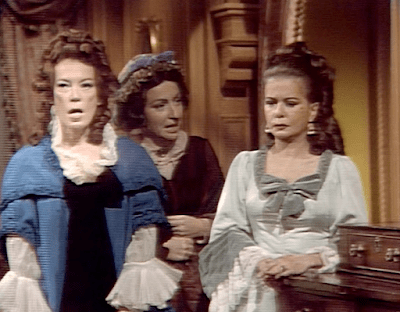


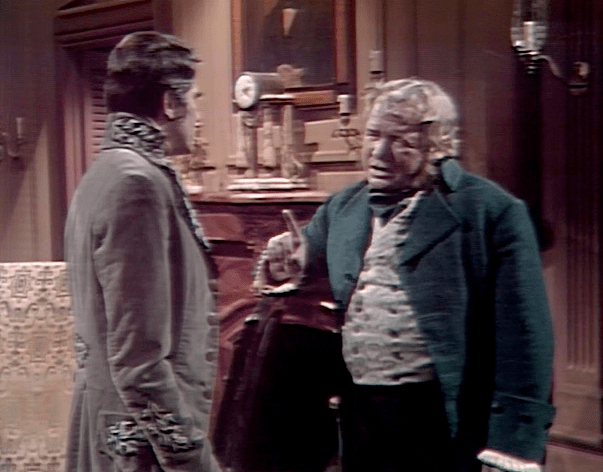


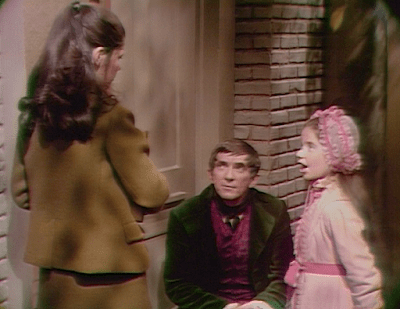


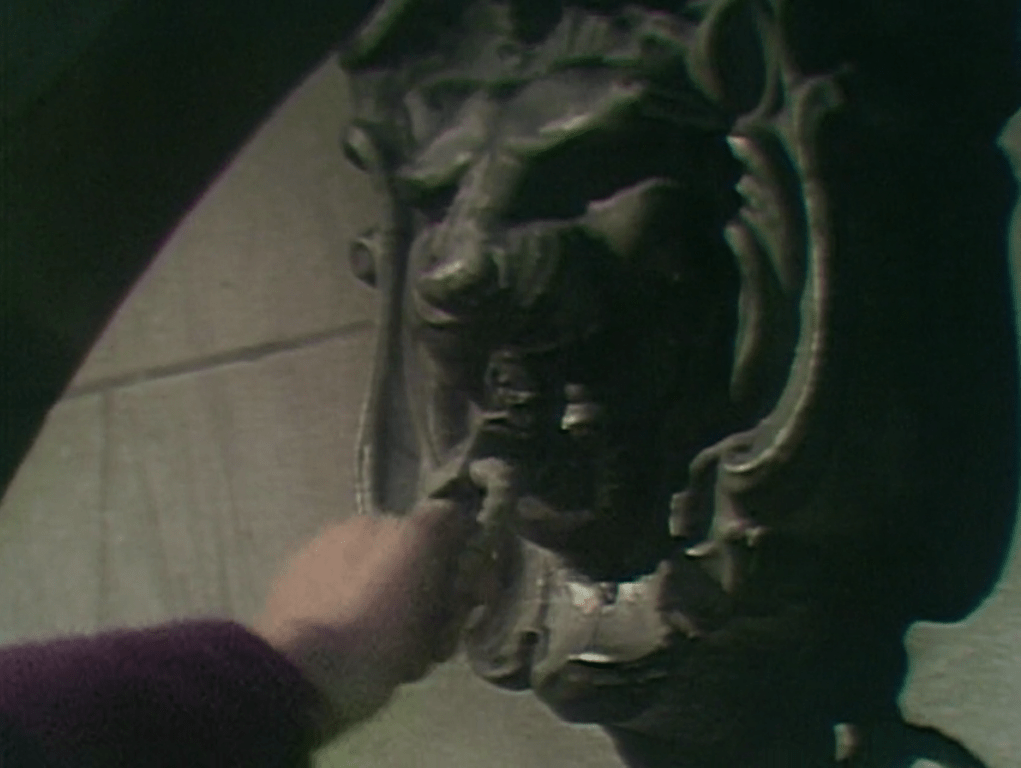


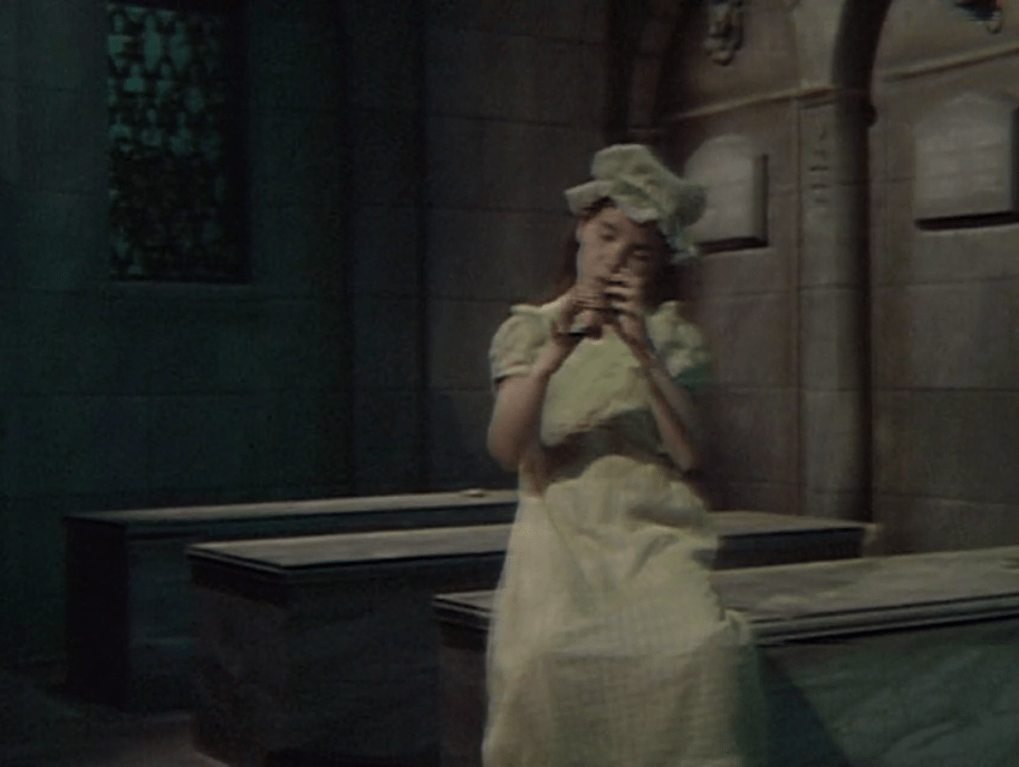




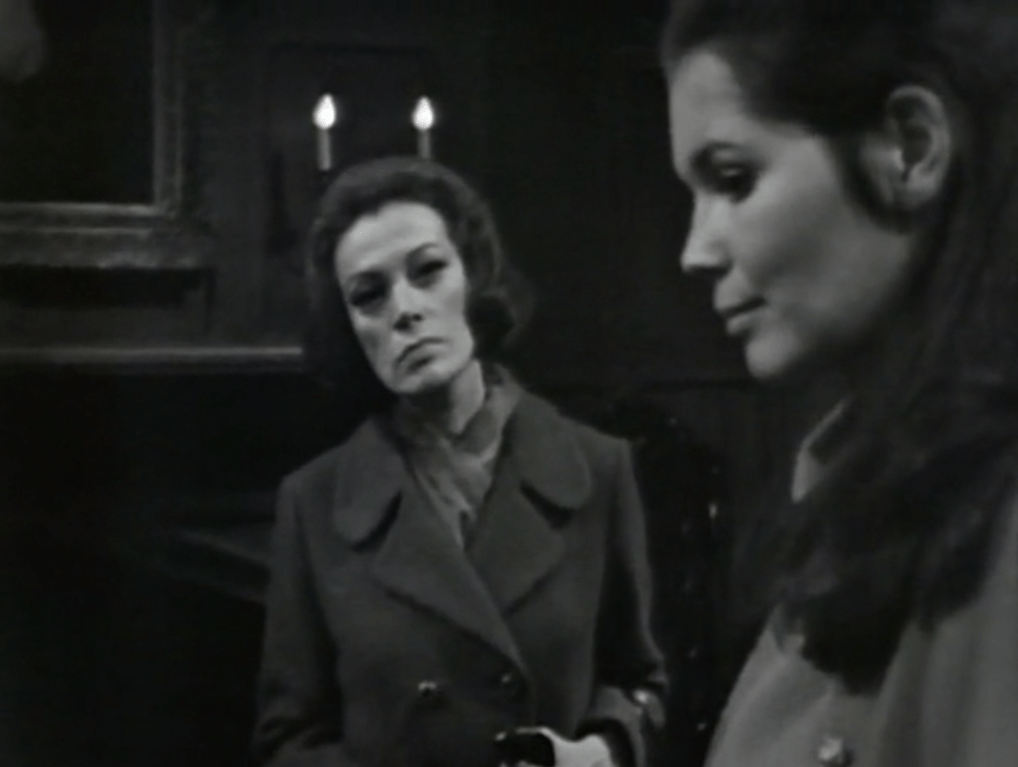
 Dark Shadows Commentary