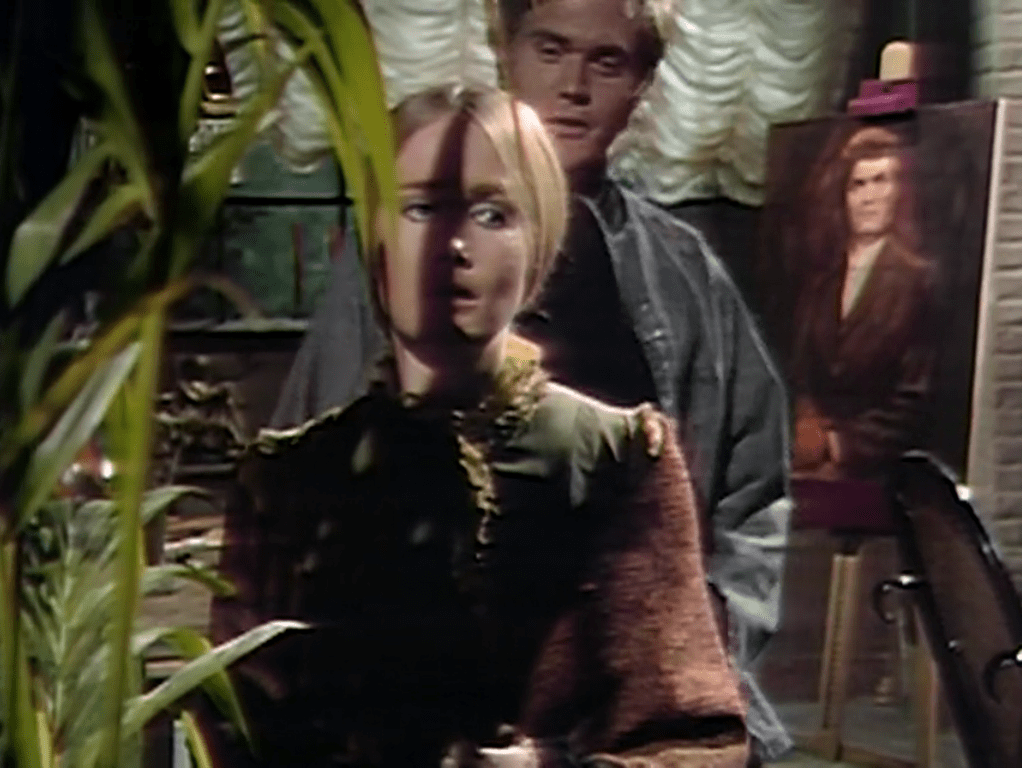
Episode 919/ 920/ 921: The giver without a gift

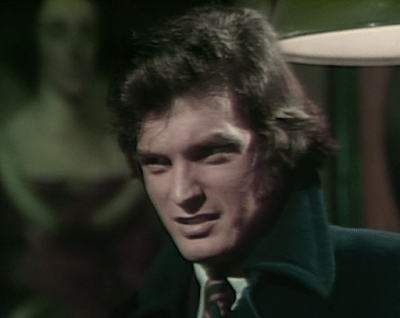
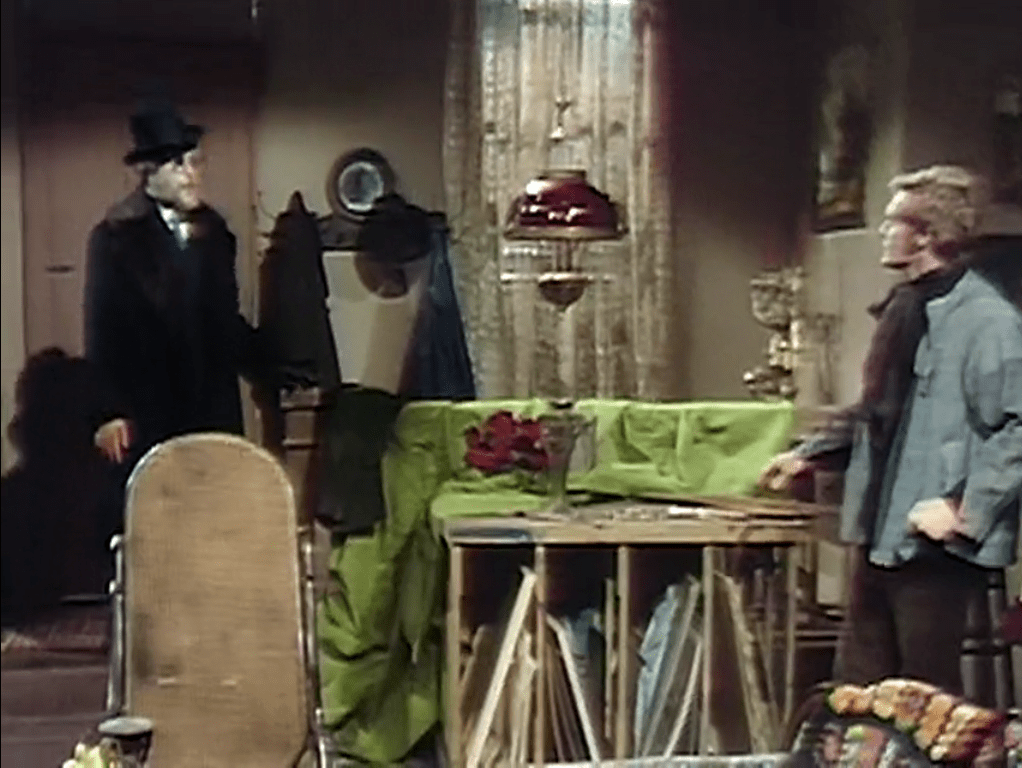
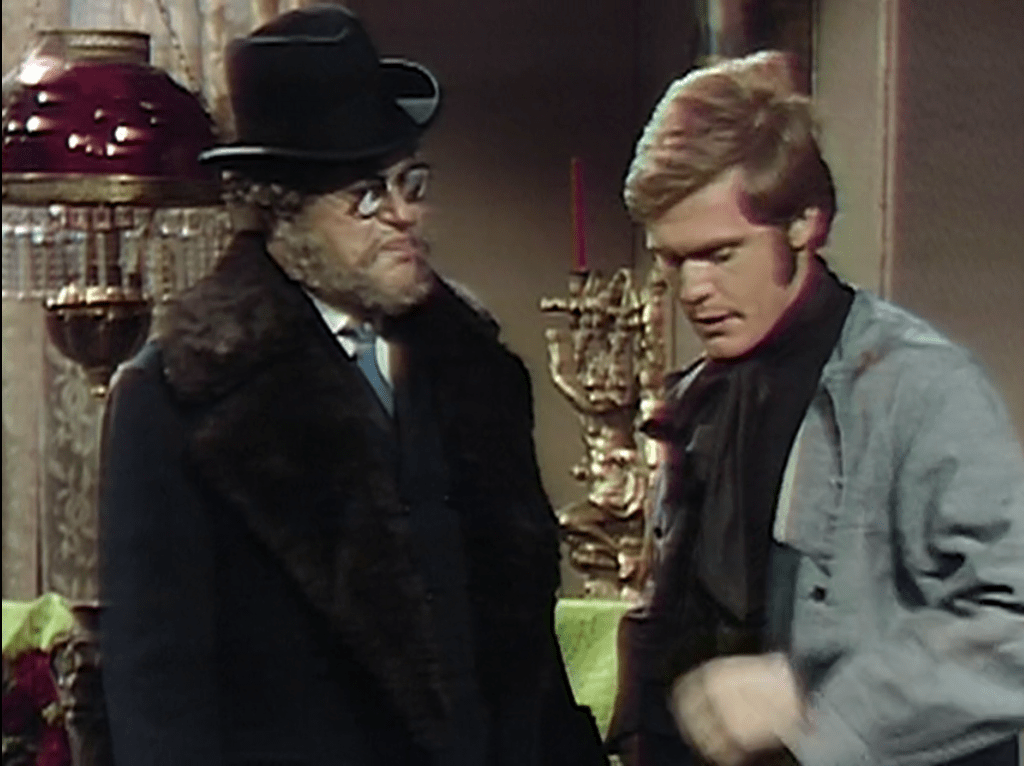
Centenarian Charles Delaware Tate, once a famous painter, is trapped in his parlor with a man who is threatening to kill him. The man is Chris Jennings. Chris tells Tate that there will be a full moon tonight, and he identifies himself as a werewolf. In 1897, Tate painted a portrait of Chris’ great-grandfather, Quentin Collins. That portrait had magical powers that immunized Quentin against both lycanthropy and aging, and Chris is demanding Tate do the same for him. Tate keeps telling Chris that he no longer has the ability to create such things, but Chris won’t listen. Tate does a sketch. He says that his work is finished and tells Chris to take it and leave. Before Chris can comply, he turns into the wolf and attacks Tate.

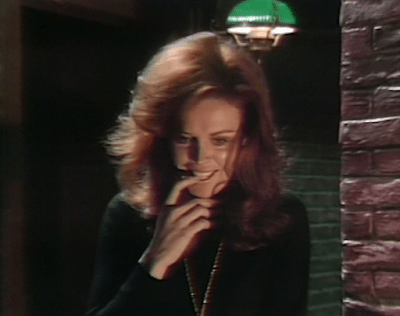
Chris had been in a secure room at a mental hospital controlled by his friend, mad scientist Julia Hoffman. He deliberately checked himself out and forced his way into Tate’s house because he wanted to use his condition as a weapon to coerce Tate. Julia is the audience’s chief point of view character these days, and she feels sorry for Chris. We also like two characters who care about Chris and don’t know that he is a werewolf. Heiress Carolyn Collins Stoddard is attracted to Chris and seems to have some lingering hopes that a romance might blossom between them, and Chris’ little sister Amy loves him and believes in him. Even one of Chris’ surviving victims, prematurely gray Sabrina Stuart, told Carolyn in #889 that while Chris is dangerous, “he is good.”

Despite everything these ladies are doing to help us like Chris, there can be no doubt that his attack on Tate is murder with premeditation and extraordinary cruelty. Roger Davis can usually be counted on to make us sympathize with anyone who is murdering one of his characters, but he plays Tate today with sensitivity and pathos, leaving us no way to avoid seeing a helpless old man locked up with a vicious killer. Chris’ future on Dark Shadows is limited for a number of reasons, chiefly his passivity in the face of his curse and his dependence on Julia and others to initiate action on his behalf. His abuse of Tate suggests that for whatever time he may have left on the show, Chris will be an unsympathetic villain.

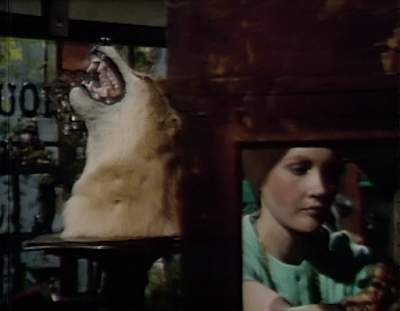
Meanwhile, Carolyn is spending the day working as an assistant in an antique shop owned by her friends Megan and Philip Todd. Our first view of the shop today features Carolyn reflected in a mirror, but the main part of it is the taxidermied head of a baying wolf, emphasizing the danger Chris poses to everyone in and around the village of Collinsport.

The Wolf is loose, Carolyn is boxed in. Screenshot by Dark Shadows Before I Die.

A pair of hands cover Carolyn’s eyes. When they are pulled away, she expects to find that they belong to Philip’s eight year old nephew Alexander, but instead discovers that a thirteen year old boy she has never before seen has introduced himself to her by creeping up behind her and grabbing her face. The boy tells her that his name is Michael, that he is another of Megan and Philip’s relatives, and that Alexander has gone away. He tries to give Carolyn a pendant, but she recognizes it as one Megan wears and says that Michael can’t very well make a gift of something that doesn’t belong to him. He becomes very stiff and screams “How dare you not believe me!?” He doesn’t get any more pleasant as the scene goes on.

Philip comes in and tries to establish some kind of control; Carolyn takes the opportunity to excuse herself. As Michael and Philip talk, it becomes clear that they are part of a secret group with sinister plans. Returning viewers know that Michael and Alexander are not really human children, but are two manifestations of the same supernatural force. As Alexander, this force was a joyless, hateful little tyrant; Michael is no more appealing.

Dark Shadows originally ran on the ABC television network five days a week, from Monday through Friday. The episodes were numbered in a sequence reflecting the order of their original broadcast. When for whatever reason the show did not air on a given day, they would skip a number to keep the episodes airing on Fridays associated with production numbers divisible by 5. That made it easy to figure out how many weeks the show had been on, which in turn made it easy to keep track of where the show was in the thirteen week cycle that governed its long-term planning and the network’s decision to renew it.

In the last months of 1969, the show was being taped several weeks in advance of airdates, in a couple of instances more than five weeks ahead of time. This was atypical, and it led to a problem with the numbering. They knew that no episodes would air on Thanksgiving Day, Christmas Day, or New Year’s Day, but did not foresee that the network would preempt #891 for live news coverage of the return of the Apollo 12 astronauts to Earth on 24 November 1969. Since they had already shot that episode and many following it with the original production numbers on the opening slate, it wasn’t until this one that they had the chance to get the numbers back in synch. That is why it is listed with the three numbers 919, 920, and 921. The only other time they had to skip two numbers was in November 1966, when coverage of football games on and after Thanksgiving Day blotted out #109 and #110. Since that disruption to the schedule was planned, the slate for the next episode was just marked #111. This is therefore the only episode regularly referred to with a triple number.

Episode 897: Restore our flesh and bones

The Trouble with David

Yesterday we saw strange and troubled boy David Collins (David Henesy) go to a mysterious cairn in the woods, the ceremonial center of the cult of the Leviathan people, and announce that he was now one of the cult. The cairn then opened, revealing a little gap. David crawled into the gap. The gap was not quite big enough for him, so that the episode ended with an extended sequence of David Henesy wiggling his rear end at the camera while he tried to wedge himself into place.

Today we learn that the carpenters were not the only ones who haven’t caught on that Mr Henesy isn’t nine years old anymore. David has followed the gap to an underground chamber with a steaming cauldron. He takes some vegetation out of the cauldron and recites a cryptic poem, all the while staring portentiously off into space. His manner, words, and actions would be effective as part of a creepy little kid sequence, but the thirteen year old Mr Henesy looks mature enough that we just chalk him up as one more member of the Leviathan cult.

The Trouble with Chris

Heiress Carolyn Collins Stoddard calls on drifter Chris Jennings in his cottage. They talk about someone named Sabrina who has told Carolyn that while Chris is a nice enough guy, he will, in spite of himself, kill her if she keeps hanging around him. Chris tells Carolyn that this is true and that he is “a monster.” He does not explain. She leaves, and he takes out a pistol. First-time viewers will wonder if Chris has a compulsion to fire his pistol at people. Regular viewers know that he is a werewolf, and that his particular case of lycanthropy is so advanced that he sometimes transforms even when the moon is not full. We can assume that he plans to use the pistol to put himself out of his misery.

Regular viewers also know that Chris was safely confined to a mental hospital until he checked himself out recently. When he returned to the great house of Collinwood, he told his psychiatrist, permanent houseguest Julia Hoffman, that he just couldn’t stand the conditions at the hospital. Since leaving the hospital means that Chris will resume killing at least one random person a month, this decision just about completely erased any sympathy we might have for him as a character. It also undercuts his motivation in this scene. If Chris really wants to stop killing, he is free to go back to the hospital at any time.

The ghost of Chris’ great-grandmother, Jenny Collins (Marie Wallace,) appears. She tells him not to commit suicide. Dark Shadows was a costume drama set in 1897 from March to November 1969; in those days, we got to know Jenny as “Crazy Jenny,” who played nothing but one mad scene after another. She was sane and well-put-together just once, when she appeared as a ghost in #810 and #811. In this second postmortem appearance, Jenny is extra mad, wearing a disheveled wig that reaches heights few hairpieces have dared. She does not tell Chris to return to the hospital, but to find his great-grandfather, Quentin Collins. She says that she cannot help him, but Quentin can.

This confirms what the show has been hinting, that Quentin is alive. Chris doesn’t know that, nor does he know of his relationship to Quentin. He is left bewildered and helpless by Jenny’s pronouncement. His response would no doubt be more complex if he were up to date, but he has been so ineffective at managing his curse and so irresponsible generally that we can’t imagine he would do anything constructive even if he knew everything we do. The character seems to have reached a dead end.

The Trouble with Barnabas

Upset by her conversation with Chris, Carolyn goes to her distant cousin, old world gentleman Barnabas Collins. She enters his home, the Old House on the estate of Collinwood, and finds the front parlor empty. She hears Barnabas’ voice coming from behind a bookcase, repeating over and over that “There is no margin for error. Punishment is necessary.”

Longtime viewers know, not only that a room is hidden behind this bookcase, but that Carolyn knows about that room. Her friend, David’s well-meaning governess Vicki, was held prisoner there by a crazy man in December 1966, several months before Barnabas joined the show. Carolyn is moving her hands, as if she is looking for the release that makes the bookcase swing open, when Barnabas comes downstairs.

When Carolyn says that she heard his voice, Barnabas explains that he was simply keeping busy by “conducting an experiment in electronics.” The candles around the room will suffice to show that the house doesn’t have electricity, and even if Barnabas weren’t so resolutely technophobic it would still require explanation that the text he set his speakers to reproduce over and over was “There is no margin for error. Punishment is necessary.” Moreover, Carolyn knows Barnabas well, and she can’t have overlooked that he is not his usual self these days. He is distant, calm, and utterly self-possessed, a far cry from the fussy, excitable chap who so often stumbles over his words. He remains formidably well-composed as he reiterates his position that Chris is a dangerously unstable person whom Carolyn should avoid, and that she has a bright future ahead of her. He gently but firmly guides her to the front door, and she is out of the house in record time.

Carolyn does not know that Chris is the werewolf, but at least she knows that there is a werewolf. She does not know that the Leviathan cult exists, and so it is understandable that she does not suspect that Barnabas is acting as its leader. But as the story unfolds, others will no doubt catch on that something is up, and so many people have spent so much time with Barnabas that it is difficult to see how they can all fail to notice the drastic change in his personality and to connect it with the strange goings-on. Putting him in this position makes it likely that the writers will have a harder time managing the story’s pace than they would if his involvement were more subtle.

Once Carolyn has exited, Barnabas opens the bookcase and reveals Philip Todd, antique shop owner. He rewinds a reel-to-reel tape and replays “There is no margin for error. Punishment is necessary.” Philip and his wife Megan are members of the cult, entrusted with the care of many of its most sacred items. Yesterday Barnabas found out that one of these, a book, had gone missing. He summoned Philip to the cairn, and it seemed he might be about to kill Philip. But now, he sends Philip off to administer the punishment to someone else, presumably Megan.

The Trouble with Megan

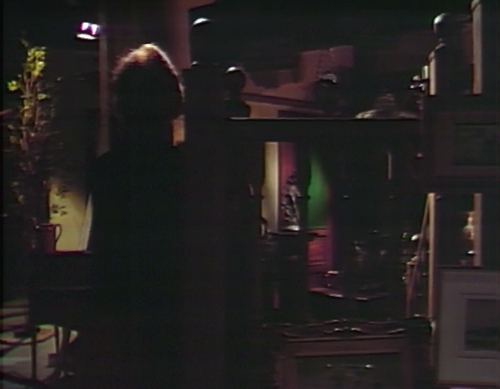
Megan (Marie Wallace) has been in an extremely overwrought state ever since she found that the book was gone. Today’s episode ends with a long scene in which she is alone in the shop, feeling that someone is coming to kill her, reacting sharply to every noise.

Danny Horn devotes most of his post about the episode on his great Dark Shadows Every Day to reasons why this scene does not work, among them the fact that a depiction of a person descending into madness requires that the person start off as something other than over-the-top loony. Megan has been so frenzied for the last few days that Miss Wallace has nowhere to go when she hears the ominous noises. Moreover, her first two characters on Dark Shadows, fiancée of Frankenstein Eve and Crazy Jenny, were both intense, overbearing characters who were so inflexible that they had little opportunity to respond to anything their scene partners might do. Longtime viewers therefore expect to see Miss Wallace screaming and carrying on by herself, so nothing she does here will unsettle us. They lampshade this iconography problem by showing us Crazy Jenny’s ghost today, but that doesn’t help at all.

Many fans compare this scene to episode #361. Most of #361 is devoted to a one-woman drama in which Julia is tormented by sights and sounds in her bedroom, suggesting that her mind is collapsing. I don’t think that episode is a success, but because Julia had always been in control of herself up to that point we can see what is supposed to be at stake in it. That’s more than we can say for Megan’s fearful turn.

In John and Christine Scoleri’s post about the episode on Dark Shadows Before I Die, Christine points out the prominence of the taxidermied animals in the background, and speculates that the scene is an homage to The Night of the Living Dead. I wouldn’t have guessed that director Lela Swift or writer Violet Welles would have studied that film, but Christine provides screenshots from it and from the episode, and the parallels are so striking that I can’t see how she could be wrong.

Closing Miscellany

I think the tape recorder is the same one we saw in the summer of 1968, when it was part of the Frankenstein story. It also appears to be the one that parapsychologist Peter Guthrie brought to Collinwood early in 1967.

Her haunting of Chris marks Jenny’s final appearance. Miss Wallace reprised the role decades later in a couple of the Big Finish audio dramas.

During Megan’s big scene, the camera swings a bit to the left and we can see beyond the edge of the antique shop set. We get a good look at a tree that stands near the cairn in the woods. Making matters worse, when they turn the camera away from the tree they go too far right, showing a stage light on the other side.

The antique shop and the cairn. Screenshot by Danny Horn, Dark Shadows Every Day.

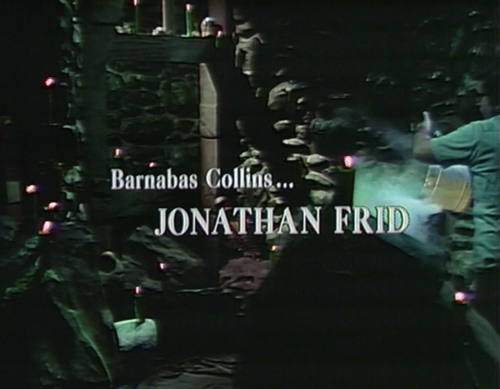
As the opening credits begin to roll, the camera is pointed a bit too far to the right and a stagehand is visible, adding dry ice to the steaming cauldron in the underground chamber.

Closing credits blooper. Screenshot by Danny Horn, Dark Shadows Every Day.

Episode 894/ 895: The time of the Leviathan people

Old world gentleman Barnabas Collins has become the leader of a mysterious cult. Antique shop owners Megan and Philip Todd are members of the cult, and they have a magical baby who materialized after Barnabas gave them a sacred box. Inside the box was a book that is also of tremendous importance to the cult. Philip and Megan left the book on a table in their shop, so that it appeared to be for sale. Yesterday strange and troubled boy David Collins stole the book. In its absence, the baby has developed a high fever. When Megan and Philip found that the book was gone, they flew into a panic and declared that they would have to kill the person who took it.

Many stories on Dark Shadows start with David, so it could be that the uncanny and sinister forces behind the cult want him to have the book. If so, Barnabas doesn’t know any more about it than do Philip and Megan. He finds out today that the book is missing, and takes Philip to a cairn in the woods. He tells him he will have to be punished for losing it.

When Philip first saw the cairn, he remarked that he had been that way before, but never noticed it. Barnabas explains that only people connected with the Leviathan cult can see it. This casts the minds of returning viewers to heiress Carolyn Collins Stoddard, Barnabas’ distant cousin. In #888, Carolyn saw the cairn and ran into a prowler there. The prowler refused to identify himself to her; the closing credits told us he was Paul Stoddard, Carolyn’s long missing father. We had seen him from behind the day before, when he saw the cairn materialize, then simply walked off. His blasé response told us that he expected to see what he saw, which can only mean he was connected with the cult. Carolyn doesn’t know anything about the Leviathans, but what Barnabas says to Philip today confirms that she is nonetheless associated with them in some sense. Indeed, Barnabas has been very solicitous of Carolyn’s well-being ever since he joined up with the Leviathans and keeps telling her that she has an extraordinary future.

Philip and Barnabas at the cairn. Screenshot by Dark Shadows Before I Die.

There is also some business going on between Paul and Carolyn. On the surface it would seem to be a typical soap opera story, in which the daughter is trying to reintroduce her errant father into the family circle and has to keep secrets from her mother and young cousin to pull it off. Given what we know about Paul’s awareness of the Leviathans and their interest in Carolyn, we can see that it is in fact part of the supernatural A story.

There are no closing credits today, only the logo of Dan Curtis Productions. The Dark Shadows wiki says that this one was directed by Henry Kaplan. I am certain this is false. Kaplan was very clumsy with the camera, resorting to closeup after closeup and then to ever-more extreme closeups until you have scenes played by one actor’s left ear opposite another’s right nostril. Today, there is a scene between Carolyn, David, and Barnabas in the drawing room of the great house at Collinwood, a scene in which Carolyn presses David with questions about the book, that is so expertly choreographed that only Lela Swift could have blocked it. My wife, Mrs Acilius, marveled at the dance that Nancy Barrett, David Henesy, and Jonathan Frid execute so flawlessly.

This episode is double numbered to make up for a planned pre-emption, when the ABC television network showed football at 4 PM on the afternoon of Thanksgiving Day. Every Friday’s episode was supposed to have a number that ended with a five or zero, so that all you had to do was divide by five and you would get the number of weeks the show had been on. That didn’t work this time, because there was also an unplanned pre-emption when the network’s nes division took the 4 PM slot to cover the return of the Apollo 12 mission. They are producing episodes well ahead of their airdates at this point, in a couple of cases over five weeks ahead, so it will be a long while before they can get back in sync.

Episode 836: The grownup world

It is 8 September 1969, and the ghost of Quentin Collins has rendered the great house of Collinwood uninhabitable. The family, including permanent house guest Julia Hoffman, have been staying at the Old House on the estate while recovering vampire Barnabas Collins is on a trip back in time to 1897, when Quentin was killed and the trouble started. But Julia has received a letter Barnabas wrote to her in September 1897 indicating that, as of that date, his mission was about to end in total failure, and so she decides to take matters into her own hands. First, she must learn exactly how and when Quentin died.

Julia goes to the great house and follows the sound of Quentin’s theme song to the tower room. There, she finds the ghost of maidservant Beth, who was one of Quentin’s many lovers. When Beth is in a shadowy corner, she puts on a ghostly voice and tells Julia that her name would mean nothing to her. As soon as she comes into the light, Julia says that they’ve met several times, and soon she is calling her by name. Along with the fact that, as Beth, Terrayne Crawford is just standing there in the same light as Grayson Hall, with no practical effect whatsoever to suggest ghostliness, this deflates whatever feeling we are supposed to have that we are witnessing an encounter with the supernatural.

Julia insists Beth tell her how Quentin died. When the ghost of Barnabas’ nine year old sister Sarah Collins was on the show from June to November 1967, she would often insist on the Ghost Rules and vanish if people put direct questions to her. But Beth just wanders around a little, moans to Quentin that she has no choice but to tell Julia what she wants to know, and starts dishing. Again, they aren’t making ghosts like they used to.

Beth tells Julia that on 10 September 1897, she found out Quentin was going to marry a woman named Angelique. Quentin did not tell her this news himself; he left it to Angelique to do so, making the blow fall all the more heavily. This will remind longtime viewers of #392, when Barnabas could not bring himself to tell his ex-fiancée Josette that he was engaged to Angelique, leaving Angelique to tell Josette herself in #393. Josette waited until #425 to leap to her death from the cliff at Widows’ Hill, but things move faster now. Beth went straight from her conversation with Angelique to her room, where she had a bottle labeled “Poison.”

Sensible shopper that she is, Beth buys her poison in the Generic section of the murder weapon store. Screenshot by Dark Shadows Before I Die.

Before she could do away with herself, Beth was interrupted by a knock on the door from twelve year old Jamison Collins. Jamison came in to show her a puzzle he had solved, then saw the bottle. He demanded to know what was going on, and she admitted that she was planning to kill herself because Quentin was going to marry Angelique. He stopped her doing that, but after he left to confront Quentin she took a loaded revolver out of her dresser.

Jamison found Quentin in the drawing room, in Angelique’s arms. Angelique at first dismissed Jamison, saying that his uncle was too busy to speak with him, but Jamison held his ground and insisted on seeing Quentin alone. Quentin obliged, but would answer Jamison’s questions only with airy assertions that he is too young to understand the situation. Jamison is so composed and forceful, and Quentin’s behavior is so flagrantly irresponsible, that we might expect Jamison to ask to be spared lectures on maturity from a man so much more childish than he. Instead, Jamison simply becomes angry and tells Quentin that after what he has done to Beth, he wants nothing more to do with him.

In #767, Jamison had a dream in which Quentin’s ghost said that his death was preceded by three events. The first two events happened shortly after. The third event was that Jamison rejected him. This has now happened, and in the dream Quentin said that once that took place “There was almost no time left for Quentin Collins.” Indeed, shortly after Jamison stalks off Beth shows up with her revolver and shoots Quentin. He staggers from the drawing room and goes upstairs. Since the staircase is made of eleven steps and is eight feet tall, that’s some pretty fancy staggering for a man who has just taken a round to the midsection. Quentin keeps staggering all the way to the tower room, where Beth shoots him a few more times.

We cut back to 1969, where Beth tells Julia she killed herself the day after she killed Quentin. She doesn’t seem to be done talking when Julia excuses herself. Say what you will about Sarah, she always left them wanting more.

Julia finds twelve year old David Collins, Jamison’s grandson, in the drawing room with Quentin’s ghost. Since Barnabas took us back in time with him in #701, we’ve got to know the living Quentin quite well, and he is a charming rascal who has very little in common with the silent, family-annihilating ghost we saw late in 1968. Beth’s story does very little to explain how the one turned into the other. The ghost has been draining the life from David; Julia orders David to come away from him, and he does. David lies down on the couch, and Julia examines him. She finds that he is weak, but resting comfortably.

Occult expert Timothy Eliot Stokes enters. Quentin’s ghost has vanished. Stokes calls Julia by her first name, something he had not done prior to this episode, and asks after David. She at first says he will be all right, then checks on him again. She cannot find a pulse, and declares him dead. Julia has performed wonders in her work as a medical doctor, but her death pronouncements are so often wrong that this does not give much grounds for alarm. However, we then hear Quentin’s voice laughing maniacally, darkening David’s prospects.

Terrayne Crawford seems to be such a nice person that it distresses me to point out that she was not a very good actress. But in this one, Beth’s lack of supernatural quality and Julia’s bland reaction to her make it seem like writer Gordon Russell and director Lela Swift were conspiring to vent their exasperation with Miss Crawford’s limits. She can play one emotion at a time, so that when Beth is shocked to learn that Quentin is going to marry someone else she is only and entirely Shocked. When Beth is suicidal, she is only and entirely Sad; when she decides to take Quentin’s life instead of her own, she is only and entirely Gleeful; when she tells Julia that her vengeance did not relieve her sorrow over Quentin, we can see that’s true, because she is only and entirely Sorrowful. The result is like looking at a series of wood block cuts illustrating various emotions. It’s all very clear and quite vivid, but there’s no sense of development from one scene to the next. Had Miss Crawford been able to lay one emotion over another and play two or more of them at a time, the grin on Beth’s face when she kills Quentin would have shown us that all the layers of complexity of feeling had finally been stripped away and only hatred was left. That would have been a tremendous climax for the character. But since there was never any such complexity to start with, it’s just another block cut.

Often when I see disappointing performances on Dark Shadows, I think of other actors in the cast and try to imagine what they would have done with the part. Gail Strickland, like Miss Crawford, is a tall, thin woman whose chin juts out on a horizontal line, and she was on the show as doomed schoolteacher Dorcas Trilling for a couple of episodes in May. Dorcas’ role would have been well within Miss Crawford’s competence, and in her long and distinguished career Miss Strickland proved she could do just about anything. So on a day like this, I envision a different, much more nuanced Beth. The episode in my imagination is really stellar, I wish you could see it.

Today, David Henesy plays both his 1897 character Jamison Collins and his 1960s character David Collins. He is not credited for either of those roles, but for Daniel Collins, whom he played when the show was set in the 1790s back in late 1967 and early 1968.

Episode 818: I have but one, and his name is Petofi

The disastrously repressed Charity Trask knows that rakish libertine Quentin Collins is a werewolf, and she wants to warn everyone about him without actually saying the facts out loud. She corners maidservant Beth Chavez in the drawing room of the great house at Collinwood and urges Beth to end her romance with Quentin.

Charity keeps saying that there is something about Quentin that Beth does not know. In fact, Beth not only knows everything Charity does about Quentin’s curse, but a great deal more. She was the very first person to know that Quentin was a werewolf, before Quentin himself knew. She was with him the first time he transformed, and when he became human again in the morning she refused to tell him what she had seen. She had previously seen Quentin murder his wife Jenny, she knows that Jenny’s sister Magda placed the curse as vengeance for that murder, and she was the one who told Magda that Jenny had borne children to Quentin who would inherit their father’s curse. Beth is the foremost authority on Quentin’s condition. But she is protecting him anyway.

Charity then goes to a set known to longtime viewers as the Evans cottage. In the parts of Dark Shadows set between 1966 and 1968, this set is home to artist Sam Evans and his daughter Maggie, The Nicest Girl in Town. Today the dramatic date is 1897, but the cottage is already an artist’s studio. It is occupied by Charles Delaware Tate, a nationally renowned painter who was commanded by the evil sorcerer Count Petofi to execute Quentin’s portrait. When we first saw Tate in the cottage, he said that he rented it because he’d heard about it from a friend who had stayed there some time before.

The cottage is full of paintings and sculptures. This is odd for a rental. Several possible explanations come to mind. Did Tate bring a dozen or more of his own works to keep him company? Did his friend or other artists who had rented it leave their completed pieces behind? Did the landlords display their own collection there for the edification of their tenants? Easy as these explanations are to think of, none of them seems very likely, and the question is never addressed in the show. The out-of-universe explanation is of course that when the audience looks at an artist’s studio, it expects to see a lot of artwork, and the artwork here gives director Lela Swift a chance to make good use of color.

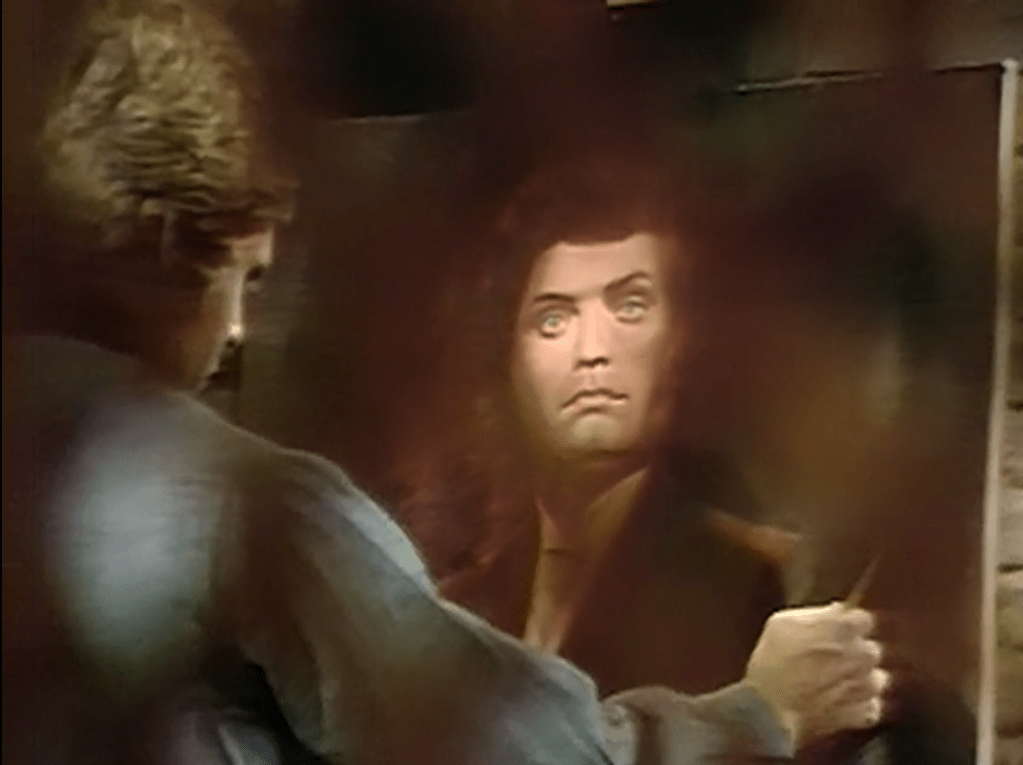
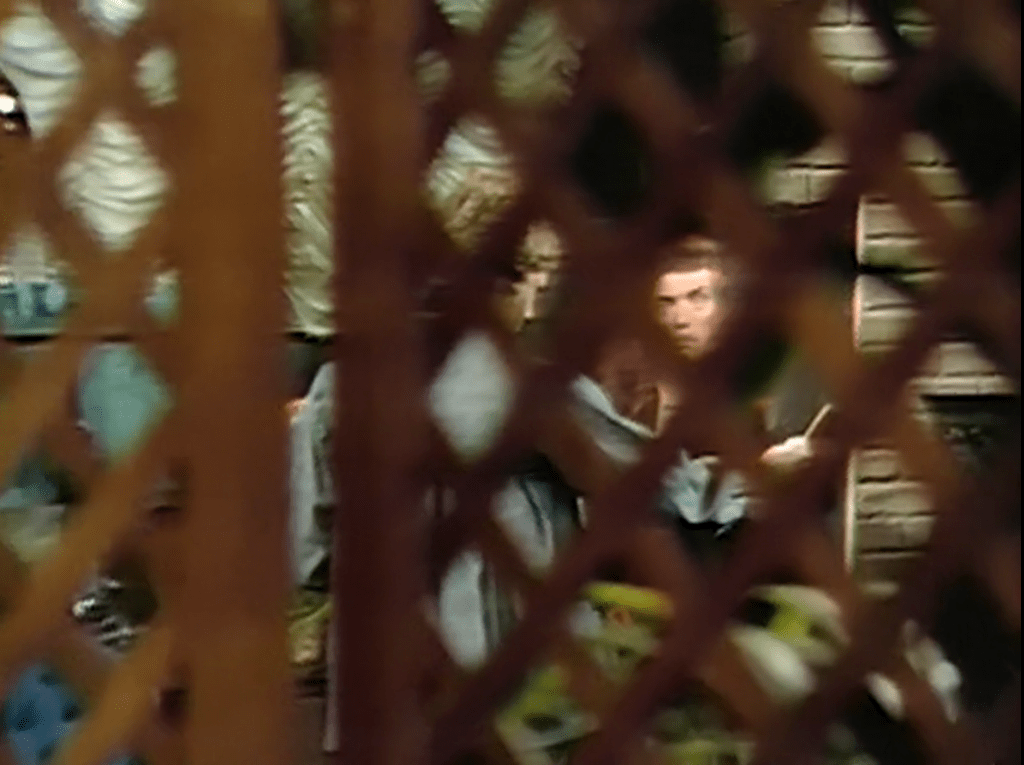
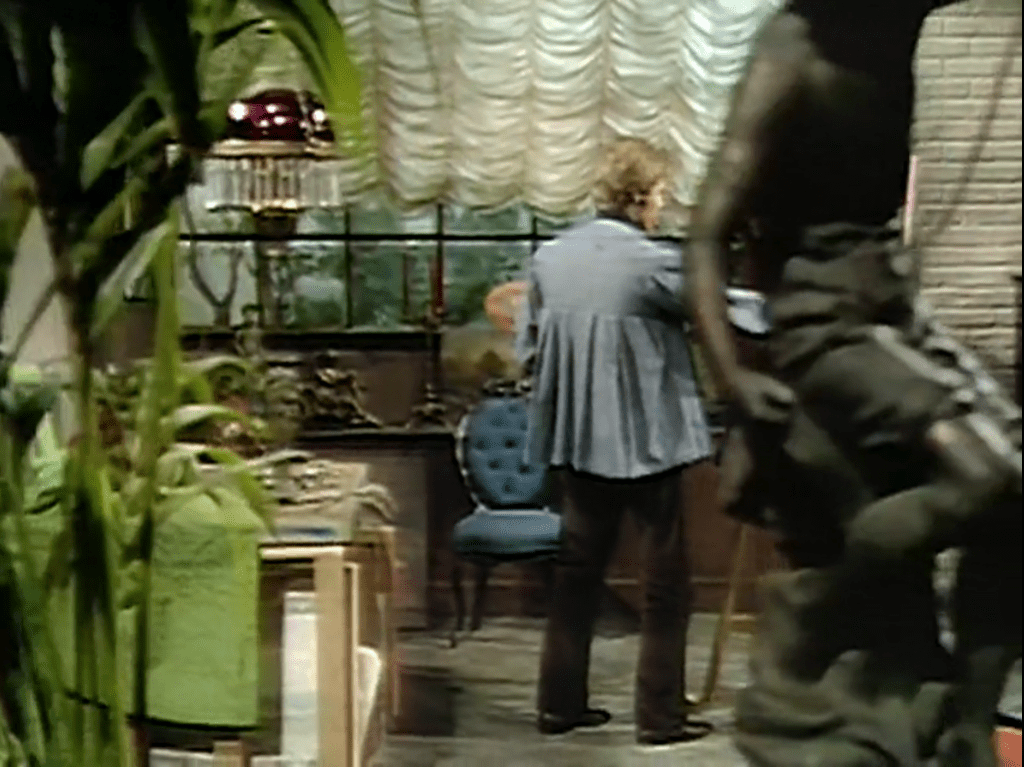
At any rate, the set is gorgeous today, full of bright greens and mixed reds. Swift was a highly ambitious visual artist, and she outdoes herself here. The first shot in the cottage begins with a closeup of the portrait of Quentin. It then pulls back further than any previous shot of this very familiar set, showing us a lattice that used to be part of the set representing the kitchen/ breakfast nook area at Collinwood. Behind it is a plant with some large, intensely green foliage. We then track around the set to see several sculpted pieces in black, paintings in a variety of tones, and a whole array of vivid colors in the furniture and other decorations. Dark Shadows has come a long way from the clumsiness that marked its use of color when it first switched from black and white in #295.

Charity is unaware that she and Tate are not alone. Tate’s master, Petofi, is in the next room eavesdropping. Charity is horrified to see the portrait of Quentin, and reminds Tate that she saw Quentin’s features in the portrait change into those of a wolf when she visited the cottage on the night of a full Moon. Tate tries to convince her she did not really see such a thing, but she will not have it. Charity gives Tate a warning somewhat less incoherent than the one she had given Beth. After she exits, Petofi and Tate talk. Tate had suspected Quentin was a werewolf, and now is sure. Petofi says that his plans for Quentin are none of Tate’s concern.

Petofi goes to the great house. Quentin confronts him there, demanding to know by what gods he swears. He replies “I have but one, and his name is Petofi!” Charity sees Petofi and vehemently demands he leave. I don’t know why she does this. As far as I can recall, Charity knows Petofi only as Victor Fenn-Gibbon, an honored guest of the Collins family. He did cast rather a nasty spell on her when he was using that alias, but I don’t see why she would realize that he was to blame for it, or for any of his other misdeeds.

Whatever the motive for Charity’s angry reaction to him, Petofi responds by magically robbing her of the power of speech. When he tells her that he has a healing touch, his manner and the background music indicate that after he touches her, what Charity will say will never again be up to her.

Episode 783: Talk to the hand

Nine year old Nora Collins walks in on her teacher, Charity Trask, being bitten by vampire Barnabas Collins. Barnabas tells Nora to “Look into my eyes!” He hypnotizes Nora and mind-wipes away her memory of him. Barnabas has been on Dark Shadows for more than two years now, and this is only the second time he has pulled the “Look into my eyes!” move with someone whose blood he has not been drinking. The previous occasion was also with Nora, in #756. In the parts of Dark Shadows set in the 1960s, Barnabas is usually paired with mad scientist Julia Hoffman, who is the master of a magical form of hypnosis that allows her to rewrite people’s memories at will. So if Barnabas exercised this traditional vampire power in those segments of the show, he’d be stepping on Julia’s territory. But this episode is part of a time-travel story set in 1897, and Julia is not here.

Barnabas has been exposed and is being hunted by a number of people. His current hiding place is inside a cave. He confers there with his reluctant sidekick, broad ethnic stereotype Magda Rákóczi. Today the show is being taped on new cameras, and the image is crisper and more nuanced than we have seen since it went to color in August of 1967. The cave would barely have shown up through yesterday’s cameras, but it looks nifty today.

Magda is Barnabas’ sidekick, she is quick with lies, and she is played by Grayson Hall, but she does not do hypnosis. Screenshot by Dark Shadows Before I Die.

Magda has stolen a severed hand that a crime boss was keeping in a box, and believes that she can use it to undo a curse she placed on the rakish Quentin Collins. Barnabas is worried that they will not use the hand correctly when the time comes to release Quentin. Since there is no way to test the procedure they plan to use on Quentin, he asks if it will be able to help someone else. Magda says that it should. He has the bright idea to summon Charity. He evidently overate, and she is in danger of dying from loss of blood.

Vampires are metaphors for extreme selfishness, and with this suggestion Barnabas is a case in point. If the hand can lift curses from the people it touches, why does Barnabas not have Magda place it on him? If it freed him of vampirism, that would heal Charity and his other victims, and would allow him to stroll up to the vampire hunters on some sunny day and watch their suspicions of him collapse. But that is out of the question, because he does not know how to control the hand. He is simply using Charity as a laboratory animal.

Barnabas telepathically summons Charity. As it happens, lawyer/ Satanist Evan Hanley is at her bedside. Evan is among the vampire hunters, and knows Charity is under Barnabas’ power. He physically restrains her from leaving her room. Barnabas and Magda despair of bringing Charity and the hand together. The hand then disappears from its box. Magda thinks the hand is simply lost and is terrified that she will not be able to return it to its owner, but Barnabas is serenely convinced that it has gone to Charity under its own power.

This turns out to be true. The hand materializes in Charity’s room. Evan sees it, and, expert that he is in occult lore, exclaims “The hand of Ojden!” It settles on Charity’s face, and when it vanishes the bite marks are gone from her neck and she is once again her brisk, authoritative, and intensely priggish self, no longer a thrall of Barnabas. The hand reappears in the cave next to the box, and Barnabas smugly announces to Magda that it completed its mission.

For some reason, Barnabas’ self-satisfied certitude crumbles and he feels compelled to check on Charity to see that she has indeed been healed. He materializes in her room, but she is not there and the cock is already crowing. When he returns to the cave, Evan meets him, holding up a cross and keeping him from getting back into his coffin.

Episode 774: Sometimes people change their roles in life

Tim Shaw, uptight teacher turned victim of brainwashing turned fugitive murder suspect, makes his way into an abandoned root cellar. He finds a coffin there. Naturally, he opens the coffin. That’s what everyone does on Dark Shadows when they find a coffin where one shouldn’t be. You meet the most interesting people that way.

Tim finds that the coffin is empty, and goes into a dark corner to hide. Someone comes to the door, and Tim gets up to greet whoever it might be. He hasn’t been a fugitive very long, and hasn’t quite perfected all the skills that the status calls for.

Tim sees Dirk Wilkins, a dimwitted servant of the ancient and esteemed Collins family who has been missing for several days. Tim calls out “Dirk!” This is the first time we learn the two men know each other. They are unlikely to have been friends. Tim rarely left the school where he worked. The school has been housed in a building on the Collins family’s estate for several weeks, so it makes sense that he and Dirk would have met, but Dirk has been unpleasant to everyone we have seen him with, including his employers and pretty girls he wants to attract. It is hard to imagine the painfully shy Tim befriending him.

Dirk turns out to be a vampire, and he bites Tim. We then cut back to the school. The headmaster, the overwhelmingly evil Gregory Trask, is browbeating Tim’s fellow teacher and onetime girlfriend, neurotic intellectual Rachel Drummond. Returning viewers will recall that Trask has made flagrant passes at Rachel, and also know that Trask conspired with a local Satanist to cast a spell on Tim which caused him to kill Trask’s wife Minerva. Trask is pretending to be upset about Minerva’s murder and to believe that Rachel plotted with Tim to commit it. He tells Rachel that if she does not leave the school, he will accept that she is innocent. She goes to her room, distraught. Later in the episode, Trask will telephone his co-conspirator, gloating that the authorities are on their side.

Spinster Judith Collins, sole proprietor of all her family’s great wealth, shows up to offer her condolences to Trask. They find that Rachel is gone, and he tells her that she must have gone with Tim. Trask realizes that Tim and Rachel have no money, and wonders if there is anyone who might give them enough to allow them to flee the state. Judith says that her distant cousin Barnabas Collins, who is currently staying at the Old House on the estate, is very fond of Rachel and that he might give them some money. She says that she will get in her carriage and go to the Old House before Rachel can get there. She will tell Barnabas about the murder and about Tim and Rachel’s involvement in it, thereby ensuring that he will not give them any money.

Judith consoles he new widower. Screenshot by Dark Shadows Before I Die.

Judith knocks on the front door of the Old House and gets no answer. She enters, and finds the house empty. She is still in the front parlor when Dirk enters. She chastises him for staying on her property after she dismissed him, and tells him she will call the police if he is not gone within 24 hours. He walks towards her, backing her against the wall and ignoring her demands that he let her leave. He says that he is no longer her servant, but that she will soon be his. He bites her.

Judith was right when she told Trask that Rachel would go to the Old House. Rachel does go there. She peeks in the window, sees Judith sitting in a chair, and scurries off. This is rather an odd moment- Judith told Trask just a few minutes before that she would go to the Old House in her carriage. It seems unlikely that she drove her own carriage and there is no driver waiting outside, but even if if she did the carriage must still be sitting there in full view. How did Rachel fail to notice it?

Trask comes to the Old House and tells Judith he wanted to offer her his support in her conversation with Barnabas. Trask knows how fond Barnabas is of Rachel, and may well suppose that he would want more details about Minerva’s death than Judith could offer before he agreed to regard Rachel as a criminal. Judith says Dirk’s name when Trask enters, and when Trask notices the bleeding wounds on her neck he quickly realizes that Dirk inflicted them.

We cut back to the root cellar, which we see Rachel entering. She sees the coffin, and of course opens it. That’s just good manners. She turns, and sees Dirk in the entryway.

In his post about this episode at Dark Shadows Every Day, Danny Horn transcribes a conversation among Roger Davis, Jerry Lacy, and director Lela Swift captured on video when the three were on a panel at a convention:

Roger Davis:  I do remember being very excited when I got to be a vampire on the show, so excited, and the first person that I got to bite was Joan Bennett, and I was so enthusiastic and excited I knocked her over — flat on her back!

Jerry Lacy:  I remember when you did it, it was rehearsal in the morning.

Roger:  Was it?

Jerry:  Yeah. You grabbed her, and you bit her, and then you just threw her. And she was already sixty years old then.

Lela Swift:  Then we had to pick Joan up and put her together again.

Danny Horn, “Episode 774: What’s Up, Dirk,” posted at Dark Shadows Every Day, 21 November 2015.

To which my comment is, fuck that guy. I don’t make a habit of swearing, but there are not enough curse words in the language to express my reaction to Mr Davis chortling through his reminiscences of physically abusing his female scene partners. He can fuck off straight to hell.

This story gives an extra dimension to the scene between Judith and Trask in the Old House. Mr Lacy plays Trask’s relentless evil so effectively that he is difficult to watch; my wife, Mrs Acilius, refuses to watch his episodes this time through the series. It usually makes a viewer’s skin crawl to see Trask posing as a representative of something good. But knowing that behind Trask in the position of standing by Judith after she had been attacked by Dirk was Jerry Lacy standing by Joan Bennett after she had been attacked by Roger Davis, our response is much more complex. After all the times we might have wondered how anyone could fail to see through Trask’s blatant hypocrisy, this time enough of the thoroughly decent humanity of Jerry Lacy peeks through that we can understand why Judith has been so supportive of Trask.

The cast went into makeup after the morning rehearsal. From the looks of Dirk’s fake mustache and artificial pallor, makeup artist Vincent LoScalzo must not have brought his usual enthusiasm to his work when Mr Davis sat in his chair. The mustache in particular is so crudely affixed that it looks like Mr Davis might have done his own makeup today.

Episode 723: A mindless hulk

Quentin Collins is dead, his sister Judith would have you know. Their brother Carl is not so sure, but Carl is quite daft. So when high-strung governess Rachel Drummond reports that Quentin has taken a seat in the rocking chair in her bedroom, Judith is exasperated. She orders Carl to stop quivering and go into Rachel’s room himself to look at the rocking chair. Carl obeys Judith, and sees that the chair is vacant. Judith then orders Rachel to accompany her to the drawing room to see Quentin resting in his coffin. To Judith’s consternation, they see that the coffin is empty.

Judith and Rachel wonder who is playing morbid games with Quentin’s corpse. Of all the residents of the great house on the estate of Collinwood, Carl would seem to be the most obvious suspect. He is not only mentally unbalanced, but is also an inveterate prankster whose practical jokes are often disturbingly unpleasant. However, Carl is quick to break into maniacal laughter when he sees that the targets of his japes are uncomfortable, and he is not laughing now. He seems to be quite sincerely terrified. So Judith sends Carl upstairs to see if the body has been returned to Rachel’s room.

While the ladies are alone in the drawing room, Judith and Carl’s distant cousin Barnabas arrives. Judith tells Barnabas what has happened. When Judith expresses puzzlement as to how a dead body could be moved in and out of Rachel’s bedroom without using the door to the corridor, Barnabas mentions that there is a secret panel in the room. Judith is startled. She asks Barnabas how he, who only arrived from England a few weeks before, could possibly know about that panel. He claims that he read a “rare volume” by “the architect of Collinwood.” Judith does not seem entirely convinced, but she lets this explanation pass unchallenged.

Carl does not find the body in Rachel’s room, but he does notice something behind the drapes in the corridor. He pulls them apart to see Quentin. Carl screams. Quentin lumbers towards Carl and begins strangling him. Carl collapses, and Quentin leaves him on the floor.

Carl comes to in the drawing room. He tells Barnabas, Judith, and Rachel what happened. Judith cannot believe that Quentin has risen from the grave, and Barnabas takes it upon himself to tell her about zombies. He claims to have seen a zombie and to have witnessed ceremonies used to put them to rest while he was a young man on the island of Martinique.

Barnabas shocks everyone with his arcane knowledge. Screenshot by Dark Shadows Before I Die.

Judith agrees to let Barnabas try his mumbo-jumbo. While the ladies are upstairs, Barnabas and Carl are in the drawing room, burning some potpourri next to Quentin’s coffin. Quentin comes lumbering in, and they withdraw to the shadows. The fun Jonathan Frid and John Karlen had working together is one of the most enjoyable things to see on Dark Shadows, but they get a little bit carried away in the moment when Barnabas and Carl hide. As they scurry off, they are so obviously a couple of kids playing that we are distracted from their otherwise outstanding performances.

Quentin comes back and resumes his place in the coffin. At Judith’s insistence, Carl and Barnabas bury the coffin on the grounds and pour cement over it. Judith assures Rachel that this means Quentin will not come back. Rachel is disappointed when Judith says she believes that Barnabas has gone back to the Old House on the estate, where he is staying. Since they have had such an exhausting night and it is almost dawn, Judith assumes that Barnabas will want to go to bed. Judith herself does retire.

Barnabas comes back and tells Rachel that he had to make sure she was all right. She thanks him, and says that during the day she will be leaving Collinwood, never to return. He asks her to reconsider. He says that he wants to see her again, but that he has to leave immediately and he cannot possibly return until the following night. He will not tell her why. Regular viewers know that Barnabas is a vampire and that he will turn to dust if he doesn’t get back into his coffin in a few minutes and stay there until sundown. Barnabas doesn’t seem to think that his relationship with Rachel has come to a point at which he can share secrets like that with her, so he evades her questions and rushes off. Rachel heads upstairs.

We see the doors open by themselves and hear the wind. Thinking Barnabas has returned, Rachel hurries down. Baffled that no one is there, she goes outside. She turns and sees Quentin. He plods towards her, and she faints into his arms. This impressively well choreographed movement brings us to a dramatic conclusion.

Episode 635: Adam smiles

Robert Rodan joined the cast of Dark Shadows in #485 as Frankenstein’s monster Adam. For his first few months, Adam could barely speak, limiting Rodan’s performance to facial expressions expressing his very intense emotions. He did well with that, and, as Adam came to master English, Rodan’s considerable range as an actor quickly became apparent. He gets a showcase today.

An experiment meant to bring Adam’s mate back to life has failed, and he decides that old world gentleman Barnabas Collins is at fault. Adam originally extorted Barnabas’ cooperation with the experiment in #557 by threatening to kill well-meaning governess Vicki and everyone else in the great house of Collinwood unless he were given a mate. Now Adam is in that house ready to carry out his threat.

He stands outside Vicki’s bedroom door. Through it, he hears heiress Carolyn Collins Stoddard talking with Vicki. Adam fell in love with Carolyn some time ago, while she was protecting him from the police. Since Vicki is Carolyn’s best friend, and since Carolyn, her mother, her favorite uncle Roger, and Roger’s son David all live in the great house, Adam’s threat to kill everyone there always lacked a certain credibility. He eavesdrops as Carolyn tells Vicki she was recently very much attracted to a man, she can’t say who, and that ever since that man had to go away she has been depressed. Regular viewers know that Carolyn is talking about Adam, and he may know as well. Once Carolyn has left the room, Adam slips in. He tries to abduct Vicki. She screams, and Carolyn comes.

Adam slaps Vicki in the face and she collapses on the floor. In #515, Adam struck his friend Sam Evans across the face, inflicting an injury that contributed to Sam’s death shortly after. Adam didn’t know his own strength then; now, he only knocks Vicki unconscious. Carolyn tries to call the police; Adam takes the telephone from her hand and rips it from the wall. She is shocked that he is prepared to hurt even her. He puts his hands on her throat and squeezes it between his thumbs. The reason his mate needed to be brought to life a second time is that he strangled her in #626, and what he is doing to Carolyn looks unnervingly like what we saw him do then.

The sorrowful strangler. Screenshot by Dark Shadows Before I Die.

Rodan is self-possessed and deliberate when Adam is alone with Vicki, apparently smug in his certitude that whatever plan he has for her will work. When Carolyn enters, he abruptly shifts to a mixture of sorrow and rage. While he is strangling her, the sorrow overwhelms him completely. He knows exactly what he is doing, and is utterly miserable to be doing it.

Mad scientist Julia Hoffman is in Barnabas’ house. Barnabas had figured out that Adam was likely to go to Collinwood to carry out his threats, and she is waiting for him to come home and tell her whether he succeeded in thwarting Adam. She hears a noise, and calls out for Barnabas. He does not come, but the equipment in her basement mad science laboratory starts making its noises. Adam enters.

Julia and Adam exchange some mutually evasive dialogue. Rodan had played Adam’s scene with Carolyn and Vicki very hot, his emotions right on the surface. Now he shows that he can just as effectively play cold. Julia keeps asking him questions, which he parries without losing his smile, becoming excited, or in any way giving a clue as to what is in his mind. He deploys each syllable like a chess player selecting the right square for a piece. He shows a bit of feeling at first when he refers to the charred skeleton in the basement as “the only bride I ever had,” but then settles into an imperturbable calm. He responds to Julia’s repeated questions about his plans for vengeance against Barnabas with perfectly logical questions of his own about what he would have to gain by hurting Barnabas- “or you, for that matter?” He is indifferent to the news that suave warlock Nicholas Blair, whom he once considered a friend, has vanished, never to return. When Julia tries to escape, he asks her where she is going, and she tries to deflect the question. He is still altogether composed until the very second Julia turns to go to the basement, when the placid surface suddenly breaks and he knocks her out.

Barnabas donated the “life force” that brought Adam to life, and there are moments when longtime viewers will recognize deep similarities between the two characters. For example, when Julia first met Barnabas he was a vampire, and he was deeply suspicious of her interest in him. In that period, they often faced each other in this room in conversations that could easily have ended with Barnabas murdering her. Barnabas would not condescend to using Julia’s first name, addressing her only as “doctor.” Adam has no way of knowing about that history, but he does know that each time he calls Julia “doctor” she seems a little bit more uncomfortable. So he does it as often as possible.

Julia regains consciousness sometime after Adam attacked her and finds that Barnabas is with her. She tells him that Adam is in the basement doing something with the equipment; he tells her what he found when he talked with the slightly injured Carolyn earlier, that Adam has abducted Vicki. They put two and two together, and go to the cellar door. It is locked, so they have to find another way to the basement.

We cut there to see Vicki strapped on a table, energy flowing from the equipment into her while she writhes and cries out in pain. Adam is at the controls. Images of Julia and of Carolyn, speaking and pleading with Adam to show mercy to Vicki, wipe across the screen. These effects may seem a little corny nowadays, but must have been quite startling on daytime television in 1968, and are typical examples of director Lela Swift’s visual artistry and technical ambition.

Barnabas and Julia enter. Barnabas points a gun at Adam and says he will kill him unless he lets Vicki go. Adam laughs at him. He and Barnabas have a connection like that between Alexandre Dumas’ Corsican brothers, so that any harm one suffers will endanger the other. Adam knows this, and he also remembers an audiotape in which the designer of the Frankenstein experiment that created him says that if he dies, “Barnabas Collins will be as he was before.” Barnabas knows about the Corsican brothers thing, but he never heard that tape, so he is puzzled when the laughing Adam says “If I die, you will revert back to what you were. That’s what it said on Dr. Lang’s tape and I heard it. I memorized it. I don’t know what you were but I know you don’t want me to die.” While Adam reaches for the switch to give Vicki a lethal jolt of electricity, Barnabas shoots him in the shoulder and he falls.

The giddy electrocutioner. Screenshot by Dark Shadows Before I Die.

Adam’s laughter in this scene is of a piece with his sorrowful expression while he chokes Carolyn. Nothing matters, no one matters, life and death are just the same, he will kill and torture and maim and it will all be a big joke. Viewers who remember the first weeks of Adam’s life, when Julia the mad scientist and Barnabas the recovering vampire, symbols of extreme selfishness both, kept him locked in a cell a few paces from the spot where he is standing now, will see in this total nihilism the logical outcome of that horrifying act of child abuse. As Rodan sold Adam’s heartbreak so effectively that his scenes in the cell were hard to watch, so he sells his total alienation from humanity so effectively that we can believe that he is ready to commit any crime against any person and to laugh all the way through it. This utterly bleak moment brings the character’s development to a fitting climax.

There are a couple of notable goofs in this one. The right sleeve of Adam’s sweater can be seen at the edge of the shot when the closing credits start; the camera zooms in to get clear of him. Robert Rodan had played his part with so few slips that he hadn’t quite seemed at home on Dark Shadows; it’s good to see him making up for lost time now. Much more embarrassingly, while Barnabas and Julia are looking through the barred window of the cellar door Jonathan Frid touches his face, and it looks very much like he is picking his nose.

Episode 601: Neither of us is a match

Recovering vampire Barnabas Collins and mad scientist Julia Hoffman are wearing complementary gray outfits today. Julia has a yellow blouse under her gray jacket; Barnabas’ shirt is white, but his tie is flecked with yellow florets that match Julia’s top. Barnabas and Julia have been inseparable for some time, but this is the first time they have coordinated their outfits. I suspect director Lela Swift and wardrobe mistress Ramse Mostoller collaborated to emphasize Barnabas and Julia’s bond.

I don’t know how Julia’s blouse shows up on your screen, but I assure you it is yellow and it matches the bits in Barnabas’ tie.
As Julia’s outfit mirrors Barnabas’ so the ring in his portrait above the mantel mirrors the one on his finger.

In separate scenes, we see heiress Carolyn and Frankenstein’s monster Adam. Adam is in love with Carolyn, and she has recently started admitting that she has deeper feelings for him than she had once believed herself capable of. Each of them wears a bright green sweater today. Adam’s sweater was a gift from Carolyn; perhaps she bought them as a matching set.

There’s also some back and forth involving unsightly ex-convict Harry Johnson and suave warlock Nicholas Blair. Their outfits are unique, which is no surprise. They are disconnected not only from each other, but also from the other characters, because they stand at opposite extremes in the story. Nicholas has the most complete understanding of what is going on and the most ability to affect events, Harry the least of both those things. Harry tries to sell Nicholas some information; Nicholas isn’t interested in paying him. A threat on his lips, Harry goes to leave Nicholas’ house. He finds that he can’t open the door. Within seconds of trying to frighten Nicholas into submission, Harry starts begging him to come open the door. That leads to some magic tricks which show just how ridiculously far out of his depth Harry is in his attempt to strong-arm Nicholas. Granted, Harry was out of his depth earlier in the episode when he tried to play hardball with Carolyn, so you’d think he’d have developed a sense of his limitations by now.