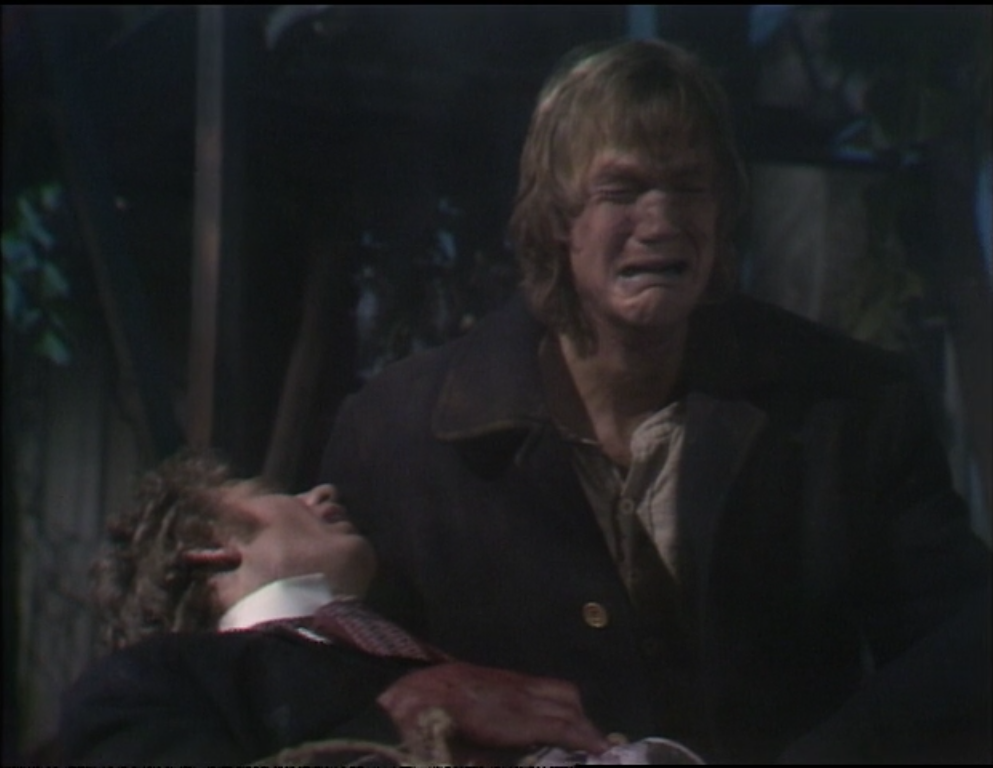
Preemption Day: Dark Shadows actors on N.Y.P.D. (1967-1969)

On 23 October 1970, the ABC network preempted its afternoon lineup to cover President Richard Nixon’s address to the General Assembly of the United Nations. As a result no episode of Dark Shadows premiered 56 years ago today.

A few months ago, I was looking for something to watch on TV. My eye fell on a show from the 1960s I’d never heard of, titled NYPD. I flipped over to it, expecting it would hold my attention for a few seconds at most. But I saw that the guest star was John Karlen, Willie Loomis himself, playing a television reporter. Like Willie, Karlen’s character thought he had found a path to fortune and success, only to end up hopelessly entangled with a homicidal maniac. Karlen was great of course, and the show was way above average for cop shows of any period. Also, the opening title sequence, shot from a perspective immediately behind a flashing light on top of a car speeding through the city streets, was obviously the inspiration for the same image in the opening of Police Squad! So I watched it again the next time it was on, and soon found myself watching it as a matter of habit.

NYPD was produced in New York City for ABC from 1967 to 1969, and Karlen was one of a great many Dark Shadows cast members who had parts on it. Their appearances are fun for Dark Shadows fans, and in more than a few cases, they played remarkably similar roles. There were other connections between the shows as well- Ohrbach’s even provided the wardrobe.

Here are some of the casting overlaps. The first season was 26 episodes long, the second 23:

Season 1, Episode 1, “Shakedown”: Opens in a hotel room where a man appears to have committed suicide. The hotel manager is played by Conrad Bain; as when he played Mr Wells, manager of the Collinsport Inn, we don’t get to see nearly enough of him. The hotel detective is played by Dana Elcar, Sheriff Patterson #1. The heroes from the 27th Squad of the New York Police Department are exasperated at having to deal with Elcar’s character, since he is notorious throughout the city as an utterly incompetent investigator. Good to see that he didn’t lose his Collinsport ways when he moved to the big city! And John Harkins, who appeared in four roles on Dark Shadows, always as a mysterious man from another place, plays a nameless character who is the secret leader of all the gays in NYC (I don’t know if the gays all share a secret leader now. Maybe things were different in the sixties.)

Season 1, Episode 2, “Fingerman”: Joel Fabiani was heard but not seen as Paul Stoddard in #271, when we flashed back to the night when Liz learned Paul’s secret and tried to beat him to death. In this episode, Fabiani plays a man who is frantic because his secrets have caught up with him and now someone wants to beat him to death.

Season 1,Episode 8, “To Catch a Hero”: Michael Currie was Dark Shadows first law enforcement officer, the hapless Constable Jonas Carter. In this episode, Currie plays an army officer assigned to assist the detectives with the case of a psychotic war veteran. He fails to provide appropriate security to keep the veteran from getting loose and the police are forced to shoot him. That’s exactly the result we’d expect if Constable Carter were in his position.

Season 1, Episode 9, “Murder for Infinity”: John Karlen’s episode. Other familiar faces in the cast are Ralph Waite, the future Pa Walton, as the homicidal maniac and Sam Waterston as a beatnik who uses “hetero” as a pejorative term to describe Karlen’s character. There’s no word on whether the Sam Waterston character is satisfied with John Harkins’ secret leadership, but I do wish the young Sam Waterston had been on Dark Shadows as a militant sexual liberationist who sneered at straight people.

Season 1, Episode 10, “The Pink Gumdrop”: Nancy Barrett is glimpsed for about three seconds sitting at a table in a cafe where people plan car thefts.

Season 1, Episode 11, “The Witness”: about 20 minutes into it there was Bob O’Connell, a.k.a. Bob the Bartender, as laboratory technician Gerardi. He has several lines, but is uncredited. He isn’t even listed on IMDb, so I took this screenshot to prove that it is him:
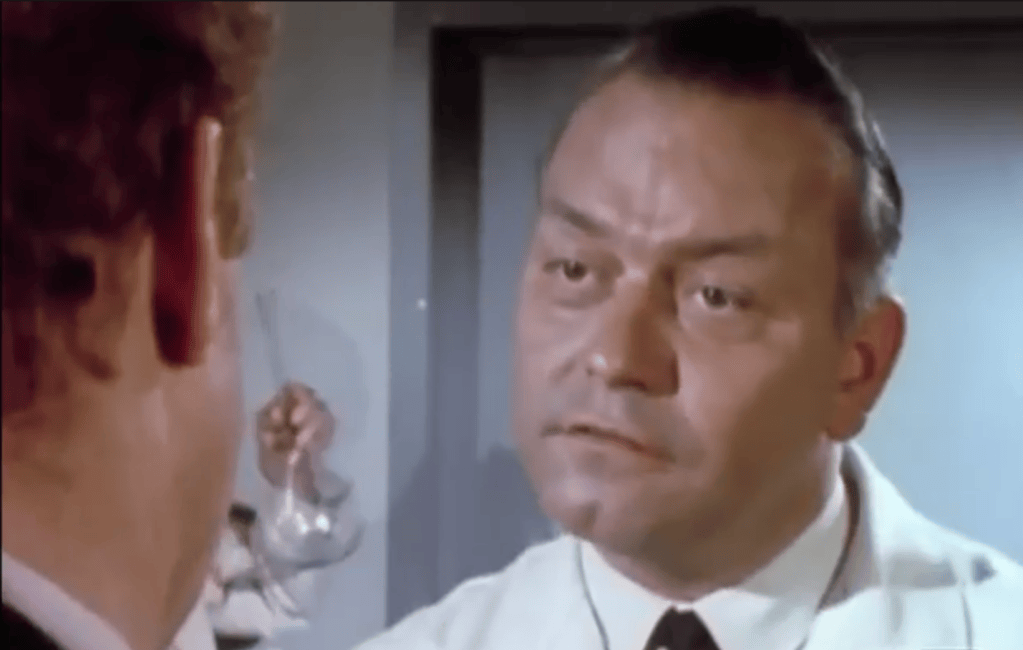
Criminalist Gerardi is supposed to analyze the ink on a document and determine when it was signed.

Season 1, Episode 12, “Boy Witness”: A 13 year old sees a woman shot to death and claims to have seen the gunman. A fingerprint on the cartridge of the fatal bullet leads the detectives to a man who matches the boy’s description and who was dating the woman. The man is played by Mitch Ryan. Ryan’s character breaks into the boy’s bedroom, and when the police catch up to him he assaults them and attempts suicide. It turns out the boy didn’t really get such a good look at the guy, so the detectives say that now they have to start all over. Since they could prove that he loaded the murder weapon, that would seem to be an overreaction! That overreaction reminds me of Burke Devlin’s belief that he was somehow proved innocent of vehicular manslaughter because he wasn’t driving his car when it hit the victim, he was just passed out drunk in the back seat after he had given the keys to an equally drunk guy. Still guilty!

Season 1, Episode 16, “Cruise to Oblivion”: Hugh Franklin played Richard Garner, grey eminence of the Collins’ family’s legal team on Dark Shadows. In this one, he plays the grey eminence of a drug ring. James Hall was Willie Loomis #1, a young mariner who seems to have lost his sea papers and who is a subordinate in some kind of unsavory scheme. Here, Hall is a subordinate in the scheme Franklin’s character oversees, and is connected with a ship carrying heroin.

Season 1, Episode 20, “Cry Brute”: Clarice Blackburn played three characters on Dark Shadows whose function was to introduce false allegations. Housekeeper Mrs Johnson was originally supposed to accuse Roger Collins of killing Bill Malloy; repressed spinster Abigail Collins brought in the Rev’d Mr Trask to accuse well-meaning governess Victoria Winters of witchcraft; and hateful biddy Minerva Trask accused neurotic intellectual Rachel Drummond of all sorts of things. In this episode, Blackburn plays a wife who backs her husband up when he falsely accuses one of Our Heroes of assault.

Season 1, Episode 24, “The Private Eye Puzzle”: Donna McKechnie as a young woman with a secret, over a year before she appeared on Dark Shadows as Amanda Harris.

Season 1, Episodes 25 & 26, “Nothing is Real But the Dead” Parts One and Two: Michael Hadge, who attained immortality as motorcycle enthusiast Buzz on Dark Shadows, plays a man the detectives meet in a pool hall. In Part One, he’s on camera for about a minute, enough to make a strong impression. He complains angrily about the damn dirty hippies who have moved into the neighborhood and are ruining it for all the hardworking, clean-living old-time residents such as himself and his family.

In Part Two, he gets another minute. The detectives remember his vociferousness against the hippies, and suspects he may have killed one of them. He denies it. Hadge has a very fine needle to thread here. The character is pretending not to be afraid of the police, and he is not as good an actor as Hadge is. We notice his insincerity, and are left wondering if he might be guilty. But it takes more time than Hadge has to really deliver on this, so we wind up attributing the character’s shrill awkwardness to his limitations and bumping ourselves out of the story for a little bit.

Season 2, Episode 1, “Naked in the Streets”: Vince O’Brien played a couple of forgettable roles as senior law enforcement officers on Dark Shadows. He has an equally forgettable role in this one as the New York Police Department’s Commander for the borough of Manhattan.

Season 2, Episode 2, “Encounter on a Rooftop”: Alfred Hinckley had a bit part in the first episode of Dark Shadows as a train conductor, and a more substantial part later as a doctor who is initially courageous when confronted by the monsters, but who ends up letting them have their way. He has a small part in this one as a man who reports a prowler and sets off the action.

Season 2, Episode 5, “Deadly Circle of Violence”: Gene Lindsey has a great scene as a man who catches up to a racist mass murderer played by some guy called Al Pacino. He doesn’t share any scenes with the murderer’s girlfriend, played by a actress named Jill Clayburgh. I wonder if those two ever called Lindsey for career help when he made it big as Randall Drew in the 1840 segment of Dark Shadows.

Season 2, Episode 6, “Case of the Shady Lady”: Harvey Keitel danced at the Blue Whale in #33; within two years, he played the manager of a dance club in NYC in this episode.

Season 2, Episode 7, “The Golden Fleece”: John Harkins has a major part as a man who gives the police an incomplete report of a a robbery of which he was the victim. Erica Fitz is credited as a waitress, but we didn’t notice her.

Season 2, Episode 9, “Walk the Long Pier”: Hugh Franklin reprises his role as the drug kingpin, but doesn’t have much to say. Dolph Sweet, a forceful Collins family loyalist in #99, is a forceful police official. Frederic Forrest, who danced at the Blue Whale in #137, appears briefly and is credited as “Customs Official.”

Season 2, Episode 12, “The Love Hustle”: The episode opens with Lara Parker walking into the squad room, raving that her mother is in danger, and dropping dead. Most of the time she is on screen she is photographed in an extreme closeup focused on her eyes. She’s only on for a minute, but the rest of the episode is an investigation of what happened to her, so she makes an impression.

Season 2, Episode 13, “The Body in the Trunk”: Mitch Ryan is the angry father of a girl who died under unsavory circumstances. House Jameson, who appeared in #270 as the useless Judge Crathorne in #270 and #271, here plays the even more useless doctor who is responsible for the girl’s death.

Season 2, Episode 14, “Night Watch”: Daniel Keyes plays a locksmith, which I suppose might be a joke about his name. Come to think of it, as the Caretaker at the old cemetery north of town he played a character whose chief responsibility was locking and unlocking gates and doorways, so perhaps he was cast on Dark Shadows for the same reason.

Season 2, Episode 15, “Three Fifty Two”: Frederic Forrest, wearing a wig that appears to be made of an old truck tire, is the second most prominent member of a gang of robbers who beat up two of the three main characters.

Season 2, Episode 21, “Boys’ Night Out”: David Ford, Sam Evans #2 and Andre DuPrés, is a detective who advises Our Heroes on his specialty, extortion rackets. He just sits across a table from them and gives a brief lecture in a reassuring tone. He appears to be reading off a teleprompter.

Season 2, Episode 22, “Everybody Loved Him”: Alfred Hinckley has another small part as a witness.

Season 2, Episode 23, “No Day-Trippers Need Apply”: Lee Beery and Gaye Edmond play women who are more or less prostitutes, which their characters on Dark Shadows were not. Philip R. Allen plays a policeman, which his was.
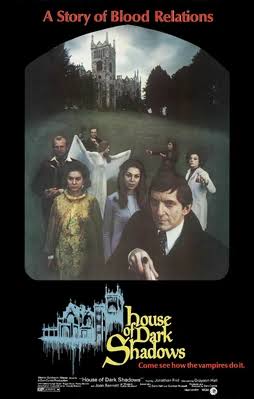
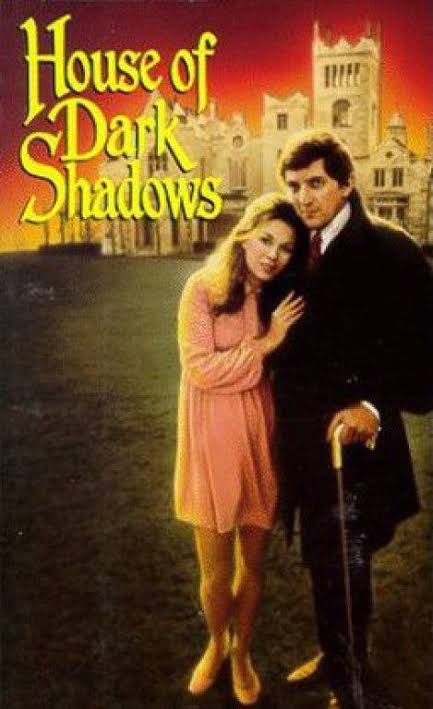
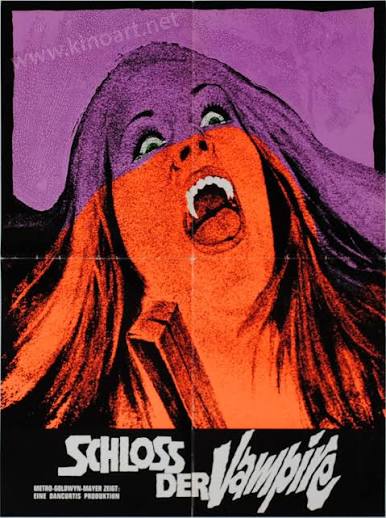
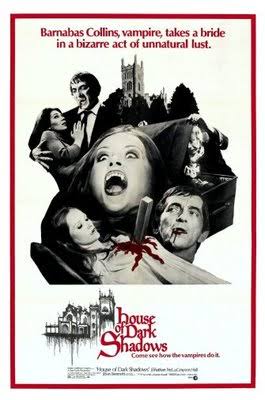
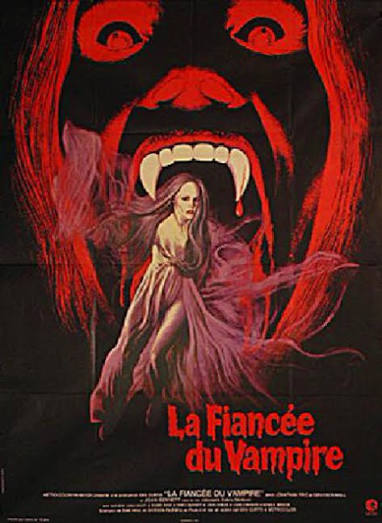
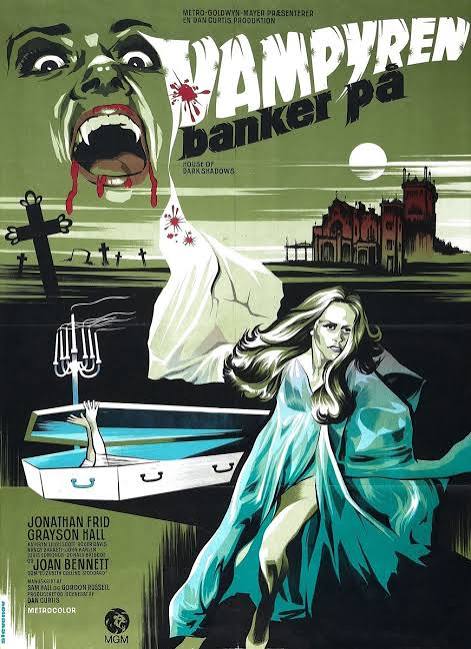
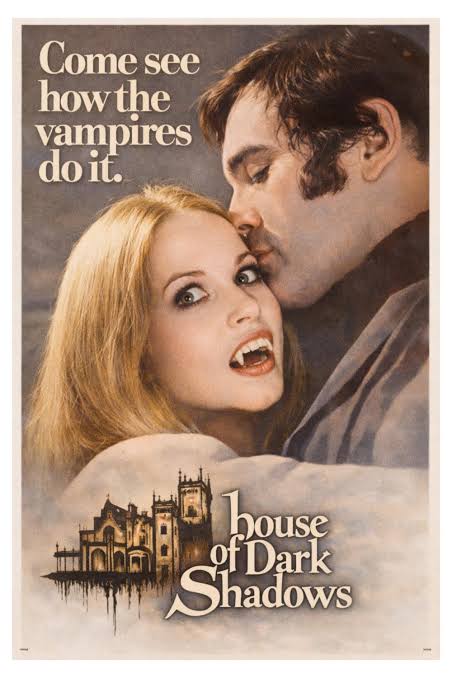
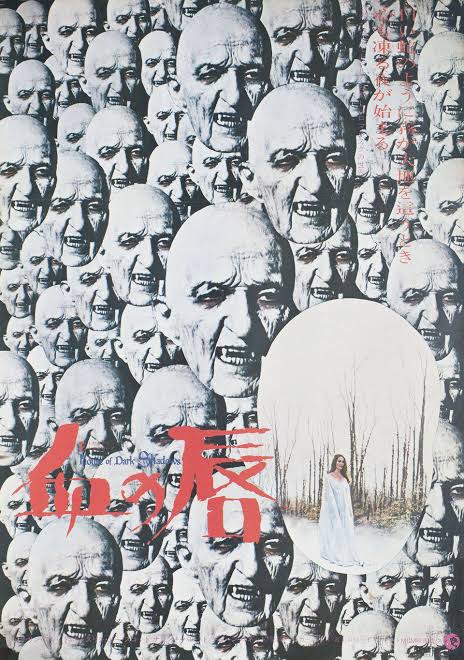
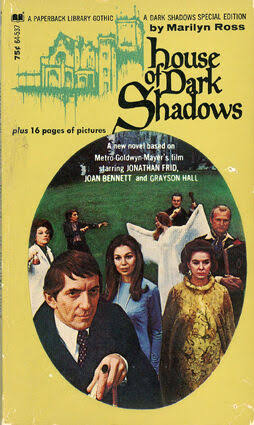
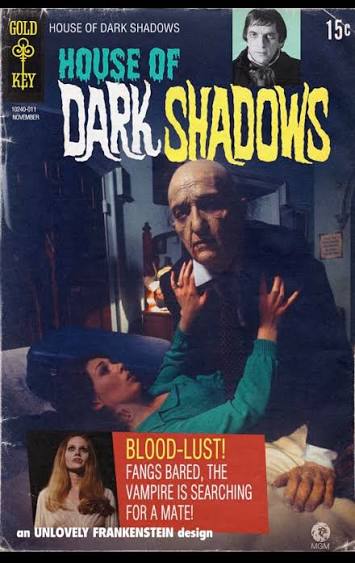
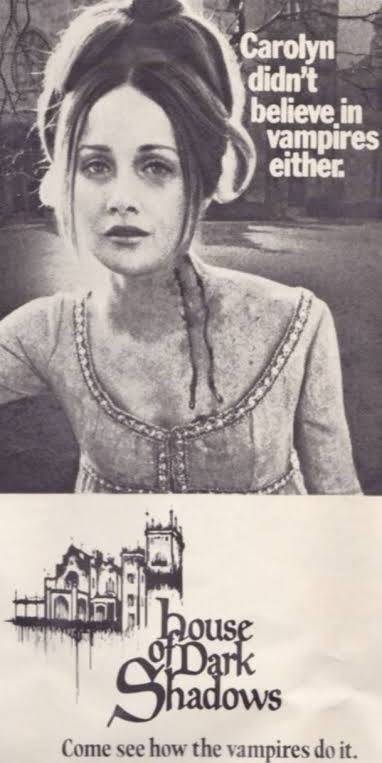
House of Dark Shadows

Vampire Barnabas Collins joined the cast of Dark Shadows in April 1967. Barnabas introduced himself to matriarch Elizabeth Collins Stoddard and her family as their distant cousin from England. Soon, Liz had given him run of the Old House on the great estate of Collinwood, and she was treating that house and its contents as though they were Barnabas’ property.

In May and June of 1967, Barnabas took Maggie Evans, The Nicest Girl in Town, as his new victim. He did not merely want to drink Maggie’s blood. He wanted to erase her personality and overwrite it with that of his lost love Josette. At the climax of this plan, he would make her into a vampire like himself, and the two of them would go forth to prey upon the living.

Barnabas’ plan failed. Maggie recovered her will and escaped from Barnabas. She would have exposed him, had her psychiatrist Julia Hoffman not betrayed her and magically mind-wiped her memory of what Barnabas was and what he had done. Julia attached herself to Barnabas as his personal physician, making it possible for him to go long periods without biting anyone. Barnabas continued to make his home at the Old House and to pass as a live Englishman. In time, the relationship between Julia and Barnabas became the core of Dark Shadows, and its most important stories were their adventures.

With Barnabas’ introduction, the show became a hit. By the time 1968 turned into 1969, it was one of the major pop culture fads of the period. That gave executive producer Dan Curtis an opening to pitch a Dark Shadows feature film to Hollywood studios. The one that bought the idea was MGM, headed at that time by Kirk Kerkorian, a tycoon who was trying to get out of the movie business and put MGM’s brand and other resources in service of his chief goal in life, making himself the king of Las Vegas. Kerkorian still had contracts with distributors that obligated him to provide a certain number of features a year. Dark Shadows already had a fan base, so that a film version of it wouldn’t require as much spending on advertising and promotion as would a new product, and the show was done so cheaply that Curtis couldn’t very well argue that he needed a big budget for production. So Kerkorian saw a way to meet his legal obligations at minimal financial risk.

The movie that resulted from this business decision is slow-paced, confusing, and amateurishly shot. I love it.

Most of the events and characters are drawn from the first seven months Barnabas was on the show. There are lots of Easter eggs for fans of the show. Almost all of the music is recycled from the show, including a brief bit of one of the rock and roll numbers that often played on the jukebox at The Blue Whale tavern in the first year but that have rarely been heard since. Both Maggie, in the opening scenes, and the sheriff later on point flashlights directly into the camera. The sheriff and his deputies display the same clownish ineptitude that distinguished them on the show. My favorite example comes after a deputy has driven his car directly into a tree. The sheriff says that he wouldn’t have done that unless he saw something, prompting us to think that a Collinsport law enforcement officer probably would be more comfortable driving with his eyes closed.

The events do not take place in the same sequence as they did on the show, and some of the characters are jumbled as well. So in 1967, the governess in the great house was the well-meaning Victoria Winters and her boyfriend was dashing action hero-turned hopeless schlub Burke Devlin. Vicki and Burke were already past their peak of interest in April 1967, and have been gone and forgotten for years at this point. Maggie is the governess on the show now, and she is the governess in this version of Collinwood as well.

Maggie’s last steady boyfriend was hardworking fisherman Joe Haskell, who left the show when he was the victim of a vampire in 1968. So in this Collinwood, Maggie is engaged to Jeff Clark, who corresponds to the character who married Vicki after Burke was lost in a plane crash. Like his namesake on the show, this Jeff is played by the repellent Roger Davis. There is a costume party in the movie, as there was in the show. Jeff wears an eighteenth century naval uniform that was originally worn on television by Nathan Forbes, a character who, like Joe, was played by Joel Crothers. It is as if Curtis is acknowledging that we would rather see Maggie and Joe, but rubbing our faces in the fact that we’re getting more Roger Davis instead.

Julia is not Maggie’s psychiatrist in this universe. When Barnabas is freed from his coffin, she is already at Collinwood, researching the Collins family history. She claimed to be doing that as a cover story in 1967, but here it is apparently the truth, for some reason. She confirms that Barnabas is a vampire when she sees that he does not cast a reflection in the mirror in her compact, the same gimmick she used on the show. She makes her offer to cure Barnabas of vampirism 56 minutes into this 96 minute movie, after he has killed several people and thrown the whole area into an uproar. She falls in love with him shortly after, to his embarrassment. When the treatments misfire by causing him to age rapidly, as they did in the show, he deviates from the original by killing her.

That sets off the final crisis. Barnabas takes Maggie to his hiding place and tries to Josettify her. Several characters set out to hunt him. Jeff finds that Barnabas has killed some of them and turned them into vampires. He kills two of these, then finds Barnabas and destroys him just as he is about to turn Maggie into a vampire.

We had barely seen Jeff and Maggie together, and in their few shared scenes they had no chemistry at all. Nor has he been involved in any of the other action sequences. Indeed, he begins the climactic sequence by being woken and told that he has overslept, which serves to underline his peripheral position in the plot up to that point. So it is entirely unsatisfying that he comes out of the blue and is the rescuer in the grand finale.

My wife, Mrs Acilius, pointed out that we have seen Maggie interact quite a bit with Roger Collins, brother to Liz and father of strange and troubled boy David. Roger also took an active part in the first destruction of a vampire, when his niece Carolyn was staked. So it would make sense for him to be the rescuer, and for Mr Davis’ character to be left out of the movie altogether. A romance between Roger and Maggie would hark back to the early days of the show, when there were a few hints that Vicki, a Jane Eyre analogue, might start dating Roger, whose position as father of her charge and whose very name recall Mr Rochester.

Fans often wonder what Barnabas’ long-term plan was in the Spring and Summer of 1967. Maggie was known to everyone and her disappearance was big news, so he could hardly have presented her to the family once she was Josettified. And his own operations as a vampire were an ongoing disaster that had everyone in the Collinsport area on edge. Add a second vampire to the household, and the situation would become entirely unsustainable.

The show indicated what would probably have happened had Barnabas succeeded, first in February 1969, and then in more depth in July 1970. In #694, the ghost of Quentin Collins takes control of the great house, forcing all of its residents to flee for their lives. In episodes #1061-#1070, Julia and Barnabas come unstuck in time and find themselves in the far-off future year 1995, where another ghost has taken control of Collinwood. The great house is in ruins, the grounds overgrown, and the residents of Collinsport are unwilling even to mention the estate, let alone go there. Surely those were the only surroundings in which Barnabas and a vampiric, Josettified Maggie could have gone on existing.

That’s very much the situation that is about to come into being at the end of this film. We don’t see the great house. Instead, Jeff encounters occult expert Timothy Eliot Stokes on an island overgrown with weeds, finds that he has become a vampire, and destroys him. He then goes to a building in ruins, apparently located on the same island (though the scraps of film that make up this movie are so confusingly pieced together that you can never be quite sure where anyone is supposed to be at any time,) and finds Roger sitting on a sort of throne. Roger is also a vampire, and Jeff destroys him too. From there he goes to the Old House, probably, where he confronts Barnabas in a big space that is also in ruins. The structures we do see show us what would happen to the great house if Barnabas survived, and what may happen to it anyway. The only living members of the family are Liz, who was catatonic after she found out that her daughter had become a vampire and doesn’t seem likely to make much of a recovery, and David, who was already pretty screwy when the movie started. It’s hard to see how either of them is going to keep such a big place up.

Pre-emption Day: Dark Shadows and Beyond: The Jonathan Frid Story

No episode of Dark Shadows premiered 56 years ago today. Instead, the ABC television network showed football, as is traditional on the USA’s Thanksgiving Day holiday.

I see I haven’t yet linked to Dark Shadows and Beyond: The Jonathan Frid Story, the documentary film that Frid’s dear friend and longtime business associate Mary O’Leary made in 2021. Any fan of the show who hasn’t seen it should do so at the earliest opportunity. It’s available on many streaming platforms; if you don’t mind commercial interruptions, you can watch it for free on Tubi.

If you look at discussion boards and comment sections on fansites that were up before the movie was released, you’ll see people going round and round at incredible length about whether Frid was gay. We all owe Ms O’Leary and her collaborators a debt of gratitude for confirming that he was and thereby putting a stop to that pointless wrangling once and for all.

Frid was often called a “Shakespearean actor” when Barnabas was a big presence in pop culture. The documentary shows that while he was never the Shakespeare specialist this title would suggest, it isn’t exactly wrong to call him that. He did spend a lot of time on Shakespeare as a student actor in Canada and in England, each of his appearances in a Shakespeare play marked a definite turning point in the development of his style, and his one turn as a director was at the helm of a production of James Goldman’s pseudo-Shakespearean The Lion in Winter. He brought a distinctly Shakespearean tone to all of his works, allowing Dark Shadows to hold our attention even when the stories are as silly as the plots of Elizabethan comedies.

The movie also shows how deeply Canadian Frid was. He grew up in Hamilton, Ontario, son of a prominent businessman and civic benefactor. The discussion of H. P. Frid leaves us with the thought that social prominence in Canada is rather a different thing than it is south of the border. Old Mr Frid seems to have occupied a lordly place that would not have been possible where the USA’s single market pulls even the most remote town into the swing of national life and presents constant reminders that the local bigwigs are themselves somewhere down the pecking order from grander figures elsewhere. Young John Frid may have pursued a career on the stage to escape his father’s shadow, and it is no wonder he had to go abroad to accomplish that.

While in England as a student at the Royal Academy of Dramatic Arts and then as an actor in regional theater, it was his North American identity that dominated people’s perception of him. For all that Canada had the same monarch who put the “Royal” in RADA’s name, in Frid’s appearances on the English stage was usually cast as a US national. And after his fame in the USA and period of residence in Mexico, Frid did go back to spend his final years in Canada. The footage of him there shows him at home in a way that he never was anywhere else.

Preemption Day: Some videos of Dark Shadows-related gatherings on Youtube

No episode of Dark Shadows premiered on ABC 56 years ago today, since the network had decided to cover the visit of the Apollo 11 astronauts to Chicago instead. So I’ve decided to take this opportunity to link to videos of some interesting discussions about the show posted on Youtube.

They couldn’t have in-person conventions with panels including original cast members in the year 2020, what with Covid-19. So they had a big Zoom call instead. That one is especially interesting, because it brought out some people who hadn’t made themselves visible to fandom in decades. In the case of David Henesy, it may have been his first act of fanservice since the show went off the air. When Alexandra Moltke Isles says that her first encounter with a fan was with someone who grabbed her hair and tried to rip it out of her head, that absence is perhaps understandable. The video shows the meeting in speaker view. Fans who groan every time Roger Davis turns up will find it grimly appropriate that he couldn’t figure out how to mute his camera, and so he keeps flashing in when other people have the floor. I can’t embed it, but here is the link.

Another Zoom recording some might enjoy seeing is of an April 2021 gathering in honor of Danny Horn’s great blog Dark Shadows Every Day. I was there, under my off-screen name. The discussion got a bit awkward when some podcasters started vying with each other and with the actual host to take over the moderator’s role, but I think all of us who wanted to do so eventually made ourselves heard. It was a good time.

Since 2020, Dark Shadows fan gatherings have taken on the character and often the label of memorial services, since so many of the people who used to appear on the panels are either deceased or otherwise unable to travel. But some of them have maintained a jolly spirit even so. For example, in this 2024 panel appearance Marie Wallace and Donna Wandrey amusingly complain about some appalling behavior by director Henry Kaplan. Sharon Smyth, who wasn’t on the show when Kaplan was, listens.

This July, Danielle Gelehrter hosted Kathryn Leigh Scott and David Henesy for a Zoom chat under the aegis of her “Terror at Collinwood” podcast. Mr Henesy has his own stories about Kaplan’s misdeeds.

I wouldn’t want you to think that Mrs Acilius and I watch nothing but 56 year old TV shows. Why, this very night, after I’d written the above and scheduled it to go live at 4 PM on Wednesday the 13th, we watched a 61 year old episode of To Tell the Truth. One of the impostors had a voice that sounded terribly familiar to us, but a face we didn’t recognize at all. When the game was over, he said his name was “Bobby Lloyd, and I’m a TV announcer at WHEC TV in Rochester, New York!” Two years later, he was Bob Lloyd, and he was on staff as an announcer for the ABC network, where he would say “Dark Shadows is a Dan Curtis production.”

In place of episode 653: The Gift of the Magi

No episode of Dark Shadows debuted on ABC-TV 56 years ago today, since that was Christmas Day. So in place of an episode commentary, I’ll share a link to Smartphone Theatre’s 2022 production of “The Gift of the Magi,” starring Kathryn Leigh Scott and David Selby.

Pre-emption Day: Dan Curtis’ Frankenstein

Episode 509 of Dark Shadows did not air on ABC-TV as scheduled on 6 June 1968. The network instead broadcast news coverage related to the assassination of US Senator Robert F. Kennedy.

At this point, one of Dark Shadows’ storylines was a loose adaptation of Frankenstein. Five years later, Dan Curtis, the show’s executive producer, would bring another adaptation of the novel to the small screen, as part of ABC-TV’s late night programming that ran under the umbrella title Wide World of Mystery.

Originally presented in two parts, each filling a 90 minute window, Dan Curtis’ Frankenstein is now available on Tubi in a 2 hour, 6 minute cut. It is more faithful to Mary Wollstonecraft Shelley’s original novel than were any previous adaptations, a point Curtis frequently made.

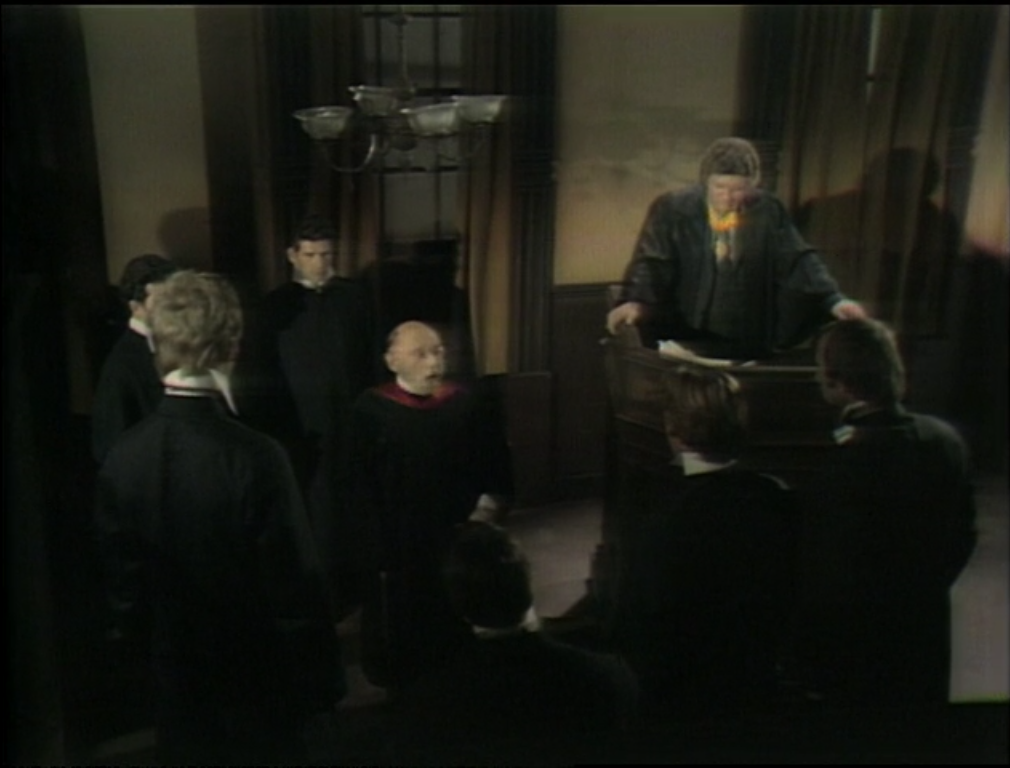
The main theme is made clear in the opening. Dr Victor Frankenstein is supposed to give a talk to a classroom of students in white coats, but they keep shouting him down. The professor identifies Frankenstein* as the winner of an academic prize and urges his unruly pupils to give him a hearing. That gets Frankenstein enough time to tell the class that they don’t understand what he has been saying, to make a little speech about the scientist’s obligation to create a superhuman life form in the laboratory, and to look frustrated when they walk out on him. The professor stays behind and tries to reason with Frankenstein, who doesn’t seem to be listening to a word he says.

Frankenstein can’t get a hearing.

No communication occurs in that scene, and very little occurs in any scene that follows. That’s a natural basis for a drama about the Frankenstein story. The mad scientist is disconnected from any voices of sanity, and the being he creates does not initially understand any language and has no frame of reference in common with anyone he might meet.

Frankenstein goes to his laboratory, where his friends Hugo and Otto are wearing funny hats and preparing to celebrate the prize he won. Hugo and Otto quickly gather that Frankenstein is uninterested in a party, but the heavy, ominous music on the soundtrack** tells us that more is going on in Frankenstein’s mind than his friends know.

Frankenstein insists that the experiment go on, an idea Otto resists. Otto wants to stop “while there is still time”; Frankenstein says that they have already passed the time when stopping was possible. Frankenstein seems to be talking about the danger that the body they have assembled will decompose, while Otto seems to be talking about the consequences of continuing to forage for organs and of bringing the body to life. Again, neither man reaches the other.

Frankenstein, Hugo, and Otto go shopping in the graveyard, where the caretaker shoots Hugo. Frankenstein and Otto get Hugo back to the laboratory. Frankenstein wants to call for help, even if it means prison, but Hugo insists that he and Otto use his heart to complete the experiment. He dies. Frankenstein decides to honor his wish. They will tell people that Hugo went climbing in the mountains, and after a while searching for his body people will simply give up. So Frankenstein and Otto will tell a false story, on the basis of which people will make and follow pointless plans. They then prepare to complete the experiment.

The preparations are interrupted when unexpected visitors arrive. They are Alphonse, father of Frankenstein; Elizabeth, fiancé of Frankenstein; and Henry, brother of Elizabeth and friend of Frankenstein. Frankenstein greets them, flustered, and says that they have come at a bad time and must stay at the inn. Alphonse and Henry wonder why Frankenstein did not receive Elizabeth’s note informing him of the date of their arrival; Elizabeth sees the note, unopened, on a table. Yet again, the emphasis is on a lack of communication.

Frankenstein and Otto resume the experiment. After a long display of flashing sparks, they cannot get any vital signs from the body. Frankenstein declares that the experiment has failed and orders Otto to burn “all the books, every journal!” They are out of the room when the body starts to move. Frankenstein comes in by himself, sees what’s happening, and says, in a voice too quiet to be heard outside the door, “He’s alive.” This unheard “He’s alive” is an obvious contrast with Colin Clive’s manic cry of “It’s alive!” in the 1931 film, emphasizing that while Clive’s Frankenstein may have been alienated from others by his obsessions, Robert Foxworth’s is simply unintelligible to the people he knows. The aftermath of the experiment is a recreation of the equivalent scene in episode 490 of Dark Shadows, but the idea of destroying the records of the experiment is added to show that Frankenstein is fighting against communication as such.

Once Frankenstein and Otto realize that the big guy has come to life, they help him up off the table. The experimenters handle their creation with a gentleness and good cheer that makes a striking contrast with the extreme callousness patchwork man Adam received from his self-pitying creators in Dark Shadows, and comes at a moment when both the immediate aftermath of the experiment and John Karlen’s presence as Otto have brought that story to the forefront of our minds.

Frankenstein and Otto are surprised that the big guy doesn’t have the memories of the professor whose brain they implanted in his head. Frankenstein speculates that the electric shocks they used to animate him may have wiped out his memories, but also thinks that those memories might eventually come back. Their attempts to communicate with him, therefore, are based not so much on listening as on an effort to conjure up the late Professor Lichtman. Still, Frankenstein is happy to note that the big guy has the reactions, not of a newborn, but of a four year old.

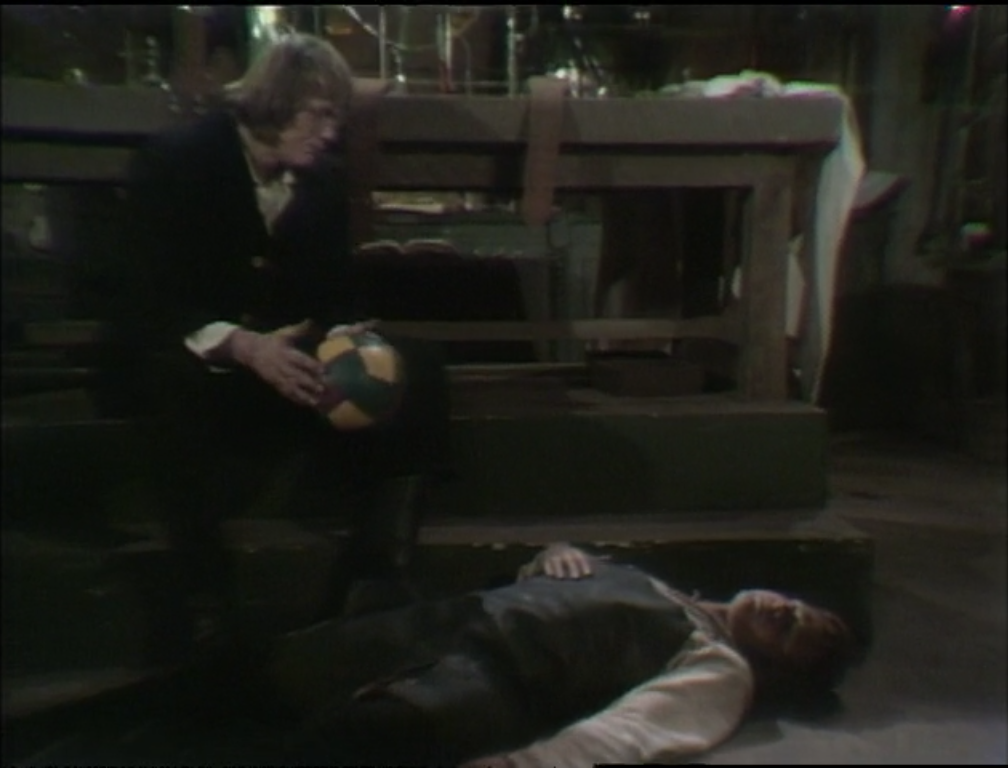
Frankenstein leaves Otto alone with the big guy while he goes off to placate his father, Elizabeth, and Henry. Otto teaches the big guy to play catch. Delighted with this, the big guy hugs Otto. He doesn’t know his own strength, nor does he understand what Otto means when he gasps out “Stop!” When Frankenstein comes back to the lab, he finds the big guy standing over Otto’s corpse, pleading “Play, Ot-ta, play!”

The big guy begs Otto to play

Frankenstein takes out a pistol, but cannot bring himself to kill the big guy. Instead, he orders him to get back on the table. He readily complies, and Frankenstein straps him in place. He takes Otto’s body from the lab. As soon as Frankenstein has left the room, the big guy easily breaks the straps and goes to the door. Finding it locked, he smashes some lab equipment.

Frankenstein takes Otto’s body to his room above what appears to be a tavern. He sets up Otto’s telescope by an open window and drops his body to the ground. By the time he returns to the lab, the big guy is gone.

The big guy wanders about and has some poignant moments when children see him and react with fear. He makes his way to a house occupied by the de Laceys, a blind girl named Agatha and her elderly father. He hides unnoticed in a closet there for, apparently, several months. Shortly after he takes up residence, Agatha’ brother, a sailor, drops his fiancée off at the house. She speaks only Spanish, and Agatha and her father speak only the language of Ingolstadt, which in this movie is identified explicitly as “inglés,” even though Ingolstadt is in Germany. In one of the first English lessons Agatha gives her sister-in-law to be, she says that the storm outside is “a summer rain”; in a later scene, while the big guy is still undetected in the closet, she mentions that October is almost over. Both the dramatized difficulties of language teaching and the unremarked failure of Agatha and her family to detect a huge man crouching a few feet away from them for so long stress the theme of non-communication.

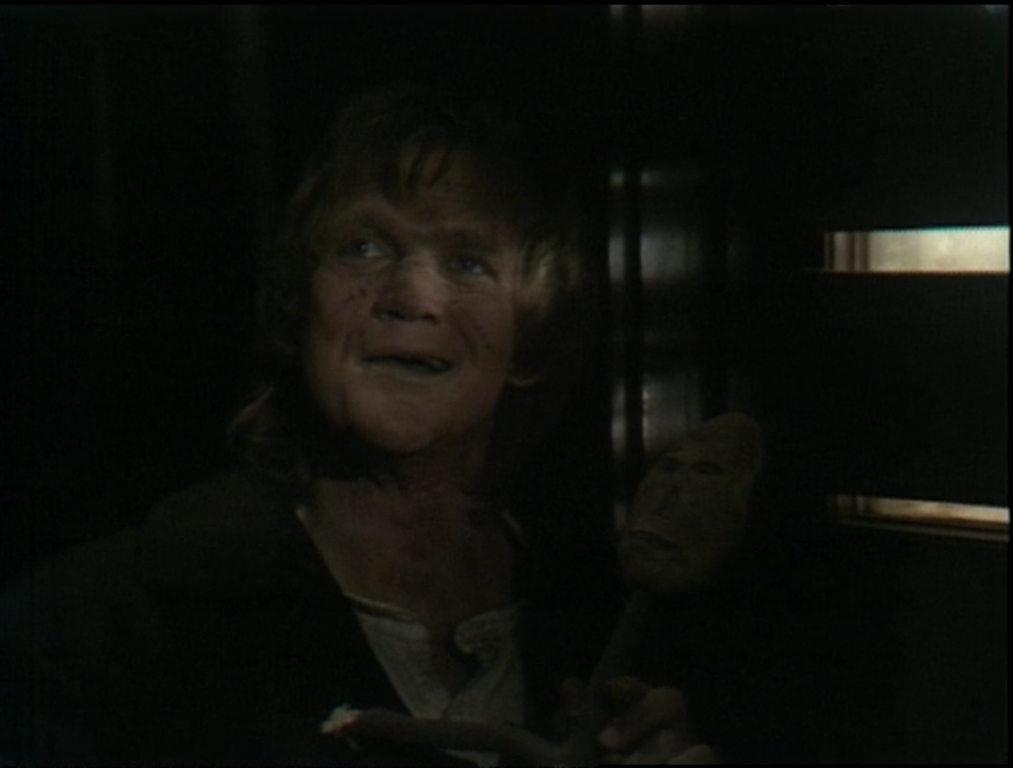
The big guy makes a crude doll and talks to it while Agatha gives her sister-in-law English lessons. He speaks quietly, but not so quietly that it isn’t absurd that they fail to notice him. I suspect that absurdity is as intentional as is the doll’s inability to talk back.

The big guy and his doll.

One autumn night, the big guy comes out of his closet and walks around the vacant living room. He starts talking. He maintains a warm smile throughout, uses sophisticated grammatical constructions and a wide variety of phrases, and acts out a scene full of pleasantries, apologizing for the roughness of his manner and explaining that he has known little kindness from people. He catches a glimpse of himself in a mirror, the first time he has seen such a thing. He recoils from his face, and exclaims “Ugly!”

In the morning, he goes outside and knocks on the front door. When Agatha enters, he tells her he is “a friend you do not know.” She is puzzled by this expression, but lets him in anyway. She jumps to the conclusion that he is a traveler; he tells her that he wishes the whole world were blind. He may have become capable of speech, but now he is terrified of nonverbal communication. The conversation goes quite well until she wants to touch his face. He refuses. She insists, and chases him around the room. At that moment, her father, brother, and sister-in-law to be enter. Misunderstanding, they jump to the conclusion that the big guy is the one chasing Agatha. They fight him, and he injures her brother.

Mr de Lacey, with Agatha and his daughter-in-law to be in tow, brings the injured young man to Frankenstein’s house. When Frankenstein hears their description of the big guy, he mutters a few words about how to tend the patient’s wounds, and sets out with a gun to hunt his creation. They are bewildered that the doctor has rushed off after giving them so little information, and Elizabeth is left to try to smooth things over with them.

That night, Frankenstein catches a glimpse of the big guy and shoots him in the forearm. The big guy gets away. He has no idea who Frankenstein is or why he would shoot him. He finds himself on the grounds of Frankenstein’s house. Frankenstein’s little brother William is outside. They meet at the fountain there. William is unafraid of the big guy and makes a tourniquet to stop the bleeding from his gunshot wound. The big guy and William are quite happy together until William sees Elizabeth and decides to call her over. The big guy tells him not to call anyone, but William ignores him. Panicked, the big guy covers William’s mouth. He still doesn’t know his own strength, so he accidentally breaks William’s neck, killing him instantly. Unlike with Otto, the big guy now knows what he has done, and so his plea is not “Play!” but “Don’t be dead!”

Frankenstein finds William and realizes what has happened. He resumes his hunt. When he finds the big guy, he fails to kill him. The big guy asks Frankenstein who he is and why he hates him. Frankenstein explains enough to draw the big guy’s full rage. He is furious that he was created to be alone, and complains that “I don’t even have a name.” He insists that Frankenstein create a mate for him. When Frankenstein demurs, the big guy threatens to kill everyone who crosses his path. This again echoes Dark Shadows, where Adam insisted that Barnabas and Julia build a “Friend” for him and responded to their protests with a similar threat. Unlike Adam, who was put up to demanding a bride by warlock Nicholas Blair and who didn’t appear to have any idea what sex was, the big guy has seen Frankenstein and Elizabeth together and says that he wants what Frankenstein has.

Frankenstein tries to comply with the big guy’s demand. He has built a womanly body, put it on his table, and hooked it up to wires that will conduct the charges from an electrical storm raging outside. Henry, furious that Frankenstein has paid so little attention to his sister, barges into the lab and sees the body of the Bride. Before he can tell anyone about it, the big guy kills him.

Frankenstein tries to complete the experiment. The big guy lets himself in and watches as the lightning makes the Bride arch her back, open her eyes, and scream. This is far more activity than the big guy showed before Frankenstein and Otto disconnected him, but Frankenstein leaves the Bride hooked up while the electric charges surge into her. She dies on the table. The big guy says that Frankenstein deliberately killed her. He doesn’t bother to deny it, but says that his conscience wouldn’t let him repeat the misdeed he committed in bringing the big guy to life. At that, the big guy vows to stalk Frankenstein for the rest of his life. He tells him that he will be there on his wedding night.

Frankenstein finally tells Elizabeth the truth. She resolves to stick with him regardless. They leave town. They check into an inn, where the innkeeper brings his friend the Burgomaster over to perform a wedding ceremony. The innkeeper and the Burgomaster explain that Frankenstein must go across the square to sign the registry to make the marriage legal. For some reason Elizabeth must remain in the room by herself while he does this. He resists, but Elizabeth and the Burgomaster insist it will be all right. Of course Elizabeth is dead when Frankenstein returns to the room a few minutes later.

Once more Frankenstein takes his gun to hunt the big guy; once more he fails to kill him. This time the big guy kills him. Frankenstein winds up dying cradled in the big guy’s arms, in a Pietà pose, while the big guy expresses his remorse for his killings. He speaks of “the pain I felt when I killed little William, the hate I felt for myself when I left Elizabeth dead,” and begs Frankenstein not to die. He does anyway, and the big guy walks off, encountering some policemen who shoot him to death.

The big guy wants forgiveness.

For a quarter century before this movie was made, feature films had spent a great deal of time exploring non-communication. Filmmakers like Michelangelo Antonioni, Jean-Luc Godard, and above all Alain Resnais had made dozens of movies about people who simply could not get through to each other. The result was a pervasive sense of tentativeness, as potential relationships were outlined but could not develop and potential events were envisioned but could not occur. The same tentativeness dominates this movie.

*Throughout the movie, people call the scientist “Frankenstein,” while his creation is known only as “The Giant.”

**Recycled from Dark Shadows and other collaborations between Curtis and composer Robert Cobert, as is nearly all the music.

In place of episode 391: Jonathan Frid reads “The Water Ghost of Harrowby Hall”

It used to be customary in many parts of the English-speaking world to tell ghost stories at Christmas. Charles Dickens’ A Christmas Carol is today the most famous of these stories, and it was dramatized in 2021 by the surviving members of the Dark Shadows cast.

But there are many others. John Kendrick Bangs’ “Water Ghost of Harrowby Hall” is one. Here is a recording of Jonathan Frid’s dramatic reading of it. He did it in the fall of 1969, and it was posted to YouTube by Frid’s close friend and longtime business partner Mary O’Leary in 2022.

The story echoes Dark Shadows at several points, most obviously when we hear about a ghost which, like that of Bill Malloy in #85, leaves pieces of the sea in its wake, and when we hear about a maiden who, like so many in the series, jumps off a seaside cliff and finds a watery grave at its foot.

When we listened to it, my reaction prompted my wife, Mrs Acilius, to say that I was “trying to ruin it, like you always do.” I’d pointed out that the Oglethorpes spend the whole story trying to build structures to contain the water that the ghost brings with her. Surely the logical thing would be to build a drain to sluice it all out of the house.

When Mrs A said that this would leave them without a story to tell, I protested that it should give them a more interesting story. Let them make a series of unsuccessful attempts to keep the water out, then an unsuccessful attempt to keep it in, and finally construct a means of draining it out. That would set you up for an ending where you see that the drainage, even though it might be mechanically successful, will still be an unsatisfactory response to the real problem, which is not the water at all but the curse of which the water is a symptom. That led her to agree that I was not “trying to ruin it,” which is about all I could hope for, I suppose.

In place of 131: “A Christmas Carol”

There never was an episode #131 of Dark Shadows. They made a point of giving numbers divisible by 5 to episodes that aired on Fridays, so on days when the show was not broadcast-as it was not broadcast on 26 December 1966- they just skipped the number that would have been used had it run that day.

Since that preemption was the result of Christmas-related programming,* this seems like the place to promote 2021’s big Dark Shadows Christmas event, a dramatic reading of the Orson Welles version of Dickens’ A Christmas Carol by ten surviving members of the original cast. Surviving at that time- it turned out to be Mitchell Ryan’s last performance before his death on 4 March 2022; Christopher Pennock had been involved in the early stages of the production, but he would die in February of 2021.

It is irresistible viewing for Dark Shadows fans. It makes extensive use of music from the show- rather too extensive for my taste, but Mrs Acilius liked it, and from what I gather she appears to be in the majority.

The acting is quite good. I was especially impressed by James Storm’s portrayal of Bob Cratchit. I had never seen Mr Storm in anything but Dark Shadows, where he was cast in the preposterously unplayable role of Gerard Stiles, so it was amazing to me to see what he could do when he had something to work with.

Another pleasant surprise was Alexandra Moltke Isles as the Ghost of Christmas Present. Readers of this blog know that I have a high opinion of Mrs Isles’ abilities, but this was her first part in 53 years. I held my breath to see how many steps she had lost in that interval. As it became clear that she could go as deep into her character as ever and pull up a treasure trove of dramatic insight, I was thrilled.

Mrs Isles appeared at one or two Dark Shadows conventions early in the 1980s. During the unpleasantness, she couldn’t very well make herself available for any event where she would be expected to take questions from the floor, but from time to time she sent greetings on video that would be played at conventions. And she sat for several interviews about Dark Shadows over the years. So you can’t say she made herself a complete stranger, but it is still quite a novelty to see her in this setting.

Many longtime fans describe Mrs Isles as the cast member who was least friendly to them when the show was in production, and there may be a reason for that. In the Q & A, she responds to the question about her first encounter with fandom by telling a story about a girl jumping her on the street and trying to rip her hair out of her head. After that introduction, it is remarkable that she’s been around as much as she has.

The person who had been absolutely disconnected from fandom the longest was David Henesy. He stuck with acting for a few years into the 1970s, but never attended a convention or had any connection with any Dark Shadows themed public events until a cast reunion on Zoom in October 2020. His performances as the child characters (he’s by far the youngest member of the cast, a mere 65 years old at the time of taping) are as letter-perfect as was his work in the series.

*A football match, but a football match usually held at Christmas-time.